
 Sign in with Facebook
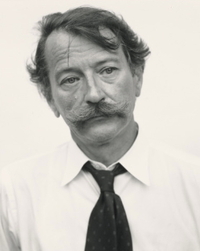
John Szarkowski’s Followers (30)


John Szarkowski
Born
in Ashland, WI, The United States
December 18, 1925
Died
July 07, 2007
Genre


|
The Photographer's Eye
—
published
1966
—
12 editions
|
|

|
Looking at Photographs: 100 Pictures from the Collection of The Museum of Modern Art
by
—
published
1973
—
8 editions
|
|

|
Ansel Adams at 100
—
published
2001
—
16 editions
|
|

|
Bellocq: Photographs from Storyville, the Red-Light District of New Orleans
by
—
published
1970
—
13 editions
|
|

|
Still Life
by |
|

|
Mirrors and Windows: American Photography Since 1960.
—
published
1978
—
12 editions
|
|

|
Photography Until Now
by
—
published
1990
—
10 editions
|
|

|
John Szarkowski: Photographs
by
—
published
2005
—
2 editions
|
|

|
The Idea of Louis Sullivan
—
published
2000
—
8 editions
|
|

|
Walker Evans
—
published
1971
|
|
“There is a terrible truthfulness about photography. The ordinary academician gets hold of a pretty model, paints her as well as he can, calls her Juliet, and puts a nice verse Shakespeare underneath, and the picture is admired beyond measure. The photographer finds the same pretty girl, he dresses her up and photographs her, and calls her Juliet, but somehow it is no good – it is still Miss Wilkins, the model. It is too true to be Juliet.
George Bernard Shaw
Wilson’s Photographic Magazine, LVI, 1909”
― The Photographer's Eye
George Bernard Shaw
Wilson’s Photographic Magazine, LVI, 1909”
― The Photographer's Eye
“Speaking of photography Baudelaire said: "This industry, by invading the territories of art, has become art's most mortal enemy." And in his own terms of reference Baudelaire was half right; certainly the new medium could not satisfy old standards. The photographer must find new ways to make his meaning clear.”
― The Photographer's Eye
― The Photographer's Eye
“The reason [Ansel Adams] is important to us, as I think he is, is because he was a good artist. On his best days, he was a terrific artist. And he found some way to put together the fragments of the world in a way that transformed them into a picture. In the same way that a poet uses the same dictionaries that the rest of us do—all the words are in there, all the words in the poem are [in the dictionary]. It is just a matter of taking a few of them and putting them in the right order. That’s all there is to it. . . . A good picture does something like that.”
―
―
