
Discover new books on Goodreads
See if your friends have read any of Eric Voegelin's books
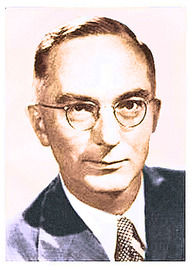
Eric Voegelin’s Followers (199)


Eric Voegelin
Born
in Cologne, Germany
January 03, 1901
Died
January 19, 1985


|
Science, Politics & Gnosticism
by
—
published
1959
—
21 editions
|
|

|
The New Science of Politics: An Introduction
—
published
1952
—
46 editions
|
|

|
Autobiographical Reflections (Collected Works of Eric Voegelin, Volume 34)
—
published
1989
—
24 editions
|
|

|
Order and History, Vol. I: Israel and Revelation
—
published
1956
—
25 editions
|
|

|
Hitler and the Germans (The Collected Works of Eric Voegelin) (Volume 1)
by
—
published
1964
—
13 editions
|
|

|
Plato and Aristotle
by |
|

|
The World of the Polis
|
|

|
Modernity without Restraint: Political Religions; The New Science of Politics; and Science, Politics and Gnosticism
by
—
published
1999
—
4 editions
|
|

|
Anamnesis: On the Theory of History and Politics
by |
|

|
History of Political Ideas, Volume 1: Hellenism, Rome, and Early Christianity
by
—
published
1997
—
6 editions
|
|


“The death of the spirit is the price of progress. Nietzsche revealed this mystery of the Western apocalypse when he announced that God was dead and that He had been murdered. This Gnostic murder is constantly committed by the men who sacrificed God to civilization. The more fervently all human energies are thrown into the great enterprise of salvation through world–immanent action, the farther the human beings who engage in this enterprise move away from the life of the spirit. And since the life the spirit is the source of order in man and society, the very success of a Gnostic civilization is the cause of its decline.
A civilization can, indeed, advance and decline at the same time—but not forever. There is a limit toward which this ambiguous process moves; the limit is reached when an activist sect which represents the Gnostic truth organizes the civilization into an empire under its rule. Totalitarianism, defined as the existential rule of Gnostic activists, is the end form of progressive civilization.”
― The New Science of Politics: An Introduction
A civilization can, indeed, advance and decline at the same time—but not forever. There is a limit toward which this ambiguous process moves; the limit is reached when an activist sect which represents the Gnostic truth organizes the civilization into an empire under its rule. Totalitarianism, defined as the existential rule of Gnostic activists, is the end form of progressive civilization.”
― The New Science of Politics: An Introduction
“The use of method as the criterion of science abolishes theoretical relevance. As a consequence, all propositions concerning facts will be promoted to the dignity of science, regardless of their relevance, as long as they result from a correct use of method. Since the ocean of facts is infinite, a prodigious expansion of science in the sociological sense becomes possible, giving employment to scientistic technicians and leading to the fantastic accumulation of irrelevant knowledge through huge “research projects” whose most interesting features is the quantifiable expense that has gone into their production.”
― The New Science of Politics: An Introduction
― The New Science of Politics: An Introduction
“The course of history as a whole is no object of experience; history has no edios, because the course of history extends into the unknown future.”
―
―
Polls
Which one is your favorite philosopher?
If it is one that is not on the list, comment below!
If it is one that is not on the list, comment below!
Gilles Deleuze
(write-in)
cumdump
(write-in)
yes
(write-in)
Arthur Schopenhauer
(write-in)
Fyodor dostoevsky
(write-in)
spinoza
(write-in)
Jesus of Nazareth
(write-in)
Socrates
(write-in)
Jordan Peterson
(write-in)
Jesus
(write-in)
Carl Jung
(write-in)
Epictetus
(write-in)
Ibn Sina
(write-in)
Bertrand Russell
(write-in)
Julius Evola
(write-in)
Simone Weil
(write-in)
Slavoj Zizek
(write-in)
Aristotle
(write-in)
wine
(write-in)
Buddha
(write-in)
Sigmund Freud
(write-in)
Maurice Merleau-Ponty
(write-in)
Nicholas Sparks
(write-in)
Charles Darwin
(write-in)
Ayn Rand
(write-in)
Michel Foucault
(write-in)
Kosov
(write-in)
Serb
(write-in)
Hypatia
Maimonides
(write-in)
Euclid
(write-in)
Alfred Whitehead
(write-in)
Edmund Husserl
(write-in)
Judith Butler
(write-in)
Niccoló Machiavelli
Max Stirner
(write-in)
Rene Guenon
(write-in)
Heraclitus
(write-in)
William James
(write-in)
Thomas Hobbes
(write-in)
Albert Einstein
(write-in)
Francis Bacon
(write-in)
Alan Watts
(write-in)
Jacques Derrida
(write-in)
Diogenes
(write-in)
immanuel kant
(write-in)
Seneca
(write-in)
my dad :)
(write-in)
John Dewey
(write-in)
Henri Bergson
(write-in)
George Berkeley
(write-in)
Teilhard de Chardin
(write-in)
Parmenides
(write-in)
Democritus
(write-in)
Rudolf Carnap
(write-in)
Lucretius
(write-in)
Paul Preciado
(write-in)
Karl Popper
(write-in)
Julius Bahnsen
(write-in)
Joseph Campbell
(write-in)
Gottfried Leibniz
(write-in)
George Santayana
(write-in)
Voltaire
(write-in)
Jeremy Bentham
(write-in)
B. F. Skinner
(write-in)