
Discover new books on Goodreads
See if your friends have read any of Gabriel Fauré's books
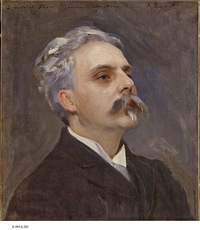
Gabriel Fauré’s Followers (16)


Gabriel Fauré
Born
Pamiers, Ariège, France
Genre


|
Requiem in Full Score
—
published
1893
—
19 editions
|
|

|
Gabriel Fauré 50 Songs for High Voice Sheet Music Songbook | The Vocal Library Edition with Piano Accompaniment and English Translations | Classical Vocal Repertoire for Voice and Piano
by
—
published
1995
—
9 editions
|
|

|
The Birth of Venus
—
published
2010
—
29 editions
|
|

|
Complete Preludes, Impromptus and Valses-Caprices (Dover Classical Piano Music)
—
published
1988
—
5 editions
|
|

|
Requiem, Op. 48: Vocal Score
by
—
published
2005
|
|

|
Cantique de Jean Racine Vocal Score Satb (Oxford Choral Music) (English and French Edition)
—
published
1986
—
18 editions
|
|

|
Elegie, Op. 24: Study Score
—
published
1983
—
14 editions
|
|

|
Requiem: For Four-Part Chorus of Mixed Voices With Soprano and Baritone Soli
by
—
published
1986
—
2 editions
|
|

|
Complete Songs for Medium Voice and Piano (1884-1919, #2)
by |
|

|
Piano Quartets Nos. 1 and 2 and Piano Quintet No. 1
—
published
1995
|
|
“The great charm of St Francis, that which explains the wonderful attraction he has even for spirits apparently removed from him, is that no one was less a churchman. He was neither a priest nor theologian. He did not even know his bible well. He ignored the first rules of scholasticism... He hardly knew the Saints, of whom he was to become the greatest. He spoke to the crowds, not like the ecclesiatical preachers, from high pulpits, but simply, from among the peasants and the womenfolk, without dogmatic paraphernalia, without theological quotations or pompous phrases. He was an orator without oratorical method. His way of renouncing earthly goods was not the way of the ascetics. He forbade himself riches, he did not forbid himself joy...”
―
―
Topics Mentioning This Author
| topics | posts | views | last activity | |
|---|---|---|---|---|
| Goodreads Librari...: Merge author profiles | 4462 | 1338 | 1 hour, 26 min ago |
Is this you? Let us know. If not, help out and invite Gabriel to Goodreads.