
Discover new books on Goodreads
See if your friends have read any of Robin A. Crawford's books
Robin A. Crawford’s Followers (4)


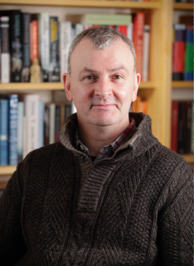
Robin A. Crawford
Born
Scotland
Genre


|
Cauld Blasts and Clishmaclavers: A Treasury of 1,000 Scottish Words
|
|

|
Into the Peatlands
—
published
2018
—
4 editions
|
|

|
The Sound of Many Waters: A Journey along the River Tay
—
published
2025
—
4 editions
|
|
* Note: these are all the books on Goodreads for this author. To add more, click here.
“It was in the neck of the Boat pool in October 1922 that Georgina Ballantine, the daughter of a ghillie, landed the largest ever salmon at 64lb. The capture and landing is described as 'Homeric' on the beat's website today. Following its capture and killing, a cast was taken by a taxidermist from Malloch's in Perth. The fish's body was then donated to and eaten by patients and staff at Perth Royal Infirmary. The stuffed fish was then added to the sculpted monuments to the dead going up all along Tayside between the two world wars.”
― The Sound of Many Waters: A Journey along the River Tay
― The Sound of Many Waters: A Journey along the River Tay
“From any icy world wrapped in cloud we emerge into a dun upland. Back down at 2,300 feet the cloud thins and a vista opens along the glen to Dalrigh. It is an umber world, a ginger world save for some faded dark green rectangles of conifer plantations, a damp world, a world of wisping cloud. Through the middle of it runs a stream, the Cononish. We are looking into the future, looking to where the waters now at our feet will soon be, and also where these feet will be on this journey from source to sea. It feels that we are now in sympathy with the river, following its direction of flow rather than struggling against it, that our futures are now running parallel.”
― The Sound of Many Waters: A Journey along the River Tay
― The Sound of Many Waters: A Journey along the River Tay
“For the majority of Scots and people living along the Tay, the rich visual culture of religious art, though once an integral part of Scotland's spiritual and cultural life, has been almost totally lost because of its destruction by the hardline Calvinist zealots who directed Scotland's reformation in the later sixteenth and seventeenth centuries. Shrines and sculptures, holy wells, crosses like that on the Forteviot arch, or McDuff's, paintings and alterpieces - all were destroyed by religious fundamentalism on a par with Isis in Syria and the Taliban in Afghanistan.
Yet like the flower that survives the inferno, a tiny bloom, if a bloodied one can still be found. Inside the medieval church at Fowlis Easter, between the Sidlaws and the Tay, are unique artworks from before the Reformation: a carved fleur-de-lis decorates the 'women's entrance' in the north wall and has a 'stoup' for holy water; an octagonal font sculpted with the baptism of Christ; a sixteenth-century painting on copper of the dove of peace, with Noah's ark grounded in the background; and, amazingly, a remnant of a large Crucifixion that has survived from c.1450.
Measuring thirteen feet by five feet, and painted in tempera on eighteen oak panels, it survived only because it was overpainted with whitewash. Now cleaned, t is a unique survivor from a different past.”
― The Sound of Many Waters: A Journey along the River Tay
Yet like the flower that survives the inferno, a tiny bloom, if a bloodied one can still be found. Inside the medieval church at Fowlis Easter, between the Sidlaws and the Tay, are unique artworks from before the Reformation: a carved fleur-de-lis decorates the 'women's entrance' in the north wall and has a 'stoup' for holy water; an octagonal font sculpted with the baptism of Christ; a sixteenth-century painting on copper of the dove of peace, with Noah's ark grounded in the background; and, amazingly, a remnant of a large Crucifixion that has survived from c.1450.
Measuring thirteen feet by five feet, and painted in tempera on eighteen oak panels, it survived only because it was overpainted with whitewash. Now cleaned, t is a unique survivor from a different past.”
― The Sound of Many Waters: A Journey along the River Tay
Is this you? Let us know. If not, help out and invite Robin to Goodreads.