
Discover new books on Goodreads
See if your friends have read any of Ronald H. Coase's books
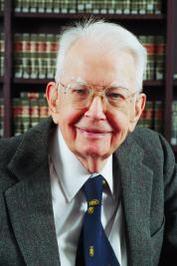




Ronald H. Coase
Website


|
The Firm, the Market, and the Law
—
published
1988
—
11 editions
|
|

|
How China Became Capitalist
by
—
published
2009
—
14 editions
|
|

|
Essays on Economics and Economists
—
published
1994
—
9 editions
|
|

|
Mainline Economics: Six Nobel Lectures in the Tradition of Adam Smith
by
—
published
2016
—
2 editions
|
|

|
Good Derivatives: A Story of Financial and Environmental Innovation
by
—
published
2011
—
15 editions
|
|

|
Economic Forces at Work
by
—
published
1977
—
3 editions
|
|

|
Famous Fables of Economics: Myths of Market Failures
by
—
published
2002
—
5 editions
|
|

|
Essential Readings in Economics
by
—
published
1995
—
6 editions
|
|
|
|
How should economists choose? (The G. Warren Nutter lectures in political economy)
—
published
1982
|
|
|
|
La naturaleza de la empresa
by |
|
“But a theory is not like an airline or bus timetable. We are not interested simply in the accuracy of its predictions. A theory also serves as a base for thinking. It helps us to understand what is going on by enabling us to organize our thoughts. Faced with a choice between a theory which predicts well but gives us little insight into how the system works and one which gives us this insight but predicts badly, I would choose the latter, and I am inclined to think that most economists would do the same.”
― Essays on Economics and Economists
― Essays on Economics and Economists
“An important reason may be that government at the present time is so large that it has reached the stage of negative marginal productivity, which means that any additional function it takes on will probably result in more harm than good…. If a federal program were established to give financial assistance to Boy Scouts to enable them to help old ladies cross busy intersections, we could be sure that not all the money would go to Boy Scouts, that some of those they helped would be neither old nor ladies, that part of the program would be devoted to preventing old ladies from crossing busy intersections, and that many of them would be killed because they would now cross at places where, unsupervised, they were at least permitted to cross.”
―
―
Is this you? Let us know. If not, help out and invite Ronald to Goodreads.