
Discover new books on Goodreads
See if your friends have read any of Ellen Moers's books
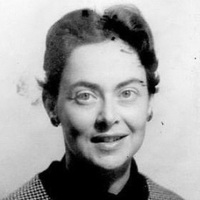
Ellen Moers’s Followers (3)


Ellen Moers
Born
in New York City, New York, The United States
December 09, 1928
Died
August 25, 1979
Genre


|
Literary Women
—
published
1976
—
13 editions
|
|

|
The Dandy: Brummell to Beerbohm
—
published
1978
—
9 editions
|
|

|
In Her Own Words
by
—
published
1879
—
3 editions
|
|

|
Harriet Beecher Stowe and American Literature
—
published
1978
|
|

|
Two Dreisers: The Man and the Novelist
—
published
1969
—
7 editions
|
|
|
|
THE DANDY: Brummell to Beerbohm
|
|

|
American Scholar: Spring 1979 Vol 48 No 2
by |
|
“It can be something of a relief to turn from the slow-moving dreamtime of Thomas Hardy and George Eliot to the faster pace of George Sand's European world, a world, as Marx read it and we still read it today, in revolutionary turmoil. Sand was a shrewd, committed, and radical observer of the half-dozen regimes that rose and fell in France during her lifetime. As Minister (without portfolio) of Propaganda, she played an active political role—greater than any woman before her—in the revolutionary government of 1848. Correspondent of Mazzini, of Gutzkow, of Bakunin, she was in touch with most of radical Europe. In all her work, her fiction and nonfiction, ideology remains a principal excitement, never a bore.”
― In Her Own Words
― In Her Own Words
“At her best, no one has ever surpassed George Sand as the novelist of Nature, because her style pulsates with a natural vigor and music and because she was a countrywoman as well as a Romantic. Her range includes not only the mysteries and enchantments of distant horizons and perilous wanderings, of superstition and legend, of ecstatic (and often feminist) solitude; but also the closely observed and dearly loved realities of peasant life: the greeds and frugalities, the labor of the seasons, the farm animals and insects, the stolid silences of illiterate folk radiated with their music and dancing, their enchanting dialect speech. Her romans champêtres (La Mare au Diable, François le Champi, La Petite Fadette, Jeanne, Les Maîtres sonneurs, Le Meunier d'Angibault) are those of Sand's novels which have never gone completely out of fashion and to which the English country novelists (George Eliot and Thomas Hardy) were most in debt. But Sand had something her English imitators did not and that was her grasp of history. "Tout concourt à I'histoire," she wrote, "tout est I'histoire, meme les romans qui semblent ne se rattacher en rien aux situations politiques qui les voient eclore." Her country tales and her love stories take place in the churning past and the open future of a world of toppling regimes, shifting classes, and clashing ideologies.”
― In Her Own Words
― In Her Own Words