
Discover new books on Goodreads
See if your friends have read any of Matthew Black's books
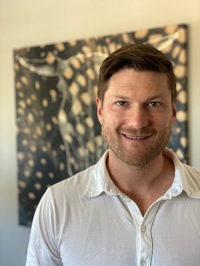
more photos (1)
Matthew Black’s Followers (38)


Matthew hasn't connected with his friends on Goodreads, yet.
Matthew Black
Goodreads Author
Member Since
September 2023


|
Operation Underworld: How the Mafia and U.S. Government Teamed Up to Win World War II
—
published
2022
—
9 editions
|
|
* Note: these are all the books on Goodreads for this author. To add more, click here.
“In late April 1942, Commander Charles Radcliffe Haffenden undertook the unlikely task of trying to recruit Charles “Lucky” Luciano to become an informant for Naval Intelligence. It was complicated in that he would have to successfully move through a number of government and bureaucratic hoops without causing a stir. It was a delicate dance filled with imagination, the kind only a man like Haffenden could conceive; a circus of go-betweens, all of whom had to understand the necessity of secrecy.”
― Operation Underworld: How the Mafia and U.S. Government Teamed Up to Win World War II
― Operation Underworld: How the Mafia and U.S. Government Teamed Up to Win World War II
“US merchant ships had already been told a month ago not to operate with their lights on at night, but back in New York City lights still made them perfect, dark silhouettes for U-boat captains who observed them through their periscopes. In April 1942, New York City finally decided to turn out the lights. However, the “blackout” that was desired by Admiral Andrews never materialized, as Mayor La Guardia argued for a compromise—New York City would institute a “dimout.” The Statue of Liberty’s torch was extinguished. The Wrigley’s fish and neon bubbles in Times Square were taken down. However, at night, the Camel man kept smoking, and blowing smoke rings over a dark street. Street lamps and traffic lights were dimmed, and cars either ran with just their parking lights on or had their lights painted over so light could only escape through a slit. Gasoline and rubber shortages saw fewer and fewer cars were on the road, and most cars running were yellow taxicabs that were exempt from rationing. Floodlights that illuminated the facades of New York City’s most recognizable structures—the Empire State Building, the Chrysler Building, and Rockefeller Center—were turned off, making them look like “giant mausoleums.” In late April, sporadic blackout drills made the city even darker.”
― Operation Underworld: How the Mafia and U.S. Government Teamed Up to Win World War II
― Operation Underworld: How the Mafia and U.S. Government Teamed Up to Win World War II
“Over the next two-and-a-half weeks, Haffenden had two of his young officers pore through case files provided by the DA’s office. For this task, Haffenden used James O’Malley and another lieutenant j.g., named Anthony Marzulo. Marzulo had also previously worked in the DA’s office, as an investigator under Thomas Dewey. He was in his early thirties, was of Italian descent, and had thick black hair and big black eyebrows. He was a linguist who not only spoke Italian, but also various Sicilian dialects. He had mixed feelings about his Italian heritage, and wanted to be thought of as an American. He despised the Italian criminal gangs of New York, as he felt they gave his ethnicity a bad name. To combat them, he had gone to law school, before becoming an investigator in the DA’s office.21”
― Operation Underworld: How the Mafia and U.S. Government Teamed Up to Win World War II
― Operation Underworld: How the Mafia and U.S. Government Teamed Up to Win World War II