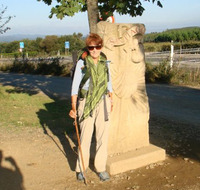
Christal Whelan, author-anthropologist, grew up in Munich, Honolulu, and Washington D.C., and has lived and worked in Japan intermittently since 1990. Six years after her arrival, she published The Beginning of Heaven and Earth: The Sacred Book of Japan's Hidden Christians, a book based on her experiences among the few remaining clandestine communities with whom she lived on the remote Goto Islands, and about whom she later made the documentary Otaiya, screened at the Margaret Mead Film and Video Festival. From a focus on rural and local religion, Whelan's interest expanded to include monastic Buddhism, Shinto, and even the country's newer globalizing religious movements. As a stringer for RNS, she was the first person in the U.S. media to Christal Whelan, author-anthropologist, grew up in Munich, Honolulu, and Washington D.C., and has lived and worked in Japan intermittently since 1990. Six years after her arrival, she published The Beginning of Heaven and Earth: The Sacred Book of Japan's Hidden Christians, a book based on her experiences among the few remaining clandestine communities with whom she lived on the remote Goto Islands, and about whom she later made the documentary Otaiya, screened at the Margaret Mead Film and Video Festival. From a focus on rural and local religion, Whelan's interest expanded to include monastic Buddhism, Shinto, and even the country's newer globalizing religious movements. As a stringer for RNS, she was the first person in the U.S. media to break the news of the sarin gas attack on the Tokyo subway as perpetrated by the cult Aum Shinrikyo.
Her new book Kansai Cool (2014) is a collection of twenty-five short essays about the Kansai region—the font of Japan's unique cultural traditions, and draws from Whelan's ten years of experience in the country, including her work for The Daily Yomiuri newspaper as columnist of "Kansai Culturescapes." A contributor to Fodor's Japan, her work has also appeared in The Japan Times, Kyoto Journal, and various publications of the Asahi Shimbun. From memorial services for needles to anime, fashion, Buddhist temples, and the culinary arts, Kansai Cool provides a cultural compass to a region vibrant in diversity.
Since 2007 Whelan began to visit Mongolia where she has worked in both the contemporary capital of Ulaan Baatar and in Kharkhorum, the ancient capital of the Mongolian Empire. Fascinated by the current trend of nomadic herders quitting the land for an urban lifestyle, the reinvention of Genghis Khan as the father of Mongolian democracy, the expanding sphere of Korean influence from hospitals and universities to television docudramas, and by the dilemmas generated by religious options in this post-Soviet democracy—Tibetan Buddhism, American Mormonism, Korean Protestantism, and Mongolian shamanism—Whelan's upcoming book on Mongolia will offer an unusual portrait of a country and its people as they navigate a complex political, social, and spiritual landscape....more