
Discover new books on Goodreads
See if your friends have read any of Robert Gellately's books
Robert Gellately’s Followers (43)


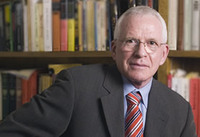
Robert Gellately
Born
Newfoundland, Canada
Website
Genre
More books by Robert Gellately…


“The Soviets were content to give Hitler the green light for an assault on Poland because they saw ways of capitalizing on it. German forces invaded Poland on September 1, and as expected, Britain and France issued an ultimatum that two days later led them to declare war on Germany.17 The Kremlin had wanted to coordinate with Berlin regarding plans for the attack on Poland, but given the shocking speed of the German advance, it had no time. Poland was already in the throes of defeat on September 17 when the Red Army ignobly invaded from the east. Stalin relished finally getting into Poland, for the initial Bolshevik crusade to bring revolution to Berlin, Paris, and beyond had ended at the gates of Warsaw in August 1920. At that time Polish forces had stopped and encircled the Red Army, taken more than 100,000 prisoners, and begun driving out the invaders until an armistice was reached in October. Poland celebrated the great battle as the “Miracle on the Vistula,” but now in 1939 the Red Army was back. Poland, Stalin said in early September, had “enslaved” Ukrainians, Byelorussians, and other Slavs, and when it fell, the world would have “one less bourgeois fascist state. Would it be so bad,” he asked his cronies rhetorically, “if we, through the destruction of Poland, extended the socialist system to new territories and nations?”18”
― Stalin's Curse: Battling for Communism in War and Cold War
― Stalin's Curse: Battling for Communism in War and Cold War
“Alf Lüdtke’s recent study shows on the basis of soldiers’ letters sent to their families back home, that in fact most people in the country ‘readily accepted’ Hitler, and they widely cheered the goals of ‘ “restoring” the grandeur of the Reich and “cleaning out” alleged “aliens” in politics and society’.”
― Backing Hitler: Consent and Coercion in Nazi Germany
― Backing Hitler: Consent and Coercion in Nazi Germany
“Himmler encouraged Gestapo and Kripo to do their bit, and in 1936 a new ‘Reich Central Office for Combating Homosexuality and Abortion’ was created to register all homosexuals investigated by police.”
― Backing Hitler: Consent and Coercion in Nazi Germany
― Backing Hitler: Consent and Coercion in Nazi Germany
Topics Mentioning This Author
| topics | posts | views | last activity | |
|---|---|---|---|---|
| The History Book ...: SECOND WORLD WAR - THE LIBERATION TRILOGY - GLOSSARY - PART ONE ~ (SPOILER THREAD) | 153 | 273 | Jun 03, 2013 07:00PM | |
Nothing But Readi...:
 Level 1 of the Serious Readers Challenge for 2014
|
644 | 1474 | Jan 11, 2015 09:28AM | |
| The History Book ...: SECOND WORLD WAR - THE LIBERATION TRILOGY - GLOSSARY - PART TWO ~ (SPOILER THREAD) | 208 | 337 | Feb 08, 2015 07:54AM | |
| The History Book ...: * STALIN AND THE SOVIET ARMY | 66 | 359 | Jan 19, 2019 09:48AM | |
| THE WORLD WAR TWO...: Stalin & Hitler Biographies | 40 | 218 | Mar 05, 2021 08:53PM | |
| The History Book ...: TODAY IN THE NEWS | 2714 | 1611 | Dec 04, 2022 07:01AM | |
| The History Book ...: * WHAT IS EVERYBODY READING NOW? | 2885 | 3103 | Oct 03, 2026 01:44AM |
Is this you? Let us know. If not, help out and invite Robert to Goodreads.