
 Sign in with Facebook
Richard Schickel’s Followers (33)


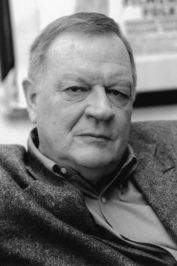
Richard Schickel
Born
in Milwaukee, Wisconsin, The United States
February 10, 1933
Genre


|
Conversations with Scorsese
by
—
published
2011
—
16 editions
|
|

|
Clint Eastwood: A Biography
—
published
1996
—
15 editions
|
|

|
Steven Spielberg: A Retrospective
by
—
published
2012
|
|

|
Clint: A Retrospective
by
—
published
2010
—
26 editions
|
|

|
The Disney Version: The Life, Times, Art and Commerce of Walt Disney
—
published
1985
—
27 editions
|
|

|
Double Indemnity
—
published
1992
—
10 editions
|
|

|
Elia Kazan
—
published
2005
—
12 editions
|
|

|
Keepers: The Greatest Films--and Personal Favorites--of a Moviegoing Lifetime
—
published
2015
—
3 editions
|
|

|
Woody Allen: A Life in Film
—
published
2003
—
7 editions
|
|

|
Bette Davis: Larger than Life
by
—
published
2009
—
6 editions
|
|
“Epictetus, I think, said not to be concerned with death, because life is the presence of feeling and emotion and awareness, and death is the absence of all of that, which means you won't have any awareness. So why worry about it ?”
― Conversations with Scorsese
― Conversations with Scorsese
“And so she signed on, not knowing, surely, what is now quite clear to us: that she was about to create one of the enduring archetypes of the American screen, the noir female. Certainly this creature had her antecedents in the vamps of the silent screen. But they tended to be European in origin, and to hide their schemings under a highly romantic manner. It might also be argued that there were hints of what was to come in figures like Mary Astor's Brigid O'Shaughnessy in The Maltese Falcon (though she, of course, affected a genteel disguise for her true motives). But really the bluntness and hardness of Stanwyck's work was something essentially new, and the alacrity with which it was imitated in film after film of the 40s is one of the interesting, largely unexplored questions of our movie and social history. It surely had something to do with the freedom American women claimed for themselves during the war years, and the nervousness that stirred among males - especially males who were absent at the front and concerned about the fidelity of the girls they left behind. Hard to keep them down on the farm (or behind a suburban picket fence) after they had found work in the rough atmosphere of factories, known the joys of living alone and, for that matter, going to bars alone. Phyllis Dietrichson did none of those things, but she had been a working woman and she was clearly capable of - putting it mildly - a high degree of self-sufficiency.”
― Double Indemnity
― Double Indemnity
Topics Mentioning This Author
| topics | posts | views | last activity | |
|---|---|---|---|---|
| Cover to Cover Ch...: Darcy's 2015 Books | 15 | 101 | Jan 04, 2015 09:12AM | |
| The History Book ...: * WE ARE OPEN - PHILOSOPHY AND POLITICS ~ BIBLIOGRAPHY~ On Politics: A History of Political Thought from Herodotus to the Present (Spoiler Thread) | 29 | 201 | Mar 01, 2015 02:32PM | |
The Seasonal Read...:
 Spring 2015 Completed Tasks - DO NOT DELETE POSTS
|
3347 | 576 | May 31, 2015 08:59PM | |
|
The History Book ...:
*
FILM HISTORY - PART ONE
|
621 | 492 | Jan 24, 2019 05:01AM |
Is this you? Let us know. If not, help out and invite Richard to Goodreads.
