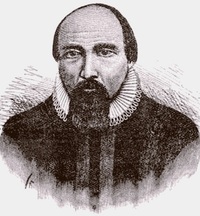
Hallgrímur was a Lutheran priest and the foremost composer of psalms in Iceland. His father was Pétur Guðmundsson, a bell-ringer at Hólar, one of the oldest bishoprics in Iceland, and cousin of the bishop Guðbrandur Þorláksson. Hallgrímur was raised at Hólar. He was a good scholar, but of a difficult temperament in his youth. He was sent to Glücksburg in Denmark (now in Germany) to learn how to work metal. For several years he worked as a blacksmith in Copenhagen and there he met the future bishop Brynjólfur Sveinsson, who persuaded him to attend the seminary there. When he was in his final year, some Icelanders arrived in Copenhagen who had been abducted in the Turkish raids of 1627 and had been in Algeria for many years. It was said that tHallgrímur was a Lutheran priest and the foremost composer of psalms in Iceland. His father was Pétur Guðmundsson, a bell-ringer at Hólar, one of the oldest bishoprics in Iceland, and cousin of the bishop Guðbrandur Þorláksson. Hallgrímur was raised at Hólar. He was a good scholar, but of a difficult temperament in his youth. He was sent to Glücksburg in Denmark (now in Germany) to learn how to work metal. For several years he worked as a blacksmith in Copenhagen and there he met the future bishop Brynjólfur Sveinsson, who persuaded him to attend the seminary there. When he was in his final year, some Icelanders arrived in Copenhagen who had been abducted in the Turkish raids of 1627 and had been in Algeria for many years. It was said that they were lapsing in their Christianity, and even forgetting their mother tongue. Hallgrímur was chosen as the Icelander to re-educate them. He fell in love with one of them, Guðríður Símonardóttir (who was married to a missing man). When the group were sent home Hallgrímur gave up his studies to return to Iceland with Guðríður, by which time she was pregnant with their first child. The couple were married when it was discovered that Guðríður's husband was dead. Brynjólfur, by then bishop at Skálholt, appointed Hallgrímur as the priest at Hvalsnes, even though he had never qualified. He would still have been just as well educated as most other Icelandic priests at that time. In 1651 he was reassigned to Saurbær at Hvalfjarðarströnd. There he composed his Passion Hymns (Passíusálmar) for which he is still famous. He also wrote the psalm "Um dauðans óvissan tíma" (Of Death's Uncertain Hour"), also referred to by its first line "Allt eins og blómstrið eina" ("Just as the one true flower"), which was, until recently, sung at every funeral in Iceland....more