
Discover new books on Goodreads
See if your friends have read any of Andrew Louth's books
Andrew Louth’s Followers (54)


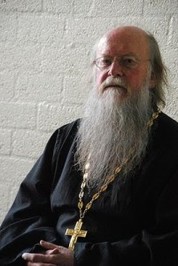
Andrew Louth
Born
in Louth, Lincolnshire, The United Kingdom
November 11, 1944
Genre


|
Early Christian Writings: The Apostolic Fathers
by
—
published
1968
—
7 editions
|
|

|
Introducing Eastern Orthodox Theology
—
published
2013
—
6 editions
|
|

|
Early Christian Writings The Apostolic Fathers
by
—
published
1987
|
|

|
The Origins of the Christian Mystical Tradition: From Plato to Denys
—
published
1983
—
12 editions
|
|

|
Maximus the Confessor
—
published
1996
—
10 editions
|
|

|
Discerning the Mystery: An Essay on the Nature of Theology
—
published
1983
—
10 editions
|
|

|
Modern Orthodox Thinkers: From the Philokalia to the Present Day
—
published
2015
—
10 editions
|
|

|
Genesis 1-11 (Ancient Christian Commentary on Scripture: Old Testament, Volume I)
—
published
2001
—
5 editions
|
|

|
Greek East And Latin West: The Church AD 681-1071 (THE CHURCH IN HISTORY SERIES, VOLUME III)
—
published
2007
—
7 editions
|
|

|
The Wilderness of God
—
published
1997
—
5 editions
|
|
“The method of science is logical and rational; the method of the humanities is one of imagination, sympathetic understanding, ‘indwelling.”
― Discerning the Mystery: An Essay on the Nature of Theology
― Discerning the Mystery: An Essay on the Nature of Theology
“Creation is not abandoned by God, it is not godless, for apart from God it would not be at all; it is not deprived of grace for it owes its existence to grace. Rather, creation is graced, it is holy; in creation God may be encountered.”
― Introducing Eastern Orthodox Theology
― Introducing Eastern Orthodox Theology
“At the heart of the kind of understanding involved in the humanities another dimension of reason is involved, which one can perhaps call contemplative. Take the example of attempting to read, or understand, a poem. There is an element of problem-solving: the meaning of certain words no longer, perhaps, in current use, the detecting of allusions to the literary tradition to which the poem belongs these can sometimes be ‘solved’ and a definitive answer produced. But having done all that, we have not finished: we have only begun —we have, as we might say, cleared the ground for an attempt to read, to understand, the poem. Here something else is involved: not a restless attempt to solve problems, to reach a kind of clarity, but rather an attempt to listen, to engage with the meaning of the poet, to hear what he has to say. We shall not do that if we misunderstand the meaning he attached to his words, or miss his allusion, but we do not necessarily hear the poet if we have simply solved all such problems. What is needed is a sympathetic listening, an engagement with the mind of the poet, and this sort of understanding has no end. There is no definitive solution: understanding is a matter of engagement, and constantly renewed engagement. WHAT is understood is much more elusive in this case than what is understood when we solve a problem. It is not a matter of facts, but a matter of reality: the reality of human life, its engagement with others, its engagement with God.”
― Discerning the Mystery: An Essay on the Nature of Theology
― Discerning the Mystery: An Essay on the Nature of Theology
Topics Mentioning This Author
| topics | posts | views | last activity | |
|---|---|---|---|---|
The Next Best Boo...:
 The Title Game
|
20218 | 14629 | May 30, 2013 12:53PM | |
| Challenge: 50 Books: JB's Challenge List for 2017 | 151 | 101 | Dec 22, 2017 07:48AM | |
| Non Fiction Book ...: * Non-Fiction Book You Are Currently Reading or Just Finished ~ 2017 | 537 | 305 | Feb 01, 2018 11:50AM | |
| The History Book ...: EASTERN ORTHODOX | 15 | 367 | Apr 25, 2020 01:10AM | |
| Challenge: 50 Books: Jonathan Brown's 70-Book Challenge for 2021 | 118 | 76 | Dec 31, 2021 11:30AM | |
| Goodreads Librari...: [solved] Serghei Bulgakov | 2 | 19 | Jul 23, 2022 01:35PM | |
| Challenge: 50 Books: Jonathan Brown's 80-Book Challenge for 2024 | 89 | 53 | Dec 26, 2024 09:26AM | |
| Goodreads Librari...: Sfântul Ioan Damaschinul. Tradiție și originalitate în teologia bizantină | 2 | 3 | May 07, 2026 12:03PM | |
| Goodreads Librari...: Dionisie Areopagitul. O introducere | 2 | 3 | May 08, 2026 02:45AM | |
| Goodreads Librari...: Originile Tradiției Mistice Creștine: de la Platon la Dionisie Areopagitul | 2 | 3 | Jul 31, 2026 01:04PM |
Is this you? Let us know. If not, help out and invite Andrew to Goodreads.