
 Sign in with Facebook
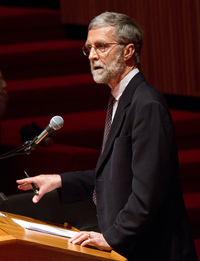


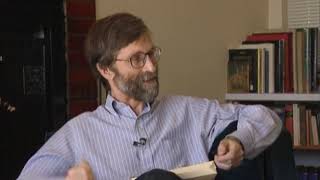
John McDowell
Born
in Boksburg, South Africa
March 07, 1942
Website
Genre
Influences


|
Theaetetus (Clarendon Plato Series)
by
—
published
-369
—
528 editions
|
|

|
Mind and World
—
published
1994
—
12 editions
|
|

|
Mind, Value, and Reality
—
published
1998
—
7 editions
|
|

|
Philosophy and Animal Life
by
—
published
2008
—
7 editions
|
|

|
The Varieties of Reference
by
—
published
1982
—
6 editions
|
|

|
Having the World in View: Essays on Kant, Hegel, and Sellars
—
published
2009
—
5 editions
|
|

|
Meaning, Knowledge, and Reality
—
published
1998
—
2 editions
|
|

|
Perception as a Capacity for Knowledge
—
published
2011
—
3 editions
|
|

|
The Engaged Intellect: Philosophical Essays
—
published
2009
—
8 editions
|
|

|
Mind and World (John Locke lectures) by John Mcdowell (1994-11-21)
|
|
“What I have described as a blind spot is not a mere oversight on Sellars's part. I think it reflects Sellars's attempt to combine two insights: first, that meaning and intentionality come into view only in a context that is normatively organized, and, second, that reality as it is contemplated by the sciences of nature is norm-free. The trouble is that Sellars thinks the norm-free reality disclosed by the natural sciences is the only location for genuine relations to actualities. That is what leads to the idea that placing the mind in nature requires abstracting from aboutness.
Now Aquinas, writing before the rise of modern science, is immune to the attractions of that norm-free conception of nature. And we should not be too quick to regard this as wholly a deficiency in his thinking. (Of course in all kinds of ways it is a deficiency.) There is a live possibility that, at least in one respect, Thomistic philosophy of mind is superior to Sellarsian philosophy of mind, just because Aquinas lacks the distinctively modern conception of nature that underlies Sellars's thinking. Sellars allows his philosophy to be shaped by a conception that is characteristic of his own time, and so misses an opportunity to learn something from the past.”
― Having the World in View: Essays on Kant, Hegel, and Sellars
Now Aquinas, writing before the rise of modern science, is immune to the attractions of that norm-free conception of nature. And we should not be too quick to regard this as wholly a deficiency in his thinking. (Of course in all kinds of ways it is a deficiency.) There is a live possibility that, at least in one respect, Thomistic philosophy of mind is superior to Sellarsian philosophy of mind, just because Aquinas lacks the distinctively modern conception of nature that underlies Sellars's thinking. Sellars allows his philosophy to be shaped by a conception that is characteristic of his own time, and so misses an opportunity to learn something from the past.”
― Having the World in View: Essays on Kant, Hegel, and Sellars
“Geist is Hegel’s counterpart to what figures in Aristotle as the kind of soul that is characteristic of rational animals. It is human beings whom Aristotle defines as rational animals; that corresponds to Hegel’s implicit identification of the philosophy of Geist with the philosophy of the human. On this account, then, Geist is the formally distinctive way of being a living being that characterizes human beings: in Aristotelian terms, the form of a living human being qua living human being.
Kinds of soul in Aristotle’s account are not kinds of substance. Souls are not material substances; the only relevant material substances are living beings. And one would miss the point of Aristotle’s conception of the form of a living being qua living if one conceived souls as immaterial substances. So Geist in particular is not a substance, material or immaterial. The idea of Geist is the idea of a distinctive way of living a life; often it is better to speak of Geistigkeit, as the defining characteristic of that distinctive form of life and thereby of the living beings that live it.”
―
Kinds of soul in Aristotle’s account are not kinds of substance. Souls are not material substances; the only relevant material substances are living beings. And one would miss the point of Aristotle’s conception of the form of a living being qua living if one conceived souls as immaterial substances. So Geist in particular is not a substance, material or immaterial. The idea of Geist is the idea of a distinctive way of living a life; often it is better to speak of Geistigkeit, as the defining characteristic of that distinctive form of life and thereby of the living beings that live it.”
―
Is this you? Let us know. If not, help out and invite John to Goodreads.
