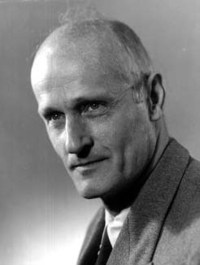
Stephen Cole Kleene

Stephen Cole Kleene’s Followers (12)

member photo
member photo
member photo
member photo
member photo
member photo
member photo
member photo
member photo
member photo
member photo
member photo

Stephen Cole Kleene


Born
in Hartford, Connecticut, The United States
January 05, 1909

Died
January 25, 1994

Genre


Average rating: 4.43 · 94 ratings · 6 reviews · 21 distinct worksSimilar authors
Mathematical Logic (Dover B...

4.40 avg rating — 58 ratings — published 1967 — 13 editions
Rate this book
Clear rating
Introduction to Metamathema...

4.41 avg rating — 34 ratings — published 1971 — 17 editions
Rate this book
Clear rating
Introduction to metamathema...

it was amazing 5.00 avg rating — 1 rating
Rate this book
Clear rating
Introduction To Metamathema...

it was amazing 5.00 avg rating — 1 rating
Rate this book
Clear rating
Mathematical logic

it was amazing 5.00 avg rating — 1 rating
Rate this book
Clear rating
Two Papers On The Predicate...

0.00 avg rating — 0 ratings — published 1997 — 2 editions
Rate this book
Clear rating
Formalized Recursive Functi...

0.00 avg rating — 0 ratings — published 1969
Rate this book
Clear rating
EOU Mathematical Logic (Dov...

0.00 avg rating — 0 ratings
Rate this book
Clear rating
Yoga et santé

0.00 avg rating — 0 ratings
Rate this book
Clear rating
Mathematical logic: Course ...

0.00 avg rating — 0 ratings
Rate this book
Clear rating
More books by Stephen Cole Kleene…
Quotes by Stephen Cole Kleene  (?)
Quotes are added by the Goodreads community and are not verified by Goodreads. (Learn more)

“An algorithm is a finite answer to an infinite number of questions.”
Stephen Cole Kleene

“In classical mathematics there occur non-constructive or indirect existence proofs, which intuitionists do not accept. For example, to prove there exists an n such that P(n), the classical mathematician may deduce a contradiction from the assumption for all n, not P(n). Under both the classical and the intuitionistic logic, by reductio ad absurdum this gives not for all n, not P(n). The classical logic allows this result to be transformed into there exists an n such that P(n), but not in general the intuitionistic … the classical meaning, that somewhere in the completed infinite totality of the natural numbers there occurs an n such that P(n), is not available to him, since he does not conceive the natural numbers as a completed totality.”
Stephen Cole Kleene, Introduction to Metamathematics

“According to Weyl 1946, 'Brouwer made it clear, as I think beyond any doubt, that there is no evidence supporting the belief in the existential character of the totality of all natural numbers ... the sequence of numbers which grows beyond any stage already reached by passing to the next number, is a manifold of possibilities open towards infinity; it remains forever in the status of creation, but is not a closed realm of things existing in themselves. That we blindly converted one into the other is the true source of our difficulties, including the antinomies – a source of more fundamental nature than Russell's vicious circle principle indicated. Brouwer opened our eyes and made us see how far classical mathematics, nourished by a belief in the 'absolute' that transcends all human possibilities of realization, goes beyond such statements as can claim real meaning and truth founded on evidence.”
Stephen Cole Kleene