
Discover new books on Goodreads
See if your friends have read any of J.M. Robertson's books
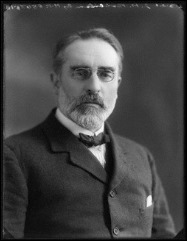


J.M. Robertson
Born
in Isle of Arran, Scotland
November 14, 1856
Died
January 05, 1933
Genre
Influences


|
Pagan Christs
—
published
1967
—
70 editions
|
|

|
Rationalism
|
|

|
A Short History of Christianity
—
published
2013
—
52 editions
|
|

|
The Problem of Hamlet.
—
published
2015
—
30 editions
|
|

|
Modern Humanists: Sociological Studies of Carlyle, Mill, Emerson, Arnold, Ruskin, and Spencer
—
published
1968
—
42 editions
|
|

|
Nehemiah (Robertson's Notes Book 16)
—
published
2014
—
2 editions
|
|

|
Elizabethan literature
|
|

|
The historical Jesus, a survey of positions
|
|

|
Christianity and Mythology
—
published
1910
—
31 editions
|
|

|
Montaigne and Shakspere
—
published
2015
—
55 editions
|
|
“It was about that time [415 BCE] that the poet Diagoras of Melos was proscribed for atheism, he having declared that the non-punishment of a certain act of iniquity proved that there were no gods. It has been surmised, with some reason, that the iniquity in question was the slaughter of the Melians by the Athenians in 416 BCE, and the Athenian resentment in that case was personal and political rather than religious. For some time after 415 the Athenian courts made strenuous efforts to punish every discoverable case of impiety; and parodies of the Eleusinian mysteries were alleged against Alcibiades and others. Diagoras, who was further charged with divulging the Eleusinian and other mysteries, and with making firewood of an image of Herakles, telling the god thus to perform his thirteenth labour by cooking turnips, became thenceforth one of the proverbial atheists of the ancient world, and a reward of a silver talent was offered for killing him, and of two talents for his capture alive; despite which he seems to have escaped.”
― A Short History Of Freethought: Ancient And Modern
― A Short History Of Freethought: Ancient And Modern
“Petronius was surely right in saying Fear made the gods. In primitive times fear of the unknown was normal; gratitude to an unknown was impossible.”
― Pagan Christs
― Pagan Christs
“The Oracle pursued a logical course of confuting theism, and leaving 'a-theism' the negative result. It did not, in the absurd terms of common religious propaganda, 'deny the existence of God.' It affirmed that God was a term for an existence imagined by man in terms of his own personality and irreducible to any tenable definition. It did not even affirm that 'there are no Gods'; it insisted that the onus of proof as to any God lay with the theist, who could give none compatible with his definitions.”
― A History Of Free Thought In The Nineteenth Century V1
― A History Of Free Thought In The Nineteenth Century V1
Topics Mentioning This Author
| topics | posts | views | last activity | |
|---|---|---|---|---|
| Goodreads Librari...: Clean Up XI | 973 | 1117 | Jul 26, 2026 06:23PM |