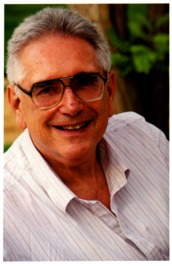
Reuven Tsur is Professor Emeritus of Hebrew Literature at Tel Aviv University, served several terms as the director of the Katz Research Institute for Hebrew Literature. He has been visiting professor at the Hebrew University, at Columbia University, and at the University of Lancaster. He participated in an indefinite number of international conferences in semiotics, comparative literature, cognitive studies, literature and psychology, linguistics, and empirical aesthetics. He has been research fellow at the University of Southampton and at Yale University. He was introduced into the mysteries of speech research at the Haskins Laboratories, New Haven, and at the University of Lancaster. He is Vice President for the Middle East of the InternReuven Tsur is Professor Emeritus of Hebrew Literature at Tel Aviv University, served several terms as the director of the Katz Research Institute for Hebrew Literature. He has been visiting professor at the Hebrew University, at Columbia University, and at the University of Lancaster. He participated in an indefinite number of international conferences in semiotics, comparative literature, cognitive studies, literature and psychology, linguistics, and empirical aesthetics. He has been research fellow at the University of Southampton and at Yale University. He was introduced into the mysteries of speech research at the Haskins Laboratories, New Haven, and at the University of Lancaster. He is Vice President for the Middle East of the International Association for Empirical Aesthetics, and a member of the editorial board of Empirical Studies of the Arts, Psyart — a hyperlink e-journal, Cognitive Semiotics, Journal of Literary Theory. and Versification: An Electronic Journal of Literary Prosody, as well as of the advisory board of the URL Literature, Cognition & the Brain.
He has a BA in English and Hebrew Literature from the Hebrew University, Jerusalem, and a D.Phil. in English from the University of Sussex.
Reuven Tsur has developed a theory of Cognitive Poetics, and applied it to rhyme, sound symbolism, poetic rhythm, metaphor, poetry and altered states of consciousness, period style, genre, archetypal patterns, translation theory, the implied critic's decision style, and critical competence. In his books and articles he applied his theories to English, French, German, Hungarian, Italian, Spanish, and Hebrew poetry, ranging from the Bible, through the eleventh, sixteenth and seventeenth century, to the eighteenth, nineteenth and twentieth century. His Perception-Oriented Theory of Metre includes a theory of the rhythmical performance of poetry which, after 25 years of agonising search, he found a way to submit to an instrumental investigation. He has recently finished this instrumental research and published its results (see below the list of Major Publications. His book Poetic Rhythm, Structure and Performance (1998) has been published by Peter Lang). Since the publication of this book he has been applying its method to a constantly-growing corpus, exploring additional aspects of vocal performance....more