
Discover new books on Goodreads
See if your friends have read any of J.N.D. Kelly's books
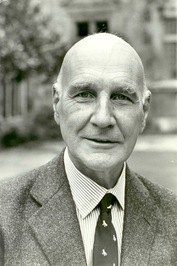
J.N.D. Kelly’s Followers (21)


J.N.D. Kelly
Born
in Bridge of Allan, Scotland, The United Kingdom
April 13, 1909
Died
March 31, 1997
Genre


|
Early Christian Doctrines
—
published
1958
—
24 editions
|
|

|
Golden Mouth: The Story of John Chrysostom-Ascetic, Preacher, Bishop
—
published
1995
—
10 editions
|
|

|
The Oxford Dictionary of Popes
—
published
1986
—
22 editions
|
|

|
Early Christian Creeds
—
published
1972
—
15 editions
|
|

|
Jerome: His Life, Writings, and Controversies
—
published
1975
—
11 editions
|
|

|
The Epistles of Peter and of Jude
—
published
1981
—
14 editions
|
|

|
A Commentary on the Pastoral Epistles
by
—
published
1981
—
9 editions
|
|

|
The Athanasian Creed: The Paddock Lectures for 1962-63
—
published
1964
—
3 editions
|
|

|
St. Edmund Hall: Almost Seven Hundred Years
—
published
1989
|
|

|
A Commentary on the Pastoral Epistles: Timothy I & II, Titus
|
|
“By far the most influential credal product of the fourth century was the formula which is sometimes technically called the Niceno-Constantinopolitan creed.1 Ordinary Christians are familiar with it as the creed of the Holy Eucharist, where it is misnamed the Nicene creed. Its hybrid title combines the popular but erroneous tradition that it is none other than the true Nicene creed enlarged with the theory,”
― Early Christian Creeds
― Early Christian Creeds
“But the work which most richly embroidered the gospel narratives and was destined to exert a tremendous influence on later Mariology was the Protoevangelium of James. Written for Mary's glorification, this described her divinely ordered birth when her parents, Joachim and Anna, were advanced in years, her miraculous infancy and childhood, and her dedication to the Temple, where her parents had prayed that God would give her 'a name renowned for ever among all generations'. It made the point that when she was engaged to Joseph he was already an elderly widower with sons of his own; and it accumulated evidence both that she had conceived Jesus without sexual intercourse and that her physical nature had remained intact when she bore Him.
These ideas were far from being immediately accepted in the Church at large. Iranaeus, it is true, held that Mary's childbearing was exempt from physical travail, as did Clement of Alexandria (appealing to the Protoevangelium of James). Tertullian, however, repudiated the suggestion, finding the opening of her womb prophesied in Exodus 13, 2, and Origen followed him and argued that she had needed the purification prescribed by the Law. On the other hand, while Tertullian assumed that she had had normal conjugal relations with Joseph after Jesus's birth, the 'brethren of the Lord' being his true brothers, Origen maintained that she had remained a virgin for the rest of her life('virginity post partum') and that Jesus's so-called brothers were sons of Joseph but not by her...In contrast to the later belief in her moral and spiritual perfection, none of these theologians had the least scruple about attributing faults to her. Irenaeus and Tertullian recalled occasions on which, as they read the gospel stories, she had earned her Son's rebuke, and Origen insisted that, like all human beings, she needed redemption from her sins; ...”
― Early Christian Doctrines
These ideas were far from being immediately accepted in the Church at large. Iranaeus, it is true, held that Mary's childbearing was exempt from physical travail, as did Clement of Alexandria (appealing to the Protoevangelium of James). Tertullian, however, repudiated the suggestion, finding the opening of her womb prophesied in Exodus 13, 2, and Origen followed him and argued that she had needed the purification prescribed by the Law. On the other hand, while Tertullian assumed that she had had normal conjugal relations with Joseph after Jesus's birth, the 'brethren of the Lord' being his true brothers, Origen maintained that she had remained a virgin for the rest of her life('virginity post partum') and that Jesus's so-called brothers were sons of Joseph but not by her...In contrast to the later belief in her moral and spiritual perfection, none of these theologians had the least scruple about attributing faults to her. Irenaeus and Tertullian recalled occasions on which, as they read the gospel stories, she had earned her Son's rebuke, and Origen insisted that, like all human beings, she needed redemption from her sins; ...”
― Early Christian Doctrines
Topics Mentioning This Author
| topics | posts | views | last activity | |
|---|---|---|---|---|
| Challenge: 50 Books: Jonathan Brown's 90-Book Challenge for 2020 | 64 | 65 | Dec 26, 2020 05:43PM |