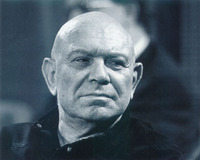
OBE Professor Teodor Shanin, president of the Moscow School of Social and Economic Sciences, is an esteemed sociologist whose long-standing commitment to the study of peasant societies has led to a prolific academic career and has earned him numerous accolades.
Shanin was born in Vilnius, Poland in 1930 and enjoyed a comfortable life until the age of 10 when Stalin’s police imprisoned his father and exiled Shanin and his mother to Siberia.
After the World War II and some stay in Poland where he finalized secondary education at the age of 17 he traveled clandestinely via France to Palestine and joined commando units during the war of independence 1948-1949. After that war he studied and proceeded to work in social work later graduating also inOBE Professor Teodor Shanin, president of the Moscow School of Social and Economic Sciences, is an esteemed sociologist whose long-standing commitment to the study of peasant societies has led to a prolific academic career and has earned him numerous accolades.
Shanin was born in Vilnius, Poland in 1930 and enjoyed a comfortable life until the age of 10 when Stalin’s police imprisoned his father and exiled Shanin and his mother to Siberia.
After the World War II and some stay in Poland where he finalized secondary education at the age of 17 he traveled clandestinely via France to Palestine and joined commando units during the war of independence 1948-1949. After that war he studied and proceeded to work in social work later graduating also in sociology and economics.
In 1963, Shanin began a PhD at Birmingham University, studying the role of peasants in the Russian Revolution and graduated in 1969. This ground-breaking work not only paved the way for his academic career, but also helped to launch in the UK an entirely new research field.
By 1974, Shanin had received his chair at the University of Manchester. He taught sociology and served on and off as the head of the sociology department for many years. In the period of Perestroika he became increasingly involved in effort to transform Russian university education which led to the creation of graduate Russian-British university with him as its first rector. In 2002, Shanin won the Order of British Empire for promoting tertiary education in Russia. In 2007 he became the president of the Moscow School of Social and Economic Sciences.
Shanin has held more than two dozen research or visiting fellowships and has written or edited more than 100 publications. His second book, The Awkward Class (Clarendon Press, 1972) was particularly admired thanks to its timely connections to the issues related to Third World nations. His exploration of historical sociology reached another peak with Russia 1905 07: Revolution as a Moment of Truth (Macmillan, 1986). Within Russia Shanin contributed majorly to its tradition of rural studies and introducing the issues of qualitative research of rural society and informal economy as a phenomenon the understanding of which changes considerably our understanding of contemporary Russia.
Shanin continues with research interests in late 19th century and early 20th century rural Russia, the role of informal economies in understanding the contemporary social economy of Russia, and educational reform in contemporary Russia. ...more