
 Sign in with Facebook
William E. Connolly’s Followers (37)


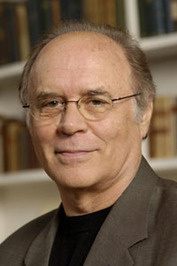
William E. Connolly
Born
Michigan, The United States


|
Pluralism
—
published
2005
—
7 editions
|
|

|
The Fragility of Things: Self-Organizing Processes, Neoliberal Fantasies, and Democratic Activism
—
published
2013
—
6 editions
|
|

|
Neuropolitics: Thinking, Culture, Speed (Theory out of Bounds, Vol. 23)
—
published
2002
—
8 editions
|
|

|
A World of Becoming (a John Hope Franklin Center Book)
—
published
2009
—
5 editions
|
|

|
Capitalism and Christianity, American Style
—
published
2007
—
3 editions
|
|

|
Identity\Difference
—
published
1991
—
11 editions
|
|

|
Why I Am Not a Secularist
—
published
1999
—
2 editions
|
|

|
Aspirational Fascism: The Struggle for Multifaceted Democracy under Trumpism
|
|

|
Facing the Planetary: Entangled Humanism and the Politics of Swarming
|
|

|
Political Theory and Modernity
—
published
1988
—
6 editions
|
|
“With the growth of market individualism comes a corollary desire to look for collective, democratic responses when major dislocations of financial collapse, unemployment, heightened inequality, runaway inflation, and the like occur. The more such dislocations occur, the more powerful and internalized, Hayek insists, neoliberal ideology must become; it must become embedded in the media, in economic talking heads, in law and the jurisprudence of the courts, in government policy, and in the souls of participants. Neoliberal ideology must become a machine or engine that infuses economic life as well as a camera that provides a snapshot of it. That means, in turn, that the impersonal processes of regulation work best if courts, churches, schools, the media, music, localities, electoral politics, legislatures, monetary authorities, and corporate organizations internalize and publicize these norms.”
― The Fragility of Things: Self-Organizing Processes, Neoliberal Fantasies, and Democratic Activism
― The Fragility of Things: Self-Organizing Processes, Neoliberal Fantasies, and Democratic Activism
“Trump, I want to say, is not a Nazi. He is, rather, an aspirational fascist who pursues crowd adulation, hyperaggressive nationalism, white triumphalism, a law-and-order regime giving unaccountable power to the police, a militarist, and a practitioner of a rhetorical style that regularly creates fake news and smears opponents to mobilize support for the Big Lies he advances. His internal targets of vilification and intimidation include Muslims, Mexicans, the media, the judiciary, independent women, the professoriate, and (at least early on) the intelligence services. The affinities across real differences between Hitler and Trump allow us to explore patterns of insistence advanced by Hitler in the early days of his movement to help illuminate the Trump phenomenon today.”
― Aspirational Fascism: The Struggle for Multifaceted Democracy under Trumpism
― Aspirational Fascism: The Struggle for Multifaceted Democracy under Trumpism
“If you are stuck in circumstances in which it takes Herculean efforts to get through the day— doing low-income work, obeying an authoritarian boss, buying clothes for the children, dealing with school issues, paying the rent or mortgage, fixing the car, negotiating with a spouse, paying taxes, and caring for older parents— it is not easy to pay close attention to larger political issues. Indeed you may wish that these issues would take care of themselves. It is not a huge jump from such a wish to become attracted to a public philosophy, spouted regularly at your job and on the media, that economic life would regulate itself automatically if only the state did not repeatedly intervene in it in clumsy ways. Now underfunded practices such as the license bureau, state welfare, public health insurance, public schools, public retirement plans, and the like begin to appear as awkward, bureaucratic organizations that could be replaced or eliminated if only the rational market were allowed to take care of things impersonally and quietly, as it were. Certainly such bureaucracies are indeed often clumsy. But more people are now attracted to compare that clumsiness to the myth of how an impersonal market would perform if it took on even more assignments and if state regulation of it were reduced even further. So a lot of “independents” and “moderates” may become predisposed to the myth of the rational market in part because the pressures of daily life encourage them to seek comfort in ideological formations that promise automatic rationality.”
― The Fragility of Things: Self-Organizing Processes, Neoliberal Fantasies, and Democratic Activism
― The Fragility of Things: Self-Organizing Processes, Neoliberal Fantasies, and Democratic Activism
Is this you? Let us know. If not, help out and invite William to Goodreads.
