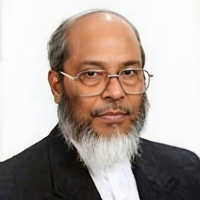
Muhammad Mohar Ali was a distinguished British Bangladeshi historian, barrister, and Islamic scholar, renowned as the first and only Bengali to receive the prestigious King Faisal International Prize (often referred to as the "Nobel Prize of the Muslim world"). Born in Shubhadia village, Bagerhat, to Mohammad Moazzem Ali and Ayatunnessa Begum, he was raised under the supervision of his maternal uncle after his father's early death. A prominent student leader, he was the general secretary of the student union at Hooghly Madrasah and maintained close ties with key political figures like Huseyn Shaheed Suhrawardy during the Partition era.
Ali’s academic journey took him from Kazi Nazrul Islam College to Dhaka University, where he earned his MasMuhammad Mohar Ali was a distinguished British Bangladeshi historian, barrister, and Islamic scholar, renowned as the first and only Bengali to receive the prestigious King Faisal International Prize (often referred to as the "Nobel Prize of the Muslim world"). Born in Shubhadia village, Bagerhat, to Mohammad Moazzem Ali and Ayatunnessa Begum, he was raised under the supervision of his maternal uncle after his father's early death. A prominent student leader, he was the general secretary of the student union at Hooghly Madrasah and maintained close ties with key political figures like Huseyn Shaheed Suhrawardy during the Partition era.
Ali’s academic journey took him from Kazi Nazrul Islam College to Dhaka University, where he earned his Master’s in History. After teaching at various institutions including Michael Madhusudan College and Rajshahi Government College, he joined the faculty at Dhaka University in 1958. He later moved to the UK, earning a Ph.D. from SOAS, University of London and becoming a barrister via Lincoln’s Inn. Though he briefly practiced at the Dhaka High Court, his life was defined by a 40-year teaching career that spanned Bangladesh and Saudi Arabia, where he taught at the Islamic Universities of Riyadh and Madinah.
As an author, Ali was a specialist in the history of Bengal and a formidable critic of Orientalist theories. His magnum opus, History of the Muslims of Bengal, is considered the definitive reference on the region's cultural and political evolution. His other significant contributions include The Autobiography and Other Writings of Nawab Abdul Latif (1966), Sirat Al-Nabi and the Orientalists, and his widely used Word for Word Meaning of the Qur’an. Known for being unassuming and practical, Ali was a man of diverse talents who balanced his rigorous research with community service and even carpentry. He passed away at his home in Woodford, Essex, leaving a legacy that continues to guide scholars of Islamic history and Bengali heritage.