
Discover new books on Goodreads
See if your friends have read any of Irving Fisher's books
Irving Fisher’s Followers (58)


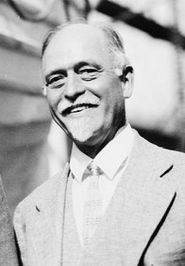
Irving Fisher
Born
in Saugerties, New York, The United States
February 27, 1867
Died
April 29, 1947
Genre


|
The Money Illusion
—
published
1928
—
15 editions
|
|

|
The Theory of Interest: As Determined by Impatience to Spend Income and Opportunity to Invest It
—
published
1930
—
23 editions
|
|

|
The Debt-Deflation Theory of Great Depressions
—
published
1933
—
9 editions
|
|

|
Booms and Depressions: Some First Principles
—
published
1932
—
10 editions
|
|
|
|
100% Money (Pickering Masters Series)
—
published
1935
—
8 editions
|
|

|
The Nature of Capital and Income
|
|

|
The Purchasing Power of Money
—
published
1911
—
95 editions
|
|

|
How to Live Rules for Healthful Living Based on Modern Science
by
—
published
1915
—
94 editions
|
|

|
100% Money and the Public Debt
—
published
2009
—
3 editions
|
|

|
A Brief Introduction to the Infinitesimal Caculus
—
published
2007
—
51 editions
|
|
“As a matter of fact, what investment can we find which offers real fixity or certainty of income? ... As every reader of this book will clearly see, the man or woman who invests in bonds is speculating in the general level of prices, or the purchasing power of money”
―
―
“How much there is I want to do! I always feel that I haven't time to accomplish what I wish. I want to read much... I want to write a great deal. I want to make money!”
―
―
“A bond price, for example, will grow with accrued interest between two coupon cuttings. That growth in its value is not income but increase of capital. Only when the coupon is detached does the bond render, or give off, a service, and so yield income. The income consists in the event of such off-giving, the yielding or separation, to use the language of the United States Supreme Court. If the coupon thus given off is reinvested in another bond, that event is outgo, and offsets the simultaneous income realized from the first bond. There is then no net income from the group but only growth of capital. If the final large payment of the principal is commonly thought of not as income (which it is if not reinvested) but as capital it is because it is usually and normally so reinvested.”
― The Theory of Interest
― The Theory of Interest