
Discover new books on Goodreads
See if your friends have read any of Mark Carwardine's books
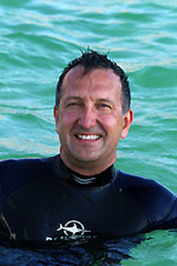
Mark Carwardine’s Followers (39)


Mark Carwardine
Born
in The United Kingdom
March 09, 1959
Website


|
Last Chance to See: In the Footsteps of Douglas Adams
by
—
published
2009
—
5 editions
|
|

|
Whales, Dolphins and Porpoises
—
published
1992
—
49 editions
|
|

|
Extreme Nature
—
published
2005
—
13 editions
|
|

|
On the Trail of the Whale
—
published
1994
—
2 editions
|
|

|
Natural History Museum Book of Animal Records
—
published
2008
—
5 editions
|
|

|
The Shark-Watcher's Handbook: A Guide to Sharks and Where to See Them
by
—
published
2002
—
3 editions
|
|

|
Shark
—
published
2004
—
5 editions
|
|

|
Whales and Dolphins
—
published
2006
—
9 editions
|
|

|
RSPB How to Photograph Garden Birds
|
|

|
Mark Carwardine's Ultimate Wildlife Experiences
—
published
2011
—
5 editions
|
|
“In every remote corner of the world there are people like Carl Jones and Don Merton who have devoted their lives to saving threatened species. Very often, their determination is all that stands between an endangered species and extinction.
But why do they bother? Does it really matter if the Yangtze river dolphin, or the kakapo, or the northern white rhino, or any other species live on only in scientists' notebooks?
Well, yes, it does. Every animal and plant is an integral part of its environment: even Komodo dragons have a major role to play in maintaining the ecological stability of their delicate island homes. If they disappear, so could many other species. And conservation is very much in tune with our survival. Animals and plants provide us with life-saving drugs and food, they pollinate crops and provide important ingredients or many industrial processes. Ironically, it is often not the big and beautiful creatures, but the ugly and less dramatic ones, that we need most.
Even so, the loss of a few species may seem irrelevant compared to major environmental problems such as global warming or the destruction of the ozone layer. But while nature has considerable resilience, there is a limit to how far that resilience can be stretched. No one knows how close to the limit we are getting. The darker it gets, the faster we're driving.
There is one last reason for caring, and I believe that no other is necessary. It is certainly the reason why so many people have devoted their lives to protecting the likes of rhinos, parakeets, kakapos, and dolphins. And it is simply this: the world would be a poorer, darker, lonelier place without them.”
― Last Chance to See
But why do they bother? Does it really matter if the Yangtze river dolphin, or the kakapo, or the northern white rhino, or any other species live on only in scientists' notebooks?
Well, yes, it does. Every animal and plant is an integral part of its environment: even Komodo dragons have a major role to play in maintaining the ecological stability of their delicate island homes. If they disappear, so could many other species. And conservation is very much in tune with our survival. Animals and plants provide us with life-saving drugs and food, they pollinate crops and provide important ingredients or many industrial processes. Ironically, it is often not the big and beautiful creatures, but the ugly and less dramatic ones, that we need most.
Even so, the loss of a few species may seem irrelevant compared to major environmental problems such as global warming or the destruction of the ozone layer. But while nature has considerable resilience, there is a limit to how far that resilience can be stretched. No one knows how close to the limit we are getting. The darker it gets, the faster we're driving.
There is one last reason for caring, and I believe that no other is necessary. It is certainly the reason why so many people have devoted their lives to protecting the likes of rhinos, parakeets, kakapos, and dolphins. And it is simply this: the world would be a poorer, darker, lonelier place without them.”
― Last Chance to See
“Wildlife conservation is always a race against time. As zoologists and botanists explore new areas, scrabbling to record the mere existence of species before they become extinct, it’s like someone hurrying through a burning library desperately trying to jot down some of the tittles of books that will now never be read.”
―
―
“The fastest extinction in New Zealand – possibly in the entire world – was the Stephen’s Island wren, which lived on tiny Stephen’s Island, in Cook Strait. It was discovered in 1894, when a new lighthouse keeper arrived on the island for the first time. One of his cats caught a bird he didn’t recognise, so he sent the little body to a friend in Wellington, who happened to be a professional ornithologist. By the time the excited friend sent news back that it was a species new to science, the cat had caught another fifteen. And that was it – there were none left. Stephen’s Island wren officially became extinct later the same year. The cat had eaten the first and last of the species, and all the others in between. Its owner, the lighthouse keeper, was the only person ever to have seen one alive.”
― Last Chance to See: An Inspirational Non-Fiction True Story of Wildlife Conservation and Global Travel
― Last Chance to See: An Inspirational Non-Fiction True Story of Wildlife Conservation and Global Travel
Topics Mentioning This Author
| topics | posts | views | last activity | |
|---|---|---|---|---|
| 2026 Reading Chal...: Gecko's 150 Books in 2013 | 16 | 111 | Feb 01, 2013 12:48AM | |
| Book Loving Kiwis: July 2013 Nominations | 8 | 25 | Jun 16, 2013 11:36PM | |
| 2026 Reading Chal...: Gecko's Corner | 25 | 91 | Aug 02, 2013 07:27AM | |
| All About Books: PaulFozz's 2014 Reads | 53 | 75 | Dec 31, 2014 01:04PM | |
| Nothing But Readi...: New 2 U Authors: 2016 | 94 | 567 | Jan 08, 2017 05:47AM | |
| Ultimate Popsugar...: Week 35: 8/23 - 8/30 | 137 | 177 | Sep 28, 2018 06:13AM | |
| Biography, Autobi...: Biography, Autobiography, and Memoir read in 2018 | 386 | 102 | Dec 31, 2018 12:58PM | |
| Non Fiction Book ...: Non-Fiction Book You Are Currently Reading or Just Finished ~ 2018 | 1086 | 389 | Jan 05, 2019 04:22AM |
Is this you? Let us know. If not, help out and invite Mark to Goodreads.