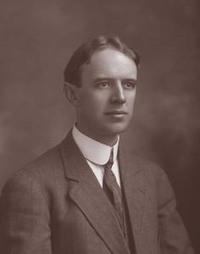
American historian who studied the American antebellum South and slavery. Phillips concentrated on the large plantations that dominated the Southern economy, and he did not investigate the numerous small farmers who held few slaves. He concluded that plantation slavery produced great wealth, but was a dead end, economically, that left the South bypassed by the industrial revolution underway in the North.
By turning away from the political debates about slavery that divided North and South, Phillips made the economics and social structure of slavery the main theme in 20th century scholarship. Together with his highly eloquent writing style, his new approach made him the most influential historian of the ante-bellum south. His interpretation oAmerican historian who studied the American antebellum South and slavery. Phillips concentrated on the large plantations that dominated the Southern economy, and he did not investigate the numerous small farmers who held few slaves. He concluded that plantation slavery produced great wealth, but was a dead end, economically, that left the South bypassed by the industrial revolution underway in the North.
By turning away from the political debates about slavery that divided North and South, Phillips made the economics and social structure of slavery the main theme in 20th century scholarship. Together with his highly eloquent writing style, his new approach made him the most influential historian of the ante-bellum south. His interpretation of white supremacy as the "central theme of southern history" remains one of the main interpretations of Southern history.
Some of Phillips's views were rejected in the 1950s, but they were revived again in the 1960s. As Harvard Sitkoff wrote in 1986, "[I]n the mid-1960s Eugene D. Genovese launched a rehabilitation of Phillips that still continues. Today, as in Phillips's lifetime, scholars again commonly acknowledge the value of many of his insights into the nature of the southern class structure and master-slave relationships. The reviewing of Philips' arguements continues into the 21st Century, with the historian Ira Berlin writing in his review of Complicity: How the North Promoted, Prolonged, and Profited From Slavery: "Slavery in the North, like its counterpart in the South, was a brutal, violent relationship that fostered white supremacy. Complicity's authors shred the notion, famously advanced by the Yale historian U.B. Phillips, that the central theme of Southern history was the region's desire to remain a white man's country. Phillips was not so much wrong about the centrality of white supremacy to the South as blind to its presence in the North."...more