Astronomy

Astronomy is a natural science which is the study of celestial objects (such as stars, galaxies, planets, moons, and nebulae), the physics, chemistry, and evolution of such objects, and phenomena that originate outside the atmosphere of Earth, including supernovae explosions, gamma ray bursts, and cosmic microwave background radiation. A related but distinct subject, cosmology, is concerned with studying the universe as a whole.

White Holes
Starry Messenger: Cosmic Perspectives on Civilization
A City on Mars: Can We Settle Space, Should We Settle Space, and Have We Really Thought This Through?
The God Equation: The Quest for a Theory of Everything
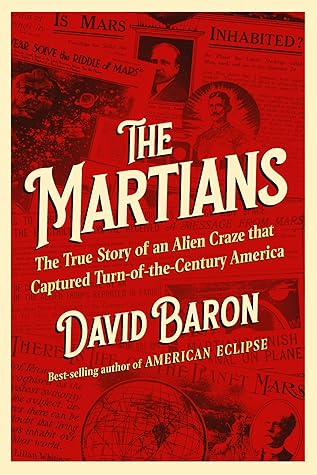
The Martians: The True Story of an Alien Craze that Captured Turn-of-the-Century America
On the Origin of Time: Stephen Hawking's Final Theory
Cosmic Queries: StarTalk's Guide to Who We Are, How We Got Here, and Where We're Going
Enlightenment
Black Holes: The Key to Understanding the Universe
The Mysteries of the Universe: Discover the best-kept secrets of space (DK Children's Anthologies)
Alien Earths: The New Science of Planet Hunting in the Cosmos
Dios - La ciencia - Las pruebas: El albor de una revolución
Black Hole Survival Guide
Space Oddities: The Mysterious Anomalies Challenging Our Understanding of the Universe
When the Heavens Went on Sale: The Misfits and Geniuses Racing to Put Space Within Reach
Cosmos
A Brief History of Time
Astrophysics for People in a Hurry
Pale Blue Dot: A Vision of the Human Future in Space
Death by Black Hole: And Other Cosmic Quandaries
The Universe in a Nutshell
The Elegant Universe: Superstrings, Hidden Dimensions, and the Quest for the Ultimate Theory
How I Killed Pluto and Why It Had It Coming
Origins: Fourteen Billion Years of Cosmic Evolution
The Grand Design
The End of Everything (Astrophysically Speaking)
The Fabric of the Cosmos: Space, Time, and the Texture of Reality
The Pluto Files: The Rise and Fall of America’s Favorite Planet
Brief Answers to the Big Questions
Packing for Mars: The Curious Science of Life in the Void
Chinese Astrology for Beginners by Althea S.T.Betelguese A Trip Through Hell by Jean Louis De EsqueCHINESE ASTROLOGY FOR HEALTH AND WELLBEING by Althea S.T.Chinese Astrology for Wealth and Prosperity by Althea S.T.No One May Ever Have the Same Knowledge Again by sarah-editor-simons
Crotch Full Of Stars
104 books — 5 voters
The Republic by PlatoWhat Is Mathematics? An Elementary Approach to Ideas and Methods by Richard CourantThe Immoralist by André GideYoung Archimedes and Other Stories by Aldous HuxleyJulius Caesar by William Shakespeare
Carl Sagan's Reading List
34 books — 9 voters

Pro Truth by Gleb TsipurskyAdapt and Plan for the New Abnormal of the COVID-19 Coronavir... by Gleb TsipurskyThe Blindspots Between Us by Gleb TsipurskyThe Truth-Seeker’s Handbook by Gleb TsipurskyNever Go With Your Gut by Gleb Tsipursky
Sci-Fi, History, Science
140 books — 16 voters
Kitten's First Full Moon by Kevin HenkesGoodnight Moon by Margaret Wise BrownOwl Moon by Jane YolenHow to Catch a Star by Oliver JeffersCloudy with a Chance of Meatballs by Judi Barrett
Picture Books About the Sky
130 books — 25 voters


Carl Sagan
Before we invented civilization our ancestors lived mainly in the open out under the sky. Before we devised artificial lights and atmospheric pollution and modern forms of nocturnal entertainment we watched the stars. There were practical calendar reasons of course but there was more to it than that. Even today the most jaded city dweller can be unexpectedly moved upon encountering a clear night sky studded with thousands of twinkling stars. When it happens to me after all these years it still t ...more
Carl Sagan, Pale Blue Dot: A Vision of the Human Future in Space

Mark Haddon
And when you look at the sky you know you are looking at stars which are hundreds and thousands of light-years away from you. And some of the stars don’t even exist anymore because their light has taken so long to get to us that they are already dead, or they have exploded and collapsed into red dwarfs. And that makes you seem very small, and if you have difficult things in you life it is nice to think that they are what is called negligible, which means they are so small you don’t have to take ...more
Mark Haddon, The Curious Incident of the Dog in the Night-Time

More quotes...
CosmoQuest Book Club Book Club for CosmoQuest
18 members, last active 4 years ago
Pop Science & Other Nerdy Subjects Actively read and discuss modern science and the books that define it for the masses. With a foc…more
10 members, last active 5 years ago
Science! For the love of non-fictional science! The group will be dedicated simply to discussions pertain…more
108 members, last active 8 years ago
The Aspiring Polymath's Society For readers who love to learn for learning's sake, this group features regular group reads of no…more
614 members, last active 4 years ago

Tags

Tags contributing to this page include: astronomy, astronomia, and atronomy