Most Read This Week In Urban Studies


Most Read This Week Tagged "Urban Studies"

Paved Paradise: How Parking Explains the World
Born in Flames: The Business of Arson and the Remaking of the American City
How Infrastructure Works: Inside the Systems That Shape Our World
Everything Now: Lessons from the City-State of Los Angeles
Shade: The Promise of a Forgotten Natural Resource
Carmageddon: How Cars Make Life Worse and What to Do About It
A Paradise of Small Houses: The Evolution, Devolution, and Potential Rebirth of Urban Housing
Our Crumbling Foundation: How We Solve Canada's Housing Crisis
Arbitrary Lines: How Zoning Broke the American City and How to Fix It
Meet Me by the Fountain: An Inside History of the Mall
Confessions of a Recovering Engineer: Transportation for a Strong Town
Stuck: How the Privileged and the Propertied Broke the Engine of American Opportunity
Homelessness Is a Housing Problem: How Structural Factors Explain U.S. Patterns
The Injustice of Place: Uncovering the Legacy of Poverty in America
Inclusive Transportation: A Manifesto for Repairing Divided Communities
The Intimate City: Walking New York
Gentrification Is Inevitable and Other Lies
A Natural History of Empty Lots: Field Notes from Urban Edgelands, Back Alleys, and Other Wild Places
When Driving Is Not an Option: Steering Away from Car Dependency
City Authentic: How the Attention Economy Builds Urban America
City Limits: Infrastructure, Inequality, and the Future of America's Highways
Engineering in Plain Sight: An Illustrated Field Guide to the Constructed Environment
The Stories Old Towns Tell: A Journey through Cities at the Heart of Europe
New York, New York, New York: Four Decades of Success, Excess, and Transformation
American Urbanist: How William H. Whyte's Unconventional Wisdom Reshaped Public Life
Killed by a Traffic Engineer: Shattering the Delusion that Science Underlies Our Transportation System
Disillusioned: Five Families and the Unraveling of America's Suburbs
Excluded: How Snob Zoning, NIMBYism, and Class Bias Build the Walls We Don't See
The Lost Subways of North America: A Cartographic Guide to the Past, Present, and What Might Have Been
Emergent Tokyo: Designing the Spontaneous City
Curbing Traffic: The Human Case for Fewer Cars in Our Lives
Miejski grunt. 250 lat polskiej gry z nowoczesnością
Indelible City: Dispossession and Defiance in Hong Kong
The Bonds of Inequality: Debt and the Making of the American City
Soul City: Race, Equality, and the Lost Dream of an American Utopia
A Fortress in Brooklyn: Race, Real Estate, and the Making of Hasidic Williamsburg
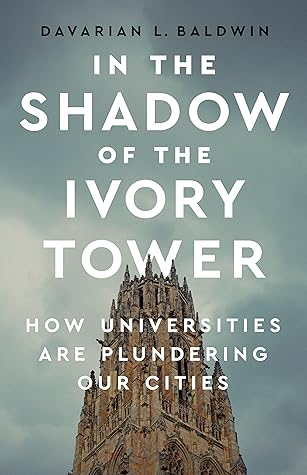
In the Shadow of the Ivory Tower: How Universities Are Plundering Our Cities
Halfway Home: Race, Punishment, and the Afterlife of Mass Incarceration
City of Segregation: 100 Years of Struggle for Housing in Los Angeles

Related Genres

Gray Brechin
It was in the nature of those who had long dreamt of Pacific empire to stress the optimism with which George Berkeley opened his quatrain. Few pondered the line with which he closed it: Westward the course of empire takes its way; The first four acts already past. A fifth shall close the drama with the day: Time's noblest offspring is its last. ...more
Gray Brechin, Imperial San Francisco: Urban Power, Earthly Ruin

John Rennie Short
Three requirements are needed to achieve a compassionate city: a realization of the seriousness of the problems that people face; an appreciation that these are not self-inflicted; and the ability to imagine ourselves in the lives of others. The problems of rising inequality are serious. And while cultures of poverty do occur, they are responses to poverty, not the cause. It is the third requirement that prompts an imaginative creativity, a moral economy not just a market economy and a more expa ...more
John Rennie Short

More quotes...