

Scientific Theory


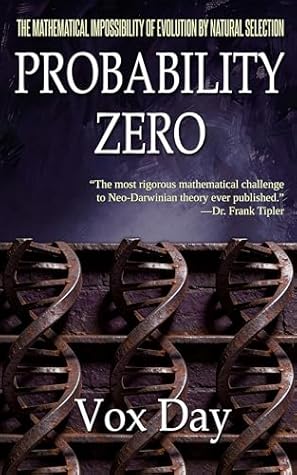
Probability Zero: The Mathematical Impossibility of Evolution by Natural Selection (The Mathematics of Evolution Book 1)
The Holographic Universe
The Many Hidden Worlds of Quantum Mechanics
The Allure of the Multiverse: Extra Dimensions, Other Worlds, and Parallel Universes
Genius: The Life and Science of Richard Feynman
Disturbing the Universe
The Scientist as Rebel
On Human Nature
The Meaning of It All: Thoughts of a Citizen-Scientist
Structures: Or Why Things Don't Fall Down
The Wizard of Quarks: A Fantasy of Particle Physics
Alice in Quantumland: An Allegory of Quantum Physics
QED: The Strange Theory of Light and Matter
Six Not So Easy Pieces: Einstein's Relativity, Symmetry, and Space-Time
The Pleasure of Finding Things Out: The Best Short Works of Richard P. Feynman
Stephen Jay Gould
As a chief ingredient in the mythology of science, the accumulation of objective facts supposedly controls the history of conceptual change–as logical and self-effacing scientists bow before the dictates of nature and willingly change their views to accommodate the growth of conceptual knowledge. The paradigm for such an idealistic notion remains Huxley’s famous remark about “a beautiful theory killed by a nasty, ugly little fact.” But single facts almost never slay worldviews, at least not righ ...more
Stephen Jay Gould, Leonardo's Mountain of Clams and the Diet of Worms: Essays on Natural History

[...] The statement "Botticelli's Birth of Venus is stunning", for starters, is an unfalsifiable hypothesis, because there is no experiment that might show this statement to be false. Parallax method and equations conventionally determined that the average distance between the Earth and the Moon is 384 400 Km (238 855 miles). Now, if we were to conduct hands-on investigation for its validation or an audit to demonstrate its falsification, direct testing of such a distance measure would require a ...more
Vincent Bozzino, Philosophy Trips: A Naive's Guide

More quotes...