Usmc


With the Old Breed: At Peleliu and Okinawa
One Bullet Away: The Making of a Marine Officer
The Last Stand of Fox Company: A True Story of U.S. Marines in Combat
Matterhorn
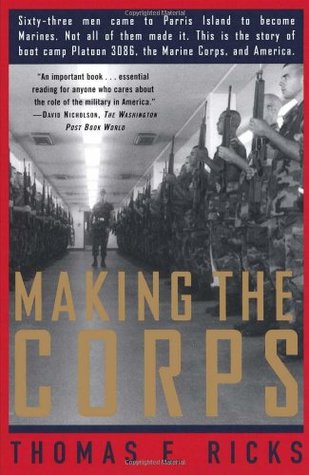
Making the Corps
Call Sign Chaos: Learning to Lead
First to Fight: An Inside View of the U.S. Marine Corps (Bluejacket Books)
Fields of Fire
Marine! The Life of Chesty Puller
Joker One: A Marine Platoon's Story of Courage, Leadership, and Brotherhood
Generation Kill: Devil Dogs, Iceman, Captain America, and the New Face of American War
On Desperate Ground: The Marines at The Reservoir, the Korean War's Greatest Battle
Chesty: The Story of Lieutenant General Lewis B. Puller, USMC
Warfighting (Marine Corps Doctrinal Publication 1)
Helmet for My Pillow: From Parris Island to the Pacific
Forbidden Trouble by Travis CaseyTrouble Triangle by Travis CaseyOceans of Trouble by Travis CaseyGoing Commando by Mark TimeEating Smoke by Chris Thrall
Military Humour
12 books — 21 voters
Kincaid by Marie  JamesJust One Chance by Carly PhillipsThe Unleashing by Shelly Laurenston2 Billionaires in Vegas by Nicole CaseyBeast by Pepper Pace
Marine Vets
85 books — 1 voter

1984 by George OrwellStarship Troopers by Robert A. HeinleinCombat Ready by David WolstenholmWith the Old Breed by Eugene B. SledgeThe Art of War by Sun Tzu
U.S. Marine Corps Reading List 2011
52 books — 23 voters
Aren’t Real Marines Yet by Gregory  HebertWind Therapy by Kevin A. DavidThe People's Pandemic by C.E. SpearsA Captain At War by Christopher WesthoffAll in by Paul Russell Parker III
Books By US Marine Corps Veterans
12 books — 5 voters

There are two basic military functions: waging war and preparing for war. Any military activities that do not contribute to the conduct of a present war are justifiable only if they contribute to preparedness for a possible future one. Clearly, we cannot afford to separate conduct and preparation. They must be intimately related because failure in preparation leads to disaster on the battlefield.
U.S. Marine Corps, Warfighting

Critiques are an important part of training because critical self-analysis, even after success, is essential to improvement. Their purpose is to draw out the lessons of training. As a result, we should conduct critiques immediately after completing training, before memory of the events has faded. Critiques should be held in an atmosphere of open and frank dialogue in which all hands are encouraged to contribute. We learn as much from mistakes as from things done well, so we must be willing to ad ...more
U.S. Marine Corps, Warfighting

More quotes...
Q&A with Patrick Turley ...May 09, 2012 to Sept 28, 2012...
2 members, last active 14 years ago
This group is for Leadership Education And Development among all ranks of United States Marines
16 members, last active 11 years ago