

Taylor Jenkins Reid Explores Space, and the Heart, in 'Atmosphere'
Posted by Cybil on June 1, 2025
Joan Goodwin, the latest heroine in Reid’s oeuvre, has spent her life looking at the stars. She applies to NASA when the space program airs a Nichelle Nichols commercial recruiting women applicants to its historically male-dominated space shuttle program and is eventually accepted.
But Atmosphere is not a story about space; it’s a story about love.
Joan meets fellow astronaut candidate Vanessa Ford in a romance that could have been love at first sight, if Joan had realized she is gay. As the two navigate the dawning of their love, they must also navigate the societal and cultural expectations of NASA in the 1980s, and the repercussions that their romance would have on their careers.
But when Vanessa is sent to space with the majority of their ASCAN family of friends, a mission turns to tragedy and Joan must watch from Earth as the ending of her love story is decided by how much a damaged shuttle can withstand when reentering the atmosphere.
Meanwhile, it's clear that Reid's star is on the rise. A movie adaptation of Atmosphere is reportedly already in the works. And Time reported that Reid recently signed a five-book deal for an eye-popping $8 million per book, according to two industry sources (although it should be noted that Reid's agent declined to confirm this).
Reid spoke to Goodreads contributor April Umminger about her latest. Their conversation has been edited.
Goodreads: How did you start writing?
Taylor Jenkins Reid: I wanted to work in Hollywood—in film and television. I went to school for film and TV, I moved out to Los Angeles, I got a job in a casting office for features.
On the weekends, I started writing these stories of things that had happened to me. I had moved 3,000 miles away from my hometown, and everybody that I knew was back East—I didn't know anyone in Los Angeles.
When something would happen to me, I would be like, “Well, I gotta tell all my friends back home about this.” I started writing in emails, “Oh, I did this, and then this happened,” or just putting out these little stories, and I would send them to my friends back home. I would get emails that were like, “I love reading these,” “it was such a great story, you should really think about writing something you know, more significant.”
That was when my brain started turning. It took me a year or two of messing around before I decided, “OK, I'm gonna sit down and try to write a short story.”
I would have been 24 when I started that short story, and I think it took me about a full year to finish, but once I got about halfway through that one, I was like, “Oh, this is it. I found it. This is the thing that I want to do more than anything else.”
GR: So you were sort of a modern-day woman of letters?
T.J.R.: [Laughs.] That's such a more glamorous way of putting it than I was sending my friends emails. I'm gonna brand myself that way.
GR: How did you get the idea for Atmosphere? Why space?
T.J.R.: I've had a lot of fun in the past writing about women in male-dominated spaces, whether it's '70s rock or surfing or sports. My brain was going, What is a space—no pun intended—where we think of, whatever the noun is, we typically think of a man?
And astronaut is what came to me.
The first female astronauts and the women who went up into space in the '80s and '90s sound really, really fascinating to me. When I get a feeling of, “Oh, I could see myself researching this for a year and still finding it interesting,” that's when I know I've hit on something.


T.J.R.: I think it's important to signal what we're going to spend a lot of our time on here in this book. We're going to go to space, and we're going to be at NASA, and we're going to be dealing with engineers and scientists. But we're here because I'm going to tell you a love story. That's why we're here. I am unapologetic about that from the jump—we're here because I wanted to tell a story that felt big and bold and heart opening. That's where the soul of this book lives.
GR: But this is also a pretty plot-driven story. Other than the love story, how would you summarize what happens?
T.J.R.: I would say that Atmosphere is the story of Joan Goodwin, an astronaut during the Space Shuttle Program, who finds that the role of CAPCOM, which is the only voice that the crew hears in space, is the role that appeals to her most. And it is during her time at NASA that she starts to understand herself and her place in the world and really finds a true sense of family. Then when she is on the ground as CAPCOM on a mission, everyone she cares about at NASA is up on the spaceship, on that crew, when a disaster strikes. Joan is the lone voice to talk these people she loves most through this perilous moment.
GR: This book is a nail-biter. How did you write the end? When you were writing it, did you know how the whole incident would resolve itself or was that even a surprise to you?
T.J.R.: I knew. From the beginning, I set out to write the book that you have in your hands, with the very specific message that, for me, the ending signifies. There are things that I'm drawn to about this story. But at the end of the day, there was one specific intention, and that is the last line of the book.
GR: I wanted to talk a little bit about Joan and Vanessa and their love story. What made you decide to write a queer romance, even more so than what you’ve done before?
T.J.R.: There are queer characters throughout all my novels. With Evelyn Hugo, that's a queer love story that I'm very proud to have written. I was just ready to do this again. As a person who identifies as bisexual, my creative mind is going to so many different places and I get to indulge different sides of myself.
I remember when I was coming up with Daisy Jones, I see this intense, very specific type of love between a man and a woman. I see it and I want to render it. With Atmosphere, I was just aching for an epic, huge romance between two women. That was just what my heart wanted.



T.J.R.: I do, although I have a brother. I'm an older sister, which I think you can read in some of my other work—I think it shows.
The thing about Joan and Barbara is it allowed me an opportunity to talk about her niece, Francis. I essentially gave myself an outlet to talk about how it feels to be a parent. It was just such a joy. That was some of the more indulgent work that I've done, but it felt so good to try to capture into words what it's like to love a child and watch them grow up in front of your eyes.
GR: You definitely captured that. Moving to space and NASA, how did you do your research for this? Did you go to Space Camp?
T.J.R.: It nearly killed me. Most of the time when it comes to researching a book, I just read other books—I read fiction and nonfiction in that area. The research for Atmosphere, I had to go far beyond that.
One of the first things I did was I flew to Houston, and I took the VIP tour at Johnson Space Center. I got to go behind the scenes there. You get to see the Apollo mission control, and you also get to see the current ISS mission control. I stood in the theater behind Mission Control, and I saw what it looks like when there are all of those people on the floor working, what the telemetry looks like when it's coming in on the screens. I stood there, and I tried to really be present in that moment and absorb everything that I could.
They take you through a decommissioned space shuttle. You get such a sense of scope of how massive that payload bay is. I stood in a space shuttle, I sat in the pilot seat. That was really the beginning of a lot of this research taking shape for me, was seeing it in person.
But even then, to have to come up with what sort of disaster could feasibly happen to the space shuttle that did not happen. It was very important to me to not take too much from the true history of NASA. I want to focus on an entirely fictional scenario.
That was really hard, and I'm incredibly fortunate that I had a lot of people help me. The person who helped me the most was a man named Paul Dye, who was a flight director at NASA during the Space Shuttle Program. He's retired now. He is a test pilot, and I somehow convinced him to talk through all of my questions about what could possibly go wrong in space. He really helped me come up with how this story could be possible.
GR: Did you talk to any astronauts?
T.J.R.: I didn't talk to any astronauts directly. I worked with a science consultant, who helped me get as many details right as I possibly could. He talked to an astronaut who confirmed and denied some of my suspicions about if this happens, would an astronaut feel this way, or would they do this? This one took a village.
GR: What was your process for writing this one, and how long did it take?
T.J.R.: With something like Atmosphere, even when I wasn't actively writing it, I made a playlist that had songs that either evoked the setting for me or they evoked some of the particular feelings. I would listen to that playlist throughout the day to just mentally stay in this world.
It took about 18 months, which the majority of that was technical detail. I started writing in the spring of 2023, and it was not fully turned in until last fall. I'm quite measured about everything, and usually I write a first draft very quickly, in a set amount of time. Normally, it's not more than about eight weeks. I'm very word-count based, but I need to live and breathe this story. My husband always reads the second draft, and he's my first reader. He gives me just pages and pages of notes. I take those, I make it into a third draft, and that third draft is what I send to my agent.
GR: I have to get back to the playlist—what was on it?
T.J.R.: I can tell you exactly. I think we're releasing it in one of the special editions. I have a lot of David Bowie, which is, if you've read the book, not surprising. A couple of songs that felt very evocative to me that I even go on to mention in the book, which is Waylon Jennings and Willie Nelson's "Mama Don’t Let Your Babies Grow Up to Be Cowboys." There's Indigo Girls on there, Brandi Carlile. There's "I Don't Want to Live on the Moon" by Ernie from Sesame Street. One that I really loved, which was "Far Away Star" by the Chordettes, is an old song, but it just struck the exact right note for me.
GR: What is the most fun part for you with writing a book like this?
T.J.R.: It's the pretending. I get to pick something I'm interested in, and learn about it as much as I can, and then go pretend that I am that sort of person.
A question that I've been getting a lot is, “Would you want to go up into space?” And I'm like, “Absolutely not!”
I do not have the courage to do something like that, and I know I would have Space Adaptation Syndrome. But I get to pretend to be in Joan’s mind. I get to pretend that I have seen the world from 250 miles away. I get to pretend that I look up at the night sky and I know what every single star is. Then any gap between my current knowledge and what I need my character to know, I get to go learn. That's part of my job! The learning is so, so much fun. I get to basically pick something and then design my own course in learning about it. It's a blast.
GR: A few of your books have gone from print to streaming channels, like Daisy Jones and the Six. And I read that Serena Williams is going to be an executive producer for the adaptation of Carrie Soto Is Back. What is that process like?
T.J.R.: It's different every time, which is part of what keeps the job interesting. There's no straightforward line to getting a book optioned and getting it made. With something like Daisy Jones, it was a privilege to be able to hand it over to such talented people, who knew what they were doing, and watch them just soar with it.
My wildest dreams did not even dare to include the idea that Serena would sign on for Carrie Soto. To say that it's an honor is unsatisfactory. I am so humbled that she even read the book. She's been so instrumental and dedicated to getting the show made and making sure that when it is made, it will be incredibly authentic and feel like real tennis. I'm still pretending that I know what it's like to stand on the court at Wimbledon and win. I'm pretending—but Serena knows. To have that, it's incredible.
GR: You recommend eight books about space at the end of Atmosphere. If you could recommend only one, what would it be?
T.J.R.: I think that if people want to know about Mission Control, which is the part of NASA I find the most interesting, Paul Dye’s book Shuttle, Houston: My Life in the Center Seat of Mission Control is it. He tells you what it is like standing on the floor at Mission Control bringing a shuttle home. And it's incredibly cool.
GR: What are you reading now?
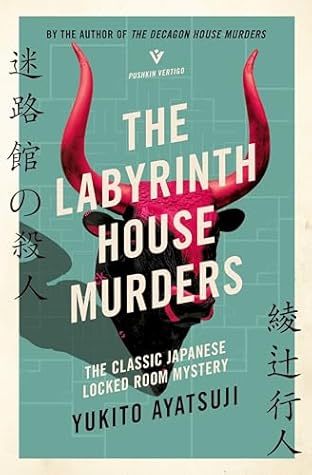
T.J.R.: I just finished Flirting Lessons by Jasmine Guillory, who I love so much and it just came out. I am reading The Education of Kia Greer by Alanna Bennett. Also, I am anxiously awaiting—like counting down the days—until The Labyrinth House Murders comes out. There's this Japanese writer named Yukito Ayatsuji, and his books came out in the '80s in Japan. They're locked room mysteries, but they just now have been translated into English, as far as I can tell. I love a locked room mystery, and it can be hard to find one that keeps you on the edge of your seat and truly stuns you at the end. Lucy Foley is good at that, but I am anxiously awaiting The Labyrinth House Murders.
GR: What is one thing you want readers to take from reading Atmosphere?
T.J.R.: I want people to be able to engage with Joan's sense of enchantment with the universe. But if nothing else, I just want to tell somebody a good story. I want to give somebody the experience that so many books have given me, where you open it up and you can't put it down, and when it's over, you wish you could read it all over again. I'm always trying to give a reader that.
GR: Last question: What do you wish I'd asked?
T.J.R.: I will add this—it's a random one, but Joan. Part of the reason that Joan is named Joan is for my great aunt, Joan. She would always call me when she saw my name in a magazine and let me know that she saw it. It always meant a lot to me. So I named Joan Goodwin after my great aunt, Joan.
Taylor Jenkins Reid's Atmosphere will be available in the U.S. on June 3. Don't forget to add it to your Want to Read shelf. Be sure to also read more of our exclusive author interviews and get more great book recommendations.
