
539 books
—
466 voters
Cult Books
Showing 1-50 of 6,320
The Girls (Hardcover)
by (shelved 86 times as cult)
avg rating 3.51 — 245,328 ratings — published 2016
It Ain't Me, Babe (Hades Hangmen, #1)
by (shelved 82 times as cult)
avg rating 4.04 — 56,107 ratings — published 2014
Cultish: The Language of Fanaticism (Hardcover)
by (shelved 67 times as cult)
avg rating 3.80 — 120,615 ratings — published 2021
The Sacred Lies of Minnow Bly (ebook)
by (shelved 60 times as cult)
avg rating 3.95 — 12,998 ratings — published 2015
Becoming Calder (Acadia Duology, #1)
by (shelved 56 times as cult)
avg rating 4.20 — 23,525 ratings — published 2014
Beyond Belief: My Secret Life Inside Scientology and My Harrowing Escape (Hardcover)
by (shelved 56 times as cult)
avg rating 3.78 — 41,953 ratings — published 2013
Fight Club (Paperback)
by (shelved 55 times as cult)
avg rating 4.18 — 648,996 ratings — published 1996
Heart Recaptured (Hades Hangmen, #2)
by (shelved 52 times as cult)
avg rating 4.13 — 29,571 ratings — published 2014
Under the Banner of Heaven: A Story of Violent Faith (Paperback)
by (shelved 48 times as cult)
avg rating 4.01 — 227,131 ratings — published 2003
Just Like Mother (Hardcover)
by (shelved 46 times as cult)
avg rating 3.70 — 15,848 ratings — published 2022
Souls Unfractured (Hades Hangmen, #3)
by (shelved 44 times as cult)
avg rating 4.41 — 28,219 ratings — published 2015
Black Sheep (Hardcover)
by (shelved 43 times as cult)
avg rating 3.58 — 37,670 ratings — published 2023
The Eclipse Ritual (Kindle Edition)
by (shelved 42 times as cult)
avg rating 3.69 — 1,890 ratings — published 2024
The Road to Jonestown: Jim Jones and Peoples Temple (Kindle Edition)
by (shelved 42 times as cult)
avg rating 4.17 — 19,960 ratings — published 2017
The Family Upstairs (The Family Upstairs, #1)
by (shelved 41 times as cult)
avg rating 3.95 — 577,058 ratings — published 2019
Uncultured: A Memoir (Hardcover)
by (shelved 40 times as cult)
avg rating 4.14 — 19,307 ratings — published 2022
The Last Housewife (Hardcover)
by (shelved 40 times as cult)
avg rating 3.69 — 64,637 ratings — published 2022
A Clockwork Orange (Paperback)
by (shelved 40 times as cult)
avg rating 4.00 — 776,699 ratings — published 1962
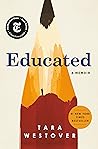
Educated (Hardcover)
by (shelved 40 times as cult)
avg rating 4.46 — 1,892,508 ratings — published 2018
The Maiden (The Cloister, #1)
by (shelved 39 times as cult)
avg rating 3.98 — 2,838 ratings — published 2018
Troublemaker: Surviving Hollywood and Scientology (Hardcover)
by (shelved 39 times as cult)
avg rating 4.07 — 77,421 ratings — published 2015
Going Clear: Scientology, Hollywood, and the Prison of Belief (Hardcover)
by (shelved 39 times as cult)
avg rating 4.04 — 45,249 ratings — published 2013
American Psycho (Paperback)
by (shelved 39 times as cult)
avg rating 3.80 — 367,901 ratings — published 1991
Helter Skelter: The True Story of the Manson Murders (Paperback)
by (shelved 39 times as cult)
avg rating 4.06 — 154,826 ratings — published 1974
The Project (Paperback)
by (shelved 38 times as cult)
avg rating 3.50 — 16,151 ratings — published 2021
Goodbye Paradise (Hello Goodbye, #1)
by (shelved 37 times as cult)
avg rating 4.16 — 11,866 ratings — published 2015
Dinner for Vampires: Life on a Cult TV Show (While Also in an Actual Cult!)
by (shelved 36 times as cult)
avg rating 4.24 — 102,356 ratings — published 2024
Her Soul to Take (Souls Trilogy, #1)
by (shelved 35 times as cult)
avg rating 4.03 — 156,415 ratings — published 2021
When She Returned (Kindle Edition)
by (shelved 35 times as cult)
avg rating 3.97 — 134,204 ratings — published 2019
Fear and Loathing in Las Vegas: A Savage Journey to the Heart of the American Dream (Paperback)
by (shelved 35 times as cult)
avg rating 4.06 — 381,512 ratings — published 1971
Sex Cult Nun: Breaking Away from the Children of God, a Wild, Radical Religious Cult (Hardcover)
by (shelved 34 times as cult)
avg rating 3.87 — 10,556 ratings — published 2021
Last Days (Paperback)
by (shelved 34 times as cult)
avg rating 3.72 — 9,107 ratings — published 2009
The Sound of Gravel (Hardcover)
by (shelved 34 times as cult)
avg rating 4.31 — 67,959 ratings — published 2016
Deep Redemption (Hades Hangmen, #4)
by (shelved 34 times as cult)
avg rating 4.33 — 14,642 ratings — published 2016
The Catcher in the Rye (Paperback)
by (shelved 33 times as cult)
avg rating 3.80 — 3,926,215 ratings — published 1951
After the Fire (Hardcover)
by (shelved 31 times as cult)
avg rating 4.29 — 11,462 ratings — published 2017
Damnable Grace (Hades Hangmen, #5)
by (shelved 31 times as cult)
avg rating 4.38 — 12,270 ratings — published 2017
Last Days (Paperback)
by (shelved 31 times as cult)
avg rating 3.71 — 15,740 ratings — published 2012
Finding Eden (Acadia Duology, #2)
by (shelved 31 times as cult)
avg rating 4.28 — 20,965 ratings — published 2014
The Unworthy (Paperback)
by (shelved 30 times as cult)
avg rating 3.60 — 52,544 ratings — published 2023
A History of Wild Places (Hardcover)
by (shelved 30 times as cult)
avg rating 3.91 — 67,759 ratings — published 2021
Breaking Free (Paperback)
by (shelved 30 times as cult)
avg rating 4.12 — 16,285 ratings — published 2017
The Chosen One (Hardcover)
by (shelved 30 times as cult)
avg rating 3.85 — 15,699 ratings — published 2009
Seductive Poison: A Jonestown Survivor's Story of Life and Death in the Peoples Temple (Paperback)
by (shelved 30 times as cult)
avg rating 4.13 — 4,050 ratings — published 1997
Slaughterhouse-Five (Paperback)
by (shelved 28 times as cult)
avg rating 4.10 — 1,495,344 ratings — published 1969
Our Share of Night (Hardcover)
by (shelved 28 times as cult)
avg rating 4.25 — 64,547 ratings — published 2019
The House of My Mother: A Daughter's Quest for Freedom (Hardcover)
by (shelved 27 times as cult)
avg rating 4.29 — 195,181 ratings — published 2025
“A psychologist came to me for a personal meeting and said, "It's good that it's not a cult." There are two kinds of people, who come to spiritual teachers and spiritual organizations. The first kind is the power people and the second kind is the awareness people. The power people focus on the outer world. They focus on creating rules, ideologies , hierarchies, churches and organizations. The awareness people focus on the inner world. They focus on meditation, love, silence, truth, freedom, creativity and the divine. Often these two kinds of people come in conflict in a spiritual organization.
I do not belong to any spiritual group or tradition any longer, I am just interested in exploring what it means to live with open eyes.
People in spiritual organizations tend to get caught in ideas of how it should be, and in the need of the ego to create hierarchies of power, status, roles, ambition and obedience.
Spiritual Masters teach on many different levels at the same time. Some people take what they can and some take something deeper.
Padma, my beloved friend for many lives, recounted during satsang with me that she told a visiting therapist during an individual consultation at a meditation center in Stockholm that she did not feel at home at the center. The therapist replied, "That is because you don’t belong to the collective unconscious at the center."
The members of a dysfunctional and unconscious group structure play the three roles: aggressor, denier (the denier is the role of "I have not seen anything,, "I do not understand what is going on", "I do not say anything" and "I do not hear anything" - like the three apes, who do not speak, see or hear) and the third role is the victim of the dysfunctional group.
This is the psychological structure in both alcoholic families, in dysfunctional groups and in cults. A dysfunctional group is a neurotic group, where there is no real love. The core of the dysfunctional group is instead neurotic, and the group does not really want to change, so any attempts from the outside for change will be met with resistance, silence and aggressive attack.
The basic sign of a dysfunctional group is that the members of the group play three roles and positions: aggressor, denier and victim. It is always easier to follow the group without reflection or awareness, than to trust your own heart, to trust your own intelligence, truth, wisdom and creativity. It is not always easy to follow your own heart, but it always leads you right.”
― The Way of the Heart
I do not belong to any spiritual group or tradition any longer, I am just interested in exploring what it means to live with open eyes.
People in spiritual organizations tend to get caught in ideas of how it should be, and in the need of the ego to create hierarchies of power, status, roles, ambition and obedience.
Spiritual Masters teach on many different levels at the same time. Some people take what they can and some take something deeper.
Padma, my beloved friend for many lives, recounted during satsang with me that she told a visiting therapist during an individual consultation at a meditation center in Stockholm that she did not feel at home at the center. The therapist replied, "That is because you don’t belong to the collective unconscious at the center."
The members of a dysfunctional and unconscious group structure play the three roles: aggressor, denier (the denier is the role of "I have not seen anything,, "I do not understand what is going on", "I do not say anything" and "I do not hear anything" - like the three apes, who do not speak, see or hear) and the third role is the victim of the dysfunctional group.
This is the psychological structure in both alcoholic families, in dysfunctional groups and in cults. A dysfunctional group is a neurotic group, where there is no real love. The core of the dysfunctional group is instead neurotic, and the group does not really want to change, so any attempts from the outside for change will be met with resistance, silence and aggressive attack.
The basic sign of a dysfunctional group is that the members of the group play three roles and positions: aggressor, denier and victim. It is always easier to follow the group without reflection or awareness, than to trust your own heart, to trust your own intelligence, truth, wisdom and creativity. It is not always easy to follow your own heart, but it always leads you right.”
― The Way of the Heart
“If you lose your ego, you lose the thread of that narrative you call your Self. Humans, however, can't live very long without some sense of a continuing story. Such stories go beyond the limited rational system (or the systematic rationality) with which you surround yourself; they are crucial keys to sharing time-experience with others.
Now a narrative is a story, not a logic, nor ethics, nor philosophy. It is a dream you keep having, whether you realize it or not. Just as surely as you breathe, you go on ceaselessly dreaming your story. And in these stories you wear two faces. You are simultaneously subject and object. You are a whole and you are a part. You are real and you are shadow. "Storyteller" and at the same time "character". It is through such multilayering of roles in our stories that we heal the loneliness of being an isolated individual in the world.
Yet without a proper ego nobody can create a personal narrative, any more than you can drive a car without an engine, or cast a shadow without a real physical object. But once you've consigned your ego to someone else, where on earth do you go from there?
At this point you receive a new narrative from the person to whom you have entrusted your ego. You've handed over the real thing, so what comes back is a shadow. And once your ego has merged with another ego, your narrative will necessarily take on the narrative created by that ego.
Just what kind of narrative?
It needn't be anything particularly fancy, nothing complicated or refined. You don't need to have literary ambitions. In fact, the sketchier and simpler the better. Junk, a leftover rehash will do. Anyway, most people are tired of complex, multilayered scenarios-they are a potential letdown. It's precisely because people can't find any fixed point within their own multilayered schemes that they're tossing aside their own self-identity.”
― Underground: The Tokyo Gas Attack and the Japanese Psyche
Now a narrative is a story, not a logic, nor ethics, nor philosophy. It is a dream you keep having, whether you realize it or not. Just as surely as you breathe, you go on ceaselessly dreaming your story. And in these stories you wear two faces. You are simultaneously subject and object. You are a whole and you are a part. You are real and you are shadow. "Storyteller" and at the same time "character". It is through such multilayering of roles in our stories that we heal the loneliness of being an isolated individual in the world.
Yet without a proper ego nobody can create a personal narrative, any more than you can drive a car without an engine, or cast a shadow without a real physical object. But once you've consigned your ego to someone else, where on earth do you go from there?
At this point you receive a new narrative from the person to whom you have entrusted your ego. You've handed over the real thing, so what comes back is a shadow. And once your ego has merged with another ego, your narrative will necessarily take on the narrative created by that ego.
Just what kind of narrative?
It needn't be anything particularly fancy, nothing complicated or refined. You don't need to have literary ambitions. In fact, the sketchier and simpler the better. Junk, a leftover rehash will do. Anyway, most people are tired of complex, multilayered scenarios-they are a potential letdown. It's precisely because people can't find any fixed point within their own multilayered schemes that they're tossing aside their own self-identity.”
― Underground: The Tokyo Gas Attack and the Japanese Psyche