133 books
—
121 voters
Data Science Books
Showing 1-50 of 4,910
Data Science for Business: What You Need to Know about Data Mining and Data-Analytic Thinking (Paperback)
by (shelved 253 times as data-science)
avg rating 4.13 — 2,642 ratings — published 2013
Storytelling with Data: A Data Visualization Guide for Business Professionals (Paperback)
by (shelved 217 times as data-science)
avg rating 4.39 — 8,127 ratings — published 2015
An Introduction to Statistical Learning: with Applications in R (Springer Texts in Statistics)
by (shelved 204 times as data-science)
avg rating 4.59 — 2,335 ratings — published 2013
Python for Data Analysis (Paperback)
by (shelved 194 times as data-science)
avg rating 4.17 — 2,443 ratings — published 2011
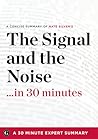
The Signal and the Noise: Why So Many Predictions Fail—But Some Don't (Hardcover)
by (shelved 188 times as data-science)
avg rating 3.97 — 52,379 ratings — published 2012
Weapons of Math Destruction: How Big Data Increases Inequality and Threatens Democracy (Hardcover)
by (shelved 187 times as data-science)
avg rating 3.87 — 30,034 ratings — published 2016
Data Science from Scratch: First Principles with Python (ebook)
by (shelved 184 times as data-science)
avg rating 3.91 — 1,150 ratings — published 2015
The Elements of Statistical Learning: Data Mining, Inference, and Prediction (Hardcover)
by (shelved 179 times as data-science)
avg rating 4.43 — 1,885 ratings — published 2001
Naked Statistics: Stripping the Dread from the Data (Paperback)
by (shelved 177 times as data-science)
avg rating 3.96 — 15,156 ratings — published 2012
Hands-On Machine Learning with Scikit-Learn and TensorFlow (ebook)
by (shelved 173 times as data-science)
avg rating 4.55 — 2,796 ratings — published 2017
Everybody Lies: Big Data, New Data, and What the Internet Can Tell Us About Who We Really Are (Hardcover)
by (shelved 136 times as data-science)
avg rating 3.91 — 42,568 ratings — published 2017
Python Data Science Handbook: Essential Tools for Working with Data (Paperback)
by (shelved 135 times as data-science)
avg rating 4.29 — 671 ratings — published 2016
R for Data Science: Import, Tidy, Transform, Visualize, and Model Data (Kindle Edition)
by (shelved 131 times as data-science)
avg rating 4.53 — 1,218 ratings — published 2016
The Art of Statistics: How to Learn from Data (Hardcover)
by (shelved 129 times as data-science)
avg rating 4.15 — 5,654 ratings — published 2019
Practical Statistics for Data Scientists: 50 Essential Concepts (Paperback)
by (shelved 128 times as data-science)
avg rating 4.02 — 541 ratings — published
Data Smart: Using Data Science to Transform Information into Insight (Paperback)
by (shelved 126 times as data-science)
avg rating 4.12 — 1,019 ratings — published 2013
Doing Data Science: Straight Talk from the Frontline (Paperback)
by (shelved 125 times as data-science)
avg rating 3.74 — 568 ratings — published 2013
The Visual Display of Quantitative Information (Hardcover)
by (shelved 113 times as data-science)
avg rating 4.39 — 8,665 ratings — published 1983
Pattern Recognition and Machine Learning (Information Science and Statistics)
by (shelved 101 times as data-science)
avg rating 4.32 — 1,900 ratings — published
Deep Learning (ebook)
by (shelved 99 times as data-science)
avg rating 4.44 — 2,117 ratings — published 2016
Invisible Women: Data Bias in a World Designed for Men (Hardcover)
by (shelved 93 times as data-science)
avg rating 4.34 — 167,816 ratings — published 2019
How to Lie with Statistics (Paperback)
by (shelved 80 times as data-science)
avg rating 3.84 — 18,007 ratings — published 1954
Algorithms to Live By: The Computer Science of Human Decisions (Hardcover)
by (shelved 77 times as data-science)
avg rating 4.12 — 34,924 ratings — published 2016
Introduction to Machine Learning with Python: A Guide for Data Scientists (Paperback)
by (shelved 75 times as data-science)
avg rating 4.33 — 595 ratings — published 2015
Deep Learning with Python (Paperback)
by (shelved 73 times as data-science)
avg rating 4.57 — 1,395 ratings — published 2017
Designing Data-Intensive Applications (ebook)
by (shelved 73 times as data-science)
avg rating 4.70 — 10,547 ratings — published 2015
The Hundred-Page Machine Learning Book (Paperback)
by (shelved 71 times as data-science)
avg rating 4.25 — 1,427 ratings — published
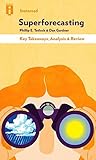
Superforecasting: The Art and Science of Prediction (Hardcover)
by (shelved 70 times as data-science)
avg rating 4.08 — 22,193 ratings — published 2015
Predictive Analytics: The Power to Predict Who Will Click, Buy, Lie, or Die (Paperback)
by (shelved 66 times as data-science)
avg rating 3.66 — 2,125 ratings — published 2013
Practical Statistics for Data Scientists: 50+ Essential Concepts Using R and Python (Paperback)
by (shelved 66 times as data-science)
avg rating 4.22 — 258 ratings — published
Big Data: A Revolution That Will Transform How We Live, Work, and Think (Hardcover)
by (shelved 64 times as data-science)
avg rating 3.69 — 8,679 ratings — published 2013
The Book of Why: The New Science of Cause and Effect (Hardcover)
by (shelved 62 times as data-science)
avg rating 3.94 — 6,575 ratings — published 2018
Applied Predictive Modeling (Hardcover)
by (shelved 62 times as data-science)
avg rating 4.40 — 343 ratings — published 2013
How to Make the World Add Up: Ten Rules for Thinking Differently About Numbers (Paperback)
by (shelved 58 times as data-science)
avg rating 4.12 — 8,256 ratings — published 2020
The Art of Data Science: A Guide for Anyone Who Works with Data (ebook)
by (shelved 58 times as data-science)
avg rating 3.71 — 297 ratings — published 2015
Think Stats (Paperback)
by (shelved 57 times as data-science)
avg rating 3.64 — 468 ratings — published 2011
Lean Analytics: Use Data to Build a Better Startup Faster (Hardcover)
by (shelved 56 times as data-science)
avg rating 4.11 — 8,211 ratings — published 2013
Dataclysm: Who We Are (When We Think No One's Looking)
by (shelved 56 times as data-science)
avg rating 3.73 — 12,470 ratings — published 2014
Python Machine Learning (Paperback)
by (shelved 53 times as data-science)
avg rating 4.24 — 756 ratings — published 2015
The Master Algorithm: How the Quest for the Ultimate Learning Machine Will Remake Our World (Hardcover)
by (shelved 51 times as data-science)
avg rating 3.74 — 6,454 ratings — published 2015
Data Analysis with Open Source Tools: A Hands-On Guide for Programmers and Data Scientists (Paperback)
by (shelved 48 times as data-science)
avg rating 4.07 — 313 ratings — published 2010
Machine Learning: A Probabilistic Perspective (Hardcover)
by (shelved 47 times as data-science)
avg rating 4.34 — 520 ratings — published
Mathematics for Machine Learning: 1st Edition (Kindle Edition)
by (shelved 42 times as data-science)
avg rating 4.33 — 247 ratings — published
Forecasting: principles and practice (Paperback)
by (shelved 42 times as data-science)
avg rating 4.39 — 316 ratings — published 2013
Designing Machine Learning Systems: An Iterative Process for Production-Ready Applications (Paperback)
by (shelved 41 times as data-science)
avg rating 4.45 — 1,017 ratings — published 2022
Factfulness: Ten Reasons We're Wrong About the World – and Why Things Are Better Than You Think (Hardcover)
by (shelved 41 times as data-science)
avg rating 4.36 — 201,610 ratings — published 2018
Numsense! Data Science for the Layman: No Math Added (Kindle Edition)
by (shelved 41 times as data-science)
avg rating 4.14 — 618 ratings — published
Statistics Done Wrong: The Woefully Complete Guide (Paperback)
by (shelved 41 times as data-science)
avg rating 4.19 — 1,086 ratings — published 2013
Bayesian Data Analysis (Hardcover)
by (shelved 41 times as data-science)
avg rating 4.21 — 539 ratings — published 1995
Artificial Intelligence: A Modern Approach (Hardcover)

by (shelved 40 times as data-science)
avg rating 4.20 — 4,447 ratings — published 1994
“In the midst of World War II, Quincy Wright, a leader in the quantitative study of war, noted that people view war from contrasting perspectives:
“To some it is a plague to be eliminated; to others, a crime which ought to be punished; to still others, it is an anachronism which no longer serves any purpose. On the other hand, there are some who take a more receptive attitude toward war, and regard it as an adventure which may be interesting, an instrument which may be legitimate and appropriate, or a condition of existence for which one must be prepared”
Despite the millions of people who died in that most deadly war, and despite widespread avowals for peace, war remains as a mechanism of conflict resolution.
Given the prevalence of war, the importance of war, and the enormous costs it entails, one would assume that substantial efforts would have been made to comprehensively study war. However, the systematic study of war is a relatively recent phenomenon. Generally, wars have been studied as historically unique events, which are generally utilized only as analogies or examples of failed or successful policies. There has been resistance to conceptualizing wars as events that can be studied in the aggregate in ways that might reveal patterns in war or its causes. For instance, in the United States there is no governmental department of peace with funding to scientifically study ways to prevent war, unlike the millions of dollars that the government allocates to the scientific study of disease prevention. This reluctance has even been common within the peace community, where it is more common to deplore war than to systematically figure out what to do to prevent it. Consequently, many government officials and citizens have supported decisions to go to war without having done their due diligence in studying war, without fully understanding its causes and consequences.
The COW Project has produced a number of interesting observations about wars. For instance, an important early finding concerned the process of starting wars. A country’s goal in going to war is usually to win. Conventional wisdom was that the probability of success could be increased by striking first. However, a study found that the rate of victory for initiators of inter-state wars (or wars between two countries) was declining: “Until 1910 about 80 percent of all interstate wars were won by the states that had initiated them. . . . In the wars from 1911 through 1965, however, only about 40 percent of the war initiators won.”
A recent update of this analysis found that “pre-1900, war initiators won 73% of wars. Since 1945 the win rate is 33%.”. In civil war the probability of success for the initiators is even lower. Most rebel groups, which are generally the initiators in these wars, lose. The government wins 57 percent of the civil wars that last less than a year and 78 percent of the civil wars lasting one to five years.
So, it would seem that those initiating civil and inter-state wars were not able to consistently anticipate victory. Instead, the decision to go to war frequently appears less than rational. Leaders have brought on great carnage with no guarantee of success, frequently with no clear goals, and often with no real appreciation of the war’s ultimate costs. This conclusion is not new. Studying the outbreak of the first carefully documented war, which occurred some 2,500 years ago in Greece, historian Donald Kagan concluded:
“The Peloponnesian War was not caused by impersonal forces, unless anger, fear, undue optimism, stubbornness, jealousy, bad judgment and lack of foresight are impersonal forces. It was caused by men who made bad decisions in difficult circumstances.”
Of course, wars may also serve leaders’ individual goals, such as gaining or retaining power. Nonetheless, the very government officials who start a war are sometimes not even sure how or why a war started.”
― Resort to War: 1816 - 2007
“To some it is a plague to be eliminated; to others, a crime which ought to be punished; to still others, it is an anachronism which no longer serves any purpose. On the other hand, there are some who take a more receptive attitude toward war, and regard it as an adventure which may be interesting, an instrument which may be legitimate and appropriate, or a condition of existence for which one must be prepared”
Despite the millions of people who died in that most deadly war, and despite widespread avowals for peace, war remains as a mechanism of conflict resolution.
Given the prevalence of war, the importance of war, and the enormous costs it entails, one would assume that substantial efforts would have been made to comprehensively study war. However, the systematic study of war is a relatively recent phenomenon. Generally, wars have been studied as historically unique events, which are generally utilized only as analogies or examples of failed or successful policies. There has been resistance to conceptualizing wars as events that can be studied in the aggregate in ways that might reveal patterns in war or its causes. For instance, in the United States there is no governmental department of peace with funding to scientifically study ways to prevent war, unlike the millions of dollars that the government allocates to the scientific study of disease prevention. This reluctance has even been common within the peace community, where it is more common to deplore war than to systematically figure out what to do to prevent it. Consequently, many government officials and citizens have supported decisions to go to war without having done their due diligence in studying war, without fully understanding its causes and consequences.
The COW Project has produced a number of interesting observations about wars. For instance, an important early finding concerned the process of starting wars. A country’s goal in going to war is usually to win. Conventional wisdom was that the probability of success could be increased by striking first. However, a study found that the rate of victory for initiators of inter-state wars (or wars between two countries) was declining: “Until 1910 about 80 percent of all interstate wars were won by the states that had initiated them. . . . In the wars from 1911 through 1965, however, only about 40 percent of the war initiators won.”
A recent update of this analysis found that “pre-1900, war initiators won 73% of wars. Since 1945 the win rate is 33%.”. In civil war the probability of success for the initiators is even lower. Most rebel groups, which are generally the initiators in these wars, lose. The government wins 57 percent of the civil wars that last less than a year and 78 percent of the civil wars lasting one to five years.
So, it would seem that those initiating civil and inter-state wars were not able to consistently anticipate victory. Instead, the decision to go to war frequently appears less than rational. Leaders have brought on great carnage with no guarantee of success, frequently with no clear goals, and often with no real appreciation of the war’s ultimate costs. This conclusion is not new. Studying the outbreak of the first carefully documented war, which occurred some 2,500 years ago in Greece, historian Donald Kagan concluded:
“The Peloponnesian War was not caused by impersonal forces, unless anger, fear, undue optimism, stubbornness, jealousy, bad judgment and lack of foresight are impersonal forces. It was caused by men who made bad decisions in difficult circumstances.”
Of course, wars may also serve leaders’ individual goals, such as gaining or retaining power. Nonetheless, the very government officials who start a war are sometimes not even sure how or why a war started.”
― Resort to War: 1816 - 2007
“Data is power.”
― Azad Earth Army: When The World Cries Blood