
The History Book Club discussion
SUPREME COURT OF THE U.S.
>
#86 - ASSOCIATE JUSTICE TOM C. CLARK
date newest »
newest »
 Thomas Campbell "Tom C." Clark (September 23, 1899 – June 13, 1977) was United States Attorney General from 1945 to 1949 and an Associate Justice of the Supreme Court of the United States (1949–1967).
Early life and career
Clark was born in Dallas, Texas to Virginia Maxey (née Falls) and William Henry Clark. A graduate of Dallas High School, he served as a Texas National Guard infantryman in 1918; afterward he studied law, receiving his law degree from the University of Texas School of Law in 1922. He was a brother of Delta Tau Delta fraternity, and later served as their international president. He set up a law practice in his home town of Dallas from 1922 to 1937, but left private practice for a period to serve as civil district attorney for the city from 1927 to 1932.
Clark, a Democrat, joined the Justice Department in 1937 as a special assistant to the U.S. attorney general for war risk litigation. He served as civilian coordinator for the forced relocation of Japanese-Americans during the opening months of World War II. He headed the antitrust division at Justice in 1943, and the criminal division from 1943 to 1945.
Attorney General and Supreme Court Justice
Appointed Attorney General by President Harry Truman in 1945,Clark was nominated to the Court on August 2, 1949, filling the vacancy left by the death of Frank Murphy. The New York Times called Clark "a personal and political friend [of Truman's] with no judicial experience and few demonstrated qualifications." Nevertheless, Clark was confirmed by the United States Senate on August 18, 1949 by voice vote, receiving his commission the following day.
Truman later came to regret his choice; he remarked to a biographer many years later that "Tom Clark was my biggest mistake." The change in Truman's attitude stemmed from Clark's vote to strike down as unconstitutional Truman's seizure of the nation's steel mills to end a strike in 1952's Youngstown Sheet & Tube Co. v. Sawyer.
Justice Murphy, Clark's predecessor, had made a 5-to-4 majority on the Supreme Court for those justices who viewed the Court as a possible instrument of social change. But Clark, along with Truman's other conservative appointees, would change that. While on the Supreme Court, Clark was generally a conservative who nonetheless proved a key vote in some Warren Court cases expanding the scope of individual rights. He is noted for writing the majority opinion in the landmark cases Mapp v. Ohio, applying the Fourth Amendment "exclusionary rule" to the states, and Abington School District v. Schempp, invalidating daily Bible readings in public schools. Clark supported the end of racial segregation, joining the unanimous decisions in Brown v. Board of Education and Sweatt v. Painter.
Later life
Clark assumed senior status, effectively retiring from the Supreme Court, on June 12, 1967. He did so to avoid a conflict of interest when his son, Ramsey Clark, was appointed Attorney General. He was succeeded on the Court by Thurgood Marshall. Lyndon Johnson was said [according to whom?] to have appointed Ramsey Clark as Attorney General precisely to force Tom Clark off the bench, leaving a vacancy so that LBJ could appoint Marshall as the first African-American Justice on the Supreme Court. After Clark's retirement he served as a visiting judge on several U.S. Courts of Appeals, as director of the Federal Judicial Center, and as Chair of the Board of Directors for the American Judicature Society.
Clark died in New York City and is buried in Restland Memorial Park, Dallas, Texas. Tom C. Clark High School of the Northside Independent School District of San Antonio, Texas is named in honor of him. Also named after him is the Tom C. Clark Building, an office building of the Texas Judiciary in Austin. His former law clerks honored him by creating the Tom C. Clark award given to the outstanding Supreme Court Fellow each year. Winners of this award include Professor Robert George, McCormick Professor of Jurisprudence, at Princeton University, and Professor Barbara A. Perry, Senior Fellow at the University of Virginia's Miller Center of Public Affairs and former Carter Glass Professor of Government at Sweet Briar College. In 1977, Clark became the first recipient of the Distinguished Jurist Award at Mississippi State University.
An extensive collection of Clark's papers, including his Supreme Court files, is housed at the University of Texas in Austin. The law school also maintains the "Tom C. Clark" fellowship, entitling selected students with a sizable tuition subsidy. The main student lounge in the school is named after Clark as well. A smaller collection, primarily relating to Clark's years as Attorney General, is located at the Harry S. Truman Library in Independence, Missouri.
Clark became an Eagle Scout in 1914 and was a recipient of the Distinguished Eagle Scout Award.
Clark was a member of Delta Tau Delta International Fraternity and served as the fraternity's International President from 1966 to 1968.
Justice Clark's personal papers, consisting of 524 linear feet (869 boxes, 20 scrapbooks, around 1,000 photographs, and approximately 100 oversize items) are in the care of the University of Texas School of Law.
source: http://en.wikipedia.org/wiki/Tom_C._C...
Books about:Supreme Court Justice Tom C. Clark: A Life of Service
 by Mimi Clark Gronlund
synopsis
An associate justice on the renowned Warren Court whose landmark ruling in Brown v. Board of Education overturned racial segregation in schools and other public facilities, Tom C. Clark was a crusader for justice throughout his long legal career. Among many tributes Clark received, Supreme Court Chief Justice Warren Burger opined that "no man in the past thirty years has contributed more to the improvement of justice than Tom Clark."
Supreme Court Justice Tom C. Clark is the first biography of this important American jurist. Written by his daughter, Mimi Clark Gronlund, and based on interviews with many of Clark's judicial associates, friends, and family, as well as archival research, it offers a well-rounded portrait of a lawyer and judge who dealt with issues that remain in contention today--civil rights, the rights of the accused, school prayer, and censorship/pornography, among them. Gronlund explores the factors in her father's upbringing and education that helped form his judicial philosophy, then describes how that philosophy shaped his decisions on key issues and cases, including the internment of Japanese Americans during World War II, the investigation of war fraud, the Truman administration's loyalty program (an anti-communist effort), the Brown decision, Mapp v. Ohio (protections against unreasonable search and seizure), and Abington v. Schempp (which overturned a state law that required reading from the Bible each day in public schools).
Lone Star Justice: A Biography of Justice Tom C. Clark
 by Evan A. Young
synopsis
Justice Tom C. Clark, the only born and bred Texan ever to serve on the Supreme Court, was in the thick of the changes sweeping the land during his term on the Courto 1949 to 1967. This highly readable account captures Clarkis distinctly Texas character and his turbulent era.
 Mod
Mod
 Oral History: Fmr. Associate Supreme Court Justice Tom Clark
C-SPAN Radio continued a series of Supreme Court oral history interviews with former Associate Justice Tom Clark, interviewed in 1969 for the Lyndon Johnson Presidential Library. You’ll hear Tom Clark talk about his relationship with LBJ, including resigning from the Court in 1967 so his son, Ramsey Clark, could become LBJ’s Attorney General. Tom Clark also discusses how he ended up in Washington from his native Dallas-and his views of the legal system. And Supreme Court historian Jim O’Hara tells us about Tom Clark’s background, personality and significance
http://www.c-span.org/video/?85364-1/...
Mod
 Breaking Rank: A Top Cop's Exposé of the Dark Side of American Policing
 by
by
 Norm Stamper
Synopsis:
Norm Stamper, formerly chief of the Seattle Police Force and deputy chief of the San Diego Police Department, has written a story unlike any other. Part memoir, part polemic on the state of policing in America, Breaking Rank melds progressive politics with hard-boiled reportage in the tradition of Charles Bukowski and Elmore Leonard. With provocatively titled chapters like "Why White Cops Kill Black Men" and "Sexual Predators in Uniform," Stamper reveals a force that can be racist, corrupt, overly militaristic, and chauvinist, yet is also made up of brave and good men and women. He reflects upon what it is like to kill a man, why drugs should be decriminalized, the correct approach to prostitution and gun control, and how the force should be trained for the future. Stamper's prescriptions for change are both reasoned and challenging, but at no time does Breaking Rank become didactic - it is a riveting story told from the perspective of one of America's top cops on the street.
Supreme Court Justice Tom C. Clark: A Life of Service by Mimi Clark Gronlund (no photo)
Synopsis:
An associate justice on the renowned Warren Court whose landmark ruling in Brown v. Board of Education overturned racial segregation in schools and other public facilities, Tom C. Clark was a crusader for justice throughout his long legal career. Among many tributes Clark received, Supreme Court Chief Justice Warren Burger opined that "no man in the past thirty years has contributed more to the improvement of justice than Tom Clark."
Supreme Court Justice Tom C. Clark is the first biography of this important American jurist. Written by his daughter, Mimi Clark Gronlund, and based on interviews with many of Clark's judicial associates, friends, and family, as well as archival research, it offers a well-rounded portrait of a lawyer and judge who dealt with issues that remain in contention today--civil rights, the rights of the accused, school prayer, and censorship/pornography, among them. Gronlund explores the factors in her father's upbringing and education that helped form his judicial philosophy, then describes how that philosophy shaped his decisions on key issues and cases, including the internment of Japanese Americans during World War II, the investigation of war fraud, the Truman administration's loyalty program (an anti-communist effort), the Brown decision, Mapp v. Ohio (protections against unreasonable search and seizure), and Abington v. Schempp (which overturned a state law that required reading from the Bible each day in public schools).
Four Percent: The Story of Uncommon Youth in a Century of American Life by
by
 Michael S. Malone
Synopsis: (From Amazon)
FOUR PERCENT is one of the most complete histories of the Boy Scouts of America ever written – and the first to focus on the remarkable story of Eagle Scouts. Award-winning author Michael S. Malone, himself an Eagle, brings the eye of a veteran journalist to a story that for too long has been wrapped in myth and prejudice – and uncovers one of the most important, but least celebrated, movements in modern American history.
FOUR PERCENT is more than just a history of the Eagle Scout rank, but also the story of many Eagles – a President of the United States, dozens of astronauts (including Neil Armstrong), Medal of Honor recipients, Nobel prize winning scientists, authors, movie stars, titans of industry, Senators, Congressmen and Governors, civil rights leaders, and community activists – who have transformed the face of America over the last century. One of Malone’s major contributions in this book is his discovery that the community service project requirement for the Eagle rank has resulted in the great youth service initiative in history: more than 100 million hours devoted to improving the nation’s communities and neighborhoods.
Filled with vivid historic anecdotes, compelling profiles, and surprising facts, Malone has brought to Four Percent the eye of a world-class writer, the insider experience of being an Eagle Scout himself, and the objectivity of a career journalist, to produce the best book ever about America’s Eagles – and perhaps even about Boy Scouting itself.
 Mod
Mod
Associate Justice of the Supreme Court of the United States August 24, 1949 - June 12, 1967
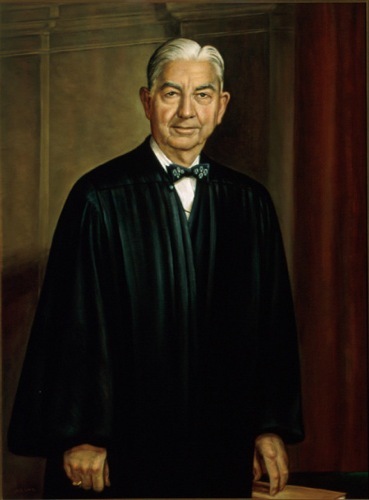
The Collection of the Supreme Court of the United States (Artist: C. Gregory Stapko)
Justice Thomas “Tom” Clark, a balanced legal mind dedicated to the work of judging, was born on September 23, 1899 in Dallas, Texas. He was born to William Henry and Virginia Maxey Clark. After graduating from Dallas High School, he served as an infantryman in the United States National Guard in 1918 during World War I. Hailing from a family of attorneys, he pursued a law degree at University of Texas School of Law, graduating with a Bachelor’s degree and an L.L.B. in 1922. While in school, Clark was a brother of Delta Tau Delta fraternity, later serving as its international president.
After obtaining his law degree, Clark joined his family’s Dallas law firm. He worked there for the better part of fifteen years, leaving private practice briefly in order to work as an assistant district attorney for the city of Dallas between 1927 and 1932. In 1937, Clark joined the U.S. Department of Justice, where he became a political ally of future president Harry Truman. Clark initially worked in the war risk litigation section, and later the antitrust division; being appointed as head of the department’s western coast antitrust office in 1940. After the attacks on Pearl Harbor in December 1941, he worked as a coordinator for the forcible relocation and internment of Japanese-Americans. Clark would later acknowledge that the government initiative was a mistake. His dedicated work on the Special Committee to Investigate the National Defense Program, informally referred to as the “Truman Committee,” established Clark as a politically credible candidate. His family was politically connected to several Democratic politicians, allowing him access to Congressman Sam Rayburn (later Speaker of the House) and Senator Tom Connally.
Clark supported then-Senator Truman in his campaign for the vice presidential nomination in 1944 all the way to the White House. When Truman succeeded President Roosevelt in 1945, he appointed Clark as Attorney General. Clark worked diligently in major antitrust cases and prosecuted suspected Communists according to the president’s agenda. He also dealt with several unfortunate by-products of World War II, including the internment and deportation of international residents, black marketeering, and government-financed war factories. Despite his sometimes immovable adherence to moderation, he steadfastly remained President Truman’s biggest advocate. Clark intended to return to private practice in Texas after working on President Truman’s reelection campaign; however, the death of Supreme Court Justice Frank Murphy caused Truman to nominate Clark to fill the vacancy. Clark faced a very difficult confirmation process; he was criticized for his lack of judicial experience, among other things. He declined to testify before the Judiciary Committee since he believed it would “[jeopardize] his future effectiveness on the Court.” Nevertheless, he received Senate confirmation with only eight dissenting votes.
Justice Clark was neither a staunch liberal or conservative justice. He voted with Chief Justice Vinson the majority of the time in his first years on the Court, which provided a somewhat predictable voting estimate. However, when Vinson died in 1953 and Chief Justice Earl Warren succeeded him, Justice Clark began issuing a balanced mix of liberal and conservative opinions. This approach was reflected in his equal use of judicial restraint and expansive constitutional interpretation. He generally supported government laws intended to protect or promote racial equality. He joined opinions of cases that utilized the Equal Protection Clause against racial discrimination in education (e.g., Sweatt v. Painter and McLaurin v. Oklahoma State Regents), which created the groundwork for the Brown v. Board of Education decision. He also faced challenges to Cold War-era laws that he initiated or created. While he usually recused himself from such cases, he deferred to the government in the cases he did participate in (e.g., Garner v. Board of Public Works, a decision he authored that upheld a city’s right to require public employees to submit affidavits that they were never members of the Community Party). Justice Clark’s career history as an assistant district attorney and attorney general influenced his opinions on criminal procedure and the rights of criminal defendants. He usually backed government prosecutorial efforts in his early years; however, as the makeup of the Court began to shift, he allied with the liberal justices on several key decisions (e.g., Gideon v. Wainwright, Mapp v. Ohio, and Berger v. New York). Also noteworthy, Justice Clark penned the opinion in Abington School District v. Schempp, a First Amendment Establishment Clause case that ruled Bible-reading exercises and mandated prayer in public schools were unconstitutional. He wrote, “The Constitution says that the government shall take no part in the establishment of religion . . . [and] [n]o means no.”
Justice Clark retired from the Court on June 12, 1967 in order to avoid a conflict of interest when his son, Ramsey, was named Attorney General. He was succeeded by Thurgood Marshall, the first African-American Supreme Court justice. Clark spent his retirement as a visiting judge on various federal appellate courts, director of the Federal Judicial Center, and Chair on the Board of Directors for the American Judicature Society. He died of natural causes on June 13, 1977 in New York City and was entombed in his home city of Dallas, Texas.
Other:
by Mimi Clark Gronlund (no photo)Source: Oyez
Mod
by Mimi Clark Gronlund (no photo)Synopsis:
An associate justice on the renowned Warren Court whose landmark ruling in Brown v. Board of Education overturned racial segregation in schools and other public facilities, Tom C. Clark was a crusader for justice throughout his long legal career. Among many tributes Clark received, Supreme Court Chief Justice Warren Burger opined that "no man in the past thirty years has contributed more to the improvement of justice than Tom Clark."
Supreme Court Justice Tom C. Clark is the first biography of this important American jurist. Written by his daughter, Mimi Clark Gronlund, and based on interviews with many of Clark's judicial associates, friends, and family, as well as archival research, it offers a well-rounded portrait of a lawyer and judge who dealt with issues that remain in contention today--civil rights, the rights of the accused, school prayer, and censorship/pornography, among them. Gronlund explores the factors in her father's upbringing and education that helped form his judicial philosophy, then describes how that philosophy shaped his decisions on key issues and cases, including the internment of Japanese Americans during World War II, the investigation of war fraud, the Truman administration's loyalty program (an anti-communist effort), the Brown decision, Mapp v. Ohio (protections against unreasonable search and seizure), and Abington v. Schempp (which overturned a state law that required reading from the Bible each day in public schools).
Mod
 by Anthony Lewis
Synopsis:
A history of the landmark case of Clarence Earl Gideon's fight for the right to legal counsel. Notes, table of cases, index. The classic backlist bestseller. More than 800,000 sold since its first pub date of 1964.
Mod
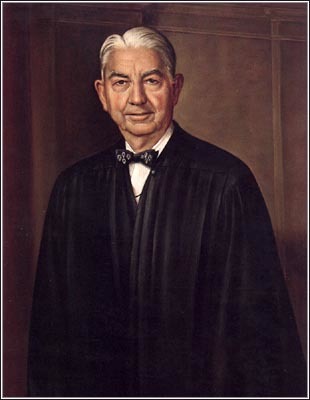
TOM C. CLARK was born on September 23, 1899, in Dallas, Texas. Following military service in World War I, Clark enrolled at the University of Texas, and received his law degree in 1922. Clark practiced law in Dallas until 1927, when he was appointed Civil District Attorney of the City. After serving five years he resumed his law practice. In 1937, Clark was appointed a Special Assistant in the Justice Department, and promoted to Assistant Attorney General in 1943. President Harry S. Truman appointed Clark Attorney General of the United States in 1945, and he served in that position until 1949. On August 19, 1949, President Truman nominated Clark to the Supreme Court of the United States. The Senate confirmed the appointment on August 24, 1949. Clark served on the Supreme Court for seventeen years. He retired on June 12, 1967, when his son was appointed Attorney General of the United States. Following his retirement, Clark served as the first Chairman of the Federal Judicial Center, which was created by Congress to improve federal court administration. Clark also accepted assignments to sit by designation on various United States Courts of Appeals until his death on June 13, 1977, at the age of seventy-seven.
Link to article: https://supremecourthistory.org/timel...
Link to audiotape: https://supremecourthistory.org/timel...
More:
 by Mimi Clark Gronlund (no photo)
Source: The Supreme Court Historical Society

The History Book Club
Books mentioned in this topic
Supreme Court Justice Tom C. Clark: A Life of Service (other topics)Gideon's Trumpet (other topics)
Supreme Court Justice Tom C. Clark: A Life of Service (other topics)
Supreme Court Justice Tom C. Clark: A Life of Service (other topics)
Four Percent: The Story of Uncommon Youth in a Century of American Life (other topics)
More...
Authors mentioned in this topic
Mimi Clark Gronlund (other topics)Anthony Lewis (other topics)
Mimi Clark Gronlund (other topics)
Mimi Clark Gronlund (other topics)
Michael S. Malone (other topics)
More...

Biography
Tom C. Clark was born, raised, and educated in Texas. The son of a prominent politician, Clark was active in Texas Democratic politics. He joined the Justice Department in 1937 and served as civilian coordinator of the forced evacuation of Japanese-Americans from the West Coast during World War II. President Harry S Truman appointed Clark attorney general in 1945, and nominated him to the High Court in 1949. Truman later lamented his choice. "It's not that he's a bad man," rued Truman. "It's just that he's the dumbest sonofabitch I ever met." Clark resigned in 1967 to avoid any question of conflict of interest after President Lyndon B. Johnson appointed Clark's son, Ramsey, to serve as Attorney General.
Personal Information
Born Saturday, September 23, 1899
Died Monday, June 13, 1977
Childhood Location Texas
Childhood Surroundings Texas
Religion Presbyterian
Ethnicity Scotch
Father William H. Clark
Father's Occupation Lawyer
Mother Jennie Falls
Family Status Upper-middle
Position Associate Justice
Seat 11
Nominated By Truman
Commissioned on Thursday, August 18, 1949
Sworn In Tuesday, August 23, 1949
Left Office Sunday, June 11, 1967
Reason For Leaving Retired
Length of Service 17 years, 9 months, 19 days
Home Texas
source: http://www.oyez.com/justices/tom_c_clark