
The History Book Club discussion
SUPREME COURT OF THE U.S.
>
#75 - ASSOCIATE JUSTICE BENJAMIN CARDOZO
date newest »
newest »
 Benjamin Nathan Cardozo (May 24, 1870 – July 9, 1938) was an American jurist who served on the New York Court of Appeals and later as an Associate Justice of the Supreme Court. Cardozo is remembered for his significant influence on the development of American common law in the 20th century, in addition to his modesty, philosophy, and vivid prose style. Cardozo served on the Supreme Court only six years, from 1932 until his death in 1938, and many of his landmark decisions were delivered during his eighteen-year tenure on the New York Court of Appeals, the highest court of that state.
Life and career
Cardozo was born in New York City, the son of Rebecca Washington (née Nathan) and Albert Jacob Cardozo. Both Cardozo's maternal grandparents, Sara Seixas and Isaac Mendes Seixas Nathan, and his paternal grandparents, Ellen Hart and Michael H. Cardozo, were Sephardi Jews of the Portuguese Jewish community affiliated with Manhattan's Congregation Shearith Israel; their families emigrated from England before the American Revolution, and were descended from Jews who left the Iberian Peninsula for Holland during the Inquisition. Cardozo family tradition held that their ancestors were Marranos from Portugal, although Cardozo's ancestry has not been firmly traced to Portugal. "Cardozo" (archaic spelling of Cardoso), "Seixas" and "Mendes" are common Portuguese surnames.
Benjamin Cardozo was a twin with his sister Emily. He was a cousin of the poet Emma Lazarus. He was named for his uncle, Benjamin Nathan, a vice president of the New York Stock Exchange and the victim of a famous unsolved murder case in 1870.
Albert Cardozo, Benjamin Cardozo's father, was a judge on the Supreme Court of New York (the state's general trial court) until he was implicated in a judicial corruption scandal, sparked by the Erie Railway takeover wars, in 1868. The scandal led to the creation of the Association of the Bar of the City of New York and Albert's resignation from the bench. After leaving the court, he practiced law until his death in 1885.
Early years
Rebecca Cardozo died in 1879 when Benjamin was young. He was raised during much of his childhood by his sister Nell, who was 11 years older. One of his tutors was Horatio Alger. At age 15, Cardozo entered Columbia University where he was elected to Phi Beta Kappa, and then went on to Columbia Law School in 1889. Cardozo wanted to enter a profession that could materially aid himself and his siblings, but he also hoped to restore the family name, sullied by his father's actions as a judge. When Cardozo entered Columbia Law School, the program was only two years long; in the midst of his studies, however, the faculty voted to extend the program to three years. Cardozo declined to stay for an extra year, and thus left law school without a law degree. He passed the bar in 1891 and began practicing appellate law alongside his older brother. Benjamin Cardozo practiced law in New York City until 1914. In November 1913, Cardozo was narrowly elected to a 14-year term on the New York Supreme Court, taking office on January 1, 1914.
New York Court of Appeals
In February 1914, Cardozo was designated to the New York Court of Appeals under the Amendment of 1899, and reportedly was the first Jew to serve on the Court of Appeals. In January 1917, he was appointed to a regular seat on the Court of Appeals to fill the vacancy caused by the resignation of Samuel Seabury, and in November 1917, he was elected on the Democratic and Republican tickets to a 14-year term on the Court of Appeals. In 1926, he was elected, on both tickets again, to a 14-year term as Chief Judge. He took office on January 1, 1927, and resigned on March 7, 1932 to accept an appointment to the United States Supreme Court.
His tenure was marked by a number of original rulings, in tort and contract law in particular. This is partly due to timing; rapid industrialization was forcing courts to look anew at old common law components to adapt to new settings. In 1921, Cardozo gave the Storrs Lectures at Yale University, which were later published as The Nature of the Judicial Process (On line version), a book that remains valuable to judges today. Shortly thereafter, Cardozo became a member of the group that founded the American Law Institute, which crafted a Restatement of the Law of Torts, Contracts, and a host of other private law subjects. He wrote three other books that also became standards in the legal world.
While on the Court of Appeals, he crticized the Exclusionary rule as developed by the federal courts, and stated that: "The criminal is to go free because the constable has blundered." He noted that many states had rejected
United States Supreme Court
Cardozo's Supreme Court nominationIn 1932, President Herbert Hoover appointed Cardozo to the Supreme Court of the United States to succeed Justice Oliver Wendell Holmes. The New York Times said of Cardozo's appointment that "seldom, if ever, in the history of the Court has an appointment been so universally commended." Democratic Cardozo's appointment by a Republican president has been referred to as one of the few Supreme Court appointments in history not motivated by partisanship or politics, but strictly based on the nominee's contribution to law. However, Hoover was running for re-election, eventually against Franklin Roosevelt, so a larger political calculation may have been operating.
Cardozo was confirmed by a unanimous voice vote in the Senate on February 24. On a radio broadcast on March 1, 1932, the day of Cardozo's confirmation, Clarence C. Dill, Democratic Senator for Washington, called Hoover's appointment of Cardozo "the finest act of his career as President". The entire faculty of the University of Chicago Law School had urged Hoover to nominate him, as did the deans of the law schools at Harvard, Yale, and Columbia. Justice Harlan Fiske Stone strongly urged Hoover to name Cardozo, even offering to resign to make room for him if Hoover had his heart set on someone else (Stone had in fact suggested to Calvin Coolidge that he should nominate Cardozo rather than himself back in 1925). Hoover, however, originally demurred: there were already two justices from New York, and a Jew on the court; in addition, Justice James McReynolds was a notorious anti-Semite. When the chairman of the Senate Foreign Relations Committee, William E. Borah of Idaho, added his strong support for Cardozo, however, Hoover finally bowed to the pressure.
Cardozo was a member of the Three Musketeers along with Brandeis and Stone, which was considered to be the liberal faction of the Supreme Court. In his years as an Associate Justice, he handed down opinions that stressed the necessity for the tightest adherence to the Tenth Amendment.
Death
In late 1937, Cardozo had a heart attack, and in early 1938, he suffered a stroke. He died on July 9, 1938, at the age of 68 and was buried in Beth Olam Cemetery in Queens. His death came at a time of much transition for the court, as many of the other justices died or retired during the late 1930s and early 1940s.
Personal life
As an adult, Cardozo no longer practiced his faith (he identified himself as an agnostic), but remained proud of his Jewish heritage.
Of the six children born to Albert and Rebecca Cardozo, only Emily, his twin sister, married, and she and her husband did not have any children. As far as is known, Benjamin Cardozo led a celibate life. The fact that Cardozo was unmarried and was personally tutored by the writer Horatio Alger (who had been accused of inappropriate sexual relations with young boys) has led some of Cardozo's biographers to insinuate that Cardozo was homosexual, but no real evidence exists to corroborate this possibility. Constitutional law scholar Jeffrey Rosen noted in a New York Times Book Review of Richard Polenberg's book on Cardozo:
“Polenberg describes Cardozo's lifelong devotion to his older sister Nell, with whom he lived in New York until her death in 1929. When asked why he had never married, Cardozo replied, quietly and sadly, I never could give Nellie the second place in my life. Polenberg suggests that friends may have stressed Cardozo's devotion to his sister to discourage rumors that he was sexually dysfunctional, or had an unusually low sexual drive or was homosexual. But he produces no evidence to support any of these possibilities, except to note that friends, in describing Cardozo, used words like beautiful, exquisite, sensitive or delicate.”
Andrew Kaufman, a Harvard Law School professor and Cardozo biographer, notes that "Although one cannot be absolutely certain, it seems highly likely that Cardozo lived a celibate life." Judge Learned Hand is quoted in the book as saying about Cardozo: "He [had] no trace of homosexuality anyway."
The question of Cardozo's ethnicity
Cardozo was the second Jewish person, after Louis Brandeis, to be appointed to the Supreme Court.
Since Cardozo was a member of the Spanish and Portuguese Jewish community, there has been recent discussion as to whether he should be considered the 'first Hispanic justice,' a notion which is controversial.
In response to this controversy, Cardozo biographer Kaufman questioned the usage of the term "Hispanic" in the justice's lifetime, stating: "Well, I think he regarded himself as a Sephardic Jew whose ancestors came from the Iberian Peninsula.”
It has also been asserted that Cardozo himself "confessed in 1937 that his family preserved neither the Spanish language nor Iberian cultural traditions". Some advocacy groups, such as the National Association of Latino Elected Officials and the Hispanic National Bar Association consider Sonia Sotomayor to be the first Hispanic justice
In his own words
Cardozo's opinion of himself shows some of the same flair as his legal opinions:
In truth, I am nothing but a plodding mediocrity—please observe, a plodding mediocrity—for a mere mediocrity does not go very far, but a plodding one gets quite a distance. There is joy in that success, and a distinction can come from courage, fidelity and industry.
source: http://en.wikipedia.org/wiki/Benjamin...
Books by and about:The Nature of the Judicial Process
 by Benjamin N. Cardozo
Synopsis
Judges don't just discover the law, they create it. A renowned and much-used analysis of the process of judicial decision-making, now in a library-quality cloth edition with modern formatting and presentation. Includes embedded page numbers from the original 1921 edition for continuity of citations and syllabi. Features a new, explanatory Foreword by Justice Cardozo's premier biographer, Andrew L. Kaufman, senior professor at Harvard Law School and author of "Cardozo" (Harvard Univ. Press, 1998). Justice Benjamin Nathan Cardozo (1870-1938) offered the world a candid and self-conscious study of how judges decide cases and the law - they are lawmakers and not just law-appliers, he knew - all drawn from his insights and experience on the bench in a way that no judge had done before. Asked the basic questions, "What is it that I do when I decide a case? To what sources of information do I appeal for guidance?," Cardozo answered them in his methodical, rich, and timeless prose, explaining the proper use of such decisional tools as logic and analogy to precedent; analysis of history and tradition; application of public policy, community mores, and sociology; and even the subconscious forces that drive judges' decisions. This book has impacted the introspective examination of the lawmaking process of the courts in a way no other book has had. It continues to be read today by lawyers and judges, law students and scholars, historians and political scientists, and philosophers - among others interested in how judges really think and the tools they employ. Judges are people, and lawmakers, too. "The great tides and currents which engulf the rest of men, do not turn aside in their course, and pass the judges by. We like to figure to ourselves the processes of justice as coldly objective and impersonal. The law, conceived of as a real existence, dwelling apart and alone, speaks, through the voices of priests and ministers, the words which they have no choice except to utter. ...It has a lofty sound; it is well and finely said; but it can never be more than partly true." Beyond precedential cases and tradition, judges make choices, using methods of analysis and biases that ought to be examined. Famous at the time for his trenchant and fluid opinions as a Justice on New York's highest court - he is still studied on questions of torts, contracts, and business law - and later a Justice of the U.S. Supreme Court, Cardozo filled the lecture hall at Yale when he finally answered the frank query into what judges do and how do they do it. The lectures became a landmark book and a source for all other studies of the ways of a judge. Brought to a new generation by Professor Kaufman, and presented as part of the properly formatted Legal Legends Series of Quid Pro Books, this edition is the understandable and usable rendition of a classic work of law and politics.
The Paradoxes of Legal Science
 by Benjamin N. Cardozo
Synopsis
Here the influential Associate Justice of the Supreme Court Benjamin Cardozo examines the nature of the relationship between the meaning of justice, the science of values and the relationship between individual and society.
Cardozo
 by Andrew L. Kaufman
Synopsis
Benjamin Nathan Cardozo, unarguably one of the most outstanding judges of the twentieth century, is a man whose name remains prominent and whose contributions to the law remain relevant. This first complete biography of the longtime member and chief judge of the New York Court of Appeals and Justice of the Supreme Court of the United States during the turbulent years of the New Deal is a monumental achievement by a distinguished interpreter of constitutional law.
Cardozo was a progressive judge who understood and defended the proposition that judge-made law must be adapted to modern conditions. He also preached and practiced the doctrine that respect for precedent, history, and all branches of government limited what a judge could and should do. Thus, he did not modernize law at every opportunity.
In this book, Kaufman interweaves the personal and professional lives of this remarkable man to yield a multidimensional whole. Cardozo's family ties to the Jewish community were a particularly significant factor in shaping his life, as was his father's scandalous career--and ultimate disgrace--as a lawyer and judge. Kaufman concentrates, however, on Cardozo's own distinguished career, including twenty-three years in private practice as a tough-minded and skillful lawyer and his classic lectures and writings on the judicial process. From this biography emerges an estimable figure holding to concepts of duty and responsibility, but a person not without frailties and prejudice.
Cardozo: A Study in Reputation
 by
by
 Richard A. Posner
Synopsis
What makes a great judge? How are reputations forged? Why do some reputations endure, while others crumble? And how can we know whether a reputation is fairly deserved? In this ambitious book, Richard Posner confronts these questions in the case of Benjamin Cardozo. The result is both a revealing portrait of one of the most influential legal minds of our century and a model for a new kind of study—a balanced, objective, critical assessment of a judicial career.
"The present compact and unflaggingly interesting volume . . . is a full-bodied scholarly biography. . . .It is illuminating in itself, and will serve as a significant contribution."—Paul A. Freund, New York Times Book Review
 Mod
Bentley wrote: "I think his unanimous appointment says it all."
Mod
Bentley wrote: "I think his unanimous appointment says it all."I will be shocked if we ever see that again.
Mod
FDR had some of his nominations opposed, and of course his court packing plan didn't fly. The federal judicial nomination process has become politicized to the point of constant gridlock and there is enough blame to be had on both sides of the aisle for that state of affairs, unfortunately.
 It goes back much further than FDR!
The first president to have a SCOTUS nominee rejected was none other than George Washington - he nominated John Rutledge, who was rejected. Many presidents since then have had nominees rejected see WIkipedia http://en.wikipedia.org/wiki/Unsucces...
In fact, according to that article, FDR was somewhat unusual among presidents who nominated justices in that *none* of his appointees were rejected (although, as Alisa points out, some were opposed).
This site, from the Senate, http://www.senate.gov/pagelayout/refe... has the votes for all the nominees. Several recent ones have won unanimous approval, including 3 of Reagan's and 1 of Nixon's (two other Nixon appointees had near unanimous approval).
What does seem to have disappeared is "voice vote" approvals.
Mod
Nixon had many nominees and he changed the court with his selections and in a way packed the court as FDR was only accused of trying to do. Usually the Presidents prior to Nixon only tried to select good jurists or good men without trying to really bend the court to their ideology (aside from FDR). Nixon was so crass, brazen and blatant - an altogether manipulative individual. He not only ruined the presidency for himself but for the American people, Americans have become quite wary as to what the government is up to - including the president (paranoid but understandable considering we had Nixon).
And Peter with Nixon - deep rancor occurred with his nominations - more so than any one of his predecessors. Although Nixon in some instances wore his opposition out since they had taken up the fight with others - it was a different age and they did not feel that it was the right thing to do - to obliterate "all of his nominees" - so the best of the worst were passed through. Of course in this day and age - everything is a big fight and now as you correctly pointed out Alisa - we have a sad state of affairs.
And I count Rehnquist as one of the "best of the worst".
Peter I like the Senate link, thanks for pointing that out. I will add some info about it to the thread about the court as a whole.Interesting stuff, I did not recall the vote on Jutice Ginsburg being so strong in favor (only 3 opposing votes), and two of the last three who had no opposition are still on the court although vastly different from each other - Scalia and Kennedy - and voted on by the same Senate. Huh.
Bentley I certainly recall the contentions hearings when Rehnquist was appointed, and of course Carsell and Haynsworth didn't have much of a chance. When you look back on it though Nixon also brought us Lewis Powell and Harry Blackmun, so his appointments weren't all bad. At least I would not include them among the 'best of the worst' group by any stretch.
It remains to be seen when we will have another vacancy and appointment, but I don't expect it will come until the next Presidential election unless one of them retires over a health issue. I still think the days of unopposed nominations are in the past, at least at the Supreme Court level.
Mod
Yes - Powell proved sometimes to provide a swing vote or two.
And remember that Blackmun got appointed after the Haynesworth fiasco and only because of the Abe Fortas resignation and many say he was railroaded out by Nixon himself...although on the surface it looks like Fortas had a lot to do with what happened to his Supreme Court appointment. It showed some bad judgement so it gave Nixon ammunition.
Haynsworth was the first Supreme Court nominee since John J. Parker (1930) to be defeated by the Senate.
Then Nixon had the audacity to nominate Carswell still pushing his unabashed Southern Conservative agenda - come hell or high water.
His nominees were against Civil Rights in many forms and expressed as much in different forums and that goes for Rehnquist too.
From Wikipedia:
In 1969, Abe Fortas resigned from the Court due to conflict of interest charges, creating an opening for Nixon's second nomination to the Court.
Nixon asked Lewis F. Powell, Jr. to accept a nomination to the Court at that time, but Powell demurred.
On August 21, 1969, Nixon nominated Clement Haynsworth, then a judge on the Fourth Circuit Court of Appeals.
Haynsworth was opposed by Democrats (possibly in retaliation for the Republicans' rejection of Fortas as Chief Justice), Liberal Republicans, and the NAACP.
He was alleged to have made court decisions favoring segregation and being reflexively anti-labor.
Also, he was accused of ruling in cases where he had a financial interest, although this was never proven. Interestingly, his nomination was supported by the Washington Post, generally considered to be the "liberal" newspaper in Washington,
D.C. Haynsworth was later termed a "moderate" who was "close in outlook to John Paul Stevens."
Haynsworth was defeated by a 55 to 45 vote on November 21, 1969. 19 Democrats and 26 Republicans voted for Haynsworth while 38 Democrats and 17 Republicans voted against the nomination. Haynsworth was the first Supreme Court nominee since John J. Parker (1930) to be defeated by the Senate.
On January 19, 1970, Nixon nominated G. Harrold Carswell to the seat.
Carswell was praised by Southern Senators including Richard B. Russell, Jr., but was criticized by others for the high reversal rate (58%) of his decisions as a District Court Judge.
Civil-rights advocates also questioned his civil rights record; in 1948, Carswell had voiced support for racial segregation while running for a seat in the Georgia state legislature (in his hometown, Irwinton, Georgia; Carswell did not win the election and moved to Florida where he started his career as a private attorney).
In defense against charges that Carswell was "mediocre", U.S. Senator Roman Hruska (R-NE) stated, "Even if he is mediocre, there are a lot of mediocre judges and people and lawyers. They are entitled to a little representation, aren't they, and a little chance?"
That remark is believed to have backfired and damaged Carswell's cause.
On April 8, 1970, the United States Senate refused to confirm Carswell's nomination to serve on the Supreme Court. The vote was 51 to 45, with 17 Democrats and 28 Republicans voting for Carswell, and 38 Democrats and 13 Republicans voting against him. Nixon accused Democrats of having an anti-Southern bias as a result.
===================================================
Then when Blacknum came up = they decided they could not go against the president yet again and they did not have any "big objections" to Blacknum so he went through.
But out of Carswell and Haynsworth and I throw in Rehnquist in the same lot - Rehnquist was the best of the worst.
Wikipedia then explains how Powell finally relented (his arm was twisted) and how we got to Rehnquist. Nixon was blatant and I stand by my post.
Here is what Wikipedia had to say about that timeline:
Lewis Powell and William Rehnquist nominations
On August 28, 1971, Justice Hugo Black admitted himself to the National Naval Medical Center in Bethesda, Maryland.
Black subsequently retired from the Court on September 17, thereafter suffering a stroke and dying within ten days. At the same time, Justice John M. Harlan was suffering from deteriorating health, and he retired from the Supreme Court on September 23, 1971.
Nixon initially intended to nominate Virginia Congressman Richard Harding Poff, but before Nixon could formally nominate him, Poff withdrew.
John Dean wrote that Poff actually made that decision based on concerns that he would thus be forced to reveal to his then-12-year-old son Thomas that he had been adopted.
Poff's concern was that the child would be negatively affected by that kind of information if revealed before he was old enough to understand.
In mid-October, Nixon's White House released a list of six potential candidates for the seat, to which Time Magazine responded with a scathing editorial, stating that Nixon had an "opportunity to redress the embarrassment of his two unsuccessful Supreme Court nominations", but that the names released "demonstrated his inability or unwillingness to nominate renowned jurists to the highest tribunal in the land".
The list included: West Virginia Senator Robert Byrd, Arkansas attorney Hershel Friday, California appeals court judge Mildred Lillie, Fifth Circuit judge Paul Roney, Fifth Circuit judge Charles Clark, and District of Columbia judge Sylvia Bacon.
Although Byrd's name was on the list, the White House had previously indicated that he was not a serious candidate for the seat.
Nixon thereafter announced his intention to nominate Hershel Friday to fill Black's seat, and Mildred Lillie to fill Harlan's seat; Lillie would have been the first female nominee to the Supreme Court.
Nixon relented after the American Bar Association found both candidates to be unqualified.
Nixon then approached Lewis F. Powell, Jr., who had declined the nomination in 1969. Powell remained unsure, but Nixon and his Attorney General, John Mitchell, persuaded him that joining the Court was his duty to his nation. Powell and William Rehnquist were both nominated on October 22, 1971.
The Senate confirmed Powell by a vote of 89-1 on December 6, 1971.[14] Fred R. Harris (D-OK) was the only senator to oppose the nomination.[14] Senators Wallace F. Bennett (R-UT), Peter H. Dominick (R-CO), David H. Gambrell (D-GA), Hubert Humphrey (DFL-MN), Daniel Inouye (D-HI), Jack Miller (R-IA), Frank Moss (D-UT), Karl E. Mundt (R-SD), Charles Percy (R-IL) and Robert Stafford (R-VT) did not vote.
Majority Whip Robert Byrd (D-WV) announced that, out of the absent Democratic senators, Senators Gambrell, Humphrey, Inouye and Moss would have voted to confirm Powell.
Minority Whip Robert P. Griffin (R-MI) announced that, out of the absent Republican senators, Senators Bennett, Dominick, Percy and Miller would have voted to confirm Powell.
The Senate confirmation of Rehnquist was much more contentious, with the loudest concerns voiced by Senators Birch Bayh (D-IN) and Philip Hart (D-MI), who brought up that Rehnquist's nomination was opposed by a record number of unions and organizations, including the AFL-CIO, the United Auto Workers, and the NAACP.
The Senate put the concerns to a vote on December 10, 1971, and Rehnquist's nomination passed by a vote of 68-26.
Of the 26 senators voting to kill the nomination, nearly all were Democrat; only Clifford P. Case (R-NJ), Edward Brooke (R-MA) and Jacob Javits (R-NY) jumped party lines in the vote.
Senate Majority Leader Mike Mansfield (D-MT), after having previously voted "nay," withdrew his vote as a goodwill gesture to Senator Charles Percy, who could not attend the vote; he would have voted "yea" and counteracted Mansfield's vote.
In addition to Percy, Clinton P. Anderson (D-NM), Wallace F. Bennett (R-UT), Karl E. Mundt (R-SD) and Margaret Chase Smith (R-ME) did not vote.
Minority Whip Robert P. Griffin (R-MI) announced that Senator Smith would have voted to confirm Rehnquist.
With both votes confirmed, Powell and Rehnquist were sworn in on January 7, 1972.
-----------------------------------
It was for the most part the horrendous civil rights records of some of these nominees which some did not feel honored the court or financial improprieties and I agree with that assessment for some of them.
Nixon created furor with his nominees.
I'm no Rehnquist fan, and certainly no Nixon fan, I get your point. He may have been reaching at the time, but Blackmun and Powell were worthy appointments. It's not what he had planned, but President's are sometimes surprised.
Mod
But Nixon really pushed the envelope on this one and we would not have had any good results if the Senate and in one case the media had not pushed back. I respect your views but I think that Nixon was more than reaching. The best thing that Nixon ultimately did was to resign after everything came out. Oddly enough the country did not know the worst until after his resignation and in many cases years later. I have great respect for the office of the presidency and one hates to see it tarnished - even though the office holder is human and we tend to place the president on somewhat of a pedestal so we are often disappointed. I still have my fingers crossed for the Supreme Court and Roberts.
I think Nixon thought he was reaching by appointing Blackmun but the reality was he had little choice but to appoint someone who would not be controversial. It turned out well for the Court but what Nixon wanted. I don't disagree with you about the damage Nixon did to the Presidency and just about everything he touched. He certainly tainted the appointment process.
Mod
The Growth of Law by Benjamin N. Cardozo
Synopsis
Judge Cardozo develops further in this book the theory of law expressed in The Nature of Judicial Process. Having dealt with the question, “How do I decide a case?” he now asks, “How should I decide it?”
“The present work glows with the same passionate sincerity that marks his judicial utterances . . . facility of expression, breadth of imagination, and lucidity of thought.”—Columbia Law Review
 Selected Writings of Benjamin Nathan Cardozo
 by Margaret E. Hall(no photo)
Synopsis:
xxiv,456, Biblio & index, frontispiece. Extra-judicial writings of the famous jurist. Includes the complete texts of Nature of the Judicial Process, Growth of the Law, Paradoxes of Legal Science and Law and Literature.
The Nature of the Judicial Process
by Benjamin N. Cardozo (no photo)Synopsis:
A distinguished jurist provides insights into the judicial role by asking and answering the question, "What is it that I do when I decide a case?" In this legal classic, Benjamin N. Cardozo — an Associate Supreme Court Justice of the United States from 1932-38 — explains a judge's conscious and unconscious decision-making processes.
Cardozo handed down opinions that stressed the necessity for the law to adapt to the realities and needs of contemporary life. Famous for his convincing and lucid prose, he offers insights that remain relevant to a modern view of American jurisprudence. In simple, understandable language, he discusses the ways that rulings are guided and shaped by information, precedent and custom, and standards of justice and morals.
Four of Cardozo's lectures appear here, bookended by an introduction and conclusion. They explore a variety of approaches to the judicial process: the method of philosophy; the methods of history, tradition, and sociology; the method of sociology and the judge as a legislator; and adherence to precedent and the subconscious element in the judicial process. Ideal for law students as well as anyone interested in legal theory, this volume offers a rare look inside the mind of a great jurist.
Secret Lives of the Supreme Court: What Your Teachers Never Told You about America's Legendary Judges by
by
 Robert Schnakenberg
Synopsis:
Drugs, Adultery, Bribery, Homosexuality, corruption—and the Supreme Court?!?
Your high school history teachers never gave you a book like this one! Secret Lives of the Supreme Court features outrageous and uncensored profiles of America’s most legendary justices—complete with hundreds of little-known, politically incorrect, and downright wacko facts. You’ll discover that:
• Hugo Black was a member of the Ku Klux Klan.
• Benjamin Cardozo likely died a virgin.
• John Rutledge attempted suicide by jumping off a bridge.
• John Marshall Harlan organized regular screenings of X-rated films.
• Thurgood Marshall never missed an episode of Days of Our Lives.
• Sandra Day O’Connor established the court’s first Jazzercise class.
• And much, much more!
With chapters on everyone from John Jay to Samuel Alito, Secret Lives of the Supreme Court tackles all the tough questions that other history books are afraid to ask: How many of these judges took bribes? How many were gay? And how could so many sink into dementia while serving on the highest court in the land? American history was never this much fun in school!
 Mod
Mod
By NEIL A. LEWIS May 26, 2009
WASHINGTON — While most people may believe Sonia Sotomayor is poised to become the first Hispanic justice on the Supreme Court, there has been a rich under-the-radar debate for years as to whether the court had already had a Hispanic justice.
Several people have suggested that Justice Benjamin Cardozo might properly hold the title of the court’s first Hispanic justice. Prof. Andrew Kaufman of the Harvard Law School, who is the author of a 1998 biography of Cardozo, said the debate was esoteric, complicated and, perhaps above all, amusing.
“Was Cardozo Hispanic?” Professor Kaufman asked, noting that the assertion has been prevalent on Web sites and in articles for years. “Well, I think he regarded himself as a Sephardic Jew whose ancestors came from the Iberian Peninsula.”
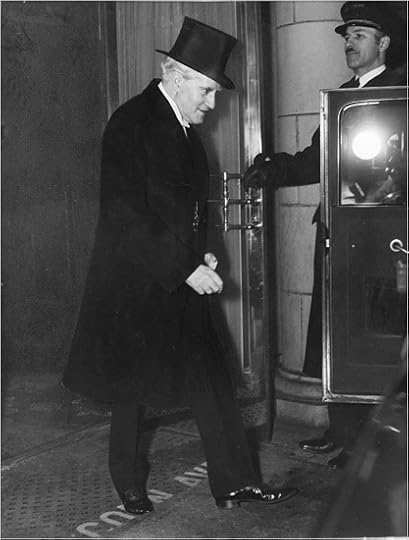
Some may consider Benjamin Cardozo, shown in 1936, the first Hispanic justice. Credit The New York Times
He said the term “Hispanic” was not commonly used during Cardozo’s lifetime and would probably have been unfamiliar to him in 1932 when President Herbert Hoover named him to the court, where he served for six years until his death.
Professor Kaufman said that although there is no documentation, Cardozo’s family, which came to America in the 18th century, always believed that its forebears had come from Portugal, not Spain. And that raises an even more recondite question: are Portuguese people Hispanic?
Most Hispanic organizations and the United States Census Bureau do not regard Portuguese as Hispanic.
But Tony Coelho, a Portuguese-American congressman from California, was a member of the Congressional Hispanic Caucus when he was in the House, and Representative Dennis Cardoza, Democrat of California, whose ancestors came from the Azores, a Portuguese archipelago, is still a member.
The executive director of the National Association of Latino Elected and Appointed Officials, Arturo Vargas, said the contemporary political definition of Hispanic in the United States would definitely not include Cardozo. The practical definition he uses, Mr. Vargas said, includes people who are “descended from countries in the Americas” with a Spanish-language heritage. It does not even include those from Spain itself, he said.
Link to article: http://www.nytimes.com/2009/05/27/us/...
Other:
by Andrew L. Kaufman (no photo)Source: The New York Times
Mod
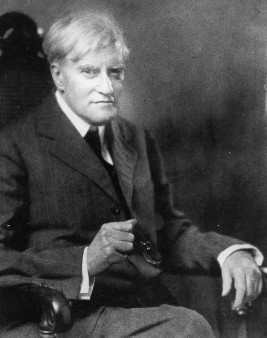
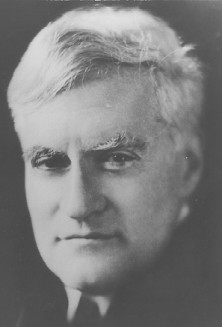
Justice Benjamin N. Cardozo (1870-1938)
Justice Benjamin N. Cardozo was a distinguished jurist who had been appointed to the court by President Hoover to fill the seat of the legendary Oliver Wendell Holmes. Modest in demeanor and with a strong philosophical bent, he was the author of four volumes of essays on the philosophy of law prior to being appointed to the court. Cardozo's view of the Constitution was in sympathy with Hamilton's, which he expressed this way: ". . .the great generalities of the Constitution have a content and a significance that vary from age to age. The method of free decision sees thru the transitory particulars and reaches what is permanent behind them."
One historian would describe his work this way: "Every law school graduate can recognize a Cardozo opinion by a quick perusal. His style is unmistakable: limpid clarity, conciseness suffused with a moral almost spiritual luminosity, and a command of historical material that is unrivaled in the entire common-law tradition. The beauty of his prose must be rated with those of the Greek and Roman classicists whose works he read in the original language for his own pleasure." 1 Another would appraise his place in history: "Except for Holmes himself, Justice Cardozo was the preeminent judge of the first half of the twentieth century. Indeed, Cardozo was the outstanding common-law jurist of the twentieth century." 2 And one biographical dictionary would summarize his legacy this way: "Shy and sensitive, immensely learned yet natively humble, Cardozo transcended the heated controversies of this day to take place as one of the dozen or so truly great judges in the Court's history."
Justice Cardozo's self-description: "In truth, I am nothing but a plodding mediocrity--please observe, a plodding mediocrity--for a mere mediocrity does not go very far, but a plodding one gets quite a distance. There is joy in that success, and a distinction can come from courage, fidelity and industry."
1. Asch, Sidney, The Supreme Court and Its Great Justices, Arco, 1972, pg. 153.
2. Schwartz, Bernard, A History of the Supreme Court, Oxford University Press, 1993, pg. 229.
Link to article: https://www.ssa.gov/history/cardozo.htm
Other:
 by Sidney H. Asch (no photo)
 by Bernard Schwartz (no photo)
Source: Social Security Administration
Mod
Mod
Justice Cardozo's background as a Sephardic Jew shaped his entire career.
By MICHAEL FELDBERG
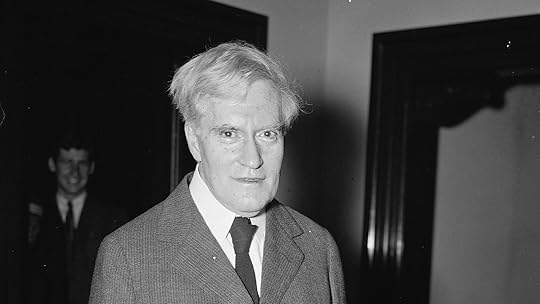
Justice Benjamin Cardozo on his 67th birthday in Washington, D.C., in 1937. (Library of Congress/Wikimedia Commons)
In 1932, President Herbert Hoover appointed Benjamin Nathan Cardozo to the Supreme Court of the United States. Cardozo was the second Jew, after Louis D. Brandeis, to serve on the nation’s highest court. Previously, Cardozo served as a judge on the New York State Supreme Court and as Chief Judge of the Court of Appeals.
The Cardozo family is one of America’s oldest and most distinguished. Cardozo forebears were numbered among the founders of Congregation Shearith Israel, the oldest congregation in North America and the central social institution of New York’s Sephardic community. One 18th century forebear served as the first Jewish incorporator and trustee of Columbia University; another helped found of the New York Stock Exchange in 1792; and the poet Emma Lazarus was his cousin.
Born in 1870, Benjamin Cardozo was the son of Judge Albert Cardozo and Rebecca Nathan. Albert Cardozo served as Vice President and trustee of Congregation Shearith Israel and Benjamin celebrated his bar mitzvah there. The family lived a well-mannered, upper-class life, the kind that might have been depicted in an Edith Wharton novel. However, the Cardozo family image suffered a major setback when Albert, a Tammany Hall appointee to the bench, resigned his judgeship in 1872 just as a legislative committee was about to impeach him for nepotism.
Despite this taint of notoriety, Benjamin chose to enter the law, his father’s profession, and he proudly–one might say defiantly–entered his father’s law firm upon graduation from Columbia University Law School. The young Cardozo distinguished himself as a commercial law litigator, and soon other attorneys brought their most difficult cases to him for assistance. Shy and reserved in his personal life, in the courtroom Cardozo was a powerful orator. Above all, perhaps driven to redeem his father’s disgrace, Cardozo developed a reputation of the utmost integrity.
After his bar mitzvah, Cardozo stopped attending religious services. In later life, he described himself as an agnostic, but he never failed to identify himself as a proud Jew and remained a Jewish traditionalist in many respects. He refused to allow pork and shellfish into his home and maintained the family pew at Shearith Israel throughout his life. In 1895, at age twenty-five, he opposed the elimination of gender-segregated seating in the synagogue, a change that would have altered the Sephardic Orthodox minhag. Cardozo delivered a “long address,” according to a member of the congregation, which was “impressive in ability and eloquence,” and contributed to keeping the traditional seating.
Other than serving as a trustee of Columbia University, all of Cardozo’s volunteer activities were within the Jewish community. At a time when “polite” anti-Semitism was rampant among the New York social elite, and Jews were virtually excluded from venues such as the New York Athletic Club and the Union League Club, Cardozo joined the Judean Club, an association “designed to gather together a body of cultured Jewish gentlemen … to advance the intellectual and spiritual aspirations of the Jews.” Cardozo also served on the board of the American Jewish Committee, and despite his personal uncertainty about the cause, agreed to join the Zionist Organization of America. He wrote:
I have signed the application with some misgiving, for I have confessed … that I am not yet an enthusiast. But today, the line seems to be forming between those who are for the cause and those who are against it, with little room for a third camp. I am not willing to join those who are against, so I go over to the others.
In the 1928 presidential contest, Cardozo backed Democratic candidate Al Smith against Herbert Hoover. He did so as a Jew. While he respected Hoover, Cardozo wrote to a cousin that in the Republican campaign “will be found all the narrow-minded bigots, all the Jew haters, all those who would make of the United States an exclusively Protestant government. … The defeat of Smith will be acclaimed as a great victory by … the friends of obscurantism.” Ironically, the victorious Hoover appointed Cardozo to the Supreme Court four years later.
Throughout his public career, Cardozo tried to never to let his Jewish identification influence his judicial reasoning. For example, although an avowed personal opponent of Hitler’s regime, he was distressed when, in 1935, New York City magistrate Louis Brodsky dismissed assault charges against five of six Jewish defendants who stormed the German ship “Bremen” in New York harbor as it flew the Nazi flag. Brodsky wrote in his opinion that the lawbreakers were justified because the flag provoked them, even though the U. S. government recognized Germany’s National Socialist regime. Cardozo wrote to a family member of Brodsky’s decision:
What is the use of striving for standards of judicial propriety if [one] condone[s] such lapses! It would have been bad enough if [Brodsky] had been a Gentile; but for a Jew it was unforgivable. Now our traducers will say–and with some right… –that these are the standards of the race.
Professor Roscoe Pound of Harvard considered Cardozo one of the ten best legal minds in American history, and his writings and opinions contributed greatly in advancing American common law. As a jurist and committed Jew, Justice Cardozo brought honor to the United States and to his people.
Link to article:
https://www.myjewishlearning.com/arti...
Other:
 by Benjamin N. Cardozo (no photo)
Source: My Jewish Learning
Mod
 by Benjamin N. Cardozo (no photo)
Synopsis:
A Collection of Cardozo's Important Opinions. Edited by A. L. Sainer, with a foreword by Hon. Robert F. Wagner. Originally published: New York: Ad Press Ltd., [1938]. Frontispiece. xv, 441 pp. A collection of notable opinions by the great judge in the areas of civil rights, crime, contractual relations, injuries, estates, labor and social matters, and international relations. Cardozo's opinions bear the mark of careful preparation, of patient and laborious research, of a profound understanding of legal principles and their ethical, social and economic setting.
BENJAMIN N. CARDOZO [1870-1938] an associate justice of the Supreme Court, was one of the most influential American jurists of the twentieth century. He is the author of The Nature of the Judicial Process (1921), The Paradoxes of Legal Science (1928) and What Medicine Can Do for Law (1930).
Mod

The History Book Club
Books mentioned in this topic
Law is Justice: Notable Opinions of Mr. Justice Cardozo (other topics)The Nature of the Judicial Process (other topics)
The Supreme Court and Its Great Justices (other topics)
A History of the Supreme Court (other topics)
Cardozo (other topics)
More...
Authors mentioned in this topic
Benjamin N. Cardozo (other topics)Benjamin N. Cardozo (other topics)
Sidney H. Asch (other topics)
Bernard Schwartz (other topics)
Andrew L. Kaufman (other topics)
More...

Biography
Benjamin Nathan Cardozo (and his twin sister) were the youngest of six children born to a distinguished family in New York. His father was a judge in the state trial court of general jurisdiction. Cardozo's father resigned from the bench rather than risk impeachment for his involvement with the Tweed machine in New York City; he maintained a successful law practice after he left the bench.
Cardozo entered Columbia College at fifteen. He graduated at the top of his class and then entered Columbia Law School, but he did not complete his degree. He joined his father's firm and entered the bar where he earned an excellent reputation. Cardozo was elected to the court from which his father resigned. Shortly thereafter, he was elected to the state's highest court after endorsements from the major political parties.
Cardozo was a star of the first order on the nation's leading common law court. He wrote and lectured on jurisprudence in addition to his distinguished service as a jurist. Cardozo was elected chief judge of his court and served with distinction until President Herbert Hoover nominated him to succeed Oliver Wendell Holmes on the Supreme Court. Cardozo's appointment was something of a fluke in the view of some scholars. At the time, there was another Jew on the Court (Brandeis) and another New Yorker (Stone); and, Hoover was a Republican. But Cardozo had enthusiastic support from all quarters (the organized bar, the academic world, the media) and Hoover may have been motivated to make a nonpolitical appointment in the face of a tough reelection campaign in November.
Cardozo's chief contribution came from his felicity of expression and skill at synthesis. His relatively short tenure of less than six years on the Court (the average in this century is more than 14 years) minimized his influence, Nevertheless, his opinions have been grist for judges well beyond his years of service, placing Cardozo in the pantheon of eminent justices.
Personal Information
Born Tuesday, May 24, 1870
Died Saturday, July 9, 1938
Childhood Location New York
Childhood Surroundings New York
Position Associate Justice
Seat 3
Nominated By Hoover
Commissioned on Wednesday, March 2, 1932
Sworn In Monday, March 14, 1932
Left Office Saturday, July 9, 1938
Reason For Leaving Death
Length of Service 6 years, 3 months, 26 days
Home New York
source: http://www.oyez.org/justices/benjamin...