
The History Book Club discussion
TRAVEL AND TRANSPORTATION
>
BOATS, SHIPPING, BOATING
date newest »
newest »
message 1:
by
Bentley, Group Founder, Leader, Chief
(last edited Jan 28, 2019 11:20PM)
(new)
Apr 29, 2013 07:43PM
 Mod
Mod
reply
|
flag
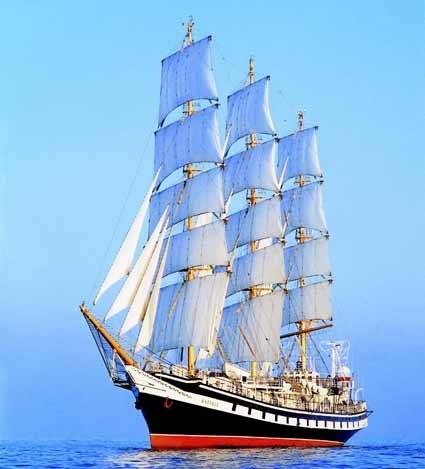
 There is nothing quite as beautiful as a group of tall ships gliding silently across the water. This book covers those that are still sailing.
The Tall Ships of Today in Photographs
 by Frank O. Braynard (no photo)
Synopsis:
Lavishly illustrated tribute to nearly 100 majestic sailing vessels now used as training ships and symbols of goodwill: Amerigo Vespucci, Clearwater, Constitution, Mayflower, Peking, Shenandoah, Victory, Viking and many more. Approximately 190 black-and-white photographs and other illustrations. Informative captions provide statistics, background information on each. Introduction. List of ships.
_____________________________________________________
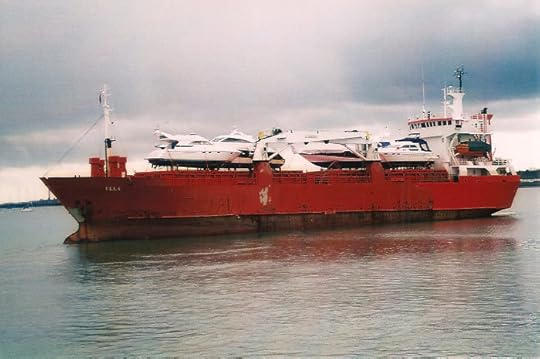
 Ninety Years Crossing Lake Michigan: The History of the Ann Arbor Car Ferries
 by Grant Brown (no photo)
Synopsis:
"A must buy for anyone interested in the Great Lakes."
---Frederick Stonehouse, maritime historian
In 1892, the Ann Arbor Car Ferries shook the transportation world by doing what was then deemed impossible---carrying loaded railroad cars by ship across the sixty-two miles of open water between Frankfort, Michigan and Kewaunee, Wisconsin. With passion, acuity, and remarkable detail, Grant Brown describes the nearly 100-year crossings---from their beginnings with James Ashley's bold new idea of car ferrying down to the last fight for survival until the Michigan Interstate Rail Company finally closed in 1982.
Crossing the lake with loaded freight cars was a treacherous task that presented daily obstacles. Knowledgeable people believed it was impossible to secure rail cars from tipping over and sinking the ship. Weather and ice presented two near-insurmountable hurdles, making car ferrying doubly difficult in the winter when nearly all shipping on the Great Lakes shut down. This vivid history gives voice to the ships and their crews as they battled the storms without modern navigational aids or adequate power.
This spirited account of the Ann Arbor car ferries draws on ships' logs from various museums, over 2,000 newspaper articles, annual reports from 1889 through 1976, and interviews with former employees. The result is a living history of the ships, the crews, and their adventures; of the men who built and ran the business; and of the enormous influence the vessels had on the communities they served.
Grant Brown, Jr., worked for S.D. Warren Company, a paper manufacturer, for 37 years. He raced sailboats on Crystal Lake in northern Michigan for ten years while growing up, continued in Boston and St. Louis, and has since returned to living and racing in Frankfort, Michigan. He spent eight years in the U.S. Coast Guard Reserve, where he learned navigation and shipboard procedure.
Mod
 Right up my alley! How about some War of 1812? There's been a lot of celebration here in MD for the 200th year anniversary.
I recommend
 by George C. Daughan(no photo)
Synopsis:
At the outbreak of the War of 1812, America’s prospects looked dismal. It was clear that the primary battlefield would be the open ocean�but America’s war fleet, only twenty ships strong, faced a practiced British navy of more than a thousand men-of-war. Still, through a combination of nautical deftness and sheer bravado, the American navy managed to take the fight to the British and turn the tide of the war: on the Great Lakes, in the Atlantic, and even in the eastern Pacific.
In 1812: The Navy’s War, prizewinning historian George C. Daughan tells the thrilling story of how a handful of heroic captains and their stalwart crews overcame spectacular odds to lead the country to victory against the world’s greatest imperial power. A stunning contribution to military and national history, 1812: The Navy’s War is the first complete account in more than a century of how the U.S. Navy rescued the fledgling nation and secured America’s future.
For something further back, and for a look at how modern technology is changing the field of ship's history check out
 by James P. Delgado(no photo)
Synopsis:
"In 1279, near what is now Hong Kong, Mongol ruler Khubilai Khan fulfilled the dream of his grandfather, Genghis Khan, by conquering China. The Grand Khan now ruled the largest empire the world has ever seen—one that stretched from the China Sea to the plains of Hungary. He also inherited the world's largest navy—more than seven hundred ships. Yet within fifteen years, Khubilai Khan's massive fleet was gone. What actually happened to the Mongol navy, considered for seven centuries to be little more than legend, has finally been revealed. Renowned archaeologist and historian James P. Delgado has gone diving with a Japanese team currently studying the remains of the Khan's lost fleet. Drawing from diverse sources—sunken ships, hand-painted scrolls, drowned bodies, and historical and literary records— in this gripping account that moves deftly between the present and the past, Delgado pieces together the fascinating tale of Khubilai Khan's maritime forays and unravels one of history's greatest mysteries: What sank the great Mongol fleet?"
Mod
In May 1987 the US frigate Stark, calmly sailing the waters of the Persian Gulf, was suddenly blown apart by an Exocet missile fired from an Iraqi jet fighter. A fifth of the ship’s crew was killed and many others horribly burned or wounded. This event jumpstarted one of the most mysterious conflicts in American history: “The Tanker War,” waged against Iran for control of the Persian Gulf.This quasi-war took place at the climax of the mammoth Iran-Iraq War during the Reagan administration. Losing on the battlefield, Ayatollah Khomeini’s Iran had decided to close the Persian Gulf against shipping from Iraq’s oil-rich backers, the emirate of Kuwait. The Kuwaitis appealed for help and America sent a fleet to the Gulf, raising the Stars and Stripes over Kuwait’s commercial tankers.
The result was a free-for-all, as the Iranians laid mines throughout the narrow passage and launched attack boats against both tankers and US warships. The sixth largest ship in the world, the tanker Bridgeton, hit an Iranian mine and flooded. The US Navy fought its largest surface battle since World War II against the Ayatollah’s assault boats. Meanwhile, US Navy Seals arrived in the Gulf, setting up shop aboard two mobile platforms. As Saddam Hussein, who had instigated the conflict, looked on, Iranian gunners fired shore-based Silkworm missiles against US forces, actions which, if made known at the time, would have required the US Congress to declare war against Iran.
In July 1988, nervous sailors aboard the cruiser USS Vincennes shot an Iranian airliner out of the sky, killing 300 civilians. This event came one month before the end of the war, and may have been the final straw that influenced the Ayatollah to finally drink from his “poisoned chalice.”
 Lee Allen Zatarain (no photo)
 Now this was the way to travel.
Luxury Liners: Life on Board
 by Catherine Donzel(no photo)
Synopsis:
An irresistible world unfolds in this fascinating voyage through the heyday of the great ocean liners. For over a century, from the 1850s to the launch of the Queen Elizabeth II in 1969, great ships like the "Queen Mary, Normandie," and "Brittania" were undisputed monarchs of the sea, when the transatlantic crossing was still the swiftest route between Europe and America.
"Luxury Liners" presents a sumptuous illustrated history of the glamorous life onboard these enormous ships. The book's organization mimics an actual crossing: the mountains of cargo crammed below decks before embarkation; the crossing itself, with entertainment that might include trained seals; the danger of shipwrecks; and finally, arrival.
Illustrated with rare, unpublished photographs from private collections, "Luxury Liners" is ideal for maritime history buffs and lovers of a bygone era.
The story of the worst maritime accident in the United States continental waters.Fitzgerald's Storm: The Wreck of the Edmund Fitzgerald
 by Joseph MacInnis(no photo)
Synopsis:
The Edmund Fitzgerald was the Titanic of the Great Lakes, seven city blocks long and thought to be invincible. One November night she disappeared from Lake Superior so quickly crewmen were unable to make a distress call. Many years later, a team led by Dr. Joseph MacInnis looked for answers. From interviews, transcripts, and his own dives, Dr. MacInnes has crafted a tale that is gripping and poignant. Re-creating the ship's voyage, he describes the ship, the men, and the events leadig up to November 10, 1975.
One author's take on the murder of Donald Aronow, the designer of the cigarette boat, a favorite of drug runners in the Caribbean and the fastest thing on the water.Blue Thunder
 by Thomas Burdick (no photo)
Synopsis:
Millionaire boat designer Donald Aronow had it all, but on February 3, 1987 all that came to an end when he died in a half of bullets on Performance Alley, the street he had done so much to create. Here, told with the urgency of newsbreaking copy, is the true story of his life and death--a story of fast boats, fast women, drug running, and a host of America's famous. 8 pages of black-and-white photographs.
The history of the greatest yacht race in the world.America's Cup
 by Dennis Conner(no photo)
Synopsis:
Once a competition held exclusively for wealthy members of the New York Yacht Club, the America's Cup has undergone significant transformations in the 20th century. No longer a yachting event limited to Morgans and Vanderbilts, the race now includes boats skippered by athletes who are not among the country-club elite.
We can't mention ships without including the tragic Titanic.Titanic: An Illustrated History
 by Don Lynch(no photo)
Synopsis:
The story of the Titanic has mesmerized the world, and Titanic: An Illustrated History brings to life in full color and vivid detail the tragic story of the great ocean liner. It features the paintings of renowned Titanic artist Ken Marschall, which inspired director James Cameron to create the epic film -- winner of 11 Academy Awards, including Best Picture and Best Director.
Mod
 by Charlie Wing (no photo)
Synopsis:
"Anyone who contemplates any onboard do-it-yourself work should have this book at his or her elbow."--Cruising World
"This book reduces a boat to its most rudimentary parts in simple drawings and clear explanations. Fascinating to read, it's a perfect teaching tool."--Ocean Navigator
Whether you're a new mariner or a lifetime veteran, How Boat Things Work is a resource you can't afford to be without. With intricate two-color cutaway drawings of eighty different systems and devices, as well as detailed explanations of how they're assembled, how they work, and how they can go wrong, this book covers every primary component of your boat's inner workings.
This guided tour "under the hood" of your sailboat or powerboat includes:
Engines, transmissions, bearings, stuffing boxes, propellers
Steering systems, autopilots, windvanes, compasses
Rigging, splicing, line handling, block and tackle, sail controls
Anchors and windlasses
DC and AC electrical systems
Pumps, toilets, seacocks, freshwater systems
 Jill wrote: "We can't mention ships without including the tragic Titanic."
I most definitely concur! Is there not a Titanic-specific thread anywhere? This seems to be the most likely place for one (this is it).
I became interested in Titanic partly because in reading biographies of the US presidents and knowing that she sank while Taft was in office, I learned that he had a friend/aide who died in the tragedy (Archie Butt). Tonight I learned he actually has two connections to Titanic, as he also invited British author and activist W.T. Stead to speak at a conference in America, and Stead was on his way there when he died on the Titanic.
For a great 21st century book on Titanic with some little-explored aspects of the tragedy and the times in which it happened, I recommend Stephanie Barczewski's 2004 Titanic: A Night Remembered (not to be confused with the popular 1955 book by Walter Lord of similar name). The second factoid about Taft I learned from the 2008 coffee-table book on Titanic by Beau Riffenburgh.
Titanic: A Night Remembered
 by Stephanie Barczewski (No photo)
Titanic: The Story of the Unsinkable Ship
 by Beau Riffenburgh (No photo)
A Night to Remember
 by
by
 Walter Lord
Mod
Walter Lord
Mod

The History Book Club
Books mentioned in this topic
Titanic: The Story of the Unsinkable Ship (other topics)A Night to Remember (other topics)
Titanic: A Night Remembered (other topics)
How Boat Things Work: An Illustrated Guide (other topics)
Titanic: an Illustrated History (other topics)
More...
Authors mentioned in this topic
Beau Riffenburgh (other topics)Walter Lord (other topics)
Stephanie Barczewski (other topics)
Charlie Wing (other topics)
Don Lynch (other topics)
More...
