
The History Book Club discussion
TRAVEL AND TRANSPORTATION
>
BICYCLES
date newest »
newest »
message 1:
by
Bentley, Group Founder, Leader, Chief
(last edited Jan 28, 2019 11:07PM)
(new)
Apr 29, 2013 07:53PM
 Mod
Mod

reply
|
flag
Mod
 by Sue Macy
Synopsis:
NCSS—Notable Social Studies Trade Books in the Field of Social Studies 2012
School Library Journal Best Books of 2011
Finalist YALSA Excellence in Non Fiction for Young Adults
SLJ’s 100 Magnificent Children’s Books of 2011
Amelia Bloomer List
Take a lively look at women's history from aboard a bicycle, which granted females the freedom of mobility and helped empower women's liberation. Through vintage photographs, advertisements, cartoons, and songs, Wheels of Change transports young readers to bygone eras to see how women used the bicycle to improve their lives. Witty in tone and scrapbook-like in presentation, the book deftly covers early (and comical) objections, influence on fashion, and impact on social change inspired by the bicycle, which, according to Susan B. Anthony, "has done more to emancipate women than anything else in the world."
 Bicycle: The History
 David V. Herlihy
Synopsis
During the nineteenth century, the bicycle evoked an exciting new world in which even a poor person could travel afar and at will. But was the “mechanical horse” truly destined to usher in a new era of road travel or would it remain merely a plaything for dandies and schoolboys? In Bicycle: The History (named by Outside magazine as the #1 book on bicycles), David Herlihy recounts the saga of this far-reaching invention and the passions it aroused. The pioneer racer James Moore insisted the bicycle would become “as common as umbrellas.” Mark Twain was more skeptical, enjoining his readers to “get a bicycle. You will not regret it—if you live.”
Because we live in an age of cross-country bicycle racing and high-tech mountain bikes, we may overlook the decades of development and ingenuity that transformed the basic concept of human-powered transportation into a marvel of engineering. This lively and engrossing history retraces the extraordinary story of the bicycle—a history of disputed patents, brilliant inventions, and missed opportunities. Herlihy shows us why the bicycle captured the public’s imagination and the myriad ways in which it reshaped our world.
 Once the rage of the early 20th century, this sport is practically forgotten today. Interesting book.
The Six-Day Bicycle Races
 by Peter Joffre Nye (no photo)
Synopsis:
A photographic portrait of what was the most popular spectator sport in America during the period from 1900 to 1930: 6-day bicycle racing. It was a big-money sport, because bets were on. The sport was tough and the stakes were high, as the most prominent people in society flocked to Madison Square Garden to watch the races and place their bets. This compilation of historic photographs reproduced in fine duotone detail and accompanying text paints the complete picture of this fascinating but almost forgotten era in American sports.
The History of Cycling in Fifty Bikes by Tom Ambrose (no photo)
Synopsis:
The invention of the bicycle changed history by democratizing travel for the first time. The common man—and importantly the common woman—could now afford to travel at reasonable speed without the need of a horse. Instead of walking just 10 miles a day on foot, a healthy individual could now ride up to 80 miles on a cycle at a relatively modest cost.Today, despite the prevalence of the car, the bicycle is as important as ever. More cycles appear on city streets each year, offering healthy, pollution-free transport. Commuters cycle to work through congested traffic, urban hire-bike schemes are increasingly common, and the sports of road and track racing continue to gain in popularity.For an invention with a history of just 200 years, the simple bicycle has changed the world in many ways. From the Velocipede to the Pinarello, The History of Cycling in Fifty Bikes relates this history by telling the stories of 50 iconic machines that have shaped the world.
____________________________________________________
Please tell me how anyone rode one of these?

 Beats me. Maybe the same way one would ride this contraption:
Unicycling: First Steps - First Tricks
 by Andreas Anders-Wilkens (no photo)
Synopsis:
With the help of detailed descriptions, illustrated by more than a hundred pictures, the beginner learns how to get started and which possible mistakes he can avoid. He also learns how to avoid injuries. Helpers can also learn how they can best provide support to the beginner. The book also includes chapters about advanced techniques like riding backwards, idling, bunny hopping, and Mountain Unicycling (MUni) for beginners, as well as a selection of different teaching methods and many games for the unicycle. The team sport "Unihockey" is also included. In the second part, variations of the ordinary unicycle like Giraffes and Ultimate wheels and some basic tricks are present. The book offers interesting internet links and also includes important tips about buying, maintaining and repairing a unicycle.
This look like a funny book which supports but still makes fun of the cyclist cult.Bike Snob: Systematically and Mercilessly Realigning the World of Cycling
 by BikeSnobNYC (no photo)
Synopsis:
Cycling is exploding in a good way. Urbanites everywhere, from ironic hipsters to earth-conscious commuters, are taking to the bike like aquatic mammals to water. BikeSnobNYC cycling's most prolific, well-known, hilarious, and anonymous blogger brings a fresh and humorous perspective to the most important vehicle to hit personal transportation since the horse. Bike Snob treats readers to a laugh-out-loud rant and rave about the world of bikes and their riders, and offers a unique look at the ins and outs of cycling, from its history and hallmarks to its wide range of bizarre practitioners. Throughout, the author lampoons the missteps, pretensions, and absurdities of bike culture while maintaining a contagious enthusiasm for cycling itself. Bike Snob is an essential volume for anyone who knows, is, or wants to become a cyclist.
 Mod
Mod
Release date: November 1, 2014
The Race Against the Stasi: The Incredible Story of Dieter Wiedemann, The Iron Curtain and The Greatest Cycling Race on Earth
 by Herbie Sykes (no photo)
Synopsis:
When the 'Iron Curtain' descended across Europe, Dieter Wiedemann was a hero of East German sport. A podium finisher in The Peace Race, the Eastern Bloc equivalent of the Tour de France, he was a pin-up for the supremacy of socialism over the 'fascist' West.
Unbeknownst to the authorities, however, he had fallen in love with Sylvia Hermann, a girl from the other side of the wall. Socialist doctrine had it that the two of them were 'class enemies', and as a famous athlete Dieter's every move was pored over by the Stasi. Only he abhorred their ideology, and in Sylvia saw his only chance of freedom. Now, playing a deadly game of cat and mouse, he plotted his escape.
In 1964 he was delegated, once and once only, to West Germany. Here he was to ride a qualification race for the Tokyo Olympics, but instead committed the most treacherous of all the crimes against socialism. Dieter Wiedemann, sporting icon and Soviet pawn, defected to the other side.
Whilst Wiedemann fulfilled his lifetime ambition of racing in the Tour de France, his defection caused a huge scandal. The Stasi sought to 'repatriate' him, with horrific consequences both for him and the family he left behind. Fifty years on, and twenty-five years after the fall of the Berlin Wall, Dieter Wiedemann decided it was time to tell his story. Through his testimony and that of others involved, and well as through the Stasi files - an organization that has stalked him for half a century - Herbie Sykes uncovers an astonishing tale. It is one of love and betrayal, of the madness at the heart of the cold war, and of the greatest bike race in history.
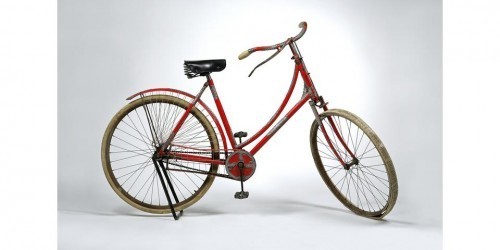
It is not only antique cars that bring the big bucks. Bicycles are highly collectable but can be sooooooo expensive.This 1890 Tiffany will clean out your bank account as it costs about $70,000.It is a luxurious and most classy bicycle that was manufactured in 1890 and worth about $50,000-70,000.It is a rare expensive bicycle as only few such beautiful and luxurious bicycles were made and one of them belonged to one of the most renowned singers and actresses Lillian Russell of the late 19th century, who was popular for her elegance and beauty and also for her voice and stage performance. This spectacular bike is embedded with Tiffany fixed gear systems, carved ivory handles and Brook’s leather saddle. -
 Mod
Mod
 In-Between a Bike and a Car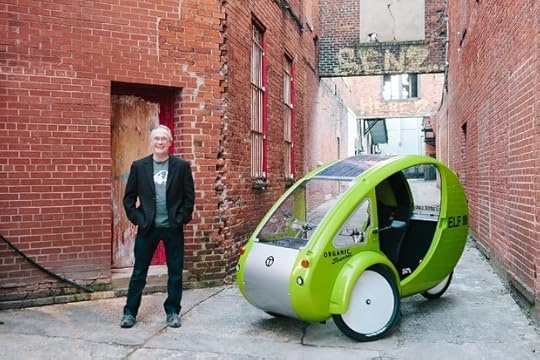
The makers of the ELF believe their enclosed, three-wheeled, low-carbon vehicle is the perfect transportation compromise.
Rob Cotter sits in his small office on a side street in Durham, North Carolina, in a baseball cap and sweatshirt, as the sounds of incessant drilling and people yelling "horn check"—followed closely by a tinny beep—press on around him.
Bright green and orange ovoid frames stand on the floors and hang from ceilings all around the workshop, where tiny pedal-driven, solar-powered vehicles called ELFs are being built late into the evening. Cotter seems remarkably down-to-earth for someone who's planning to take over the world.
Two years ago, Cotter launched Organic Transit, a startup that designs, builds, and sells the ELF, an "electric, light, and fun" vehicle that's essentially an enclosed recumbent tricycle. With an optional electric- and solar-powered motor, the ELF can go up to 30 miles per hour. Though it comes with headlights, turn signals, a cargo space that fits more than a dozen bags of groceries, a roof, and (soon) doors, it's legally a bike.
The ELF requires no driver's license and can travel on bike paths or lanes and in any weather. Perhaps most importantly, the company estimates that one ELF can prevent as many as six tons of carbon dioxide from entering the atmosphere annually, if it's used in place of a car.
"There is nothing more polluting than driving our cars each day," Cotter says. "As individuals, we are limited as to what we can effectively implement, but we can change how we behave. Getting out of your car and using your body along with a solar assist is the most powerful thing you can do."
(Read More Here: http://www.citylab.com/commute/2015/0...)
The most famous of the American made bicycles. Some of the rarer models are extremely collectable...and extremely expensive. Beautiful designs.Schwinn Bicycles
 by Jay Pridmore (no photo)
Synopsis:
The legendary 100-year history of the best-known name in American bicycling. German immigrant Ignaz Schwinn launched the company that bears his name in 1895, setting the bicycling standard in the U.S. for decades to come. This lavishly illustrated volume is overflowing with original archival material, much of it from Chicago's Bicycle Museum of America, and specially commissioned photography. Pridmore and Hurd fully detail Schwinn's technical developments, racing history, and significant models including the Black Phantom, Varsity, Paramount, Fastback, and many others. Contains discussions of Schwinn's foray into motorcycle manufacture. Fabulous!
Bike Snob: Systematically & Mercilessly Realigning the World of Cycling
by BikeSnobNYC (no photo)Synopsis:
Cycling is exploding in a good way. Urbanites everywhere, from ironic hipsters to earth-conscious commuters, are taking to the bike like aquatic mammals to water. BikeSnobNYC cycling's most prolific, well-known, hilarious, and anonymous blogger brings a fresh and humorous perspective to the most important vehicle to hit personal transportation since the horse. Bike Snob treats readers to a laugh-out-loud rant and rave about the world of bikes and their riders, and offers a unique look at the ins and outs of cycling, from its history and hallmarks to its wide range of bizarre practitioners. Throughout, the author lampoons the missteps, pretensions, and absurdities of bike culture while maintaining a contagious enthusiasm for cycling itself. Bike Snob is an essential volume for anyone who knows, is, or wants to become a cyclist.
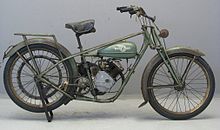
Its not a bicycle, its not a motorcycle, it's a Whizzer!! Popular back in the day, they are in demand again and are being manufactured once more.Whizzer
Whizzer bicycle engines are a line of bicycle engines that were produced in the United States from 1939 to 1965. They were commonly sold as kits to be assembled and attached to a consumer's bicycle thus creating a motorized bicycle. Whizzer U.S.A. re-appeared in 1997 to sell an improved version, pre-assembled on an old Schwinn-style bicycle frame.
The Whizzer bicycle engine was first produced in 1939 by Breene-Taylor Engineering, a Los Angeles-based manufacturer of airplane parts. By 1942, sales of the engines had not been entirely successful, having sold only about 2500 units. The Whizzer operation was then sold to Dietrich Kohlsatt and Martin Goldman.
By 1943, World War II was well underway, and Whizzer Motors were forced to lobby the United States Government for the right to continue production of what was argued to be a great way for defense workers to travel to and from work.
In 1948, Whizzer sold its first pre-assembled motorized bicycle, the "Pacemaker".
Whizzer motorcycle engines would cease to be produced in 1965 due to the increasingly competitive bicycle engine market.
In 1997, Whizzer motorcycles were brought back into production in the same style of the originals but with technological improvements.
Source: Wikipedia
We are all familiar with the beautiful cars made by Lotus but did you know they make bicycles. Look at this beauty.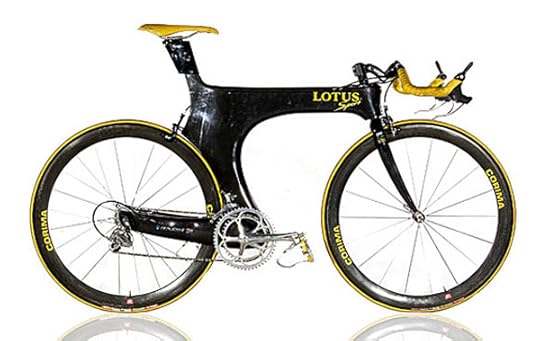
(Source: Sodapic.com
It looks like half scooter/half bike. It looks like it would be hard to drive.
 Cyclepedia: A Century of Iconic Bicycle Design
 by Michael Embacher (no photo)
Synopsis:
For every way to ride, there s a bicycle to fit the need. An homage to the beauty of the bike, Cyclepedia showcases the innovations and legacies of bicycle design over the past century. Join longtime bike enthusiast and avid collector Michael Embacher for a tour of 100 bicycles, from the finest racing bikes and high-tech hybrids to the bizarrely specific (such as a bike designed to cycle on ice). Captivating photographs, detailed component lists, and anecdotal information illuminate the details that make each bicycle unique. Also including a foreword by cyclist and designer Paul Smith, Cyclepedia is the ultimate coffee-table book for devotees of the two-wheeled life.
Mod
Mod
Release date: April 5, 2016
The Mechanical Horse: How the Bicycle Reshaped American Life
 by Margaret Guroff (no photo)
Synopsis:
With cities across the country adding miles of bike lanes and building bike-share stations, bicycling is enjoying a new surge of popularity in America. It seems that every generation or two, Americans rediscover the freedom of movement, convenience, and relative affordability of the bicycle. The earliest two-wheeler, the draisine, arrived in Philadelphia in 1819 and astonished onlookers with the possibility of propelling themselves "like lightning." Two centuries later, the bicycle is still the fastest way to cover ground on gridlocked city streets.
Filled with lively stories, The Mechanical Horse reveals how the bicycle transformed American life. As bicycling caught on in the nineteenth century, many of the country's rough, rutted roads were paved for the first time, laying a foundation for the interstate highway system. Cyclists were among the first to see the possibilities of self-directed, long-distance travel, and some of them (including a fellow named Henry Ford) went on to develop the automobile. Women shed their cumbersome Victorian dresses—as well as their restricted gender roles—so they could ride. And doctors recognized that aerobic exercise actually benefits the body, which helped to modernize medicine. Margaret Guroff demonstrates that the bicycle's story is really the story of a more mobile America—one in which physical mobility has opened wider horizons of thought and new opportunities for people in all avenues of life.
message 21:
by
Jerome, Assisting Moderator - Upcoming Books and Releases
(last edited Aug 28, 2016 07:25PM)
(new)
Mod
Release date: June 6, 2017
Butcher, Blacksmith, Wrestler, Sweep: The Tale of the First Tour de France
 by Peter Cossins (no photo)
Synopsis:
The first Tour De France was a far cry from the polished international sporting event we see on television today. Organized by the financially free falling L'Auto magazine, the desperate editors thought that organizing a grand cycling tour was the only thing that could save their publication. But in 1903, cyclists weren't enthusiastic about what was pitched to them as a heroic race through roads more suited to hooves than wheels, with bikes weighing up to forty-four pounds, on a single fixed gear, for three full weeks. Assembling enough riders for the race meant bribing unemployed laborers from the suburbs of Paris, including a butcher, a blacksmith, a chimney sweep, and a wrestler. Through these characters backstories, Cossins paints a nuanced portrait of France in the early 1900's. The race itself is packed with mishaps and adventure—in part due to the fact that water was scarce at the time, so the men drank wine and beer throughout, often keeling over from their bicycles in a drunken stupor.
There was no indication that a ramshackle cycling pack would endear crowds to throng France's rutted roads and cheer the first Tour heroes. But they did, and cycling would never be the same again.
Mod
Release date: June 6, 2017
Re:cyclists: 200 Years on Two Wheels
 by Michael Hutchinson (no photo)
Synopsis:
Somewhere in a German forest 200 years ago, during the darkest, wettest summer for centuries, the story of cycling began. The calls to ban it were more or less instant.
Re:cyclists is the tale of what happened next, of how we have spent two centuries wheeling our way about town and country on bikes--or on two-wheeled things that vaguely resembled what we now call bikes. Michael Hutchinson picks his way through those 200 years, discovering how cycling became a kinky vaudeville act for Parisians, how it became an American business empire, and how it went on to find a unique home in the British Isles. He considers the penny-farthing riders exploring the abandoned and lonely coaching roads during the railway era, and the Victorian high-society cyclists of the 1890s bicycle craze--a time when no aristocratic house party was without bicycles and when the Prince of Wales used to give himself an illicit thrill on a weekday afternoon by watching the women's riding-school in the Royal Albert Hall.
Re:cyclists looks at how cycling became the sport, the pastime and the social life of millions of ordinary people, how it grew and how it suffered through the 1960s and '70s, and how at the dawn of the twenty-first century it rose again, much changed but still ultimately just someone careering along on two wheels.
Mod
Mod
Mod
by Jay Pridmore (no photo)Synopsis:
The legendary 100-year history of the best-known name in American bicycling. German immigrant Ignaz Schwinn launched the company that bears his name in 1895, setting the bicycling standard in the U.S. for decades to come. This lavishly illustrated volume is overflowing with original archival material, much of it from Chicago's Bicycle Museum of America, and specially commissioned photography. Pridmore and Hurd fully detail Schwinn's technical developments, racing history, and significant models including the Black Phantom, Varsity, Paramount, Fastback, and many others. Contains discussions of Schwinn's foray into motorcycle manufacture. Fabulous!
Mod
Besides Schwinns, Bike Museum Has Nostalgia And History
October 15, 1993 By Jay Pridmore
New museums come and go, but this one demands attention like a long-lost friend. The Bicycle Museum of America, at North Pier Terminal, 435 E. Illinois St., opened several weeks ago and will touch many visitors with an extra-strength dose of nostalgia.
This is what successful museums, even small ones, do: They draw us in with whiffs of familiarity-here with old balloon-tire Phantoms, early 10-speeds, and Sting Rays. They grab us and lead us to more remote chapters of history-boneshakers, high-wheelers and a few contraptions that most of us have never seen before.
Wandering through the Bicycle Museum, we learn that the technology of early bikes was the work of America's most creative inventors. We also learn that the industry had its ups and downs, recovering in the '30s through an understanding of mass marketing, and in the '70s on the heels of the environmental movement.
Eventually, we begin to understand that the bicycle is not at all a trivial thing. It is an ever-changing icon of American life.
Although the museum is modest and in some ways homespun, its contents are not. Of more than 100 bicycles now on display, most come from a collection assembled over the years by Chicago's Schwinn family, owner until this year of the Schwinn Bicycle Co. Several months ago, the Bicycle Museum was created independently, raising money among hobbyists and many companies in the bike industry.
Beneath the marvelous nostalgia of the bikes is a history that includes tales of "Bicycle Row," a stretch of West Lake Street that was home to dozens of leading bike companies before the turn of the century. Makers worked on the development of lighter metal frames and stronger spoked wheels. Bicycle Row peaked in 1899 when 1.2 million bikes were made and sold in the United States.
What happened to bicycles in the early 1900s was simple enough-the automobile. And as the focus of the public shifted from human-powered chain drives to internal combustion engines, the bicycle industry had its first major bust.
But bikes carried on. Women took up cycling. Racing was a sport of national interest, and one of the earliest world champions in any sport to hail from America was a Chicago cyclist named Marshall Taylor. Taylor was one of the most famous African-Americans in the nation at the time.
As the Bicycle Museum grows, these and other stories will highlight a history that "encompasses a wide cross-section of American society," said Jim Hurd, the museum's founder and director. "This invention has touched just about everyone who grew up in this century."
The museum is open from 10 a.m. to 7 p.m. Mondays through Thursdays, 10 a.m. to 8 p.m. Fridays and Saturdays and noon to 5 p.m. Sundays. Admission is $2 for adults and $1 for seniors 65 and over and children 5-12. For information call 312-222-0500.
Mod
http://www.ibike.org/library/history-...

 by David V. Herlihy (no photo) is an interesting book about the history of the bicycle, the sport of cycling, the intrepid endeavors of cycling around the world and the mystery of the disappearance and the search for cyclist Frank Lenz during his solo trek around the world.
Mod
by David V. Herlihy (no photo) is an interesting book about the history of the bicycle, the sport of cycling, the intrepid endeavors of cycling around the world and the mystery of the disappearance and the search for cyclist Frank Lenz during his solo trek around the world.
Mod
Thank you so much for posting these adds - keep them coming.
Bentley wrote: "Elizabeth A.G. thank you very much - we love getting all adds. by David V. Herlihy (no photo) Thank you so much for posting these adds - keep..."
Thanks, Bentley, You are even quicker! I kept editing my comment until I finally got it right but you had already responded.
Mod
Mod
 by Frank J. Berto (no photo)
Synopsis:
Unlike other books about the history of the bicycle, this one focuses on how the modern lightweight derailleur bike and its gearing system evolved from its early beginnings to the most recent developments in racing and mountain bikes.
Mod
Release date: May 24, 2022
Two Wheels Good: The History and Mystery of the Bicycle
 by Jody Rosen (no photo)
Synopsis:
The bicycle is a vestige of the Victorian era, seemingly out of pace with our age of smartphones and ridesharing apps and driverless cars. Yet we live on a bicycle planet. Across the world, more people travel by bicycle than by any other form of transportation. Almost anyone can learn to ride a bike--and nearly everyone does.
In Two Wheels Good, writer and critic Jody Rosen reshapes our understanding of this ubiquitous machine, an ever-present force in humanity's life and dreamlife--and a flashpoint in culture wars--for more for than two hundred years. Combining history, reportage, travelogue, and memoir, Rosen sweeps across centuries and around the globe, unfolding the bicycle's saga from its invention in 1817 to its present-day renaissance as a "green machine," an emblem of sustainability in a world afflicted by pandemic and climate change. Readers meet unforgettable characters: feminist rebels who steered bikes to the barricades in the 1890s, a prospector who pedaled across the frozen Yukon to join the Klondike gold rush, a Bhutanese king who races mountain bikes in the Himalayas, a cycle rickshaw driver who navigates the seething streets of the world's fastest-growing megacity, astronauts who ride a floating bicycle in zero gravity aboard the International Space Station.
Two Wheels Good examines the bicycle's past and peers into its future, challenging myths and clichés, while uncovering cycling's connection to colonial conquest and the gentrification of cities. But the book is also a love letter: a reflection on the sensual and spiritual pleasures of bike riding and an ode to an engineering marvel--a wondrous vehicle whose passenger is also its engine.
 Thank you, Jerome for another grand review … there’s no hope for my burgeoning TBR List; it will just have to burgeon …
Regards,
Andrea

The History Book Club
Books mentioned in this topic
Two Wheels Good: The History and Mystery of the Bicycle (other topics)The Dancing Chain : History and Development of the Derailleur Bicycle (other topics)
The Lost Cyclist (other topics)
The Lost Cyclist (other topics)
Schwinn Bicycles (other topics)
More...
Authors mentioned in this topic
Jody Rosen (other topics)Frank J. Berto (other topics)
David Herlihy (other topics)
David Herlihy (other topics)
Jay Pridmore (other topics)
More...