
Read with Pride Northwest discussion
GRNW Author Interviews
>
GRNW Interview - Lou Harper
date newest »
newest »
 Mod
Mod
I love your books--Dead in L.A., Spirit Sanguine, the suspense thriller Last Stop--and am a greedy terrible person who wants-want-wants sequels. Are there any sequels planned for these books? (And for Dead Man, which I hope to read next week!)
I'm working on the sequel to Dead in L.A. as we speak. The boys will take a couple trips to the desert. I intend to publish it in September. The plan is to start working on the sequel to Spirit Sanguine after that—it's tentatively scheduled to be released next summer. Perhaps Dead Man after that—I definitely want a sequel, but it's too far for me to plan.
A sequel to Last Stop is not completely out of the question, but it's not so simple. I could throw the guys into more danger, but their romantic arc is complete. I can't just start over. I hate when others do it—it voids everything that happened before. There could possibly be other kinds of romantic tension, but at the moment I lack time and inspiration.
Are there other books on the horizon that you can talk about now?
Secrets and Ink will be published by Samhain in December. It's a suspenseful romp in the shadows of the Hollywood Hills. The hapless hero of the story is convinced that he's been cursed by a meter maid.
You’ve written contemporary romance, romantic suspense, and paranormal. Do you have a favorite genre to write in? And is there one that you’ve thought about, but haven’t tried yet?
To me they are all contemporary, with extra flavors mixed in. Like ice cream. I have a thing for science fiction but I don't see myself diving into that in the near future. By the way, you left out mystery. I'm pretty sure Spirit Sanguine is a contemporary paranormal romantic suspense mystery. :P
Last question (from me. GRNW followers can jump in after this.) We’ll have a lot of readers at the September GRNW Meet-Up in Seattle, and it’s always interesting to hear what authors like to read and would recommend. What gay romance titles are some of your favorites?
I have a huge reader-crush on Ginn Hale. Her books are so rich--they have everything, plot, character, and worlds that are both familiar and foreign at once. I recommend all her books. My only complaint about Ginn is that she doesn't write faster.
I 100% agree! I look forward to the chance to harass her in person at the Meet-Up in September. (...Ginn, it won't be too bad, I promise. Kinda.) ;)
And thank you, Lou, for sitting down with us! It was wonderful to talk with you. I cannot wait for your new books coming up!
Mod
If you have questions for Lou, please feel free to ask here. This thread is open to questions. :D
 Haven't read the entire interview yet—I just had FANBOI PANIC at the discussion of covers that opens it and had to scroll down here to say thank you, thank you so, so much.
Covers matter.
great interview, ttg.hi lou :-) your thoughts on headless torsos are a lot like mine—though i tend to the crusty, irritable end of the spectrum—and i think it's a legitimate question: does a book sell better with a
i think maybe it used to, but... if it does now, it's not by much. there are a lot of other ways to cue a reader into the MM flavor of a particular book, and with metadata—shelving, tagging, context on sites, in other words—it's easier than ever.
that said, your cover for Tenino's The Fix was gorgeous, slabs of man-tits or no. the color! the composition! the font! *fanboiplosion* i've been stalking your website's cover page since this morning :-)
excellent point.it actually never occurred to me, the bit about people getting annoyed with you for robbing them of the opportunity to put their own face on a hunk
 Lou wrote: "Heyhey! I'm hoping the the subject of headless torsos will start up an impassioned debate. :P"
Actually, of all my Loose Id covers I kinda like the torso ones best--not because I find them sexy but because the models available for stock photos often have the WEIRDEST expressions on their faces.
Good interview. :)
 "I'm not good at angst, or basing a story mainly on the protagonists' self-reflections. I need stuff to happen."
My thoughts exactly.
--Also, awesome cover art!--
 I tend to hate the faces on my covers because they look nothing like the guys in my head, but I'm starting to get over that. I will say, The Fix was one of those covers where the face just seemed entirely unnecessary. Lurve that cover so hard.
Lou, do you think you'll continue in the paranormal vein, or are you going to continue to put out contemporary comedy, too?
Lou wrote: "Ginn wrote: "My thoughts exactly.--Also, awesome cover art!--"
You'd know. I'm curious, how detailed are your outlines before you start writing? "
My outlines tend to have a number of details that are key to the plot--key scenes or actions that must take place-- but simple descriptions of chapters between...though with the Rifter most of the outline was detailed because of all the time travel and the number of characters.
What about you?
Lou wrote: "I started Last Stop without any outline, but halfway through I realized I had to sketch out the rest or I'll get lost. Now I plot, but I'm like you--I know the major plot points that I have to reac..."I find other writers' outlines really fascinating to see... almost like looking at art, for me.
Some are crisp flow charts, others are laid out in bubbles or written over wandering lines. To me, it's like a glimpse into the beauty of creative thought.
(Mine tend to curl and wrap themselves around the paper like eels wriggling out of a pot.)
....eels wriggling out of a pot......will give me nightmares tonight.
thank you, ginn.
thank you sooooooo much.
:-P
and my latest didn't even have a chance until i put it in scrivener. too complicated. what a godsend that app is.
Mine are just as confusing to me in Scrivener as not.
Mod
I’m a fairly recent romance reader—only really getting into m/m since early 2012 (and read yaoi/Japanese comics prior to that, but that’s a little different.) I never read much in the m/f romance genre besides Pride and Prejudice, Bridget Jones, and something with romantic subplots like the Guernsey Literary and Potato Peel Pie Society or YA novels like the Leviathan series. So last year was very educational! I learned a lot about the genre, including popular tropes, what the heck HFN means (and why that term is so important to some readers), and way more about kinks than I have ever read before!
Both as a reader and an organizer for this event, I’ve bumped into a lot of marginalization, diminishment, and elitism against the romance genre, erotic romance, and gay romance. It some ways, it’s fascinating! In other ways, it’s very frustrating. I imagine writers must go through this a lot. As a person with disabilities, I’ve come to understand a lot of marginalization and diminishment, and as a comics and manga fan, I’ve felt diminished before about what I choose to read, but I find the negative reaction towards and downplay of romance fiction, writers, and readers as even more appalling.
So, I have two minds about the covers and headless torso debate.
On one hand, is it harder for romance books to break out of the “trashy” stigma because of the proliferation of saucy covers?
In some ways, romance books are marketing to those who are fine (and appreciate) these kinds of covers, but is it harder to cross-over and gain new readers to the genre?
On the other hand, why should these books bow to a more conservative viewpoint that diminishes the (naked) human form on covers? I mean, c’mon. The Fix! A Strong Hand! Those covers are awesome.


But then we see books like 50 Shades of Gray, which I hear contains kink and sexual awakenings, things that are often poo-pooed by anti-romance readers, but that book tied into this big audience, and there was probably a lot of marketing decisions about those covers. None of them are a shirtless Edward clutching a debauched Bella, her breasts in mid-heave, yet her gaze the normal vacant and bored. They have “acceptable” covers although the objects on them have a kink meaning.


In one way, I think romance covers really celebrate the genre, and the overall “openness” of many of the readers, and as Lou pointed out, there are beautiful headless torso covers/nekkid covers.
But, my long question is, will it be harder for us to get over the wall of marginalization and elitism with these covers?
Or will the books that “cross-over” to new readers always be the “normal-looking” books, and those who get interested enough with those books will take the next step to getting into more saucy-looking books?
Or should we just not bother, and let those who hate be haters, and we can still have our headless torsos and be happy?
Anyways, my long question(s). Sorry if it’s all the over the place. I would be interested in hearing people’s thoughts, and also, if you’ve felt this elitism, how do you deal with it?
 Lou wrote: "Nicole wrote: "...the models available for stock photos often have the WEIRDEST expressions on their faces."
And they smile entirely too much. And some of the "smoldering" looks are just too cheesy..."
I don't mind the headless torso too much, though I find there's no guarantee a headless male torso on the cover means the story's m/m. Not anymore.
It does irritate me when the model on the cover looks nothing like either of the main characters e.g., the wrong hair color or short hair when it should be long etc.
Lou wrote: "Mine are in Scrivener so not very exciting, but I keep a notebook for every story for random notes, sketch of apartment layout, family trees, etc. It's hard to completely give up the tactile, and I..."Yeah I think there's something about physically jotting things down and doodling that stokes the imagination... at least for me. I've never been able to outline on a computer, in a clean mechanical format... but that might just be a sign of my age. As I recall Mark Twain made the same sort of comment about typewriters!
Julio-Alexi wrote: "....eels wriggling out of a pot......will give me nightmares tonight.
thank you, ginn.
thank you sooooooo much.."
All part of the service!
:D
 Pender wrote: "Lou wrote: "Nicole wrote: "...the models available for stock photos often have the WEIRDEST expressions on their faces."
And they smile entirely too much. And some of the "smoldering" looks are ju..."
I've never assumed the models on the covers were meant to represent the characters in the book. The cover is there to capture the attention of the person browsing the shelf or passing the aisle. That was always my take on it, anyway.
There might be some attempt to get the hair color right, but I know for my het bodice rippers, the men especially never resembled the actual heroes (I guess cover designers didn't think beards were sexy?).
I never really paid much attention to the covers. Not unless my attention was intentionally drawn to it: in middle & high school by my classmates when they attempted to taunt me and shame for reading "those trashy romance books".
I didn't put much thought into m/m romance covers until I carried a copy of Wolfe Proxy into work one night and a coworker suggested that I should leave that at home because some people might get offended. Because I guess naked, headless torsos are offensive?
Lou wrote: "Samantha wrote: "I didn't put much thought into m/m romance covers until I carried a copy of Wolfe Proxy into work one night and a coworker suggested that I should leave that at home because some p..."I was flummoxed. But I think it was just that person. I had it out and read it during my lunch hour and no one else bothered me about it. And I finished it before my next shift so it became a non-issue.
I was curious about het covers, myself, but the only het books I saw in the breakroom were Danielle Steel and the 50 Shades and Twilight books.
Mod
Pt. 1
Elitism? Most definitely. The scorn toward for romance in general I expect and ignore. What really bothers me though is the back-and-forth snubbery between erotic romance and erotica. Depending on whom you ask, one is the true art and the other is either fluff or smut."
Oh? I hadn’t known there was a division. That’s interesting! Although snobbery seems counter-productive since I can see readers liking both, depending on the mood. Hmmm...
"I suspect that having a cover that separates you from the crowd helps but is not enough. There are plenty of(romance) books with unique, gorgeous covers who didn't break out."
That’s true. And I think a lot of covers are looking more polished. Although I think Stumbling Over Chaos’ project Misadventures in Stock Photography will probably still have lots of fodder.
"On the other hand, the Harry Potter covers were pedestrian at most, yet the book sales broke the sound barrier. (And they were/are also subject of elitism aplenty.)"
And even for those in their heyday, the company created “adult” covers that were classier, so adults would feel less sheepish (supposedly.) I think this or this might be the ones. I always think it’s interesting when I see “adultified” covers for kids or YA books.
"For m/m to break out there needs to be a change in the thinking of the audience. Take Brokeback Mountain. It was sort of a break out but it had a tragic end. So it's viewed as a "serious" story, and thus less threatening. I'm waiting for a mainstream romantic movie with two guys in the lead, that is not a comedy, and has a happy ending."
I agree, and I wonder what that change will be. For books, will it be linked to bigger companies like Penguin, which picked up Captive Prince? Unsure.
Thanks so much for your response! I think it's such an interesting topic--how books are packaged and why and what's appealing to whom, and then also how these trends evolve, and what might be the tipping point for more m/m in the mainstream.
And I dig the movie posters. You're right that it's neat to see what things stay similar and what don't.
It reminded me a little of a radio discussion about movie posters for recent action movies, and how the typical shot was of some guy running towards the camera, sometimes with a woman behind him. I think this poster was what started the discussion:
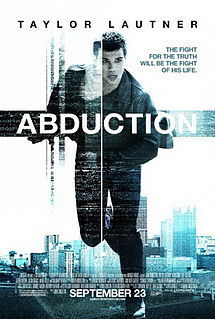
So not just romance covers can get trapped in a using and reusing stock poses, ideas, and themes.
Thank you, Lou! It's such a varied topic, so I appreciate your thoughts. (And interesting to see the similarities in the m/f covers too.)
 Lou built the cover for my Trey Grey novel and I loved working with her. I plan to snag her again for the second book (I am sure she is now slinking away to hide from me) as she was incredibly giving of her time.
 As for where we are headed on cover designs in LGBT think Jay Bell. Something like Summer is being made into a movie and his covers are quite simple. Captive Prince's covers are also quite simple. I think if an author wants to be taken seriously, and writes in a way that will get them there, then covers will alter to a more simplistic style in the near future. Think Beautiful Disaster... super simple and lovely. Look where that breakout novel went. Supernova at least.
Lou wrote: "For a book--romance or not--to achieve the Fifty Shades type of success, it needs something that's not quantifiable. The right thing in the right moment in the right packaging. I have no idea what made it for Fifty Shades. It was certainly not the writing. But I also don't understand the appeal of Twilight."Okay, Lou, because I know you put a lot of thought into your covers . . .
So, IMO, the Shifty Fades covers are not representative, they're outliers, and they were designed that way once it was clear that they could break the barrier into general fiction. I'm fairly certain those aren't the original covers, but also it was my understanding the books didn't get a deal until the story itself had already created some kind of phenomenon on the internet.
That all said, do you ever think about your covers for your own books with that kind of strategy in mind? Take Spirit Sanguine. If you'd designed this cover would you have done it differently? The way I see it, that book has some break-out potential, since it's far from your average vampire story, so maybe it needs a cover that screams something other than "M/M vampire."
Lou wrote: "I designed Spirit Sanguine's cover. :P I wanted something minimalistic with two guys actually photographed together. I have a weakness for grainy BW photography.Now, if I worked for a big-shot Ne..."
You designed that one? I thought Samhain did. :-P
Mod
Lou, say the word, and I'll be happy to use my super-elite art skillz to draw you a stick-figure cover. I'm sure it will help sells lots of books. ;)
Is
 based on photos or illustrated art? It looks so arty and drawn.
Mod
based on photos or illustrated art? It looks so arty and drawn.
Mod
My guess is that a lot of this stuff is cyclic too, like if one book goes supernova, others may emulate its style or themes (including cover designs) so they all start to blend together. And then someone else comes out with something different from that blend, and the cycle restarts around those styles, themes, and designs.
Like after
 ,
,
 , and
, and
 , there were covers coming out similar to those. It's bizarre to go to the YA "Paranormal Romance" shelf in a bookstore because so many of the covers are so similar. (And it's hilarious how many pop science/business books emulate Gladwell's style. It's really easy to get all those bare white covers mixed up.)
I once saw a Blackberry print ad using identical font, coloring, and weird word placement as one of the Dragon Tattoo books. Every time I saw it, I thought Dragon Tattoo first and then saw the Blackberry phone.
Or there's the styles like
 , which is very simplistic and nice, but put a bunch of similar ones together, and you start to lose the idea of different books.
Which makes me think that cover art is pretty hard since you're trying to capture the book's content, represent the genre, and catch the reader's eye (in a good way.)
Mod
I wonder why that is? Is it because genre readers read more and thus want quick filters (i.e. visual) or are more pick (or lazy?) Is Literary just more...arty?
I saw this and thought of you, especially with our dialogue about covers:
SPF One-Sheet: American Summer Movie Posters vs. Their European Counterparts: http://www.film.com/movies/summer-mov...
Some of the European ones looked to be on drugs. (What is up with Airplane??)
BTW--I liked your blog post on what you like to focus on in romance writing. I like the small, "ordinary" touches myself. I think that's one reason why like your writing so much. I find it both realistic and down-to-earth, even when the MCs are vampires or can see the dead.
Lou wrote: "Tara wrote: "I think if an author wants to be taken seriously, and writes in a way that will get them there, then covers will alter to a more simplistic style in the near future. Think Beautiful Di..."I agree that there could be an over the top era on normalicy, and we may already be in it with all the erotics out there with flower covers! EGAD, it looked like a floral shop when I glanced through the book aisles the other day. But on the flip side I dislike my books to disappear into the melee of romance covers.
Lou wrote: "I must add  caught my eye too. I like it much better than the Fifty Shade ones. Strangely, the sequel
  is much more conve..."
The first cover SandS designed followed the theme of the first book. About 250 first run copies made it out before they changed the cover art to what you see now. Unfortunately they should have used all that marketing money to edit the dang book. Just a hair disappointed... does it show?
Lou wrote: "Btw, Beautiful Disaster had another cover version too: I do not like it."
I must admit I haven't read BD but if I were browsing in a bookstore that cover would definitely put me off .
Mod
It must be such an interesting challenge to do art for a movie (or book) if you don't have much info on what the thing is about. (That totally gives an idea of why the posters are so different.)
That would be an interesting story though--an artist or group of overseas promoters who are given the title, but nothing else, and have to come up with promo from that. It would be hilarious to be given a movie title and think it's a story about competing Hollywood actresses when in fact it's really a sci-fi adventure about a orphan using a mythical Force to fight against Evil in Space. :)
That second cover to Beautiful Disaster is strange. What market are they going for with that one? More "edgy"?
On a separate note, Lou, you mentioned that your start in m/m was writing Torchwood fanfic. Was that your first foray in writing in general? I'm a big fan of your low-key writing style. Do you feel like that style was developed while writing fanfic, or did that come later?
Mod
I find that surprising, mostly because you avoided well the issues that seem to affect "early authors".
I think it's interesting when people start writing later. (So, not straight through college, and after, etc.) One of my favorite books is Watership Down, and I don't think Richard Adams wrote that until he was older, and making up stories for his kids. I think that's neat.
One of the things I like about m/m (and probably romance and writing in general) is that there are quite a few authors that started writing because it's just what they wanted to do and try. Most balance it with their day jobs or taking care of families, etc, but they have the compulsion to write the stories down and put it out there. I think it's very admirable.
I like your low-key style. It's easy but expressive, and not over-burdened with unnecessary details. (My mental example of an over-writer is Stephen King. He would write so much of what I thought of as "skipping paragraphs". Writing that might have added to setting or mood, but not much to the story, so you could just skip right over them and not miss much or anything.)
I dug Tinker Tailor and found it riveting. I was clutching the chair in the theater while we were waiting during one of those last scenes to see how the reveal would go. (I hadn't read the book, so I had no idea what to expect.)
Lou wrote: "Heh, I haven't read either of them but I take your word for it. Often times when an author achieves a big success his/her subsequent books suffer from the lack of editing. Happened with JK Rowlings..."EW! Missed that version of the cover. I am not sure I ever would have bought the book with that cover on it! Yeah, I am an editing freak too, so I see every little thing.
Mod
I'm not an expert, compared to the writers and editors in this group, but a few things that IMO signify early writing are:
- Heavy use of descriptive nouns instead of pronouns or names. (The cop. The taller man. The musician. The blonde. The younger man. The blue-eyed man.) I feel like a lot of that comes from fear of not thinking the characters and voices are distinguishable enough on their own for the readers, so the author adds more description, but often times it's needless. Personally, it's kicks me out the narrative.
- "Heavy avoidance of the word 'said'," she remarked, commented, fumed, shouted, yelled, grumbled, mentioned, tossed out, bit out, blurted out, spat out, retorted, whispered, murmured, voiced, groused. All of those are fine, but said is good too, but I know it's an early fear of sounding too repetitive with really, "said" often just disappears. (I say this as someone who was once afraid of overusing "said".)
- Over description in general. (This can be really bad in fanfic. So much description of eye and hair color...)
- "Mary Sue", self-inserts, or overly-perfect MCs. (I'm soooooo glad there was no internet when I was in middle school. You have been saved from so much terrible Mary Sue Dragonlance fanfiction!)
- Needless scenes or dialogue. So, when you can see an author loving a character, but not knowing when to pull back and see how things are adding to the story. I read a book that had pages of needless dialogue that you could just skip right over and there would be no impact on your understanding of the story.
- Everyone is in the same voice, no matter the character. (My best example of this is actually a movie. I love Clerks, but Kevin Smith's characters, especially in his early movies, all have the same voice--of Kevin Smith. I found it the oddest when listening to his female characters.)
Those are just a couple things that come to mind. I totally understand the "writing stories in the head" thing, so I really admire anyone who takes it out of their head and puts it down in words because it is really hard and frustrating and tiring, and sometimes really discouraging, especially when you look at someone else who makes it look "so easy* and effortless. Then you have to overcome the "why bother?" feeling.
That's why it is great to celebrate those who push past the "why bother?" Because what you can make is so great, and often better than what was just percolating in one's head. :)

Read with Pride Northwest
Books mentioned in this topic
Walking Disaster (other topics)Beautiful Disaster (other topics)
Twilight (other topics)
Boy Meets Boy (other topics)
The Tipping Point: How Little Things Can Make a Big Difference (other topics)
More...
Please feel free to join in and ask your own questions for the authors!
GRNW interviews Lou Harper - Part 1!
Here we interview Lou Harper, author of Last Stop, Spirit Sanguine, Dead in L.A. and other works.
GRNW: Congratulations on the release this week of Dead Man and the Restless Spirits, which I know is a companion story to another recent novel of yours, Spirit Sanguine. For new readers, could you tell us a little bit about these two books, and what inspired you to write them?
Lou: It started with Spirit Sanguine. I got tired of vampires and all their emo kid antics. I wanted to write a short novella about a vampire with a sense of humor and a zest for (un)life. 77,000 words later… What happened is that Harvey and Gabe hijacked the story, and things got out of hand.
Denton, aka Dead Man had a supporting role in Spirit Sanguine, but he was too interesting not to get his own story and own man.
Several of your books, Dead Man, Spirit Sanguine, and the paranormal mystery Dead in L.A. have a format based on multiple smaller mysteries. As a reader, I found it works really well (and is also neat to see how characters grow between the different stories.) What is it about this format that you like?
Well, in this format I can show their relationship grow in mini arcs and in the context of their adventures together. I'm not good at angst, or basing a story mainly on the protagonists' self-reflections. I need stuff to happen.
Dead in L.A. was a really fun mystery. Where did the inspiration for the characters of Jon and Leander come from? (And if someone fulfilled my big wish and made it into a TV show, are there any actors that you think would fit the roles well?)
That book started out as a real struggle. I rebooted it twice. The original protagonists were completely different. They looked good on paper but I didn't feel them. I think the problem was that I had Holmes and Watson stuck in my head too much. They were overbearing. Fortunately, I managed to chuck them and come up with new characters who clicked. If you think about it, there's still a shade of Holmes and Watson, but with the character dynamics seriously messed up, which is how I like things.
I'm sorry, I have no actors in my head for Jon and Leander. But feel free to pick your own.
(I'm terrible at actor-picking. GRNW Readers, any ideas?)
I remember you wrote in our introductions thread that you started getting into the m/m genre after watching the Star Trek film reboot a few years ago. So many never cross the threshold into writing—what pushed you to write your first m/m?
It was Josephine Myles' fault. After Star Trek I thought I'd check out this thing called "slash" I've heard about. So of course I got sucked in and pretty soon was writing Torchwood fanfiction. Yeah, I know... That's where I met Jo. She kindly offered to beta-read my stories and we became friends. When she made the jump to m/m she dragged me with her. At first I didn't think it was for me, but of course, I got sucked in again.
One of my favorite parts of your writing is your dialogue--it’s always very natural sounding, adds to the characters and their personalities, is never unnecessary, and is often very funny. Can you tell us a little bit about your thoughts on writing dialogue and what you like to take into consideration?
The truth is, writing dialogue is the easiest part for me. Often times I write what I call "naked dialogue" in the first draft—no tags, no beats, just the back and forth. I think my affinity comes from watching a lot of old movies growing up. I especially loved Classic Hollywood screwball comedies. Just watch any movie by Billy Wilder and you'll hear the best exchanges—quick and sharp.
Of course, I take the characters in consideration, what their vocabulary, speech pattern would be like. For example, Victor Augustine in Spirit Sanguine is a hundreds-years old vampire. His speech is more ornamental, long-winded, and he often uses old-fashioned words. (I think of Anthony Hopkins while writing him.)
Sometimes when I'm minding my own business, bits of dialogue float into my head--not even related to anything I'm working on. Like an exchange from an imaginary disaster movie while parking at Costco.
Along with working with publishers like Samhain and Loose Id, you also self-publish, including this week’s Dead Man and the Restless Spirits. What are some of the factors that you take into account when thinking of a book to either option to a publisher or to self-publish on your own?
I didn't plan on self-publishing, did it simply out of necessity. Last year revisions messed up my schedule and putting Dead in L.A. out myself was the only way to have one more title out before the end of the year. Dead Man happened for similar reasons.
In my opinion, it makes sense for authors with good name recognition to self-publish. I'm not quite there. There are lots of upsides to going with a publisher. To me the biggest one is not having to hire an editor. I love editors but they are not cheap. :P
You posted on your blog a handy guide about using Kindle Direct Publishing. Are there other recommendations that you’d like to share with others who are thinking of self-publishing?
Tons. I have considered putting together some sort of quasi guide, but give myself a headache thinking about it. There are so many little bits and bobs you figure out as you go, and the next person will have to figure them out all over for themselves. So it would make sense to share those experiences, but it's a daunting prospect and I'm not really an expert.
My main advice: hire an editor, cover designer, and proofreader. At the very minimum hire a proofreader. Readers will forgive a few mistakes but when your book is full of typos, misspelling, etc., you'll lose the readers before they could get into your story, and that's tragic. If you can't afford an editor, at least have beta readers and critique partners, and listen to them. If you absolutely must design you own cover, keep it simple. There's more to cover design than cut-and-paste.
For Dead in L.A., which was also self-published, I believe you experimented with KDP Select program, which requires you to publish exclusively with them for a period of time. What did you think of that program, and would you try it again?
In my opinion it's a bad idea for new titles. The only thing KDP Select gives you is the option to set your book free for a few days. But you shouldn't be doing that with a new release, anyway. On the other hand, you'll piss off those fans of yours who can't or won't use Amazon. Even if they’re a minority, you shouldn't inconvenience them. (You also get 70% royalty for your books sold in Japan and Brazil with KDP select. Whateva'.)
However, if you have an older title, that isn't selling that well, and you're thinking of making it free for a few days here and there for promo reasons, then by all means, Amazon Prime is a good choice. That's my opinion, at any rate.
Along with your writing, you’re also a very accomplished cover artist. How did you get started doing covers? How long can it take to design a book cover? Do you have any favorites that you can tell us about?
I have a degree in art and worked in graphic design for years, so getting into cover design after starting to write was a natural progression. At first I was making covers for friends, but then I got to do a couple for Josh Lanyon and through him for Harper Fox.
Usually the latest ones are my favorites. I'm very happy with The Haunted Heart series I did for Josh Lanyon recently. It consists of four ebook covers and one print cover. They all have the same composition but they’re also all unique. I'm very happy with Dead Man too. That one took me months to finish, mostly because I wasn't sure at first what I wanted. But I was designing as I wrote the book, so there was no hurry. It usually takes me a few days to come up with the initial concept(s) that I can show the author. I need to play around with it, try different elements, etc. and then sleep on it.
Referenced Covers:
The headless torso covers are often poked fun at (since they are so prolific), but I also heard that they sell the most books. (Is that true?) As an artist, how do you balance between that ideal design that makes you happy, and one that the market is demanding?
I don't know if they sell the most books but it's quite possible. I’ve heard many readers say they don't want to see faces on the covers because they'd rather have their own image of the protagonists. Headless torsos are not necessarily bad, and God knows, I’ve done my share of them. The problem is when they're done in assembly line fashion, without any regard to the spirit of the book. They end up looking generic.
These covers have headless torsos but they're all different:
My main goal is to make the authors happy. Some have very specific ideas others not so much. When the author is undecided I tend to present them with a traditional design and with something a little different, and let them chose.
I play around the most with my own covers, and it might be to my own detriment. Would Dead in L.A. have sold better if it looked more like m/m and less like a pulp mystery novel? Possibly.
Good points, Lou, and those covers you reference are really nice. (And I do have a severe soft spot for Jurgen's torso in The Fix...:D)
On to the next post for Part 2 with Lou!