
Bright Young Things discussion

This topic is about
H.V. Morton
Favourite Authors
>
H.V. Morton
date newest »
newest »
 Nigeyb wrote: "For anyone interested, there's a programme that looks well worth hearing all about H.V. Morton on the iPlayer:
HV Morton: Travelling into the Light"
I have now listened to it, and it's a marvellous introduction to the world of HV Morton. There's an interesting dichotomy between his public persona and the real "Harry" Morton.
Right, off camping now. Have a great weekend BYTers.
 Nigeyb wrote: "Nigeyb wrote: "For anyone interested, there's a programme that looks well worth hearing all about H.V. Morton on the iPlayer:
HV Morton: Travelling into the Light"
I have now listened to it, and ..."
Thanks Nigeyb, for posting the link to the Radio program portrait on Morton. Excellent, beautifully produced, and specifically enriched by the background ambient sounds and music.
Greg wrote: "Thanks Nigeyb, for posting the link to the Radio program portrait on Morton. Excellent, beautifully produced, and specifically enriched by the background ambient sounds and music. "Yes. I couldn't agree more. The sound of the Morris engine was particularly pleasing and really helped to evoke a sense of his travels for me. My copy of In Search Of England has been despatched. Hurrah!
I am reading through it again, it is so visual, H. V. M's description of England. Apart from the urge to play Geoffrey Burgon's soundtrack to the 1981 TV series of Brideshead, the book evokes a desire to play English music, and not necessarily of the time of his writing. I had to play Pink Floyd's Cirrus Minor. (You can hear it on Spotify). The birdcalls over the music have a powerful effect of giving a sense of place, as I was alluding to in the previous comment about 'Travelling Into The Light'.If I can sort of digress a bit, I recommend listening to a series of 4 lectures by Niall Furguson. They're free podcast downloads from BBC Radio 4. The Reith Lectures, Niall Furguson: The Rule Of Law and Its Enemies: 2012, The Human Hive. They are an amazing explanation of The English structure and shows wherever it was exported to, those nations flourished and prospered because they kept the underlying structural system, like the rule of law. Very impressive stuff!
I mention this because this is another way of discovering another aspect of 'The Search For England'. Cheers.
Marvellous stuff Greg. Thanks so much. I will indeed follow up on the lectures by Niall Furguson. Radio is such a wonderful medium.Whilst reading your excellent post, specifically your musings on appropriate music for HVM's descriptions of England, I was also reminded of - and I'm veering even more wildly off topic here but it feels connected - Electric Eden: Unearthing Britain's Visionary Music by Rob Young.
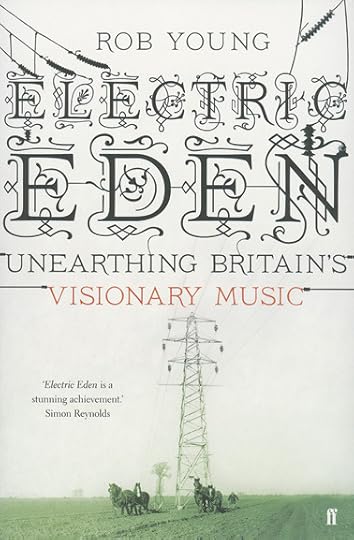
The GoodReads description pretty much nails it...
"Electric Eden" documents one of the great untold stories of British music over the past century. While ostensibly purporting to be a history of that much derided (though currently fashionable) four-letter word, 'folk', "Electric Eden" will be a magnificent survey of the visionary, topographic and esoteric impulses that have driven the margins of British visionary folk music from Vaughan Williams and Holst to The Incredible String Band, Nick Drake, John Martyn and Aphex Twin. For the first time the full story of the extraordinary period of folk rock from the mid 1960s to the mid 1970s will be told in a book with the breadth of a social history touching on sonic worship, pagan architecture, land art, ley lines and ther outer fringes of the avant garde. "Electric Eden" identifies a particularly English wellspring of imagery and imagination, an undercurrent that has fed into the creative and organic strand of Britain's music over the past century. From Edwardian composers assimilations of folk song and visionary poetry, via folk rock of the 60s and 70s, the story is brought up to date by placing these earlier movements in a continuum that links through significant figures in 21st century pastoral electronica.
You may well find it interesting. It's a doorstop of a book.
 Greg wrote: "Nigeyb, a good choice, to spread the word on H.V. M."
Thanks Greg. I have a very good feeling about H.V Morton, and will be reading the book soon, whether it emerges as the BYT non-fiction choice for September 2013 or not.
Greg wrote: "While looking back over the book, I noticed that H. V. M.'s writing style is so of the time and has a charm which is now rare. Sayings and words, like 'Jove's bolt's!' It might be fun for the B.Y.T's group to bring back into use, words and phrases of the period into the discussion. Or maybe create a section for a dictionary where we all can add words or phrases of the period that are rarely used now. "
A wonderful idea Greg, and one I wholeheartedly support.
I already pepper my conversation with "splendid", "toodle pip", "ridiculous", and so on. Actually P.G. Wodehouse informs a lot my speech mannerisms.
Thanks very much Nigeyb, for the 'Electric Eden' heads up. That looks, or more fittingly, sounds like a fantastic read. There's nothing like books on music that can stir an argument, more than sport, I'd say. Always controversy aroused by who was left out or in, or not given enough attention.
Greg wrote: "Thanks very much Nigeyb, for the 'Electric Eden' heads up. That looks, or more fittingly, sounds like a fantastic read "I'm pretty confident you'll find a lot to enjoy in it. It's very interesting and quite original. Another of those alternate social histories - and lots of music to follow up on too.
In Search of H. V. Morton by Michael Bartholomew sounds very intriguing and lifts the lid on the real H.V. Morton. 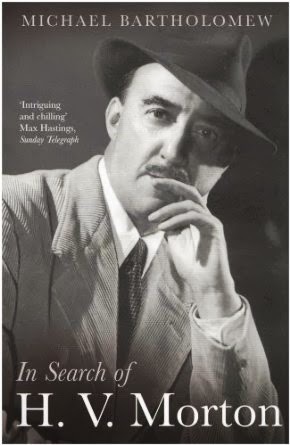
Here's an interesting review by Max Hastings that probably gives anyone interested the key points:
The subject of this short, intriguing and chilling biography was a phenomenon between the wars. He invented a genre of travel writing which made him famous and rich - in 1938 royalties and a newspaper column yielded the huge sum of £36,000. In 1941, when Brendan Bracken (then Minister of Information) wanted a worthy chronicler of Churchill's trip to Placentia Bay to meet Roosevelt, Harry Morton, the star reporter, seemed the obvious choice to travel with the Prime Minister's party on the battleship Prince of Wales.
His photograph on the jacket of Michael Bartholomew's book shows a figure closely resembling Peter Sellers as Inspector Clouseau. Yet in truth, as this book shows with copious evidence from Morton's unpublished diaries and memoirs, he was more fitted to play Frankenstein's monster. The shrewd, amiable lone traveller of Morton's narratives emerges in real life as a thoroughly nasty piece of work - vain, cynical, misanthropic, deeply anti-Semitic, with a penchant for grotesque sexual adventures.
Michael Bartholomew embarked on his task as an admirer of Morton's work. As he explored his subject through his private papers, however, something close to revulsion set in. What is it about travel writers? This biographer's experience seems not dissimilar from that of Nicholas Shakespeare, a devoted admirer of Bruce Chatwin, who discovered as he wrote the Chatwin biography that, for all the man's famous charm, he possessed a notably unpleasant personality, and invented substantial parts of his books.
Henry Vollam Morton was born in 1892, the son of a Midlands regional newspaper editor. He himself achieved early success as a journalist on the Daily Express and was a favourite of Lord Beaverbrook. Like most of Beaverbrook's proteges, at the outset he was searched and relieved of scruples and principles, leaving him free to display superb reporting skills. Morton quickly perfected the art of producing heartfelt accounts of events before they took place, and composing moving interviews with people who did not exist.
When in 1926 he embarked on a motor tour of the country to produce pieces for the Express which later became his first best-seller In Search Of England, he invented substantial passages of experience, and omitted to mention that instead of travelling alone, as his books always implied, he was usually bonking for Britain as he went.
Travelling to Rome on an assignment for the Daily Herald (after he and his editor decided that the Daily Express was not big enough for the egos of both) he broke his journey in Paris for just long enough to dash from the station to a brothel for a ten-minute coupling, before rushing back to his train. All this sort of stuff he recorded in his private papers. His widow must have disliked him greatly, not to burn these after his death.
If the sexual passages were merely undignified, Morton's political views were repellent. He hated socialists, and indeed democracy. "I must say Nazi-ism has some fine qualities", he wrote in February 1941. For nationalistic reasons he did not want a German victory in the Second World War, but he believed the Fuhrer had sound ideas about Jews and Bolsheviks. "I am appalled to discover how many of Hitler's theories appeal to me", he wrote - fortunately for his reputation, not for publication. Even America is dismissed in his diary as "that craven nation of Jews and foreigners".
After the war, he and his wife decamped to South Africa, in those happy days when blacks were kept in their place and he could escape British democracy, austerity and taxation. The heyday of his success was over, but he got away with enough loot to live comfortably with his fascistic ruminations until his death in 1979.
His book In Search of South Africa might more justly have been titled something much cruder, since his travels there involved a ludicrous dalliance with a married woman whose husband appears to have accompanied them everywhere except the bedroom.
How good was Morton as a writer? Bartholomew approaches the issue with the ingenuous honesty of a non-professional writer. He is obviously shocked by the extent to which Morton made things up. Yet I fancy that it is a commonplace of travel writers, to mould experiences and encounters and the chronology of their journeys to conform to a literary shape. My father, as a child, once asked Hilaire Belloc in a wide-eyed fashion whether it was really true that he had walked from London to Paris with only sixpence in his pocket, as he had described. "Young man", said Belloc sternly, "I am a journalist".
Even some of the great Patrick Leigh-Fermor's travel writings represent the highest order of Irish story-telling, rather than precise and literal historical truth. This does not diminish their literary quality, and I bet Cobbett did exactly the same.
The best of Morton's writing displays great shrewdness, descriptive power and charm. He brought to his books the qualities of an outstanding Beaverbrook journalist of his period: masterly understanding of public taste, deployed in a moral void. Bartholomew is so disgusted by the revelation of Morton's nastiness and deceits that he finds it hard to be charitable about his books, though he struggles manfully.
Through the pages of In Search Of England, Morton contrived a portrait of the warm beer, country lanes and village greens he knew his readers wanted. I bet John Major lapped it up in his youth. The book ends with a passage which Bartholomew judges to have been not reportage, but pure fiction:
"I went out into the churchyard where the green stones nodded together, and I took up a handful of earth and felt it crumble and run through my fingers, thinking that as long as one English field lies against another there is something left in the world for a man to love.
'Well', smiled the vicar as he walked towards me between the yew trees, 'that, I am afraid, is all we have'.
'You have England', I said."
A blue commemorative plaque is to be unveiled next month at Morton's home town of Ashton-under-Lyne. The Nazi revelations in Bartholomew's book should alone suffice to quash that idea, even in a burgh a trifle short of celebrities. Morton was a gifted entertainer who grasped the knack of touching the heart of bourgeois Britain, but today it seems hard to pitch his claims much higher.
I suspect that part of the enjoyment of reading In Search Of England and other books by H.V. Morton is working how much is true and how much is wishful thinking, in addition to deconstructing the character of "Harry" versus his real life counterpart. As Hastings says above, "The shrewd, amiable lone traveller of Morton's narratives emerges in real life as a thoroughly nasty piece of work - vain, cynical, misanthropic, deeply anti-Semitic, with a penchant for grotesque sexual adventures."
Nigeyb wrote: "In Search of H. V. Morton by Michael Bartholomew sounds very intriguing and lifts the lid on the real H.V. Morton. Here's an interesting review by Max Hastings that probably gives anyone interes..."
Thanks Nigeyb, Patrick Leigh-Fermor, I read a very interesting article on him in NYRB a few years ago. I'll dig it out and refresh the memory and come back. Hopefully the article online is not blocked, only for subscribers, and I can post the link. Looks like he had a fascinating life. A book by him of his time in Greece I want to get. It looks like Patrick Leigh-Fermor was a thoroughly decent chap.
Here is the link to the article in NYRB on Patrick Leigh-Fermor by Colin Thubron.
http://www.nybooks.com/articles/archi...
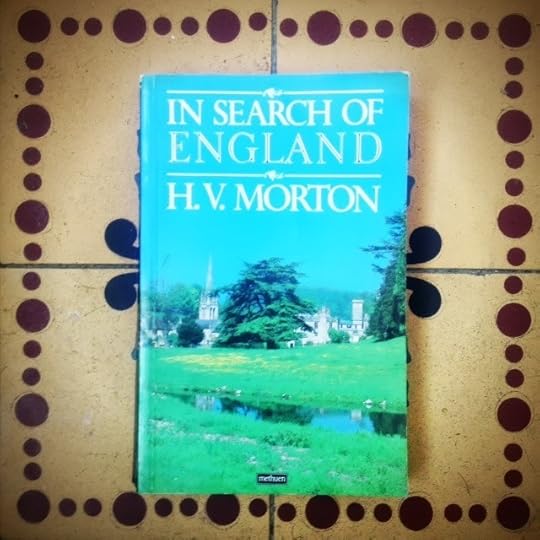
I've just finished In Search Of England by H.V. MortonAfter many years abroad, H.V. Morton set out one morning in the mid-1920s, in his Morris two-seater car, on a tour of his home country.
This book was published on 2nd June 1927. It is now in its 40th printing with its original publisher in the UK. One British newspaper described the book as "travel writing at its best. Bill Bryson must weep when he reads it." I agree. The book is an absolute delight. The best travel writing inspires the reader to want to go and visit the places described. I came away from this book with a list of places to visit, or revisit. I was also inspired to look up many of the places he visited online. Many still look every bit as charming as H.V. Morton's descriptions.
H.V. Morton was writing at a time when people were less mobile. Interestingly he still describes traffic jams in the Lake District, and seems to encounter American tourists wherever he goes. He also stumbles across many old customs and skills that would have been in their death throes at the time he was writing, for example he describes flint-knappers in Norfolk, a skill that was already all but extinct.
Morton's writing is frequently sublime. It is fairly obvious that the reality cannot have been quite so perfect and that he must have made up some of the account. As the trauma of World War One started to diminish I suspect many readers wanted this type of pleasing portrait of England as a place of tradition, stability, history, country lanes, village greens, outstanding beauty, quirky characters and traditional pubs serving warm ale and cheese. The book's conclusion perfectly illustrates this romanticised view:
"I went out into the churchyard where the green stones nodded together, and I took up a handful of earth and felt it crumble and run through my fingers, thinking that as long as one English field lies against another there is something left in the world for a man to love.
'Well', smiled the vicar as he walked towards me between the yew trees, 'that, I am afraid, is all we have'.
'You have England', I said."
It is interesting to consider the extent to which it is acceptable to embellish or romanticise accounts of travel. For me it matters not a jot and I have no hesitation in recommending this delightful book.
 The 1930s in England. Pretty much a golden age for writers, poets, journalists, essayists, pundits, critics, editors. Awesome.
 Nigeyb wrote: "It is interesting to consider the extent to which it is acceptable to embellish or romanticise accounts of travel. For me it matters not a jot and I have no hesitation in recommending this delightful book. "
I haven't read the book yet, but I think most travel writers embellish or romanticise their accounts, to draw out certain aspects and impressions of the places they are visiting. That is fine by me, they are writing their account, not a guide book. If their portrayal is so subjective that the place is unrecognisable however, I might wonder if they had actually been there at all.
Val wrote: "Nigeyb wrote: "but I think most travel writers embellish or romanticise their accounts, to draw out certain aspects and impressions of the places they are visiting...."Care to highlight the sources or experiences from which you developed this impression?
Chatwin, Fermor, Lawrence (both), Maugham, Newby, Stevenson and Waugh all embellished and I think some of them claimed it was better to do so, although it would take some time to track down interviews etc.
Here's a wonderful bit of HVM history. The lost book of 'In Search of Australia' by HVM!Well, almost. A great article about how the book almost happened. HVM was planning on heading down under in 1936 but WWII happened, and HVM never did get to Australia to write 'In Search of Australia.'
It is interesting comparing how HVM wrote about peoples of other countries, like say, Italians in 'In Search of Italy' to how HVM observed Americans on English soil. Would he have been charmed by Australia's characters?
http://hvmorton.wordpress.com/2014/04...
^ That's wonderful Greg.I would guess that HVM would indeed have been charmed by Australia's characters. I base this assessment on my own encounters with those Australians who have danced through my own life. All the Australians I have ever met have been nothing less than completely agreeable and endearing. I sometimes wonder if it's only the nice ones that come travelling as I have only ever met Australians here in the UK.
I'm a fan of Antiques Roadshow. It is a great vehicle for showcasing England to the rest of the world. The appeal for me primarily are the stunning locations and the history, and Fiona Bruce is a wonderful presenter.I was inspired to dust off my 1933 hardcover edition of The Call of England which I paid $6.50 in very good condition from a second hand bookshop. It has a map of England with the route followed by the author.
This book is every bit as good as In Search Of England. The Call of England may be even more interesting as it doesn't focus solely on the beautiful parts of England.
This is the Introduction from the 1933 edition.
This book, like its companion In Search of England, is the record of a rather haphazard motor-car holiday in spring. It is a queer mixture. In the earlier book I deliberately shirked realities. I made wide and inconvenient circles to avoid modern towns and cities. I went through Lancashire without one word about Manchester and Liverpool. I devoted myself entirely to ancient towns and cathedral cities, to green fields and pretty things.
This book is an attempt to give a more general view of England, town and country. You will find in it the past and the present, cathedrals and factories, town walls and rag markets - the wandering of St. Columba's dead body through Anglo-Saxon England is separated by only a few pages from an account of a golf-ball factory in Birmingham !
This may displease the tourist, but the traveller may see in it an attempt to present a fair and accurate picture of Old and New England. England is an incredible jumble of romance and reality.
In the other book I dwelt mainly in the south and the west, rushing, rather wildly, through the north. In this book I linger in the north. I hope that many London motorists may be encouraged to go north instead of south and west, which, at present moment, they do instinctively. No man who wishes to understand the country in which he lives can neglect the north of England. Almost within our time we have seen a great re-grouping in the distribution of human energy, comparable only perhaps with the switchover of our ports in medieval times from the east to the west coast. The Industrial Revolution, while it has planted an enormous population in the north, has at the same time distorted our ideas of that part of the country. We are inclined to think of the north as an extended Sheffield. The symbol of the north is the chimney-tack. It is only when we go there that we realize how very slightly the age of coal and steel has deformed the green beauty of England. Our manufacturing districts, vast as they ate, form merely a scratch on the map in comparison with those miles of wild and romantic country, whose history and beauty rivals anything in the south can boast.
The Intelligent traveller will find it stimulating to talk to the men of Manchester, Liverpool, Birmingham and Sheffield and he will also discover, with perpetual pleasure and, I think, astonishment, that the north of England offers wider solitudes, more rugged beauty, more old castles and abbeys than the south. He will discover in the Peak District of Derbyshire a marvellous wilderness as desolate as Dartmoor; in Yorkshire he will find little market towns in whose corners lurk the last vestige of the eighteenth century; in Lancashire he will find shepherds and their lambs within sound of the cotton looms; along the Northumbrian coast he will enter a district whose romantic wildness cannot be surpassed in any part of England.
H. V. M. May 1928
^ Sounds good Greg. Please keep us informed with your progress - and what you make of it once you've completed it.
Certainly will Nigeyb. From the first couple of chapters I can recommend it if you enjoyed In Search of EnglandHVM's description of a photo of a newly married couple in a room of a cottage in Colchester with a sign bearing the word 'Refreshments'. HVM describes the newlyweds in the photo while waiting for his food.
"Both of them, then, had entered the dangerous state of matrimony in bovine magnificence." Hardy would be proud of him.
The Call of England progress update. It is certainly a supplementary volume to In Search Of England. So far, probably because it is similar to In Search of England in style and subject, it doesn't generate the same enthusiasm as the first book, but I'm splitting hairs. There are parts of The Call of England of places that are so beautifully described like that of three ruined abbeys and some coastal towns. Contrasting with these I feel the coverage of some of the less attractive towns and cities HVM is forcing the words to make it interesting. So, so far the book is a mix of the exquisite and quotidian. The quotidian places opens an interesting conversation, being places unfamiliar to this reader, not having any association or memory to evoke a feeling for the place. There is a wonderful discussion on this topic about 'place and name' between Paul Auster and J. M. Coetzee in Here and Now: Letters. If I was/were (what is the correct word) British reading The Call of England, I'd be looking for my car keys and road map.
Val,The Call of England is available as a 2007 paperback which shouldn't be too hard to find.
 Sounds fascinating! Will have to get some of his stuff.
Greg wrote this in the May non-fiction nominations open thread and I thought it was as good a reason as any to revive this thread.....
Sounds fascinating! Will have to get some of his stuff.
Greg wrote this in the May non-fiction nominations open thread and I thought it was as good a reason as any to revive this thread.....Greg wrote: "A while ago I set up a Hot Read for In Search Of London by H.V. Morton. As a prompt/urge/exhort/entreat I nominate this book for a group read."
^ Bravo Greg. I still have this on my shelf waiting the right moment.
In Search Of England was a delight

Bright Young Things
Books mentioned in this topic
In Search Of England (other topics)In Search of London (other topics)
The Call of England (other topics)
The Call of England (other topics)
In Search Of England (other topics)
More...
Authors mentioned in this topic
H.V. Morton (other topics)H.V. Morton (other topics)
Michael Bartholomew (other topics)
H.V. Morton (other topics)
H.V. Morton (other topics)
More...
Who is HV Morton?
Did he write many books?
He wrote over fifty books. Click here for more information.
Where might be a good place to start?
I have nominated one of his books for our September 2013 non-fiction read.
In Search Of England by H.V. Morton.
It was published on 2nd June 1927. Currently in its 40th printing with its original publisher in the UK, this is the book that one British newspaper has called "travel writing at its best. Bill Bryson must weep when he reads it."
Whether describing ruined gothic arches at Glastonbury or hilarious encounters with the inhabitants of Norfolk, Morton recalls a way of life far from gone even at the beginning of a new century.
H.V. Morton peerlessly evokes the sights, the splendors, and the drama of history for tourists and armchair travellers alike.
I have ordered a copy and will tell you what I think once I have read it. Here's three reviews that make me keen to read it:
Is there somewhere I could listen to a radio programme about him?
For anyone interested, there's a programme that looks well worth hearing all about H.V. Morton on the iPlayer:
HV Morton: Travelling into the Light
I'll be listening over the weekend. I'll let you know what it's like. It's H.V. Morton's world, we just live in it.