
The History Book Club discussion
TECHNOLOGY/PRINT/MEDIA
>
OTHER E-READERS
date newest »
newest »
 Mod
Mod
 by Jarice Hanson (no photo)
Synopsis:
Social media shapes the ways in which we communicate, think about friends, and hear about news and current events. It also affects how users think of themselves, their communities, and their place in the world. This book examines the tremendous impact of social media on daily life.
• Provides an insightful perspective on the past and future that demonstrates how the technologies of communication serve to create the nexus of social interaction
• Examines the fundamental need and desire of humanity to communicate, which in turn determines what we think of ourselves, how we see the world, and how we make meaning
• Focuses on social media as a powerful tool, not only for communication and entertainment but also for potentially equalizing power and social mobility locally, nationally, and globally
• Considers the financial impact of social media as it challenges legacy media for consumers, users, and audiences
Mod
 by
by
 Raymond Williams
Synopsis:
-The most important Marxist cultural theorist after Gramsci, Williams' contributions go well beyond the critical tradition, supplying insights of great significance for cultural sociology today... I have never read Williams without finding something worthwhile, something subtle, some idea of great importance-
- Jeffrey C. Alexander, Professor of Sociology, Yale University
Celebrating the significant intellectual legacy and enduring influence of Raymond Williams, this exciting collection introduces a whole new generation to his work.
Jim McGuigan reasserts and rebalances Williams' reputation within the social sciences by collecting and introducing key pieces of his work.
Providing context and clarity he powerfully evokes the major contribution Williams has made to sociology, media and communication and cultural studies.
Powerfully asserting the on-going relevance of Williams within our contemporary neoliberal and digital age, the book:
Includes texts which have never been anthologized - Williams' work both biographically and historically
Provides a comprehensive introduction to Williams' social-scientific work
Demonstrates the enduring relevance of cultural materialism.
Original and persuasive this book will be of interest to anyone involved in theoretical and methodological modules within sociology, media and communication studies and cultural studies.
Review and Commentary:
According to Journalism Professor at Columbia University - Todd Gitlin - "This is an inaugural lecture Raymond Williams gave in 1974, when he assumed a professorship in drama at Cambridge University.
He’s one of the most fertile minds when it comes to media in the last century. Basically he’s saying that it’s extremely odd, and yet central, to the form of civilization that has evolved, that there’s so much drama.
And what he means by drama is not simply normal plays, but everything from advertising to television serials, to the contents of newspapers and magazines. He died in 1988 before a lot of the new technology we have now appeared; he had not encountered the iPhone.
But he anticipates a life in which people are immersed in narrative nonstop. I would add sound, or song, as another important component. This article is, at least to my way of thinking, the earliest statement of the point that quantity becomes quality.
The quantity of a certain kind of media experience creates a different way of life, which is in fact ours. Williams directed us into the whole problem of media saturation as a phenomenon worthy of treatment in its own right. -- Journalism Professor at Columbia University - Todd Gitlin in interview with Five Books

The History Book Club
Books mentioned in this topic
Raymond Williams on Culture and Society: Essential Writings (other topics)Authors mentioned in this topic
Raymond Williams (other topics)Jarice Hanson (other topics)
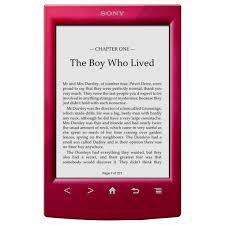
These would include Sony and Kobo and any others.