
The Patrick Hamilton Appreciation Society discussion

This topic is about
The Midnight Bell
Patrick Hamilton: book by book
>
The Midnight Bell
date newest »
newest »
 Mod
Mod
I am currently putting together a little walking/drinking tour of Fitzrovia for a couple of friends that will take place on a Saturday in mid-October 2013. I hope to evoke a bit of the spirit of Patrick Hamilton and Julian Maclaren-Ross.
In the course of my preliminary research I came across this web page which seeks to identify The Midnight Bell
Above all, though, The Midnight Bell is a book about a pub. There are quite a number of pubs in Fitzrovia - the area west of Tottenham Court Road - and, as his biographers have established, Patrick Hamilton knew this area, and its bars, well. The Fitzroy Tavern was even in the 1920s a well-known drinking place, courtesy of its legendary landlord, Judah ‘Pop’ Kleinfeld. The interior of the Midnight Bell has a physical resemblance to that of the Fitzroy, certainly closer than any other pub in the area. The Wheatsheaf, just down the road from The Fitzroy Tavern on Rathbone Place, also offers a close match - and a resemblance too in its landlord and family. This is Hamilton’s account of the publican at the Midnight Bell:
[T]he Governor and his wife […] were as benign as they were bloated. It was pretty obvious to everybody that they might both burst at any moment.
The Governor’s Wife’s Sister was a different proposition altogether. She was, to begin with thin. She was also dark, and tall, and bony, and ugly. She was, however, all-powerful — the true ruler and organiser of The Midnight Bell. She had, it was widely known, a Head for Business. (Hamilton 18-19)
That bears more than passing similarity to the management at the Wheatsheaf, described by Paul Willetts in his biography of another Fitzrovia writer and drinker, Julian Maclaren-Ross:
The landlady was a short, plump spinster named Mona Glendenning, who ran the place in conjunction with her similarly rotund brother, Redvers, and his wife Frances, a spindly woman in a tweed suit and pince-nez[…]The Wheatsheaf’s comparative distance from the West End meant that few of the foreigners or the whores found there way there. (Willetts 141)
Indeed, the description could equally apply to Charlie and Annie Fairchild at the Fitzroy Tavern.
Here's some more from the same source...
What is of more interest is the physical area in which The Midnight Bell is situated. Fitzrovia, with its pubs and cafes, has always represented a fringe and marginal space within London. It is the drinking culture rather than any discernible aesthetic, political ethic or philosophy that attracted people. Nina Hamnett remarked: ‘At this time several afternoon clubs started. They opened at three and continued till eleven pm. I found an extraordinary number of so-called business men who had nothing to do in the afternoon’ (Hamnett 78-9)
Hamilton’s Fitzrovia represents a post-war bohemian space. The Midnight Bell is set in the late 1920s, and many of the men who drink at the bar are of an age to have served in France or Flanders. The companionship of the bar becomes a recreation of the sense of comradeship experienced in the trenches. The landlord, the ‘guv’nor’, becomes a symbolic reconstruction of the officer. Drink becomes a means of anaesthetising memories. This oblivion of memory becomes then the guiding imperative for those who drink in the Midnight Bell.
It's all worth a read if you love this stuff as much as we here at The Patrick Hamilton Appreciation Society. I'll take a few photos and make a few notes to record our day in Fitzrovia and publish anything of interest.
All rights to the text above remain with Simon Goulding. And here's the link to the London Fictions home page: http://www.londonfictions.com
Mod
 The Midnight Bell is well observed and written and is a good story in its own right, but for me the power of Twenty Thousand Streets Under The Sky (and the fifth star I gave it) came from the linking of the three stories, so I would recommend reading the trilogy.
Mod
The Midnight Bell is well observed and written and is a good story in its own right, but for me the power of Twenty Thousand Streets Under The Sky (and the fifth star I gave it) came from the linking of the three stories, so I would recommend reading the trilogy.
Mod
Thanks Val. Yes, I'm sure that's right and I will definitely read all three but perhaps not all in one sitting. I have so many other things I am trying to get read too.
In a way I wish I hadn't watched the TV adaptation first as I think I prefer not to know the story before I read a book. I'm also finding that my mental image is based on the (excellent) cast of the BBC adaptation.
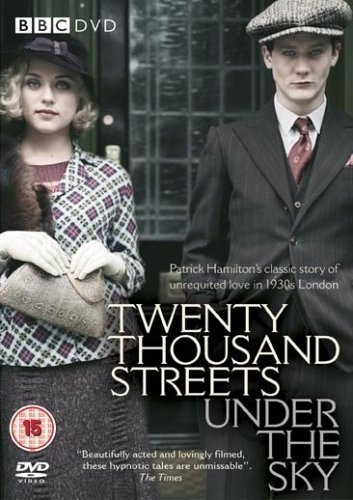
That's Jenny (the prostitute) and Bob (the barman) on the cover
Mod
Mod
Mod
The Midnight Bell (1929) is the first book of the Twenty Thousand Streets Under The Sky trilogy - the other two are The Siege of Pleasure (1932) and The Plains of Cement (1934).
Around a year before reading the book I watched a DVD of the BBC4 adaptation screened in 2005 - three one hour episodes (one per book). On reflection I wish I hadn't watched the TV adaptation first as I think I'd prefer not to have known the story before I read the book. My mental image of the characters was based on the (excellent) cast of the BBC adaptation.
I adore Patrick Hamilton's Hangover Square (1941) - my favourite novel of all time. Since reading Hangover Square, I have been working my way through all of Patrick Hamilton's work. The Slaves of Solitude (1947) is superb; I also really enjoyed the first two Gorse novels - The West Pier (1952); and Mr Stimpson and Mr Gorse (1953); and Craven House (1926).
Whilst Hangover Square may be Patrick Hamilton’s best-known London novel I think that The Midnight Bell (1929) - the title comes from the pub which is the book’s focal point - is a key book in understanding his world view and the way he used his own life to inform his fiction. The story is akin to watching a slow motion car crash, the knowledge that this story is strongly autobiographical makes that feeling even more pronounced.
Patrick Hamilton’s protagonist Bob, the waiter at a Euston pub called The Midnight Bell, has saved £80 (worth several thousands of pounds in today's money) in the bank through prudence and maximising his tips. Following a chance encounter with Jenny, a prostitute, and with whom he becomes obsessed, and believing he can change her, he becomes ever more reckless and desperate. Towards the end, Bob, realising the folly of his misadventure, concludes "that it had all come from him, and only the hysteria and obsession of his pursuit had given a weak semblance of reciprocation". Basically he'd been played.
As with all the best books by Patrick Hamilton, in addition to a riveting drama, The Midnight Bell also provides a powerful evocation of London - 1920s London in this instance. The character of Euston, the West End, Soho, and Hampstead, still recognisable to the modern Londoner are beautifully captured, especially the various pubs and cafes which feature so heavily in the story.
The other aspect that rings true so authentically is the dialogue: whether this be the conversations between the regulars at The Midnight Bell, or the somewhat stilted and love lorn conversations between Bob and Jenny, or most powerfully a dreadful scene when Bob visits Jenny in the room she shares with two other prostitutes. The true horror of his situation dawns on Bob, who remains powerless to escape. Frequently these experiences are accompanied by boozing, and then appalling hangovers and self-loathing: clearly something about which Patrick Hamilton had already gained a thorough knowledge.
I am writing this without having read the other two parts of the trilogy: The Siege of Pleasure (1932) and The Plains of Cement (1934). However, knowing the basic story, I realise that part of the trilogy's power is the way in which all the stories interlink. I will consider this in greater detail when I have read the other two, however for now I'll conclude by stating that, as a stand alone book, The Midnight Bell is right up there with Patrick Hamilton's best work. It's not quite Hangover Square or The Slaves of Solitude, but it's not far off.
 Thanks for the introduction to the world of Patrick Hamilton. Now I’m trying to catch up. Yes, I liked The Midnight Bell – though the fact that it was semi-autobiographical helped give credence to Bob’s otherwise puzzling infatuation with the insouciant Jenny. It’s not a great explanation to say that “Dreams were his life...[and] Bob believed that one day his dreams would come true”, but I guess Patrick Hamilton may have felt the same about his Lily. So what is Bob’s dream? Jenny looks very pretty and as such is an attractive companion for a young man with ambitions. But she also looks like what she is – a streetwalker – and everyone sees that, including Bob, right from the word go. Most writers would have made Bob an innocent abroad and created a Big Scene when he eventually discovers Jenny’s True Nature (damn...these capitals are catching). Alternatively, Bob might have been attracted to forbidden lowlife pleasures (but in fact he’s quite prim). Instead, he seems to be motivated by self-congratulatory delusions of chivalry. He will rescue the pretty Jenny – not like a knight in shining armour (Jenny ain’t no damsel), but more like King Cophetua. (Should I throw that in? Go on, we’re literary – we can take it). Odd story, in a way. The only bit I found too hard to swallow concerned Bob’s literary ambitions which we are asked to believe extended to writing and submitting short stories. No, I don’t think so. The painfully inarticulate conversations throughout the novel suggest that talking is challenge, never mind writing. Perhaps Patrick Hamilton’s autobiographical impulses got the better of him at that point. The ending was unanticipated as well. Running away to sea? Never say die? Very strange, like something out of a slightly earnest moral tract...
 I liked the invocation of 1920s London, of course, and the depiction of pre-war pub life. A “B&B” – Burton & Bitter puzzled me, since I thought the two were pretty much the same thing. A search on-line, however, told me that original Burton beers weren’t just premium bitters, but could be as strong and sweet as barley wine, which would explain the order. Now I come to think of it, I tried an original recipe Burton beer on my one and only visit to Burton-on-Trent years ago. Sweet, strong, and vile.
And was Bob’s frequently calling Jenny “dear” to be taken an example of his quaint lack of sophistication...or normal usage for the 1920s? No idea.
Mod
Peter wrote: "the fact that it was semi-autobiographical helped give credence to Bob’s otherwise puzzling infatuation with the insouciant Jenny."
It is a little puzzling but not lacking in credibility. As you say, Hamilton was writing about his own very similar experience, and the "I want the one I can't have" trope is as old as the hills, as is l'amour fou. In a sense it's what makes the story so powerful, I was willing Bob to realise what was happening before his savings were gone and whilst he still had a vestige of dignity left.
Peter wrote: "..he seems to be motivated by self-congratulatory delusions of chivalry."
Absolutely. Saving her from herself. Her "true" nature becomes more apparent in the second book.
Peter wrote: "The only bit I found too hard to swallow concerned Bob’s literary ambitions which we are asked to believe extended to writing and submitting short stories."
Yes, good point. I'd not really thought about that but it is a bit implausible - but then much of his behaviour is deluded.
Peter wrote: "The ending was unanticipated as well. Running away to sea?"
In the third book, it mentions that he had previously been at sea, so I guess it's a return to what he knows.
Peter wrote: "I tried an original recipe Burton beer on my one and only visit to Burton-on-Trent years ago. Sweet, strong, and vile."
Ha, good to know. I did not know about the strong Barley Wine style premium beers. I'd assumed Barley Wine was out there on its own. A man I went to college with used to drink Barley Wine occasionally and always referred to it as "a stick" of Barley Wine. He was from Birmingham which may or may not be pertinent.
Peter wrote: "Bob’s frequently calling Jenny “dear” to be taken an example of his quaint lack of sophistication...or normal usage for the 1920s? No idea."
I think it was quite common back then. My grandmother used to say it quite a bit.
Peter wrote: "Is Bob’s frequently calling Jenny “dear” to be taken as an example of his quaint lack of sophistication...or normal usage for the 1920s? No idea." Nigeyb wrote: "I think it was quite common back then. My grandmother used to say it quite a bit."
It is of course a legal requirement for grandmothers to call everyone "dear". When it comes to men, however, it's a word usually reserved for hen-pecked husbands talking to their wives. The oddity is Bob calling Jenny "dear"...but as you say, it might have been normal for the 1920s.
Mod
Yes!
Peter wrote: it's a word usually reserved for hen-pecked husbands talking to their wives.
Yes!
Especially in British sitcoms of the 1970s.
When I was growing up middle aged women would habitually call anyone "love" or "my love" - especially in cafes and pubs etc. "Alright my love?" being the standard way of asking about someone's health or state of mind. However, male market traders, and barmen, etc. were legally obliged to call every woman "darling".
Peter wrote: The oddity is Bob calling Jenny "dear"...but as you say, it might have been normal for the 1920s.
I think for a couple it probably was normal, and in this instance it was Bob's way of (misguidedly and inaccurately) signifying that they were an item.
Mod
I had to check in to comment on the start of chapter XX. The benefit of reading slowly for me is that if I read through quickly to get the gist of the story I'd miss, or probably not remember the beautiful opening to chapter XX. The contrast created between a cold grey overcast Monday in London to Ella's missing out on the job in India, with the heat and colour that India implies.
^ Yes indeed a lovely juxtaposition there Greg
 Nigeyb wrote: "Peter wrote: It is of course a legal requirement for grandmothers to call everyone "dear".
Yes!
Peter wrote: it's a word usually reserved for hen-pecked husbands talking to their wives.
Yes!
E..."
There is a superb barmaid in my local that calls everyone, the exception being her husband, darling.
 Enjoyed reading through this thread. The more I think back on reading The Midnight Bell, I would have to agree it is up there with Hangover Square.
If I can add a personal note here. 'Dear' being a term grandmothers used, when I got married as a young man, my wife and I started calling each other 'dear' as a bit of a joke which stuck. Family and friends thought it hilarious. Still married.
I was going to re-borrow the trilogy from the library to read the book on Jenny but I think I'll buy a copy of Twenty Thousand Streets.
 If you’re looking to splash out on a holiday gift for the Patrick Hamilton fan in your life, you could do a whole lot worse than this...
https://www.ebay.com/itm/Patrick-Hami...
Mod
Author: Hamilton, Patrick
Title: The Midnight Bell (First Edition, inscribed by the author to his wife)
Publication: Boston: Little, Brown, 1930.
Description: First American Edition. First book in Hamilton's "20,000 Streets Under the Sky" trilogy. INSCRIBED by the author to his wife, and dated in the year and month of their marriage (as well as the year of publication):
"To Lois / from / her own private novelist / Patrick Hamilton / 8th August 1930."
Very Good lacking dust jacket. Some wear at the spine ends, light fading to the backstrip, slightest lean, light soil to the rear board. In a custom quarter-leather clamshell box.
Seller ID: 143569
Subject: Best Copy in the World, Literature, Social Justice, Radical, and Proletarian Interest
Now that begging has been re-branded as crowd-sourcing, maybe I should set up a quick GoFundMe page?
Mod
Thanks, I'll post a link in a little bit...
 Not sure if this is anywhere else on the group but Matthew Bourne is doing a dance production based on The Midnight Bell: https://new-adventures.net/the-midnig...
Looks interesting…
I will be booking but it may get booked up quick as Matthew Bourne is so popular.
 My first impression after 150 pages or so is that there's less London in here than I'd anticipated. Of course the streets and pubs, Hampstead Heath and stuff are all very familiar but maybe I've been too caught up in the train crash in a tunnel horror of watching Bob's ghastly head long dash into romantic oblivion. Thinking about it now, rather than about Bob's love life, the atmosphere does kind of reek of London.
 The PHAS was a lucky find.
Mod
I envy you reading it for the first time - you have to read the rest of the trilogy. It makes it a much richer experience. All three novels feature the same characters but provide different perspectives
I have the 20k omnibus, here for the long haul.
Mod
We're discussing it over at the Reading The Twentieth Century group which I help to run
It's blimmin marvellous to be back in PH's world
Only a few chapters in and I was instantly reminded of PH’s gift for writing convincing dialogue. The exchanges between Bob and Ella are a masterclass.
The second chapter is real fly-on-the-wall stuff placing the reader straight into an evening at The Midnight Bell.
Needless to say it's every bit as good second time round
Nigeyb wrote: "Needless to say it's every bit as good second time round"The third time round’s equally good, I can tell you!
Here’s wishing you a happy and healthy new year - hope to see you in it.
Mod
Yes, another meet up in 2024 would be wonderful
 Wow, just seen the posts from 10 years back. I first read the Midnight Bell when I was in my 20s and reread it last summer (now in 50s). Such an amazing book, will go back now and reread all the old posts on it, particularly interested in the pubs that were used as an influence - I’m London based. I’ve actually been lurking here since I picked up PH again. Happy New Year!
Mod
Wow, just seen the posts from 10 years back. I first read the Midnight Bell when I was in my 20s and reread it last summer (now in 50s). Such an amazing book, will go back now and reread all the old posts on it, particularly interested in the pubs that were used as an influence - I’m London based. I’ve actually been lurking here since I picked up PH again. Happy New Year!
Mod
Welcome aboard
I just finished my reread and will be reading the other two books in the trilogy soon
 Thanks, Nigeyb - I've finally had a chance to catch up on the whole thread. I'm wondering how your walk went, over 10 years ago now? I think the Fitzroy Tavern is a Samual Smiths pub these days? so I should imagine a regular change of managers rather than a proper landlord. Still, I think I need to go back there and to the Wheat Sheaf with PH in mind. Unrequited love is a theme that PH repeats at least 3 times with similar relationships to Bob and Jenny's in both Hangover Square and Monday Morning. I've also found the BBC4 adaptation on YouTube though the quality doesn't look great, I'm going to try and give it a watch, Happy New Year.
 Frances, there are multiple copies of Twenty Thousand Streets Under The Sky DVD going very cheap on eBay
This is the cheapest brand new copy, and there are pre-owned copies available at even lower cost. It’s superbly made, and it was this adaptation, and The Gorse Trilogy’s reprint in the early 21st century, that opened up the Hamilton world to me.
https://www.ebay.co.uk/itm/2348481823...
Thanks just purchased!I first discovered PH because of a band called the Siddleys - I can't remember how quite - perhaps they mentioned him in a fanzine interview, but it led me to Hangover Square. That particular brand of 80s indie was quite literary.
Mod
I received the DVD and watched the 3 episodes over two nights with my partner who hasn't read the books. We both enjoyed it, but it felt watered down compared to the books, lacking the darkness and strangeness in Hamilton's prose. Also, I felt it didn't capture the hustle and bustle of London's nightlife as he describes it, the outside shots seemed to be filmed in the Columbia Road area (the Royal Oak was the pub in Hammersmith) with empty, swept-clean cobbled backstreets populated with very few people.Having said all that, it was very watchable, and I would have enjoyed it for what it was, if I hadn't read the book first.
Mod
Glad to discover you still found them all watchable
Bit late to the party but I managed to see the ballet version of The Midnight Bell at Sadler’s Wells a few weeks ago. I didn’t realise it was a mishmash of characters from all Hamilton’s novels and I managed to guess who they were without reading the programme! I think that says more about my obsession with Hamilton though. Not really a ballet person but thought the way they recreated the atmosphere and the longing of Hamilton’s characters was great.
Mod
I’ll keep an eye out for that
Thanks LITC

The Patrick Hamilton Appreciation Society
Books mentioned in this topic
The Midnight Bell (other topics)The Midnight Bell (other topics)
The Plains of Cement (other topics)
Hangover Square (other topics)
Twenty Thousand Streets Under the Sky (other topics)
More...
Authors mentioned in this topic
Patrick Hamilton (other topics)Patrick Hamilton (other topics)
Patrick Hamilton (other topics)
Patrick Hamilton (other topics)
Julian Maclaren-Ross (other topics)
More...
Hangover Square may be Patrick Hamilton’s best-known London novel but The Midnight Bell (1929) - the title comes from the pub which is the book’s focal point - is the key to understanding his world view and the way he uses his own life to construct his fiction.
We already have a discussion thread about Twenty Thousand Streets Under The Sky (the Trilogy of which The Midnight Bell is the first book) - *click here to read it* - however for those who prefer to work their way through the trilogy one at a time, I have set up this thread which will just focus on the first book - The Midnight Bell (1929). If there's an appetite for separate threads for The Siege of Pleasure (1932) and The Plains of Cement (1934) then I'll sort that out too.
I have set this up as a group read for October 2013.
It would be great to see some of us getting involved in a discussion about this book. Of course you can add to the thread at any time, so if October 2013 is not convenient, or you have already read it and want to comment, please dive in.