
Short & Sweet Treats discussion
Side Dishes
>
Poetry

 Mod
Mod
what a beautiful poem. At first, I thought you wrote that, Julia. It reminds me of how when I was little, I loved being outside, playing in the dirt and closely examining every insect I could see. I loved fireflies, snails, and pill bugs.
 Ah, Laura--I used to take high school students on canoe trips, and I loved watching them "wake up" to all those small joys of nature. Here's another from Mary Oliver that speaks to how we must not ever lose our child-like wonder:
What Can I Say
What can I say that I have not said before?
So I'll say it again.
The leaf has a song in it.
Stone is the face of patience.
Inside the river there is an unfinishable story
and you are somewhere in it
and it will never end until all ends.
Take your busy heart to the art museum and the
chamber of commerce
but take it also to the forest.
The song you heard singing in the leaf when you
were a child
is singing still.
I am of years lived, so far, seventy-four,
and the leaf is singing still.
~ Mary Oliver ~
 I was amused by this poem fragment I found in my book this afternoon:
Marriage from love, like vinegar from wine—
A sad, sour, sober beverage—by time
Is sharpen'd from its high celestial flavour
Down to a very homely household savour.
- Lord Byron, Don Juan
Melanti wrote: "I was amused by this poem fragment I found in my book this afternoon:Marriage from love, like vinegar from wine—
A sad, sour, sober beverage—by time
Is sharpen'd from its high celestial flavour
D..."
Yes, Byron definitely had that view of relationships, and he certainly had enough of them. I love Keats and Shelley, but Byron's main claim to fame for me is the party he hosted where Mary Shelley wrote Frankenstein.
Thankfully, his daughter Ada Lovelace escaped his influence when her mother divorced him. Lovelace is credited with being the first computer programmer, and her method is recognized as the world's first computer program. http://en.wikipedia.org/wiki/Ada_Love...
Flare
When loneliness comes stalking, go into the fields, consider
the orderliness of the world. Notice
something you have never noticed before,
like the tambourine sound of the snow-cricket
whose pale green body is no longer than your thumb.
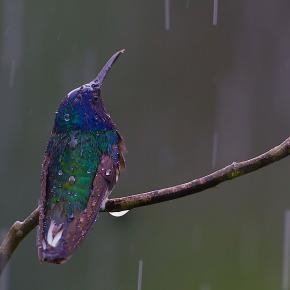
Stare hard at the hummingbird, in the summer rain,
shaking the water-sparks from its wings.
Let grief be your sister, she will whether or no.
Rise up from the stump of sorrow, and be green also,
like the diligent leaves.
A lifetime isn't long enough for the beauty of this world
and the responsibilities of your life.
Scatter your flowers over the graves, and walk away.
Be good-natured and untidy in your exuberance.
In the glare of your mind, be modest.
And beholden to what is tactile, and thrilling.
~ Mary Oliver ~
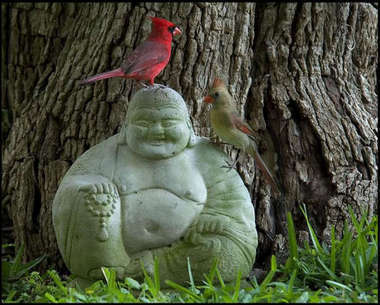
“Despair” by Billy Collins
So much gloom and doubt in our poetry -
flowers wilting on the table,
the self regarding itself in a watery mirror.
Dead leaves cover the ground,
the wind moans in the chimney,
and the tendrils of the yew tree inch toward the coffin.
I wonder what the ancient Chinese poets
would make of all this,
these shadows and empty cupboards?
Today, with the sun blazing in the trees,
my thoughts turn to the great
tenth-century celebrators of experience,
Wa-Hoo, whose delight in the smallest things
could hardly be restrained,
and to his joyous counterpart in the western provinces,
Ye-Hah.
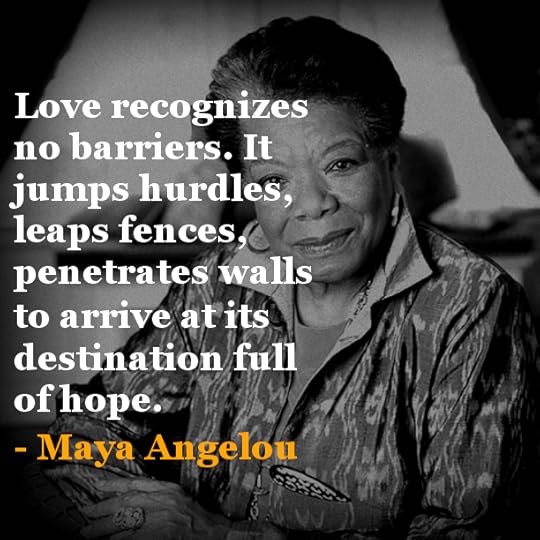
In honor of Black History Month (February):"I Know Why The Caged Bird Sings"
Maya Angelou
The free bird leaps
on the back of the wind
and floats downstream
till the current ends
and dips his wings
in the orange sun rays
and dares to claim the sky.
But a bird that stalks
down his narrow cage
can seldom see through
his bars of rage
his wings are clipped and
his feet are tied
so he opens his throat to sing.
The caged bird sings
with fearful trill
of the things unknown
but longed for still
and his tune is heard
on the distant hill
for the caged bird
sings of freedom
The free bird thinks of another breeze
an the trade winds soft through the sighing trees
and the fat worms waiting on a dawn-bright lawn
and he names the sky his own.
But a caged bird stands on the grave of dreams
his shadow shouts on a nightmare scream
his wings are clipped and his feet are tied
so he opens his throat to sing
The caged bird sings
with a fearful trill
of things unknown
but longed for still
and his tune is heard
on the distant hill
for the caged bird
sings of freedom.
 Mod
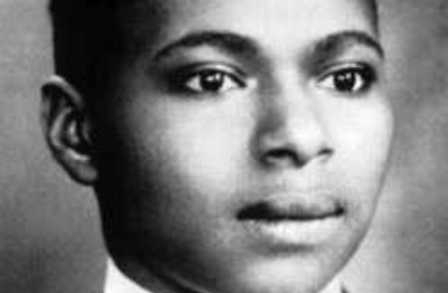
"Yet Do I Marvel"
Mod
"Yet Do I Marvel" By Countee Cullen
I doubt not God is good, well-meaning, kind,
And did He stoop to quibble could tell why
The little buried mole continues blind,
Why flesh that mirrors Him must some day die,
Make plain the reason tortured Tantalus
Is baited by the fickle fruit, declare
If merely brute caprice dooms Sisyphus
To struggle up a never-ending stair.
Inscrutable His ways are, and immune
To catechism by a mind too strewn
With petty cares to slightly understand
What awful brain compels His awful hand.
Yet do I marvel at this curious thing:
To make a poet black, and bid him sing!
 I used to teach this poem when my students were studying The Allegory of the Cave by Plato.
truth
And if sun comes
How shall we greet him?
Shall we not dread him,
Shall we not fear him
After so lengthy a
Session with shade?
Though we have wept for him,
Though we have prayed
All through the night-years—
What if we wake one shimmering morning to
Hear the fierce hammering
Of his firm knuckles
Hard on the door?
Shall we not shudder?—
Shall we not flee
Into the shelter, the dear thick shelter
Of the familiar
Propitious haze?
Sweet is it, sweet is it
To sleep in the coolness
Of snug unawareness.
The dark hangs heavily
Over the eyes.
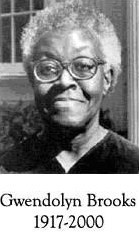
~Gwendolyn Brooks~
 Julia wrote: "I've always loved poetry, and if we keep our selections within the "short and sweet" parameters, we can find some lovely poems :-) Here's my first selection, which speaks to my 73 years on this ear..."
I love this poem, it epitomizes my life! :)
Unfold Your Own MythWho gets up early to discover the moment light begins?
Who finds us here circling, bewildered, like atoms?
Who, like Jacob blind with grief and age,
smells the shirt of his lost son
and can see again?
Who lets a bucket down and brings up
a flowing prophet? Or like Moses goes for fire
and finds what burns inside the sunrise?
Jesus slips into a house to escape enemies,
and opens a door to the other world.
Solomon cuts open a fish, and there's a gold ring.
Omar storms in to kill the prophet
and leaves with blessings.
But don't be satisfied with stories, how things
have gone with others. Unfold
your own myth, so everyone will understand
the passage, We have opened you.
Start walking toward Shams. Your legs will get heavy
and tired. Then comes a moment of feeling
the wings you've grown, lifting.
~ Rumi
Lovely, Jen--Rumi has such a sense of the magical wonder unpinning our lives. I get that same feeling from Mary Oliver in this poem:Wild Geese
You do not have to be good.
You do not have to walk on your knees
For a hundred miles through the desert, repenting.
You only have to let the soft animal of your body
love what it loves.
Tell me about despair, yours, and I will tell you mine.
Meanwhile the world goes on.
Meanwhile the sun and the clear pebbles of the rain
are moving across the landscapes,
over the prairies and the deep trees,
the mountains and the rivers.
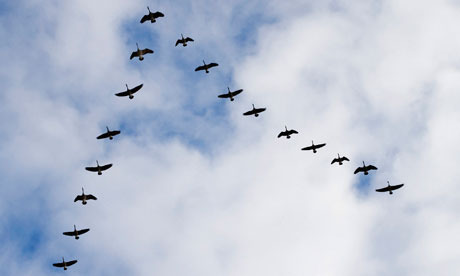
Meanwhile the wild geese, high in the clean blue air,
are heading home again.
Whoever you are, no matter how lonely,
the world offers itself to your imagination,
calls to you like the wild geese, harsh and exciting --
over and over announcing your place
in the family of things.
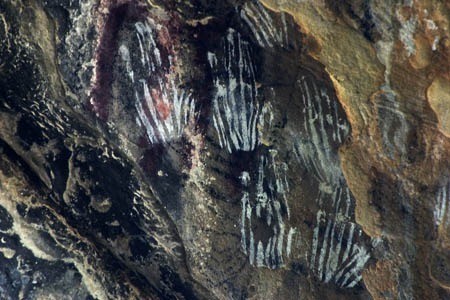
Inside a cave in a narrow canyon near Tassajara
The vault of rock is painted with hands,
A multitude of hands in the twilight, a cloud
of men's palms, no more,
No other picture. There's no one to say
Whether the brown shy quiet people who are dead intended
Religion or magic, or made their tracings
In the idleness of art; but over the division of
the years these careful
Signs-manual are now like a sealed message
Saying: "Look: we also were human; we had
hands, not paws. All hail
You cleverer hands, our supplanters
In the beautiful country; enjoy her a season, her
beauty, and come down
And be supplanted; for you also are human.”
Robinson Jeffers
Evolutionary IntelligenceThis groggy time we live, this is what it is like:
A man goes to sleep in the town
where he has always lived, and he dreams
he is living in another town.
He believes the reality of the dream town.
The world is that kind of sleep.
The dust of many crumbled cities
settles over us like a forgetful doze,
but we are older than those cities.
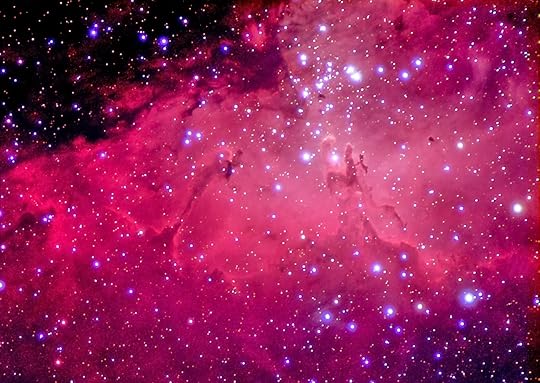
We began as a mineral. We emerged into plant life
and into the animal state. Then into being human,
and always we have forgotten our former states,
except in early spring when we almost
remember being green again.
Humankind is being led along an evolving course,
through this migration of intelligences,
and though we seem to be sleeping,
there is an inner wakefulness that directs the dream.
It will eventually startle us back
to the truth of who we are.
Rumi
 Jen, thank you so much--I've saved the poem for my notebook.
You're welcome :) I was behind on my Rumi blog and loved this one :)
To start us out on Womens History Month (March):
Jen, thank you so much--I've saved the poem for my notebook.
You're welcome :) I was behind on my Rumi blog and loved this one :)
To start us out on Womens History Month (March):EMILY DICKINSON
by Linda Pastan
We think of hidden in a white dress
among the folded linens and sachets
of well-kept cupboards, or just out of sight
sending jellies and notes with no address
to all the wondering Amherst neighbors.
Eccentric as New England weather
the stiff wind of her mind, stinging or gentle,
blew two half imagined lovers off.
Yet legend won't explain the sheer sanity
of vision, the serious mischief
of language, the economy of pain.

 Here is a poem by one of my all time favorite poets Weldon Kees. He is known as the bitterest of 20th century poets, but I enjoy his dark sense of humor and his wonderful way with closed form. I hope you enjoy this poem as much as I did.
 Subtitle
by Weldon Kees
We present for you this evening
A movie of death: observe
These scenes chipped celluloid
Reveals unsponsored and tax-free
We request these things only:
All gum must be placed beneath the seats
Or swallowed quickly, all popcorn sacks
Must be left in the foyer. The doors
Will remain closed throughout
The performance Kindly consult
Yours programs: observe that
There are no exits. This is
A necessary precaution
Look for no dialogue, or for the
Sound of any human voice: we have seen fit
To synchronize this play with
Squealings of pigs, slow sound of guns,
The sharp dead click
Of empty chocolatebar machines
We say again: there are
No exits here, no guards to bribe,
No washroom windows.
No finis to the film unless
The ending is your own
Turn off the lights, remind
The operator of his union card:
Sit forward, let the screen reveal
Your heritage, the logic of your destiny
(1936)
Miriam wrote: "Here is a poem by one of my all time favorite poets Weldon Kees. He is known as the bitterest of 20th century poets, but I enjoy his dark sense of humor and his wonderful way with c..."Really powerful, Miriam--especially the lines about "No exits here..." I immediately saw the movie theater as "life", with the screen showing "the logic of [our] destiny."
Thanks for introducing me to a new poet--especially one who shares the dark vision of one of my favorite authors, Dostoyevsky.
Here is the poem that expresses why I want my ashes scattered beneath a tree:-)It Is Enough
by Anne Alexander Bingham
To know that the atoms
of my body
will remain
to think of them rising
through the roots of a great oak
to live in
leaves, branches, twigs
perhaps to feed the
crimson peony
the blue iris
the broccoli
or rest on water
freeze and thaw
with the seasons
some atoms might become a
bit of fluff on the wing
of a chickadee
to feel the breeze
know the support of air
and some might drift
up and up into space
star dust returning from
whence it came
it is enough to know that
as long as there is a universe
I am a part of it.
Mod
It also reminds me of how God is in everything.
Julia wrote: "Miriam wrote: "Here is a poem by one of my all time favorite poets Weldon Kees. He is known as the bitterest of 20th century poets, but I enjoy his dark sense of humor and his wonde..."Your welcome Julia! I also love Dostoyevsky. I love the metaphor he uses as the theater as life. I thought it was both dark and somewhat satirical at the same time. I glad you enjoyed it!
"Provide, provide"by Robert Frost
The witch that came (the withered hag)
To wash the steps with pail and rag
Was once the beauty Abishag,
The picture pride of Hollywood.
Too many fall from great and good
For you to doubt the likelihood.
Die early and avoid the fate.
Or if predestined to die late,
Make up your mind to die in state.
Make the whole stock exchange your own!
If need be occupy a throne,
Where nobody can call you crone.
Some have relied on what they knew,
Others on being simply true.
What worked for them might work for you.
No memory of having starred
Atones for later disregard
Or keeps the end from being hard.
Better to go down dignified
With boughten friendship at your side
Than none at all. Provide, provide!
And here is Frost himself, changed by time:
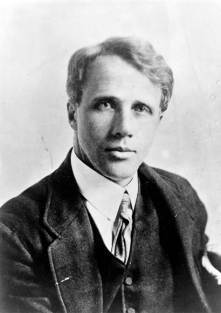 Frost, 1910
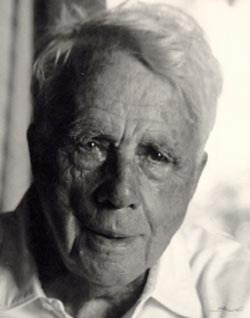 Frost, 1959
Julia wrote: ""Provide, provide"
Frost, 1959
Julia wrote: ""Provide, provide"by Robert Frost
The witch that came (the withered hag)
To wash the steps with pail and rag
Was once the beauty Abishag,
The picture pride of Hollywood.
Too many f..."
What a beautiful and thought provoking poem! Thank you for sharing it Julia!
You're very welcome, Miriam--Frost spoke at my college the year before he died, and even though his voice was wispy, the wit was still there :-) He read this poem, "Dust of Snow":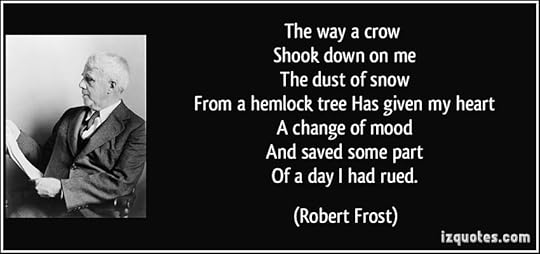
Then he smiled that elf smile of his and talked about how people keep trying to make the poem "sinister", by connecting the "hemlock" to the poison Socrates drank (when a hemlock TREE has no connection to that plant.)
I'll never forget his giggle or that smile, although it's been over 50 years ago.
Thats wonderful that he left such an impression!I heard Elie Wiesel speak at my husband's grad school, soft spoken and still very influencing.
An InterruptionRobert S. Foote
A boy had stopped his car
To save a turtle in the road;
I was not far
Behind, and slowed,
And stopped to watch as he began
To shoo it off into the undergrowth—
This wild reminder of an ancient past,
Lumbering to some Late Triassic bog,
Till it was just a rustle in the grass,
Till it was gone.
I hope I told him with a look
As I passed by,
How I was glad he'd stopped me there,
And what I felt for both
Of them, something I took
To be a kind of love,
And of a troubled thought
I had, for man,
Of how we ought
To let life go on where
And when it can.
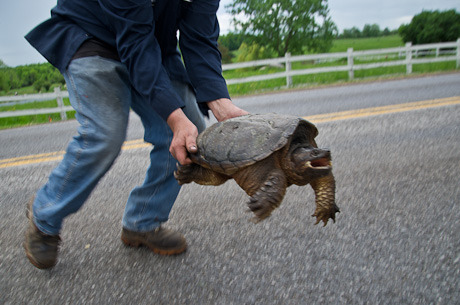 Note to turtle rescuers:
 Please be sure to return the turtle to the side of the road where he/she wanted to travel, not where he/she started, otherwise they'll try to cross again. Also, wash your hands afterwards.
Robinson Jeffers is my favorite poet. I visited Tor House in Carmel, CA, which he built himself, and his ashes are scattered there. The structure on the left is Hawk Tower, which he built for his wife. http://www.torhouse.org/ 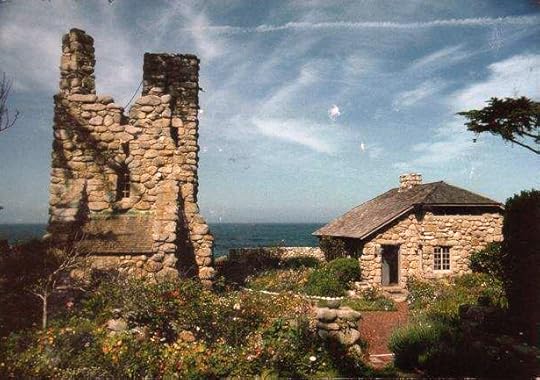
Inscription for a Gravestone
Robinson Jeffers
I am not dead, I have only become inhuman:
That is to say,
Undressed myself of laughable prides and infirmities,
But not as a man
Undresses to creep into bed, but like an athlete
Stripping for the race.
The delicate ravel of nerves that made me a measurer
Of certain fictions
Called good and evil; that made me contract with pain
And expand with pleasure;
Fussily adjusted like a little electroscope:
That's gone, it is true;
(I never miss it; if the universe does,
How easily replaced!)
But all the rest is heightened, widened, set free.
I admired the beauty
While I was human, now I am part of the beauty.
I wander in the air,
Being mostly gas and water, and flow in the ocean;
Touch you and Asia
At the same moment; have a hand in the sunrises
And the glow of this grass.
I left the light precipitate of ashes to earth
For a love-token.
I love this Julia, the idea of rejoining nature is wonderful :)
Me, too, Jen--this is the only thing I want read when my ashes are scattered beneath a tree.
And for St. Patrick's Day, one of my favorites from John O'Donohue, the wonderful Irish poet who died far too young. http://www.johnodonohue.com/ His book Anam Cara: A Book of Celtic Wisdom is probably his best known ("anam cara" means "soul friend"). 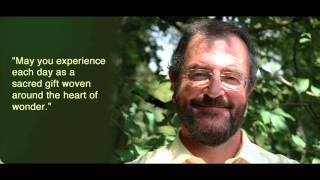
Beannacht
("Blessing")
On the day when
the weight deadens
on your shoulders
and you stumble,
may the clay dance
to balance you.
And when your eyes
freeze behind
the grey window
and the ghost of loss
gets into you,
may a flock of colors,
indigo, red, green,
and azure blue
come to awaken in you
a meadow of delight.
When the canvas frays
in the currach of thought
and a stain of ocean
blackens beneath you,
may there come across the waters
a path of yellow moonlight
to bring you safely home.
May the nourishment of the earth be yours,
may the clarity of light be yours,
may the fluency of the ocean be yours,
may the protection of the ancestors be yours.
And so may a slow
wind work these words
of love around you,
an invisible cloak
to mind your life.
One of my favorite poems by
 . This poem spoke to me at a very dark time during my life. I hope you guys enjoy it.
he Ambition Bird
So it has come to this
insomnia at 3:15 A.M.,
the clock tolling its engine
like a frog following
a sundial yet having an electric
seizure at the quarter hour.
The business of words keeps me awake.
I am drinking cocoa,
that warm brown mama.
I would like a simple life
yet all night I am laying
poems away in a long box.
It is my immortality box,
my lay-away plan,
my coffin.
All night dark wings
flopping in my heart.
Each an ambition bird.
The bird wants to be dropped
from a high place like Tallahatchie Bridge.
He wants to light a kitchen match
and immolate himself.
He wants to fly into the hand of Michelangelo
anc dome out painted on a ceiling.
He wants to pierce the hornet’s nest
and come out with a long godhead.
He wants to take bread and wine
and bring forth a man happily floating in the Caribbean.
He wants to be pressed out like a key
so he can unlock the Magi.
He wants to take leave among strangers
passing out bits of his heart like hors d’oeuvres.
He wants to die changing his clothes
and bolt for the sun like a diamond.
He wants, I want.
Dear God, wouldn’t it be
good enough to just drink cocoa?
I must get a new bird
and a new immortality box.
There is folly enough inside this one.
Anne Sexton
Sexton is so good--thanks for this one, Miriam! Yep, those "birds" can keep us up at night, be they "ambition birds" or, in my case "melancholy birds".Oh how I wish these lines could come true!
".....wouldn’t it be
good enough to just drink cocoa?"
If only!
"Boundaries"The universe does not
revolve around you.
The stars and planets spinning
through the ballroom of space
dance with one another
quite outside of your small life.
You cannot hold gravity
or seasons; even air and water
inevitably evade your grasp.
Why not, then, let go?
You could move through time
like a shark through water,
neither restless or ceasing,
absorbed in and absorbing
the native element.
Why pretend you can do otherwise?
The world comes in at every pore,
mixes in your blood before
breath releases you into
the world again. Did you think
the fragile boundary of your skin
could build a wall?
Listen. Every molecule is humming
its particular pitch.
Of course you are a symphony.
Whose tune do you think
the planets are singing
as they dance?
Lynn Ungar
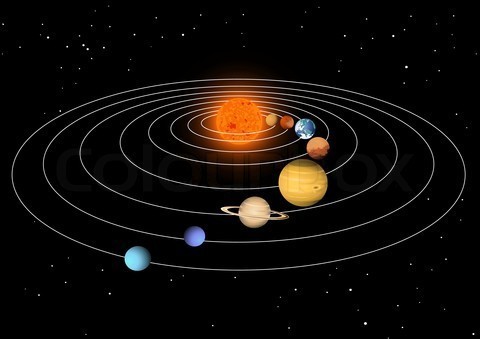 Here's one from a 2010 poem by Wendell Berry, at his angriest, concerning what we are doing to the planet and ourselves:
"Questionnaire"
by Wendell Berry
How much poison are you willing
to eat for the success of the free
market and global trade? Please
name your preferred poisons.
For the sake of goodness, how much
evil are you willing to do?
Fill in the following blanks
with the names of your favorite
evils and acts of hatred.
What sacrifices are you prepared
to make for culture and civilization?
Please list the monuments, shrines,
and works of art you would
most willingly destroy.
In the name of patriotism and
the flag, how much of our beloved
land are you willing to desecrate?
List in the following spaces
the mountains, rivers, towns, farms
you could most readily do without.
State briefly the ideas, ideals, or hopes,
the energy sources, the kinds of security;
for which you would kill a child.
Name, please, the children whom
you would be willing to kill.
Wow, he is angry (but I understand why).
So true--Berry is usually much more gentle and nature-centered, but he's REALLY frustrated! Part of it is his love and concern for his children and grandchildren (hence that last stanza).Here is my favorite poem by him, and like him, I find solace in the "grace of the world".
The Peace of Wild Things
When despair for the world grows in me
and I wake in the night at the least sound
in fear of what my life and my children’s lives may be,
I go and lie down where the wood drake
rests in his beauty on the water, and the great heron feeds.
I come into the peace of wild things
who do not tax their lives with forethought
of grief. I come into the presence of still water.
And I feel above me the day-blind stars
waiting with their light. For a time
I rest in the grace of the world, and am free.
Wendell Berry
That is lovely, and by disconnecting from the constraints of our modern world, we can find freedom and enjoyment. :) My husband and I until the last few years, camped every year, to get rid of those constraints.
I also loved camping--used to tent even in winter, with down sleeping bag! Berry did a great interview with Bill Moyers in October of 2013, which you can see here: http://billmoyers.com/segment/wendell...
The introduction says:
"Wendell Berry, a quiet and humble man, has become an outspoken advocate for revolution. He urges immediate action as he mourns how America has turned its back on the land and rejected Jeffersonian principles of respect for the environment and sustainable agriculture. Berry warns, “People who own the world outright for profit will have to be stopped; by influence, by power, by us.” In a rare television interview, this visionary, author, and farmer discusses a sensible, but no-compromise plan to save the Earth.
This week on Moyers & Company, Bill Moyers profiles Berry, a man of the land and one of America’s most influential writers, whose prolific career includes more than forty books of poetry, novels, short stories and essays. This one-on-one conversation was taped at Kentucky’s St. Catharine College during a two-day conference celebrating Wendell Berry’s life and ideas and marking the 35th anniversary of the publication of his landmark book, The Unsettling of America: Culture and Agriculture.
Berry, described by environmental activist Bill McKibben as “a prophet of responsibility,” lives and works on the Kentucky farm where his family has tilled the soil for 200 years. He’s a man of action as well as words. In 2011, he joined a four-day sit-in at the Kentucky governor’s office to protest mountaintop mining, a brutally destructive method of extracting coal. Moyers explores Berry’s views on civil disobedience as well as his strong opposition to agribusiness and massive industrial farms. They also discuss Berry’s support for sustainable farming and the local food movement.
“It’s mighty hard right now to think of anything that’s precious that isn’t endangered,” Berry tells Moyers. “There are no sacred and unsacred places; there are only sacred and desecrated places. My belief is that the world and our life in it are conditional gifts.”
“We have the world to live in on the condition that we will take good care of it. And to take good care of it we have to know it. And to know it and to be willing to take care of it, we have to love it.”
March 24 is the birthday of Lawrence Ferlinghetti, poet and painter, founder of the City Lights bookstore. Here's a poem that combines both his loves:Instructions to Painters & Poets
I asked a hundred painters and a hundred poets
how to paint sunlight
on the face of life
Their answers were ambiguous and ingenuous
as if they were all guarding trade secrets
Whereas it seems to me
all you have to do
is conceive of the whole world
and all humanity
as a kind of art work
a site-specific art work
an art project of the god of light
the whole earth and all that's in it
to be painted with light
And the first thing you have to do
is paint out postmodern painting
And the next thing is to paint yourself
in your true colors
in primary colors
as you see them
(without whitewash)
paint yourself as you see yourself
without make-up
without masks
Then paint your favorite people and animals
with your brush loaded with light
And be sure you get the perspective right
and don't fake it
because one false line leads to another
And don't forget to paint
all those who lived their lives
as bearers of light
Paint their eyes
and the eyes of every animal
and the eyes of beautiful women
known best for the perfection of their breasts
and the eyes of men and women
known only for the light of their minds
Paint the light of their eyes
the light of sunlit laughter
the song of eyes
the song of birds in flight
And remember that the light is within
if it is anywhere
and you must paint from the inside
from How to Paint Sunlight: Lyric Poems & Others
Words
The world does not need words. It articulates itself
in sunlight, leaves, and shadows. The stones on the path
are no less real for lying uncatalogued and uncounted.
The fluent leaves speak only the dialect of pure being.
The kiss is still fully itself though no words were spoken.
Yet the stones remain less real to those who cannot
name them, or read the mute syllables graven in silica.
To see a red stone is less than seeing it as jasper --
metamorphic quartz, cousin to the flint the Kiowa
carved as arrowheads. To name is to know and remember.
The sunlight needs no praise piercing the rainclouds,
painting the rocks and leaves with light, then dissolving
each lucent droplet back into the clouds that engendered it.
The daylight needs no praise, and so we praise it always --
greater than ourselves and all the airy words we summon.
Dana Gioia
Interrogations at Noon: Poems
A Wished-For SongYou are song, a wished-for song.
Go through the ear to the center,
where the sky is, where wind,
where silent knowing.
Put seeds and cover them.
Blades will sprout
where you do your work.
~ Rumi
I tried to post e.e. cummings "in just" poem, but the spacing can't be kept in the goodreads formatting (plus the link makes the two "e's" capitals, which he wouldn't have liked :-) Glad I could find it by searching images:
I love his images of spring being "mud-luscious" and "puddle-wonderful". And I wonder how many children still play these games of my childhood--marbles and piracies, hop-scotch and jump-rope. No batteries needed! :-)
"Optimism"by Jane Hirshfield
More and more I have come to admire resilience.
Not the simple resistance of a pillow, whose foam
returns over and over to the same shape, but the sinuous
tenacity of a tree: finding the light newly blocked on one side,
it turns in another. A blind intelligence, true.
But out of such persistence arose turtles, rivers,
mitochondria, figs -- all this resinous, unretractable earth.
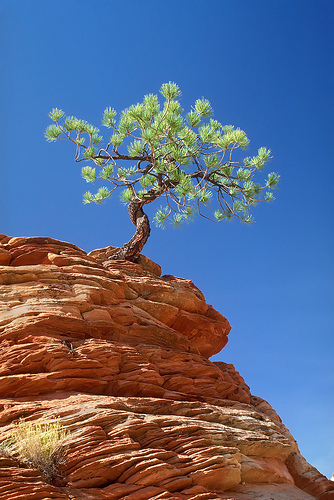
 This is a poem that is in my novel, Thirty Two Miles to Paradise. Let me know what you think, it's one of my favorites.
The stoic sits in his silvery haze,
Mixed with velvet and midnight ponderings.
Ruminated,
His swallowed wanderings,
Aghast, a ghoul
A welcoming slave to addled meanderings.
Lilting rearward with vision agape
He sees the world,
Spackled with time and carpeted with hate.
The passions of the passive
Remiss in their passing
The drifting of translucence,
Of dreams everlasting.
Out of the corner from a cut-eyed glance,
The vari-colored striking of a star fired dance,
Ignites,
Reappears,
The breathes its death.
So the stoic sighs, to take take his rest.
An Evolving CourseWe began as a mineral.
We emerged into plant life and into
the animal state, and then to being human.
And always we have forgotten our former states,
except in early spring,
when we dimly recall being green again.
That is how a young person turns
toward a teacher, how a baby leans
toward the breast, without knowing
the secret of its desire,
yet turning instinctively.
So humankind is a being led along
an evolving course through this migration
of intelligences, and though we seem
to be sleeping, there is an inner wakefulness
that directs the dream.
It will eventually startle us back
to the truth of who we are.
Rumi


Short & Sweet Treats
Books mentioned in this topic
W.B. Yeats: A Vision, The Original 1925 Version (other topics)Sands of the Well (other topics)
Paradise Lost (other topics)
Anam Cara: A Book of Celtic Wisdom (other topics)
Poetry Please (other topics)
More...
Authors mentioned in this topic
Denise Levertov (other topics)Diane Ackerman (other topics)
Philip Levine (other topics)
Langston Hughes (other topics)
Mary Oliver (other topics)
More...
A Prayer
I want to be ever a child
I want to feel an eternal friendship
for the raindrops, the flowers,
the insects, the snowflakes.
I want to be keenly interested in everything,
with mind and muscle ever alert,
forgetting my troubles in the next moment.
The stars and the sea, the ponds and the trees,
the birds and the animals, are my comrades.
Though my muscles may stiffen, though my skin may
wrinkle, may I never find myself yawning
at life.
~Toyohiko Kagawa ~