
Art Lovers discussion
Movements in Art
>
Surrealism
date newest »
newest »
 I think my favorite Surrealist is Rene Magritte.
 This is one of my favorites of his paintings. Although I enjoy many of his works.
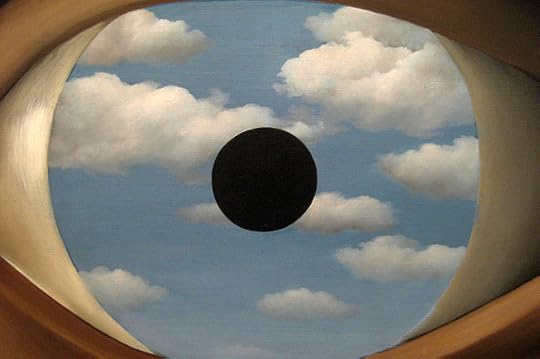
The False Mirror 1928
The image jolts the viewer by removing the eye from its usual context, presenting it without the face to which it belongs. It further disrupts expectation by placing a circular sky inside the otherwise ordinary oculus. Sometimes called magical realism, such juxtaposition of normally unrelated objects within a seemingly incongruous context is characteristic of much of Magritte's oeuvre. For Magritte and Surrealists working in a similar mode, these surprising, even bizarre combinations were considered the products of their unconscious minds. By visualizing them, the artists believed, they might also touch the unconscious minds of their viewers.
http://www.renemagritte.org/the-false...
 The question is who and what would have been the harbingers of the movement. Giorgio De Chirico was probably the initiator, but his source of inspiration was Bocklin. Couldn't we say the H. Bosch was the initial inspiration?
 Geoffrey wrote: "The question is who and what would have been the harbingers of the movement. Giorgio De Chirico was probably the initiator, but his source of inspiration was Bocklin. Couldn't we say the H. Bosch w..."
By 1923, a specific group of Dadaists who proved reasonably competent and successful at painting turned their attentions to modern surrealism; modern referring to the period covered here, because there is really nothing new about surrealism. Avoiding philosophical intricacies and explanations of subject matter, I define Surrealism simply as the painting of realistic images in an unrealistic context or realistic images juxtaposed in an unrealistic way.
By this definition, Bosh and Breughel and the many flying angels of classical paintings are surreal. Likewise modern illustrations, comics, cartoons, and animated cinema also fall in this category. Modern Surrealism when it is successful requires knowledge and skill in classical techniques, especially drawing. This is the real reason why popular critics shy away from any great interest in the best of surrealism and treat it minimally.
“Surrealism is destructive, but it destroys only what it considers to be the shackles limiting our vision.” Salvador Dali
"By 1923, a specific group of Dadaists who proved reasonably competent and successful at painting turned their attentions to modern surrealism; modern referring to the period covered here, because there is really nothing new about surrealism. Avoiding philosophical intricacies and explanations of subject matter, I define Surrealism simply as the painting of realistic images in an unrealistic context or realistic images juxtaposed in an unrealistic way.
By this definition, Bosh and Breughel and the many flying angels of classical paintings are surreal. Likewise modern illustrations, comics, cartoons, and animated cinema also fall in this category. Modern Surrealism when it is successful requires knowledge and skill in classical techniques, especially drawing. This is the real reason why popular critics shy away from any great interest in the best of surrealism and treat it minimally.
“Surrealism is destructive, but it destroys only what it considers to be the shackles limiting our vision.” Salvador Dali"
"Modern Art a Portrait of Mediocrity." Quote
PolyYou missed out on the most essential component of surrealism in that it purports to visualize the subconscious.
I agree, Geoffrey. That's one of the main reasons I like it.
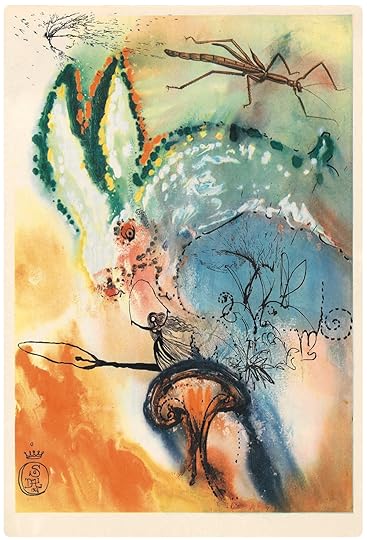
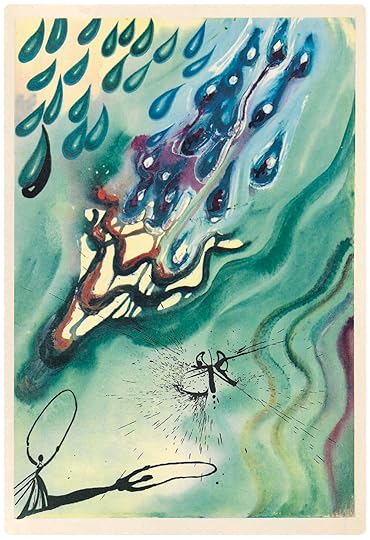
150th Anniversary Edition of “Alice in Wonderland” Features Rare 1969 Salvador Dalí Illustrations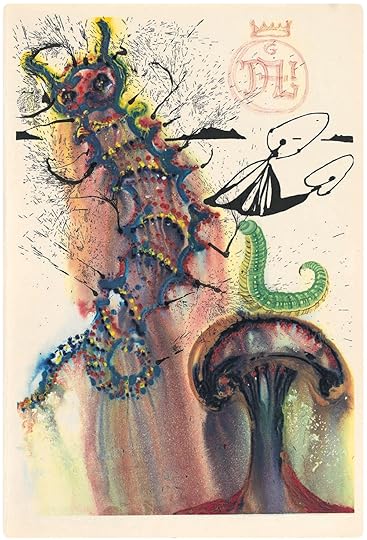
"While glancing at Salvador Dalí’s paintings one might get the sense that they’ve tripped down their mind’s own rabbit hole, all of a sudden dropped within a barren wasteland filed with abstract objects and creatures. The pairing then, of Dalí and Alice in Wonderland writer and mathematician Lewis Carroll, seem perfectly matched—two men whose minds travel far beyond the cutesy corners of an average fairytale. In the 1960s an editor at Random House realized this genius partnership, commissioning Dalí to illustrate an exclusive edition of Alice in Wonderland, of which Dalí signed every copy.
This rare edition of Alice was long coveted by rare book collectors and scholars, making only occasional appearances for study or the auction block. However, for the 150th anniversary of Lewis’ surrealist tale, this one-of-a-kind collaboration has finally been printed for the public by Princeton University Press. The deluxe edition, Alice’s Adventures in Wonderland, features an introduction explaining Dalí’s connection to Carroll by Lewis Carroll Society of North America President Mark Burstein, and exploration by mathematician Thomas Banchoff of the mathematics found in Dalí’s work and illustrations. (via Brain Pickings, Lost at E Minor)"
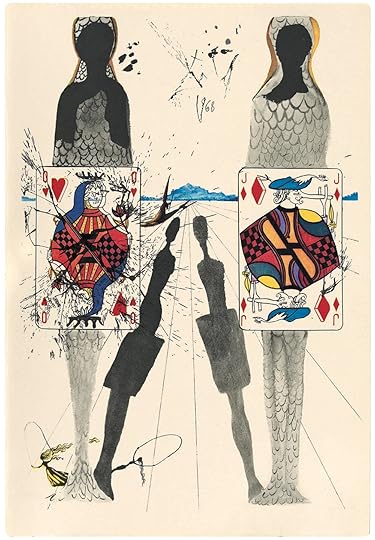
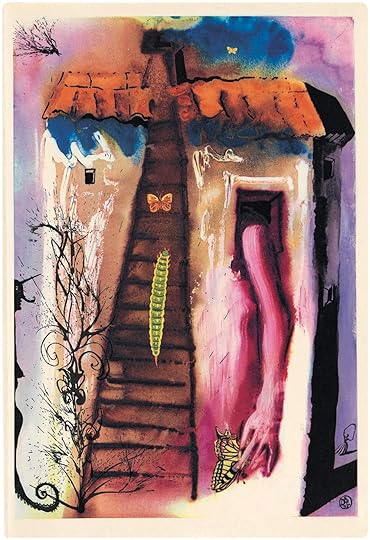
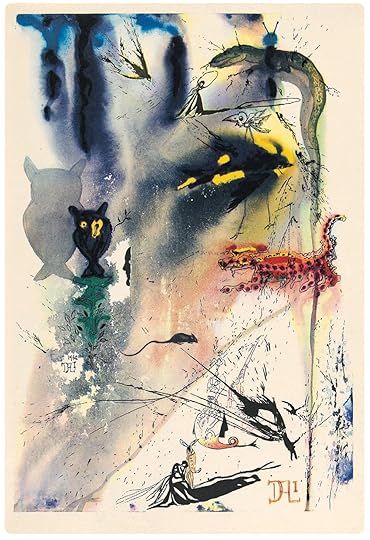
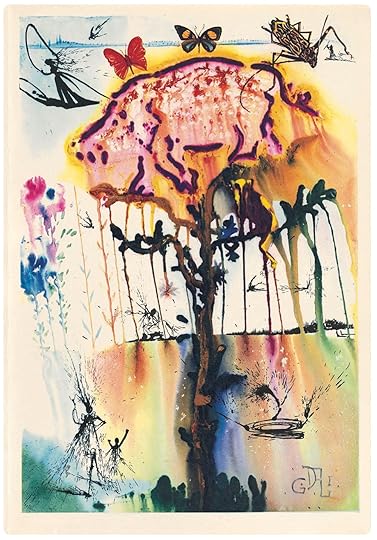
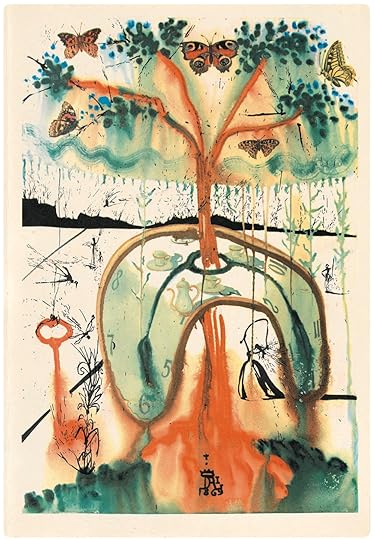
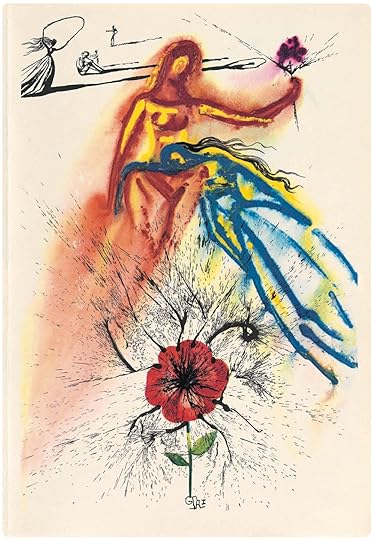
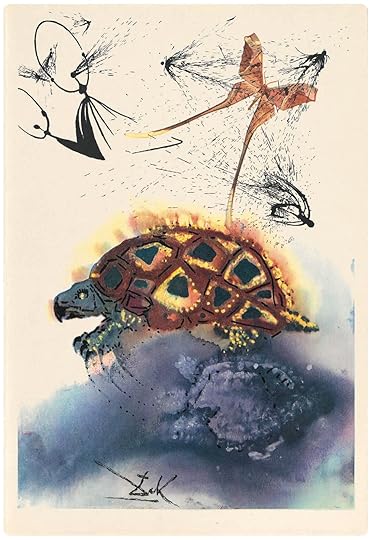
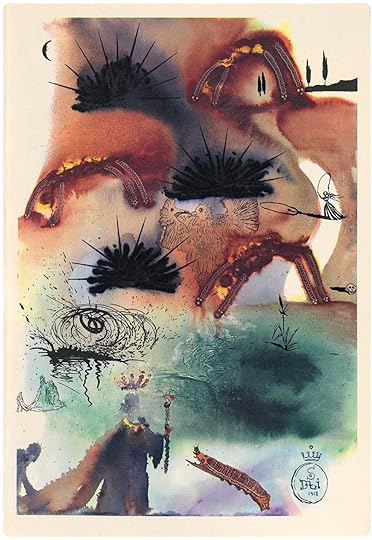
http://frame.bloglovin.com/?post=6082...
Salvador Dali’s Rare Surrealist Cookbook Republished for the First Time in over 40 Years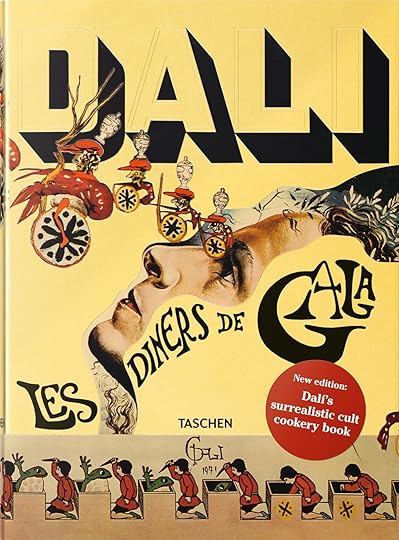
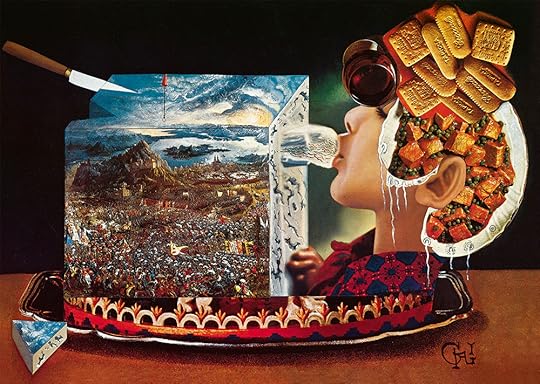
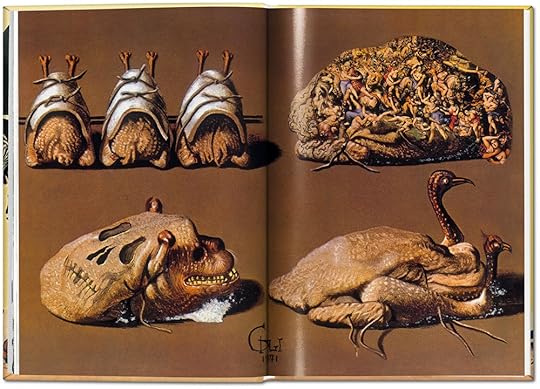
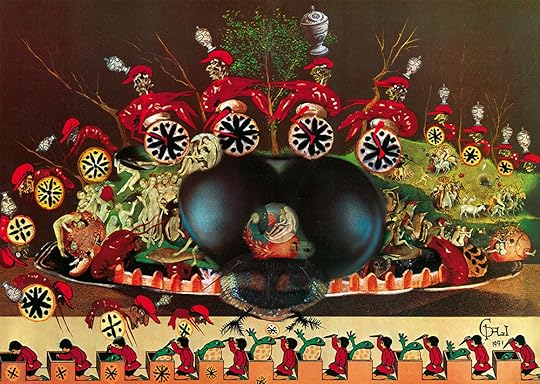
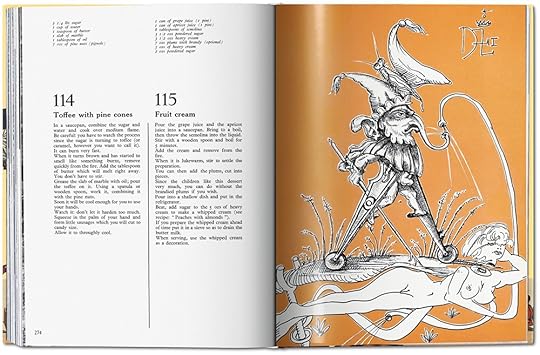
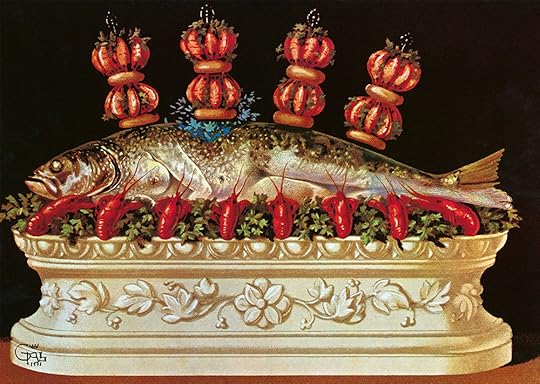
"Published only once in 1973, Les Diners de Gala was a dream fulfilled for surrealist artist Salvador Dali who claimed at the age of 6 that he wanted to be a chef. The bizarro cookbook pairs 136 recipes over 12 chapters (the 10th of which is dedicated to aphrodisiacs) with the his exceptionally strange illustrations and collages created especially for the publication. The artworks depict towering mountains of crayfish with unsettling overtones of cannibalism, an unusual meeting of a swan and a toothbrush in a pastry case, and portraits of Dali himself mingling with chefs against decadent place settings. Recipes include such delicacies as “Thousand Year Old Eggs”, “Veal Cutlets Stuffed With Snails”, “Frog Pasties”, and “Toffee with Pine Cones”.
Dali is widely known for his opulent dinner parties thrown with his wife Gala, events that were almost more theatrical than gustatory. Guests, many of the celebrities, were required to wear completely outlandish costumes and an accompaniment of wild animals often roamed free around the dinner table. Despite the unusual ingredients and preparation methods, many of the old school recipes in Les Diners de Gala originated in some of the top restaurants in Paris at the time including Lasserre, La Tour d’Argent, Maxim’s, and Le Train Bleu. Lest you think anything in the book might be remotely healthy, it offers a cautionary disclaimer at the outset:
We would like to state clearly that, beginning with the very first recipes, Les Diners de Gala, with its precepts and its illustrations, is uniquely devoted to the pleasures of Taste. Don’t look for dietetic formulas here.
We intend to ignore those charts and tables in which chemistry takes the place of gastronomy. If you are a disciple of one of those calorie-counters who turn the joys of eating into a form of punishment, close this book at once; it is too lively, too aggressive, and far too impertinent for you.
Only around 400 copies of Les Diners de Gala are known to survive, most of which sell for hundreds of dollars."
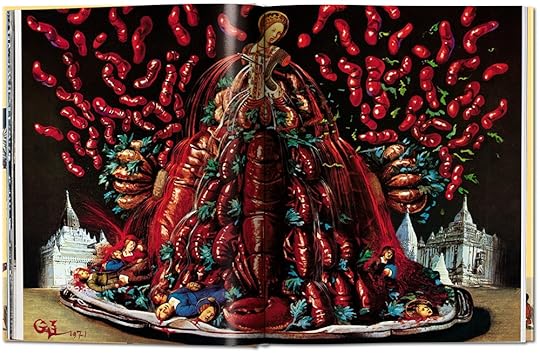
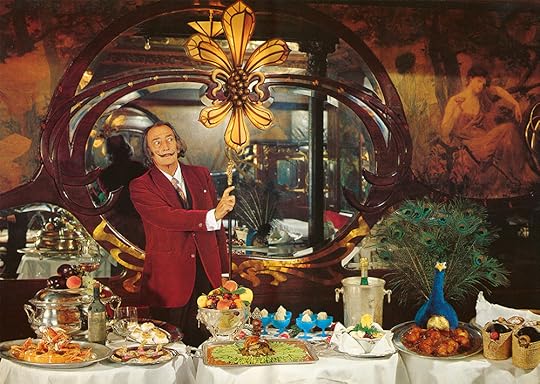
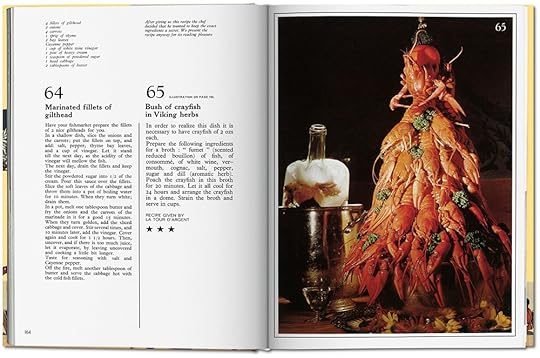
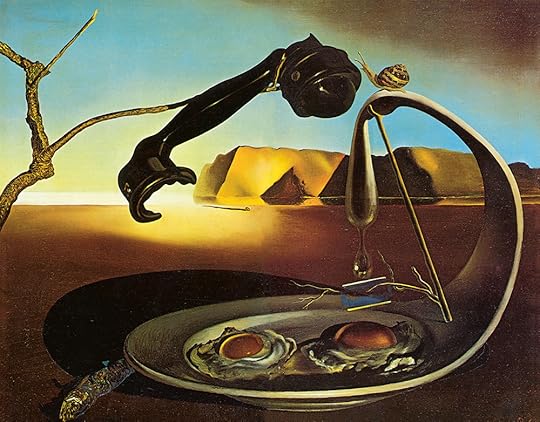
http://frame.bloglovin.com/?post=6082...
I want one of those cookbooks! Not that I would try any of the recipes, I don't cook anyway.
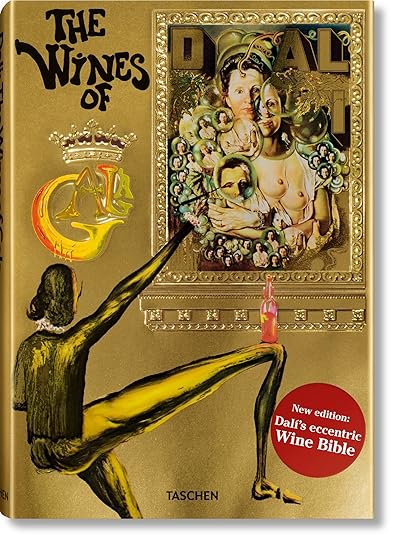
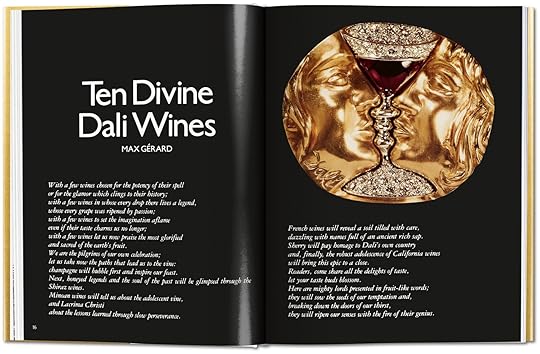
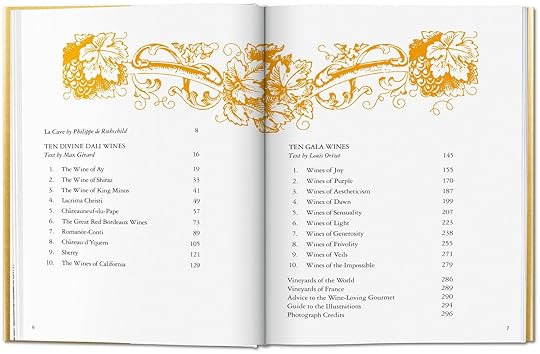
Another book: The Wines of Gala: Salvador Dalí’s Surrealist Wine Guide Republished for the First Time in 40 Year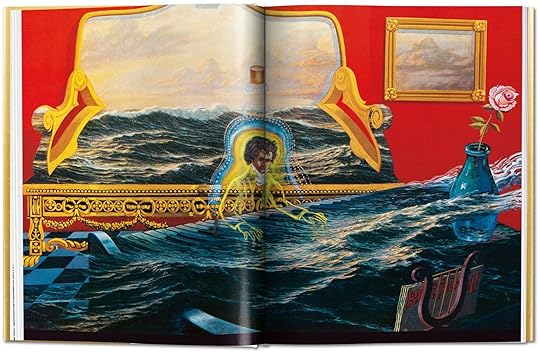
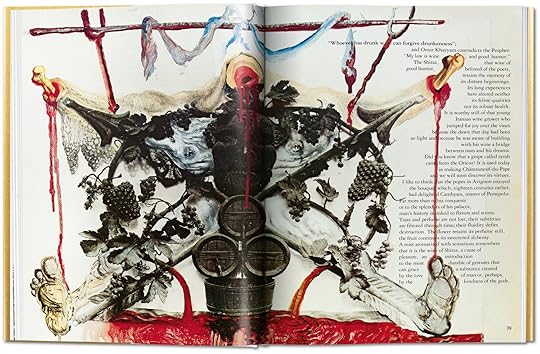
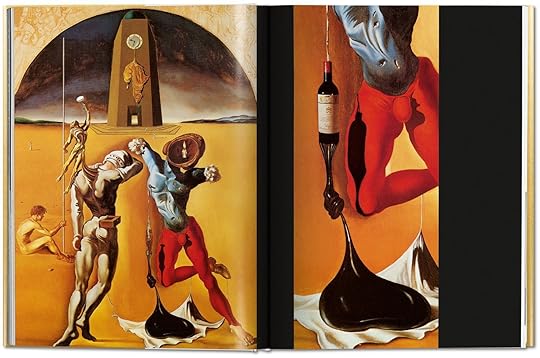
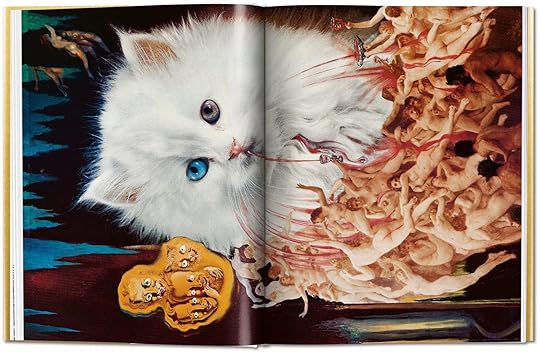
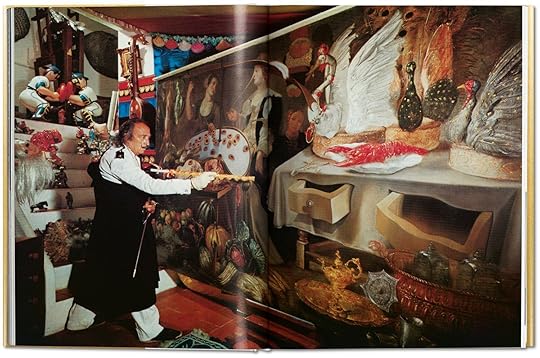
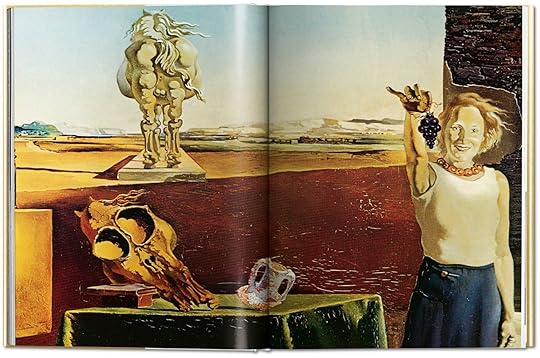
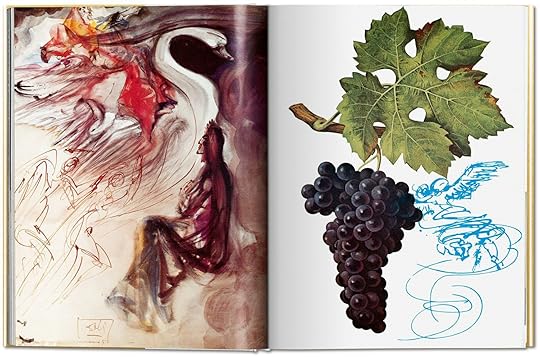
Last published in 1978, The Wines of Gala is Salvador Dalí’s eccentric guide to wine grapes and their origin. Filled with over 140 appropriated artworks and collages collected and created by Dalí, the book is an equally surreal follow-up to TASCHEN’s reprinting of the artist’s cookbook Les Diners de Gala. In addition to Jean-François Millet’s The Angelus, which was a constant point of reference in Dali’s works, visuals include a Bacchus-like kitten, and a sort of tableau vivant featuring Dali himself.
In keeping with Dalí’s efforts to create artwork based on his emotions, memories, and dreams, the artist chose to organize the wines in the book by how they influenced his mood. The groupings are appropriately imaginative classifications including such section titles as “Wines of Frivolity,” “Wines of the Impossible,” and “Wines of Light.” A section in the book also outlines Dalí’s method of ordering wine by emotional experience, quoting the artist’s famous credo: “A real connoisseur does not drink wine but tastes of its secrets.”
1)
2)
3)
4)
5)
6)
7)
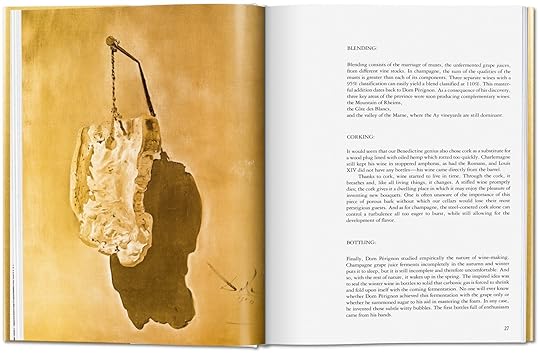
8)
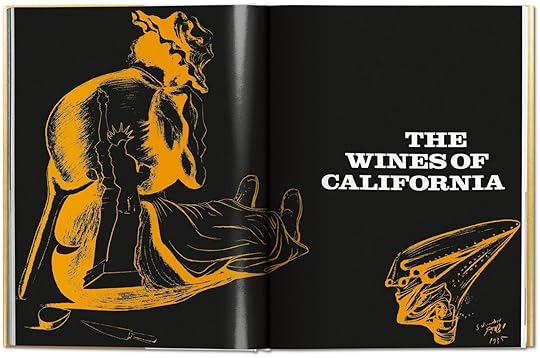
Since "In keeping with Dalí’s efforts to create artwork based on his emotions, memories, and dreams, the artist chose to organize the wines in the book by how they influenced his mood. ", what kind of mood do you think he was in when he painted a certain page? They didn't have names so I numbered them. How do they make you feel?


Surrealist works feature the element of surprise, unexpected juxtapositions and non sequitur; however, many Surrealist artists and writers regard their work as an expression of the philosophical movement first and foremost, with the works being an artifact. Leader André Breton was explicit in his assertion that Surrealism was, above all, a revolutionary movement.
Surrealism developed out of the Dada activities during World War I and the most important center of the movement was Paris. From the 1920s onward, the movement spread around the globe, eventually affecting the visual arts, literature, film, and music of many countries and languages, as well as political thought and practice, philosophy, and social theory.
https://en.wikipedia.org/wiki/Surrealism