
The Mookse and the Gripes discussion
Book Chat
>
New & upcoming translations you're looking forward to

 Mod
Mod
Rafael Chirbes'On the Edge , a book which has been getting a lot of great write ups from the US, is being released in Britain in July by Harvill Secker.
The new Alina Bronsky Baba Dunja's Last Love looks fun - but I'll need to get round to Hottest Dishes of the Tartar Cuisine first, as this is a sort of sequel to that.
In Scandinavian crime, I'm glad to see that the rest of Anne Holt's Hanne Wilhelmsen series (also of LGBT interest) is appearing in English this year - the US is a few books behind the UK - and that she's also written a new book featuring the character.
A Goodreads friend whose opinions I really respect has translated Horacio Castellanos Moya's Revulsion: Thomas Bernhard in San Salvador , out in the summer from New Directions, and in critical seals of approval, won a PEN grant for it.
Another winner from the same round of PEN grants for translation was Olga Tokarczuk's The Books of Jakub, for which I've seen two separate rounds of conversation going: "this should be translated!" "but it is being translated!". (Although not sure it has a publisher yet.)
Having enjoyed Yuri Herrera's Signs Preceding the End of the World, his next book, The Transmigration of Bodies should be interesting.
And in titles already out in the UK but forthcoming across the pond, I'd still really like to read Before the Feast , but have been waiting for Scribd / library / price drop.
So Much for That Winter: Novellas by Dorthe Nors is one for which I might just get an imported US copy. I've read one of the novellas, Minna Needs Rehearsal Space in a UK collection which bundled it with her short stories, and months later still like it enough to want my own paper copy - and needless to say would love to read the other novella which isn't out in the UK.
As I read several Estonian books last year, am tentatively interested in Apothecary Melchior and the Mystery of St Olaf's Church, first in a historical mystery series - from these smaller countries/languages, it's often only the more "highbrow" works that get translated, and this is one of a few exceptions.
And how could I forget: the final instalment in probably the best-written translated crime series I've so far read: Rage by Zygmunt Miloszewski - the first two were published by Bitter Lemon Press, but AmazonCrossing have picked up the third.
 Mod
Mod
May:
-The Clouds, by Juan Jose Saer and translated by Hilary Vaughn Dobel
July:
-Zama, by Antonio Di Benedetto and translated by Esther Allen. I've been waiting for this since they first announced it in, I think, 2013.
August:
-Bright Magic: Selected Stories, by Alfred Doblin and translated by Damion Searls
September:
-Girlfriends, Ghosts, and Other Stories, by Robert Walser and translated by Tom Whalen, Nicole Kongeter and Annette Wiesner
-The Last Wolf, by Laszlo Krasznahorkai and translated by George Szirtes
-Vampire in Love, by Enrique Vila-Matas and translated by Margaret Jull Costa
October:
-His Only Son: with Dona Berta, by Leopoldo Alas and translated by Margaret Jull Costa
-Iza's Ballad, by Magda Szabo and translated by George Szirtes. I am about done with The Door and loving it, so this is exciting.
November:
-Thus Bad Begins: A novel, by Javier Marias and translated by Margaret Jull Costa. I think this is already out is is just about to come out in the UK. I may just have to import this.
-Schlump, by Hans Herbert Grimm and translated by Jamie Bulloch.
-The Memoirs of a Polar Bear, by Yoko Tawada and translated by Susan Bernofsky
December:
-Ema the Captive, by Cesar Aira and translated by Chris Andrews. More Aira is always a great occasion for me, and I've been hearing about this particular book for several years.
-The Return of Munchausen, by Sizmund Krzhizhanovsky and translated by Joanne Turnbull. Definitely the title I'm most looking forward to this year. I have loved the three we've already gotten from Krzhizhanovsky, and I was checking listing daily to see when another would pop up.
 There are a lot (whatever New Directions publishes, especially the new Aira), but number one for me is the English translation of Arno Schmidt's Zettels Traum coming out in fall from Dalkey Archive.
Mod
Mod
There are a lot (whatever New Directions publishes, especially the new Aira), but number one for me is the English translation of Arno Schmidt's Zettels Traum coming out in fall from Dalkey Archive.
Mod
Mod
 Trevor wrote: "I still haven't read any Schmidt. What's a good place to start if I wanted to devote my life to Bottom's Dream later this year?"
M.A. Orthofer has a fun and short "Centennial Colloquy" out which is specifically meant to introduce new readers to Schmidt and prepare them for B's Dream
http://www.amazon.com/Arno-Schmidt-M-...
 Trevor wrote: "I still haven't read any Schmidt. What's a good place to start if I wanted to devote my life to Bottom's Dream later this year?"
Last year I read the third of the Nobodaddy's Children: Scenes from the Life of a Faun, Brand's Heath, Dark Mirrors books, which was both short and enjoyable (I am assuming that short is part of the reason for starting with something other than Bottom's Dream).
I tracked it down in the library here in French, but I'm pretty sure that all three of these have been translated into English.
 BookRiot has a regular column called "In Translation"; I've linked to the most recent post (from March). I am also auto-approved on NetGalley for Archipelago Books, Restless Books, and Pushkin Press, all of which publish wonderful works in translation.
Mod
Antonomasia wrote: "Deborah, thanks, I've added the Book Riot columns and related features using a link to their "Translation" tag. (Was hoping to use the pulldown link they used to have for regular columns at the top..."
BookRiot has a regular column called "In Translation"; I've linked to the most recent post (from March). I am also auto-approved on NetGalley for Archipelago Books, Restless Books, and Pushkin Press, all of which publish wonderful works in translation.
Mod
Antonomasia wrote: "Deborah, thanks, I've added the Book Riot columns and related features using a link to their "Translation" tag. (Was hoping to use the pulldown link they used to have for regular columns at the top..."Yeah, I hate the new design; it's so much harder to find the fresh posts.
 Can we have a translation of Orhan Pamuk's latest novel please? Get Maureen Freely translate it please please please!
Kırmızı Saçlı Kadın whose English equivalent would be The Red-Haired Woman.
"Orhan Pamuk’s tenth novel, The Red-Haired Woman is the story of a well-digger and his apprentice looking for water on barren land. It is also a novel of ideas in the tradition of the French conte philosophique.
In mid-1980s Istanbul, Master Mahmut and his apprentice use ancient methods to dig new wells; this is the tale of their back-breaking struggle, but it is also an exploration—through stories and images—of ideas about fathers and sons, authoritarianism and individuality, state and freedom, reading and seeing. This short, compelling novel is at once a realist text investigating a murder which took place thirty years ago near Istanbul, and a fictional inquiry into the literary foundations of civilizations, comparing two fundamental myths of the West and the East respectively: Sophocles’s Oedipus Rex (a story of patricide) and Ferdowsi’s tale of Rostam and Sohrab (a story of filicide).
Throughout runs the demonic voice of the eponymous red-haired woman."
http://www.orhanpamuk.net/book.aspx?i...
The blurb is very enticing. The murder mystery reminds me of My Name is Red wherein the subject of inquiry is the competing conceptions of art between the East and the West told through a wonderful exploration of miniature painting and its greatest practitioner Behzad. Currently I'm reading A Strangeness in My Mind, my sixth Pamuk novel, and the least intereting so far. The good old improvisatory Pamuk has taken a backseat to tell a multi-generational story of Karataş family with little focus and in average prose.
I don't know, it might be the translation. Who is Ekin Oklap anyway? I have read and enjoyed Maureen Freely's three translations as well as one each by Victoria Holbrook and Erdağ M. Göknar. Or it might just be the writing. Pamuk's two pst-Nobel novels don't quite match with his pre-Nobel ones.
 A quick hello to everyone and a big thanks to Antonomasia for the invite. This is a fantastic group for those interested in world literature!
To begin with, my main source of information (apart from Goodreads and newspapers/magazines) comes from Words Without Borders.
It usually has a monthly theme and very often covers fiction from a certain country or region. Very helpful and full of interesting stuff.
Mod
Jibran wrote: "Can we have a translation of Orhan Pamuk's latest novel please? Get Maureen Freely translate it please please please!
Kırmızı Saçlı Kadın whose English equivalent w..."
Unfortunately I've only read a bit of My Name is Red, years ago (also have Strangeness), but this put me off Freely as a translator:
here is the first sentence of his seminal novel, The Black Book, replicating the Turkish word and suffix order as closely as possible: "Bed-of top-from tip-to as-far-as stretched-out blue checked quilt-of rugged terrain-its, shadowy valleys-its and blue soft hills-its-with covered sweet and warm darkness-in Rüya face-down stretched-out sleeping-was."
When I translate, I become something akin to a shadow novelist. When I am shadowing Pamuk, what I want to do most is capture the music of his language as I hear it. Accuracy is important, but a lot of what I need to be accurate about lies deep below the surface. After consultation with the author, the first sentence of The Black Book became: "Rüya was lying face down on the bed, lost to the sweet, warm darkness beneath the billowing folds of the blue-checked quilt."
So many great metaphors are lost in the English sentence - the literal translation, albeit inelegant, is fascinating and exhilarating, the finished version, although it's not terrible, I find quite pedestrian. But with most contemporary novels, there's only the choice of one translation, so .
Alternative re-write of the literal:
From top to tip [end to end / head to foot] of the bed stretched the rugged terrain of the blue quilt, [with] its shadowy valleys and soft hills. [Or the other way round - 'hills & valleys' sounds more English, 'valleys & hills' interestingly foreign and different.] Covered by its sweet warm darkness, Ruya was spread out, sleeping face-down.
(Also gradually zooms in on the character, which I always like as a way to begin a story.)
Mod
Nice to see one of Istros Books' titles in line for more attention (from sources other than Winstonsdad blog, which already reviews a lot), as McSweeneys are publishing it as Adios, Cowboy . (BTBA 2017 eligible.)
Noticed this thanks to Caterina mentioning Words Without Borders - they reviewed it here: http://www.wordswithoutborders.org/bo....
There are some publishers whose work I've missed out on by switching to mostly Scribd, library and flash-discounted or loyalty-points funded ebooks (and recently netgalley) and Istros is one of the most interesting of those.
Antonomasia wrote: "Unfortunately I've only read a bit of My Name is Red, years ago (also have Strangeness), but this put me off Freely as a translator:"It would be interesting to compare Freely's method with the other two translators (Holbrook and Göknar). Both their voices sound very similar to Freely's, so I took their translations to be as faithful as possible, but since I don't know Turkish, I can't really say. It could be that Freely's translations makes Pamuk sound more 'clean' and 'coherent' than he really is, which reminds me of what Marquez said about Gregory Rabassa, that Rabassa's translation of Cien años de soledad is better than the original. I realised there's some truth in it when I read Rabassa's translation of Machado de Assis' works. Returning to Pamuk though, The Strangeness in My Mind has nothing of Pamuk as I know him from his previous novels. It's a Dickensian novel minus the playful humour.
Translators are also under pressure to translate the idiom into English equivalent (for easy comprehension) especially when working with languages outside the Western family. What is a very standard way of saying in Turkish, or Arabic or Thai, sounds very peculiar/unconventional if translated on the literal side, which may give the impression that the original was attempting a stylistic innovation, when it's not. Yet the downside is that a lot of original metaphors and figures of speech are lost if it is straightened out with standard English equivalent as the example from The Black Book demonstrates.
 bottom's Dream has ve top of the list for this year Arno Schmidt epic work in English for first time
Looking forward to reading Collected Stories of Naiyer Masud. an Indian Urdu writer of great repute.
bottom's Dream has ve top of the list for this year Arno Schmidt epic work in English for first time
Looking forward to reading Collected Stories of Naiyer Masud. an Indian Urdu writer of great repute.Time in his stories exists on the textual plane, but remains nonexistent on the level of narration. He writes pure fiction, as if weaving dream after dream, shunning nightmare after nightmare. He does so using uncomplicated diction, and yet, the wheels-within-wheels ambiance of his stories constantly keeps the reader on his toes, as it were.
Memon [the translator] confesses in the introduction to the book that working closely with the writer’s fictional world, he is nowhere close to its meaning than he was more than 25 years back. He goes on to argue that meaning is to do with the domain of logic, discursive reason, praxis and ego, and infers that his short stories are preoccupied with being, to be, and not so much to mean.
It all begins with a story, ‘Obscure Domains of Fear and Desire’, that more or less contains the recurrent inanimate characters in Masud’s stories — architectural space and obscurity of desire. They act as living beings because the narrator, or whoever the protagonist in the story is, interacts with them as if they are flesh and blood, as if they have feelings and are prone to making mistakes.
http://www.dawn.com/news/1251214
 Nothing specific mentioned yet, but Lauri Bambus of the Estonian Embassy London UK tweeted that the plan is to have 100 works of Estonian literature translated into English by the 100th Anniversary of Estonia in 2018. 80+ done so far. Pictured is Apothecary Melchior and the Ghost of Rataskaevu Street translated by Christopher Moseley coming soon from Peter Owen Publishers. https://twitter.com/LauriBambus/statu...
Mod
Nothing specific mentioned yet, but Lauri Bambus of the Estonian Embassy London UK tweeted that the plan is to have 100 works of Estonian literature translated into English by the 100th Anniversary of Estonia in 2018. 80+ done so far. Pictured is Apothecary Melchior and the Ghost of Rataskaevu Street translated by Christopher Moseley coming soon from Peter Owen Publishers. https://twitter.com/LauriBambus/statu...
Mod
There seems to be more Estonian lit translated to English than Lithuanian and Latvian (although still not much!) Do you know what might have made that difference? Is Estonia perhaps keener on promoting it?
Jibran: it would be interesting to know how Mushtaq Ahmed Yousufi is thought of in Urdu-speaking countries. I hadn't heard of him until a couple of days before Mirages of the Mind was longlisted for the BTBA.
Antonomasia wrote: "Jibran: it would be interesting to know how Mushtaq Ahmed Yousufi is thought of in Urdu-speaking countries. I hadn't heard of him until a couple of days before Mirages of the Mind was longlisted for the BTBA. "Yousufi is primarily known as a humourist not a novelist. He's very popular and well-liked. A very fine prose writer. His other books are basically essays and sketches about anything that takes his fancy. Mirages of the Mind is a translation of آبِ گم Aab-e-gum . Its protagonist Basharat Ali is the author's alter ego. The story is told with inordinate amount of humour in his typical style.
Most migration lit in trans deals with East-to-West migration or even what's called West-to-East "reverse migration" as in Tayeb Salih's novel. Basically intercontinental migration where society is fundamentally different from 'back home' and culture shock is huge. But in this novel migration, displacement, and nostalgia have local focus, with two countries which have so much in common despite so many differences that migration becomes a mental phenomenon than a spatial one.
When I read Yousufi back in my late teens I remember I thought he's tough for his encyclopedic knowledge and historical-literary references. I haven't gone back to him snce then, but I'm interested in reading this translation.
Antonomasia wrote: "Cheers Alan. What do you think of that series, if you've read any of it? Is it popular over there?There seems to be more Estonian lit translated to English than Lithuanian and Latvian (although st..."
Hi Antonomasia, the Melchior series is extremely popular over there. The last novel was No. 5 in the series and topped the 2014 bestsellers (http://news.err.ee/v/Culture/3d471731...). I've read the 1st one and am on the 2nd in Estonian right now, will then read the 2 translations. They strike me as very well researched. They are perhaps more noirish than the Brother Cadfael series which is probably the closest English equivalent. It is in preproduction for a possible TV-series and feature film. It is the only Estonian mystery/detective series that I am aware of.
I think that what gave Estonia a leg up during and post-Soviet era is that it is similar to Finnish in the Finno-Ugric language group. Estonians could receive & understand Finnish radio & tv (not always legally) even during the Soviet times. So there was this sibling entry-point to the rest of Europe & the international market which then became more concrete with independence. The Baltic Latvian and Lithuanian languages didn't have a similar international sibling. I may be simplifying it but it seems to me that if a book is already translated from Estonian to Finnish, it is then easier and more likely to be translated onwards in German, Scandinavian, French, Italian etc. and then English (a gradual westward movement ;)
I can't be absolutely certain but I do try to watch Baltic culture in general and it does seem to me that Estonians push themselves more in the culture, tourism, tech & social media world.
Mod
 I'm currently reading The First Wife: A Tale of Polygamy by Paulina Chiziane, with a U.S. publication date of July 2016, from Archipelago. So it's upcoming, but I'm enjoying it right now a whole lot. The blurb from the publisher says Chiziane is the "first published female novelist" from Mozambique, which is astonishing right there, especially because this novel is a hilarious female feminist anthem.
 So off the top of my head:
The Vegetarian - Han Kang - Reading and enjoying now.
On the Edge - Rafael Chirbes
Seeing Red - Lina Meruane
The Heart (Mend the Living) - Maylis de Kerangal
Ladivine - Marie Ndiaye
I Saw Her That Night - Drago Jancar - I enjoyed 2014s The Tree With No Name
Bardo or Not Bardo - Antoine Volodine
Gessell Dome - Guillermo Saccomanno
A Greater Music - Bae Suah
The last three are Open Letter titles, and I'd be happy to read their whole catalog if I wasn't dirt poor (hey wife, my birthday's on the way, hint hint). They yearly seem to publish my favorite book (Physics of Sorry, La Grande the past two) and Chad Post does a ton and then some for translated literature, so let's be honest, all of us owe them a 12 month subscription, right? Sidenote, over.
Much like last year, I'm hoping to read 15 to 20 of this year's translated book crop, which is about half of my reading. I'd also like to check out 1 or 2 Two Lines Press titles as I was pretty impressed by both The Sleep of the Righteous (Hilbig) and The Boys (Toni Sala) last year. Finally, my apologies to the translators; you'll get your props when I remark on books as I read them. Sorry gang.
Mod
Eric wrote: "Seeing Red - Lina MeruaneThe Heart (Mend the Living) - Maylis de Kerangal."
Eric, these are two I've read recently. I was glad to have read them both, but both are harrowing, each in its own way. They're not the kind of books you finish and say "I really enjoyed reading that". Especially Meruane's book. I'm having a feeling now, just thinking back on the first scene.
Anto, Thanks for the suggestion. I still exclusively read paper books, and many titles new and old from those presses are available to me by free statewide interlibrary loan. I'm really just a fan of backing things financially that I believe in and I think need the funding, and I think Open Letter fits that bill. All great presses though, and thank you so much for the idea!
Poingu,
I'm totally good with harrowing reads. I understand Chirbes' On the Edge is pretty bleak as well. I've got plenty of books to break those up with so it's not disturbing book after disturbing book. Toss in a few Aira and Marias books and I'm good to go.
 Not sure if "bleak" is the word for Chirbes' "On The Edge" - I'm yet to get to a review at my blog, but my notes use words like "decay", "destruction", "humans as commodities", "corruption". So if you're up for the economic crisis in Spain, written in a massive rant, then it's one for you.
Mod
Not sure if "bleak" is the word for Chirbes' "On The Edge" - I'm yet to get to a review at my blog, but my notes use words like "decay", "destruction", "humans as commodities", "corruption". So if you're up for the economic crisis in Spain, written in a massive rant, then it's one for you.
Mod
Anxious to hear what others think!
Mod
January 2017:
-Leila Guerriro's A Simple Story , translated from the Spanish by Frances Riddle
-Raduan Nassar's A Cup of Rage , translated from the Portuguese by Stefan Tobler, and Ancient Tillage , translated from the Portuguese by K.C.S. Sotelino
February 2017:
-Junichiro Tanizaki's Devils in Daylight , translated from the Japanese by J. Keith Vincent, and The Maids , translated from the Japanese by Michael P. Cronin
-Julio Cortazar's Literature Class, Berkeley 1980 , translated from the Spanish by Katherine Silver
March 2017:
-Raymond Roussel's Locus Solus , translated from the French by Rupert Copeland Cunningham
-Mathias Enard's Compass , translated from the French by Charlotte Mandell
April:
-Osama Alomar's The Teeth of the Comb & Other Stories , translated Osama Alomar & C.J. Collins
-Bei Dao's Open Up, City Gate , translated from the Chinese by Jeffrey Yang
-Reiner Stach's Is that Kafka?: 99 Finds , translated from the German by Kurt Beals
-Carl Seelig's Walks with Walser , translated from the Germany by Anne Posten
Very excited about, well, all of these. The Enard is probably at the top of my list, but Walks with Walser, the Tanizakis, and Leila Guerreiro's short journalism are close to top.
I saw that yesterday and am already gritting my teeth about how much money I'm going to end up spending at the bookstore.
Mod
The Ropewalker by Jaan Kross - first in an Estonian series that the publisher compares to Wolf Hall. I don't feel the need to read big historical novels about the Tudors, heard enough about them already, but equivalent from some other places, definitely!
It looks like they have put a 4-part series into 3 parts for translation, but hard to tell for sure.
Hoping Alan might have more some info about these in the original.
I like martial arts movies; curious how they might work in book form - A Hero Born is the first official translation of part of a massively popular Chinese historical adventure series that fans have translated online for years.
There are quite a few others I'm somewhat interested in, but as things are, I couldn't see myself buying them - including
Masha Regina,
Sergio Y
The Tale of Aypi
The Carousel of Desire
Antonomasia wrote: "Been working on the MBI eligible list & whilst I seem to be getting pickier myself, there are a few books I'm really interested in:"Thanks for your MBI list, Anto. Some very interesting books to look forward to. The Hero Born sounds fun, and I have added The Tale of Aypi and The Carousel of Desire. But most of all I'm looking forward to Yaa Gyasi's Homegoing which, for all its raving reviews, seems like it has combined good writing with the eye-catching storyline.
Antonomasia wrote: "Hoping Alan might have more some info about these in the original.The Ropewalker by Jaan Kross - first in an Eston..."
The original Estonian editions 1970-1980 issued "Kolme katku vahel" (Between Three Plagues) aka "Balthasar Russowi romaan" (The Balthasar Russow Novel) as 4 volumes of about 270, 200, 400 and 300 pages respectively. See Kolme katku vahel I to Kolme katku vahel IV.
Subsequent reprints have usually combined the shorter Volumes I and II as a single book, such as in the Jaan Kross Kogutud teosed (Jaan Kross Collected Works) series Kolme katku vahel, I-II (Balthasar Russowi romaan, #1-2).
There are a few unwieldy 1000+ page editions that collect the entire 4 volumes under a single cover such as the Finnish Uppiniskaisuuden kronikka (The Willfulness Chronicle)
Mod
If you have a chance to read the translation, it'll be good to know what you think of it.
Whatever organisation promotes Estonian literature for translation has been doing a good job; especially in Britain there seem to be more books coming through from Estonia than from several larger Central/Eastern European countries at the moment.
"Antonomasia wrote: "Hoping Alan might have more some info about these in the original.They've taken inspiration for the english title from the chapter 1 segment where young Balthasar is thrilled by a troupe of acrobats (ropewalkers) who are passing through mediaeval Tallinn. There is a German edition cover that illustrates that nicely:

 This may be a little off topic, but do any readers of Jaan Kross know, with certainty, whether his books The Czar's Madmen and Professor Martens' Departure were translated into English via the Finnish versions, or from the Estonian originals. There is plenty of conflicting info about this, and no clear answers pop up.
Evansl wrote: "This may be a little off topic, but do any readers of Jaan Kross know, with certainty, whether his books The Czar's Madmen and Professor Martens' Departure were translated into English via the Finn..."
This may be a little off topic, but do any readers of Jaan Kross know, with certainty, whether his books The Czar's Madmen and Professor Martens' Departure were translated into English via the Finnish versions, or from the Estonian originals. There is plenty of conflicting info about this, and no clear answers pop up.
Evansl wrote: "This may be a little off topic, but do any readers of Jaan Kross know, with certainty, whether his books The Czar's Madmen and Professor Martens' Departure were translated into English via the Finn..."I can't answer with certainty, but Estonian translator Eric Dickens definitely said so on a thread at the World Literature Forum: "the other two Kross novels translated into English were translated via the Finnish versions by Anselm Hollo, someone of the Beat Generation and a friend of Allan Ginsberg." (from http://www.worldliteratureforum.com/f...). Hollo was not known as an Estonian translator otherwise, his two Kross works are his only Estonian related books.
I think the original first edition 1992 Harvill hardcover The Czar's Madman might have said this explicitly i.e. "translated from the Finnish" but I can't put my hand on a copy right now (I also have no idea why the Goodreads posting for the 1992 edition has a George Kurman listed as the translator) . Subsequent editions have been cagier about it, saying things like "the translator has also taken account of the Finnish and French versions of this work." (Publisher's Note for Professor Martens' Departure).
"Subsequent editions have been cagier about it, saying things like "the translator has also taken account of the Finnish and French versions of this work." (Publisher's Note for Professor Martens' Departure)."That's exactly what my Harvill paperbacks for both novels say: that the translations were done by Hollo from the Estonian, but with reference to versions of the texts in other languages.
Googling brought me to the discussion boards with Eric Dickens weighing in. But even there, he's a bit ambiguous:
"Anselm Hollo (an American Finn from the Aalan Ginsberg crowd) translated [Professor Martens] into English from the Estonian original, but also looked at the Finnish and French versions. With Kross, it is hardly surprising that the translator needs back-up versions."
http://www.worldliteratureforum.com/f...
Can anyone say for certain?
Alan wrote: "I think the original first edition 1992 Harvill hardcover The Czar's Madman might have said this explicitly i.e. "translated from the Finnish" but I can't put my hand on a copy right nowOK, found my copy of the 1992 original English Edition, which unfortunately is a case of "ignotum per ignotius" as it says: "Translated by Anselm Hollo from the Finnish Edition by Ivo Iliste". Iliste is co-translator of the Swedish Edition Kejsarens galning though and it should have said Juhani Salokannel for the Finnish Edition Keisarin hullu. Here is a screengrab of the 1992 title page: https://www.facebook.com/photo.php?fb...
Thanks for this. Why then did Harvill go ahead with their "translated from the Estonian with reference to other texts" spiel in subsequent editions? I'd have expected a publisher of Harvill's calibre to give a less garbled account of the book's translation.
Evansl wrote: "Thanks for this. Why then did Harvill go ahead with their "translated from the Estonian with reference to other texts" spiel in subsequent editions? I'd have expected a publisher of Harvill's calib..."I don't have any specific evidence of then contemporary reviews disparaging the translation from a translation, but i think it is generally frowned upon unless the original language is extinct or extremely obscure. In 1992, Estonian translations into English were still relatively obscure unless you had a source for some limited editions from Progress Publishers in Moscow. I think Czar's Madman was actually the first major publication of an Estonian literary work in English (I can only think of the poetry of Jaan Kaplinski in The Same Sea in Us All and The Wandering Border that preceded it). Subsequently, Harvill must have decided it wasn't dignified to broadcast Madman's pedigree, resulting in the later obfuscation.
Antonomasia wrote: "If you have a chance to read the translation, it'll be good to know what you think of it."I've just started The Ropewalker and although I'm only 20 pages into it, all indications are that this is a proper job with an extensive translator's introduction, extensive notes, translations of Estonian site/street names explained (where the original is still used in the main text etc. i.e. this is a full and proper job, unlike those botched editions of Indrek Hargla's Apothecary Melchior series (Apothecary Melchior and the Mystery of St Olaf's Church & Apothecary Melchior and the Ghost of Rataskaevu Street)
Mod
Lovely! Just the sort of thing I like to see in translated books.
Mod
... Though I might be persuaded to the apparent Pynchon spoof Beat Space
Let's hope Prof Martens and The Czar's Madman get fresh translations then. Fingers crossed a press somewhere will commission new editions sometime in the future.
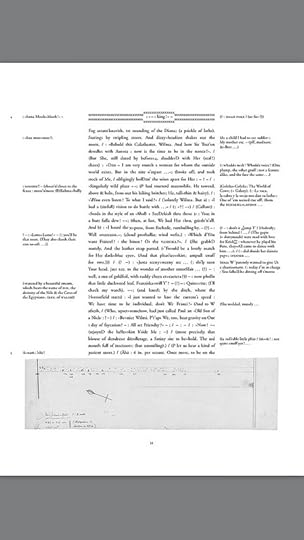
 Has anyone got their (6kg) copy of Bottom's Dream yet?
Yes Lee I do, I'm 20 pages in - only 1470 or so to go.
Mod
Has anyone got their (6kg) copy of Bottom's Dream yet?
Yes Lee I do, I'm 20 pages in - only 1470 or so to go.
Mod

The Mookse and the Gripes
Books mentioned in this topic
Tõde ja õigus I–II (other topics)A People Without a Past (other topics)
Beat Space (other topics)
The Ropewalker (other topics)
Apothecary Melchior and the Ghost of Rataskaevu Street (other topics)
More...
Authors mentioned in this topic
Indrek Hargla (other topics)Jaan Kaplinski (other topics)
Eric Dickens (other topics)
Anselm Hollo (other topics)
Balthasar Russow (other topics)
More...

Not just fiction ('literary' or genres) – non-fiction, poetry, drama as well.
Whether the book's new in the US or UK, or other country's publication schedule, that's fine.
(e.g. There are quite a few English translations appearing in the US in 2016 that were released in the UK in 2015.)
Feel free to post links to articles, lists and excerpts.
-----
Where do people hear about new translated books?
(Maybe we could compile a list of sources here, add more links to this post - see at the end of the post)
Twitter is a major source for some people, but I don't use Twitter as anything more than occasional source to read when there's some event I'm interested in - so, personally, I hear about new translated books sometimes from people on my Goodreads friends & following lists, but more often through sites like:
The Complete Review
Three Percent.
Asymptote Journal is one I keep ending up on via links from other places and recently started following for itself.
And a handful of blogs including Tony's Reading List and Winstonsdad. (Who are both members of Goodreads/this group.)
Nick Lezard in the Guardian, one of the few really good regular newspaper book critics left in the UK, whilst he doesn't exclusively cover translations, includes a fair few from British small presses.
This is very much a non-exhaustive list, just the places from which I've heard about the highest volumes of new stuff.
(English PEN had this awesome preview article at the start of 2015, from which I found several good books, but unfortunately they don't seem to have replicated it for 2016.)
Though, through compiling Goodreads lists of books eligible for the International Booker 2016 and 2017 – I heard about a lot of stuff for the first time by looking at publishers' catalogues myself.
In respect of US publishers, Deep Vellum and Open Letter are a couple of those whose new releases I've been looking through. Several Goodreads friends are big fans of Dalkey Archive press, although since Dalkey withdrew from Scribd and also stopped doing ebooks I have been less motivated to look at their new titles.
-----
Further links:
Words Without Borders
Book Riot's "In Translation" columns and other features