
Book Nook Cafe discussion
General Conversation
>
Obituaries - 2017

message 1:
by
Alias Reader
(new)
Dec 31, 2016 04:46PM


reply
|
flag
THE ASSOCIATED PRESSSaturday, December 31, 2016
Allan Williams, who set up Beatles’ early gigs, dies at 86
Allan Williams, a fixture on the Liverpool music scene who gave the Beatles a place to practice and helped them get early gigs, has died. He was 86.
http://www.nydailynews.com/entertainm...
12/31/16William Christopher, actor best known for role as Father Mulcahy on 'MASH,' dies at 84
PASADENA, California (WABC) --
William Christopher, the actor best known for his role as Father John Mulcahy on the hit TV show "M*A*S*H," died on Saturday, his family confirmed to WABC sister station KABC-TV.
His son, John Christopher, said the actor died from non-lung small cell carcinoma at his home in Pasadena.
He was 84.
http://abc7ny.com/1680921/
Good riddance to 2016: From Muhammad Ali to Prince, here’s a look at the long list of famous figures we lost this yearhttp://www.nydailynews.com/news/natio...
After the deaths of these 10 notable people in 2016, we photographed their private spaces — as they left them.http://www.nytimes.com/interactive/20...
 Alias, 2016 was a rough year in so many ways. Here's hoping 2017 is better!
Barbara wrote: "Alias, 2016 was a rough year in so many ways. Here's hoping 2017 is better!"
Alias, 2016 was a rough year in so many ways. Here's hoping 2017 is better!
Barbara wrote: "Alias, 2016 was a rough year in so many ways. Here's hoping 2017 is better!"Indeed. Though I'm a bit of a pessimist. :(
Huston Smith, Author of ‘The World’s Religions,’ Dies at 97By DOUGLAS MARTIN and DENNIS HEVESIJAN. 1, 2017
Huston Smith, a renowned scholar of religion who pursued his own enlightenment in Methodist churches, Zen monasteries and even Timothy Leary’s living room, died on Friday at his home in Berkeley, Calif. He was 97.
His wife, Kendra, confirmed his death.
Professor Smith was best known for “The Religions of Man” (1958), which has been a standard textbook in college-level comparative religion classes for half a century. In 1991, it was abridged and given the gender-neutral title “The World’s Religions.” The two versions together have sold more than three million copies.
The book examines the world’s major faiths as well as those of indigenous peoples, observing that all express the Absolute, which is indescribable, and concluding with a kind of golden rule for mutual understanding and coexistence: “If, then, we are to be true to our own faith, we must attend to others when they speak, as deeply and as alertly as we hope they will attend to us.”
“It is the most important book in comparative religious studies ever,” Stephen Prothero, a professor of religion at Boston University, said in an interview.
Professor Smith may have reached his widest audience in 1996, when Bill Moyers put him at the center of a five-part PBS series, “The Wisdom of Faith With Huston Smith.” (Each installment began with a Smith quotation: “If we take the world’s enduring religions at their best, we discover the distilled wisdom of the human race.”)
Richard D. Hecht, a professor of religious studies at the University of California, Santa Barbara, called Professor Smith “one of the three greatest interpreters of religion for general readers in the second half of the 20th century,” the others being Joseph Campbell and, in Britain, Roderick Ninian Smart.
Professor Smith, whose last teaching post was at the University of California, Berkeley, had an interest in religion that transcended the academic. In his joyful pursuit of enlightenment — to “turn our flashes of insight into abiding light,” as he put it — he meditated with Tibetan Buddhist monks, practiced yoga with Hindu holy men, whirled with ecstatic Sufi Islamic dervishes, chewed peyote with Mexican Indians and celebrated the Jewish Sabbath with a daughter who had converted to Judaism.
It was through psychedelic drugs in the early 1960s that Professor Smith believed he came closest to experiencing God. Leary, a Harvard professor who championed mind-altering substances, recruited Professor Smith to help in an investigation of psychedelic drugs. At the time, Professor Smith was teaching philosophy nearby at the Massachusetts Institute of Technology.
Leary thought that he had had a profound religious experience in Mexico in August 1960 when he first ate psilocybin mushrooms, which can produce hallucinations. Accordingly, he wanted religious experts to be part of his Harvard Psilocybin Project for the study of mind-altering drugs. Richard Alpert, a colleague in Harvard’s psychology department, was a critical figure in the initiative. (He later took the name Ram Dass.)
On New Year’s Day in 1961, Leary’s team ingested mushrooms in his living room. “Such a sense of awe,” Professor Smith said afterward. “It was exactly what I was looking for.”
A year later, the group gathered in a church basement as a Good Friday service was being held upstairs and tried an experiment involving 20 volunteers in which half were given the psilocybin mushrooms and the other half a placebo. Professor Smith received the drug, which was legal at the time, and reported that he was certain he had had a personal experience with God. He thought that the voice of a soprano singing upstairs was surely that of an angel.
“From that moment on, he knew that life is a miracle, every moment of it,” Don Lattin wrote in “The Harvard Psychedelic Club,” a 2010 account of the psychedelic research project, “and that the only appropriate way to respond and be mindful of the gift of God’s love was to share it with the rest of the world.”
Professor Smith later became disenchanted with Leary’s “tune in, turn on, drop out” gospel, but he retained his belief that the briefest of insights from a psychedelic trip could be mind-expanding.
Those early drug experiments, however, were enough for him, he wrote in “Cleansing the Doors of Perception: The Religious Significance of Entheogenic Plants and Chemicals” (2000). (The word entheogenic refers to substances that produce an altered state of consciousness for spiritual purposes — “God-enabling,” in Professor Smith’s words.)
“If someone were to offer me today a substance that (with no risk of producing a bummer) was guaranteed to carry me into the Clear Light of the Void and within 15 minutes would return me to normal,” Professor Smith wrote, “I would decline.”
Huston Cummings Smith was born to Methodist missionaries on May 31, 1919, in Suzhou, China. The family soon moved to the ancient walled city Zang Zok, a “caldron of different faiths,” he wrote in his 2009 memoir, “Tales of Wonder: Adventures Chasing the Divine.”
“I could skip a few blocks from my house past half the world’s major religions,” he added. “Side by side they existed.”
He decided to be a missionary, and his parents sent him to Central Methodist University, a small church-affiliated college in Fayette, Mo. He was ordained a Methodist minister but soon realized that he had no desire to “Christianize the world,” as he put it; he would rather teach than preach.
Admitted to the University of Chicago Divinity School, he became intrigued by the scientific rationalism propounded by Henry Nelson Wieman, an influential liberal theologian there. He also became attracted to Professor Wieman’s daughter, Kendra, then an undergraduate. They married in 1943.
Besides his wife, he is survived by two daughters, Gael Rosewood and Kimberly Smith; three grandchildren; and four great-grandchildren.
Professor Smith was working on his doctorate at Berkeley and leading Sunday services at a Methodist church in 1944 when he encountered a book that changed his life: “Pain, Sex and Time: A New Outlook on Evolution and the Future of Man” (1939), by Gerald Heard. Mr. Heard advanced an expansive view of spirituality and came to be called “the grandfather of the New Age movement.”
Professor Smith read all two dozen of Mr. Heard’s books and tracked him down at Trabuco College, which Mr. Heard had founded in the Santa Ana Mountains. After dinner, they retired to a large rock.
“They just sat there in silence, gazing at the barren canyon walls,” Mr. Lattin wrote in “The Harvard Psychedelic Club.” “Huston realized there was nothing he needed to ask the man. It was enough just to sit with him on the edge of the canyon.”
Mr. Heard told Professor Smith how to get in touch with Aldous Huxley, the novelist, mystic and psychedelic pioneer, and in summer 1948, Professor Smith took a bus into the Mojave Desert to Huxley’s cabin. The two had a deep conversation about boundless desert sand and Old Testament prophets.
Professor Smith received his Ph.D. in 1945 from the University of Chicago, taught for two years at the University of Denver and accepted a professorship at Washington University in St. Louis.
Huxley recommended he meet Swami Satprakashananda, a Hindu monk who had founded the Vedanta Society of St. Louis in 1938. Professor Smith soon became the president of a Hindu society and an associate minister of a Methodist congregation in St. Louis.
In 1955, he turned his popular college lectures into a series of programs on world religions for the National Educational Television network, the precursor to PBS. On one program, he demonstrated the lotus position.
He was hired by M.I.T. in 1958 and two years later joined other professors in inviting Huxley to deliver seven lectures, which drew standing-room-only crowds. In the decade since their last meeting, Huxley had experimented with mescaline and written “The Doors of Perception,” which became a counterculture classic. Professor Smith confessed to him that he had never had a full-blown mystical experience despite his studies of religious mysticism.
Huxley said Leary could probably supply what he wanted, and gave Professor Smith his phone number.
Professor Smith joined campaigns for civil rights in the 1960s and for a more tolerant understanding of Islam in the 2000s. He wrote more than a dozen books and held professorships at Syracuse University and Berkeley. He helped introduce the Dalai Lama to Americans.
Despite his liberal views, Professor Smith argued that science might not totally explain natural phenomena like evolution. He clung to his Methodism while criticizing some of its dogma. He prayed in Arabic to Mecca five times a day.
His favorite prayer was written by a 9-year-old boy whose mother had found it scribbled on a piece of paper beside his bed.
“Dear God,” it said, “I’m doing the best I can.”
http://www.nytimes.com/2017/01/01/us/...
 The World's Religions: Our Great Wisdom Traditions----Huston Smith
 The Religions of Man
 The Huston Smith reader
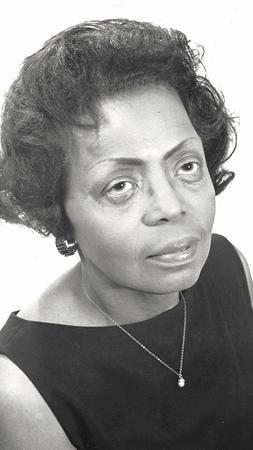
Mattie Smith Colin, Chicago Defender reporter who covered Emmett Till story, dies at 98
The Huston Smith reader
Mattie Smith Colin, Chicago Defender reporter who covered Emmett Till story, dies at 98 Mattie Smith Colin, a reporter for the Chicago Defender, was dispatched to a Chicago train station in 1955 to cover the return of Emmett Till's body.
A deeply moving experience, covering what would become a flash point in the civil rights movement, Colin eloquently captured the anguish of Till's mother as her young, black son, slain in Mississippi after reportedly whistling at a white woman, was returned to her.
http://www.chicagotribune.com/news/ob...
 Alias Reader wrote: "After the deaths of these 10 notable people in 2016, we photographed their private spaces — as they left them.
http://www.nytimes.com/interactive/20......"
Great photos of last spaces. I like this new thread.
 Alias Reader wrote: "After the deaths of these 10 notable people in 2016, we photographed their private spaces — as they left them.
http://www.nytimes.com/interactive/20......"
What a great article!
John Berger, art critic, author, dies at age 90John Berger, the British art critic, Marxist intellectual and prodigious author whose pioneering 1972 book and the BBC series it spawned, “Ways of Seeing,” ushered in a political perspective to art criticism, died Monday. He was 90.
Simon McBurney, the British actor and a friend of Mr. Berger’s, said he died at his home in the Paris suburb of Antony. Mr. Berger had been ill for about a year, McBurney said.
Mr. Berger was the author of art criticism, novels, poetry, screenplays and many less classifiable books. He consistently, provocatively challenged traditional interpretations of art and society and the connections between the two. He examined the role consumerism played in the rise of Picasso in 1965’s “The Success and Failure of Picasso.” He claimed that cubism anticipated the Russian revolution in “The Moment of Cubism, and Other Essays.” When he won the prestigious Booker Prize in 1972 for his novel “G,” he spoke against the prize’s roots in Caribbean slave labor and pledged to give half his reward to the Black Panthers, a group he said more accurately reflected his own politics.
That same year, the London-born, Oxford-educated Mr. Berger — with a wavy brown head of hair, a beige ’70s shirt and a magnetic authority — captivated the British public with “Ways of Seeing,” a series of four 30-minute films. In it, he mined imagery for larger cultural discoveries. How women were depicted in art, for example, revealed much about a time period’s attitude toward gender.
“It is seeing which establishes our place in the surrounding world,” Mr. Berger wrote in “Ways of Seeing,” which became a common curriculum of universities. “We explain that world with words, but words can never undo the fact that we are surrounded by it. The relation between what we see and what we know is never settled.”
Though Mr. Berger began as a painter and initially focused on art criticism, his studies expanded significantly into other realms. He examined the lives of migrant workers in 2010’s “A Seventh Man: Migrant Workers in Europe.” In 1980’s “About Looking,” he considered, among other subjects, how animals exist alongside human lives.
“To suppose that animals first entered the human imagination as meat or leather or horn is to project a 19th century attitude backwards across the millennia,” Mr. Berger wrote. “Animals first entered the imagination as messengers and promises.”
Mr. Berger’s considerable output ran right up until last year, when he published a collection of essays, “Confabulations.” A documentary on Mr. Berger, produced by Tilda Swinton, was also released in 2016. In “The Seasons in Quincy: Four Portraits of John Berger,” Mr. Berger and Swinton, a longtime friend of his, converse in the French Alpine village he lived in for much of his life. Swinton calls him “a radical humanist.”
“If I’m a storyteller, it’s because I listen,” Mr. Berger says in the film. “For me, a storyteller, he’s like a passer, that’s to say like somebody who gets contraband across a frontier.”
Ways of Seeing
John Berger
http://www.sfgate.com/world/article/J...
“If I’m a storyteller, it’s because I listen,” Mr. Berger :)
Nice, eh? I forgot to mention that i read his Ways of Seeing in 2010, while in NYC those months. I mostly read it because i was getting much reading material from my daughter's book shelf and that was on it. Looking short, i began reading it one night, thinking i'd polish it off the next day. Impossible. It was full of ideas, controversial and/or eye opening. One of those books with which i argued, thinking "I can't stand this guy". By the end, i really liked and felt i understood what he was writing. The obituary mentions there was a TV series based on the book (or vice versa, not sure). It would be neat to see that. My library doesn't even have the book, though. Tomorrow we go to Half-Price Books's flagship store, so maybe i'll find it there.
madrano wrote: "Nice, eh? I forgot to mention that i read his Ways of Seeing in 2010, while in NYC those months. I mostly read it because i was getting much reading material from my daughter's book shelf and that ..."OMG that was 2010 !! Where does time go?
Tyrus Wong1910-2016
Chinese born artist whose art influenced Walt Disney's Bambi and who did storyboard for Warner Bros.
http://www.nytimes.com/2016/12/30/mov...
Julie wrote: "Tyrus Wong1910-2016
Chinese born artist whose art influenced Walt Disney's Bambi and who did storyboard for Warner Bros.
http://www.nytimes.com/2016/12/30/mov......"
106 ! God bless. RIP
Nat Hentoff, who wrote for The Village Voice for 50 years, was the author of more than 35 books — novels, volumes for young adults and nonfiction works on civil liberties, education and other topics.Nat Hentoff, an author, journalist, jazz critic and civil libertarian who called himself a troublemaker and proved it with a shelf of books and a mountain of essays on free speech, wayward politics, elegant riffs and the sweet harmonies of the Constitution, died on Saturday at his home in Manhattan. He was 91.
His son Nicholas said he was surrounded by family members and listening to Billie Holiday when he died.
Mr. Hentoff wrote for The Village Voice for 50 years and also contributed to The New Yorker, The Washington Post, Down Beat magazine and dozens of other publications. He wrote more than 35 books — novels, volumes for young adults and nonfiction works on civil liberties, education and other subjects.
http://www.nytimes.com/2017/01/07/nyr...
 Nat Hentoff
 Alias Reader wrote: "Nat Hentoff, who wrote for The Village Voice for 50 years, was the author of more than 35 books — novels, volumes for young adults and nonfiction works on civil liberties, education and other topic..."
I love the thought that he was listening to Billie Holiday when he died. It led to this thought. We often ask people what they would like for their last meal, what kind of answer would we get if we asked what would you like to be listening to. Guess this only works for those of us who love music -- and for me in many forms.
Obscure but interesting obits-William F. Grisham
1925-2016
Historian of Silent Films
http://chicago.suntimes.com/news/hist...
Parker Beam
1941-2017
Master Bourbon Maker
http://www.kentucky.com/news/business...
Zygmunt Bauman
1925-2017
http://hosted2.ap.org/APDEFAULT/Obitu...
Holocaust Scholar
Starting from the bottom. Julie, thank you for these obits of lesser known people. I had no idea Chicago had a silent film industry. In it i saw mention of Wallace Beery, who was a favorite of mine when i was a kid, for some reason. AND i learned that the deceased daughter wrote a soon-to-be-released book about actress & director Ida Lupino ( and, i see, author of her autobio, Ida Lupino: Beyond the Camera). I'm an even bigger fan of Lupino & her directing career.And who doesn't want to sip bourbon while reading Beam's obit? The facts about his industry struck home with me. When we visited Kentucky last fall, we were amazed/dismayed at the size of their agratouristbusiness in the area of bourbon. And tours of distilleries were not cheap, $9 was the smallest charge.
I'd never heard of Zygmunt Bauman but found this quote & his idea, from Modernity and the Holocaust intriguing. The book, "a 1989 release in which he differed with many other thinkers who saw the barbarism of the Holocaust as a breakdown in modernity. Bauman viewed the mass exterminations of Jews as the very outcome of such pillars of modernity as industrialization and rationalized bureaucracy."
What a great life story was Tyrus Wong's. Much history was included to make sense of what he experienced, too. Good obit--thanks, Julie.Alias, thanks for fleshing out Hentoff for me. I knew the name as a writer but couldn't figure out specifics. Now i know.
Bobbie, that's an interesting quote about what sound one wants when they die. One year we visited Hawaii as a family. I clearly recall an afternoon when i took a nap in one room while the family (husband & two kids, upper teens at the time) talked softly in the next room. There was a floral lei on the bedside table and, as our room was right on the shore, the surf could be heard. I realized that if i died then, it would have been an ideal moment. The surf, my family, the scent. Until you asked, music never entered my mind.
Bobbie57 wrote: I love the thought that he was listening to Billie Holiday when he died. It led to this thought. We often ask people what they would like for their last meal, what kind of answer would we get if we asked what would you like to be listening to. Guess this only works for those of us who love music -- and for me in many forms. .."I love that too, Barbara. I think music is a wonderful thing to experience as one passes on to the next world.
Reporter Who Broke The Story Of Start Of WWII Dies At 105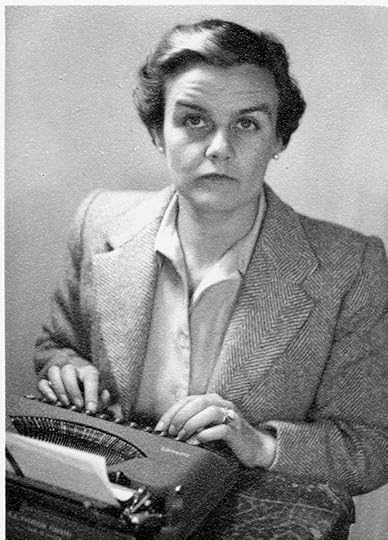
Clare Hollingworth, the war correspondent who told the world of the outbreak of World War II, has died at 105.
She died Tuesday evening in Hong Kong, according to long-time friend Cathy Hilborn Feng, who says Hollingworth "had a smile before she left us."
Hollingworth was a rookie reporter when she landed the scoop of a century — she had been a journalist for the Daily Telegraph for less than week when she revealed German tanks were gathered at the Polish border, poised for an invasion. It was the start of an illustrious career in journalism that lasted some seven decades.
The "doyenne of war correspondents" lived the last few decades of her life in Hong Kong, where she was a regular at the Foreign Correspondents' Club. The club mourned her death on Tuesday, with President Tara Joseph calling her a "tremendous inspiration."
Before her career as a journalist began, Clare Hollingworth helped thousands of political refugees fleeing Hitler's forces to gain asylum in Britain.
The BBC told the story in a piece last year:
"In 1938, a year before war was declared, thousands of refugees were flooding across borders looking for asylum.
"In response, Clare Hollingworth, a glamorous 27-year-old political activist from Leicester, booked a Christmas holiday to Kitzbühel in Austria.
"She visited the well-heeled ski-resort in December 1938 to carry out reconnaissance, and returned to the UK with a Nazi-approved visa in her passport."
With her visa in hand, Hollingworth could travel into Poland to provide aid to fleeing Jews, unionists and writers. Many of the refugees lacked documents and were in danger of being sent back into Nazi territory.
Hollingworth's grand-nephew Patrick Garrett, who wrote a biography of his great aunt, wrote in the Telegraph that she used her "noted pushiness and ability for wrangling with officials, skills that would later stand her in very good stead as a foreign correspondent," to get the refugees papers, food, money and tickets to the U.K.
She helped thousands of refugees reach Britain, Time reports, and the British press dubbed her "The Scarlet Pimpernel" for her efforts. But the British government suspected she was letting in "potential spies," including communists. They put an end to her efforts in the summer of 1939.
Back in London and looking for a new job, Hollingworth persuaded the Daily Telegraph to send her back to Poland as a reporter.
Here's how Time describes what happened next:
"Knowing that war may be imminent, and bolstered by the presence of a diplomatic flag, she borrowed her host's car, and 'motored off alone into Nazi Germany' to stock up on wine and aspirin. As she drove back along the border, a fabric partition separating the two countries flapped momentarily in the wind, exposing 'scores, if not hundreds of tanks' in the valley below. And there was her first big scoop: the outbreak of World War II."
Her headline in the Daily Telegraph: "1,000 Tanks Massed on Polish Frontier; 10 Divisions Reported Ready For Swift Stroke; From Our Own Correspondent."
There were actually only nine divisions, Garrett notes — but "not bad" for her first week on the job.
Three days later, the invasion began. Hollingworth called both her editor and the British Embassy to alert them. The Guardian reports that the embassy staff didn't believe her — so she held the telephone receiver out the window so they could hear the attack for themselves.
It was a stunning start to an extraordinary career. Hollingworth continued to report for the next seven decades, from all over war-torn Europe, then from north Africa and communist China and Palestine and Iraq and Vietnam, among other places.
Colleagues particularly admired her work on the perilous, complicated Algerian War in the '50s and '60s, both Time and the Guardian write.
She also uncovered a famous scoop related to Kim Philby, the "third man" of Britain's notorious "Cambridge Five" group of Soviet spies. At a time when the British government was insisting Philby was not the spy in question, she discovered evidence suggesting he had quickly and covertly escaped to Russia.
The scoop was so stunning that an editor at the Guardian refused to run it, fearing libel suits. Weeks later, she persuaded a deputy editor to run the item on page 7.
"Shortly afterwards the government admitted it believed Philby had indeed fled to Russia," the Guardian writes.
Hollingworth was a famously hard worker, obsessive and seemingly tireless. She loved covering war and conflict — one colleague told the Guardian that Hollingworth "actually enjoys war. She's not at all bloodthirsty, she's actually very humane and kind, but she gets a huge kick out of it."
"I enjoy action," Hollingworth told the BBC. "I enjoy being in a plane that's bombing something, or being on the ground in the desert when they're advancing."
"She was always in the right place at the right time," John Simpson, world affairs editor at the BBC, said in a video produced for Hollingworth's 104th birthday. "Who did the first interview with the shah of Iran? Clare Hollingworth. Who did the last interview ... after he fell? Clare Hollingworth."
She later became a Beijing-based correspondent for The Telegraph. In her early 90s, living a quieter life in Hong Kong, Hollingworth told the Guardian that she still didn't consider herself retired; she called in regularly to the London newsdesk.
Toward the end of her life, most of her life savings were stolen by a fellow expat in Hong Kong, as the Telegraph reported at the time. But her grand-nephew and biographer says she was able to maintain her "independent lifestyle in Hong Kong, closer to her beloved Foreign Correspondents' Club."
At her 105th birthday this past October, she was feted at the club by admiring journalists and friends. She also received a long-distance message from Margo Stanyer, who had fled Hungary as a 4-year-old in 1939.
As the BBC reports, Hollingworth had helped Margo and her family arrange visas and travel to London. Some 77 years later, Stanyer, an 81-year-old great-grandmother, recorded a video message for Hollingworth.
"Thank you to Clare, again and again and again. I think of you a lot, until the end of my life," she said, tearing up. "Wish you all the best. Live for a hundred years again."
http://www.npr.org/sections/thetwo-wa...
Alias Reader wrote: "Reporter Who Broke The Story Of Start Of WWII Dies At 105Clare Hollingworth, the war correspondent who told the world of the outbreak of World War II, has died at 105.
She died Tuesday evenin..."
What a amazing story!
It's remarkable...and so early in her career. Thanks for this one.
Michael Chamberlain1944-2017
This is the former husband of Lindy Chamberlain who was accused of killing their daughter in Australia. Their story was made into a film with Meryl Streep called A Cry in the Dark 1988.
http://www.roanoke.com/news/world/wir...
Thanks, Julie. It's a sad story. RIP.
Buddy Greco, who ran with the Rat Pack and had a hit in 'The Lady Is a Tramp,' dies at 90 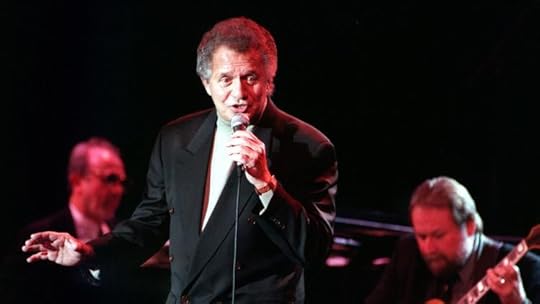
Buddy Greco, the jazz singer, piano player and long-running Vegas showman whose hits included “The Lady Is a Tramp,” has died.
The musician, who was often associated with Frank Sinatra and Dean Martin’s Rat Pack and whose lengthy career spanned eight decades, died Tuesday in Las Vegas, according to his Facebook page. He was 90.
Sam Greco confirmed his father had died, but did not provide details or cause of death.
For decades Greco headlined top nightclubs, cabarets and music rooms around the world. He had such solid-selling singles as “The Lady Is A Tramp,” "I Ran All the Way Home" and "Mr. Lonely" and recorded more than 60 albums.
He also performed with Marilyn Monroe, Ella Fitzgerald, Lena Horne and once played for Queen Elizabeth II along with The Beatles.
Though he was never officially a member of the Rat Pack, he shared the stage and hung out with Sinatra, Martin and Sammy Davis Jr.
See the most-read stories in Entertainment this hour »
Born Armando Greco in South Philadelphia in 1926, Greco began performing at age 4. He sang on the radio and started playing piano by the time he was 6. When he was 20, he signed with his first record label, MusiCraft, which counted Duke Ellington, Sarah Vaughan and Mel Tormé among its artists.
"I knew the minute I was born, I've always known my life was going to be in the music business," Greco said in a 2008 interview with the Riverside Press-Enterprise.
“Oh Look-A-There Ain’t She Pretty” was his first hit, selling over a million copies, according to his website. In 1949, band leader Benny Goodman came into Philadelphia's Club 13, heard Greco and hired him as his keyboardist.
"I always wanted to be my own boss," Greco said in 1991. "I never liked working with anybody. When I first made a couple of records that were little hits, people like Charlie Ventura, Buddy DeFranco and Dizzy [Gillespie] used to mention me for their band. But I never wanted to work with them. The only guy I really wanted to work for was Benny Goodman.
“Luckily, one night he came in and hired me."
Though he was a mainstay in America, two of his career highlights took place in England, where he both lived and toured, Greco said in a 1991 interview with The Times.
In 1960, he recorded what became his favorite album, "From the Wrist Down,” a collection of instrumentals with accompaniment from the London Symphony Orchestra. And in 1964, he played for the queen at Prince of Wales Hall.
"I arrived and there were 10,000 people outside trying to get into 1,200 seats. It turned out the opening act was the Beatles, and it was about six months before they were to become known in the U.S.," Greco recalled. "That was a thrill, an Italian from South Philly performing for the queen.”
In his prime, the headlining Strip performer drew crowds comparable to his pals in the Rat Pack. He made his Las Vegas debut in 1955 at the lounge at the Sands, where he met Sinatra. He also headlined the Desert Inn’s Starlight Room in 1992 — that’s where he met his wife fifth wife, Lezlie Anders, who had been his opening act.
“I'm basically a jazz piano player who made it as a singer like Nat (King) Cole did -- he started me. He was my best friend. A lot of the stuff I do is stuff he gave me over the years,” Greco said.
In 1991, Greco released his first jazz album, the self-produced "The Magic of It All," which took him back to his musical roots.
"I'm at the point in my life that I don't have anything to prove to anyone," Greco told The Times. "I just want to go out and play and have fun."
The couple, who also toured together, moved to Palm Springs where they opened Buddy Greco’s Dinner Club, where he headlined until it closed in 2009.
In August, Greco celebrated his 90th birthday with tributes and toasts at the Italian American Club in Las Vegas.
“That is what Lezlie wants everyone to remember... The man with the magic fingers and the smooth, sexy voice,” his friend Barb Donahue wrote on Facebook.
Despite ups and downs in his lengthy career, the musician remained gracious.
"I've been lucky…. I always happened to be in the right place at the right time. Through my Benny Goodman days, through the Rat Pack thing, my friendship with Marilyn Monroe -- I've got so many stories."
Greco is survived by Anders and seven children from previous marriages.
 A talented man who lived a full life. RIP
I knew the name but nothing about Greco's life. Thanks.
William Peter Blatty, writer of ‘The Exorcist,’ dead at 89
A talented man who lived a full life. RIP
I knew the name but nothing about Greco's life. Thanks.
William Peter Blatty, writer of ‘The Exorcist,’ dead at 89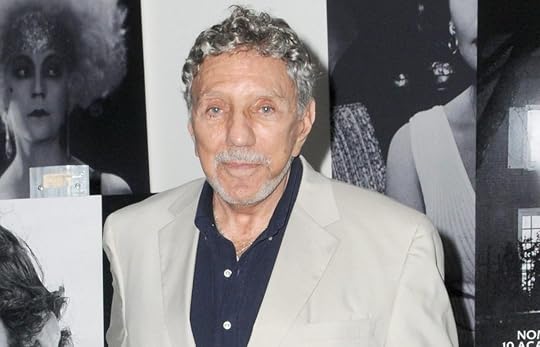
William Peter Blatty, the writer behind the classic horror novel and film “The Exorcist,” has died.
He was 89.
Blatty wrote the novel — and ultimately the screenplay — for the 1973 flick “The Exorcist,” which centered on two priests attempting to help the possessed 12-year-old daughter of an actress (portrayed by Ellen Burstyn).
His wife Julie shared that her late husband died on Thursday at a hospital in Bethesda, Maryland.
William Friedkin, who directed the film, first broke the news of Blatty’s passing on Twitter.
William Peter Blatty, dear friend and brother who created The Exorcist passed away yesterday,” he wrote on Friday.
His cause of death was multiple myeloma, a form of blood cancer, according to his wife.
The writer went on to win both an Oscar and a Golden Globe for the adapted screenplay of his own work and the film itself won the Golden Globe for Best Picture.
Blatty also went on to both pen and direct the "The Exorcist III" and 1980's "The Ninth Configuration."
He also co-wrote “A Shot in the Dark,” which was a sequel to “The Pink Panther.”
Author Stephen King also remembered the late writer.
RIP William Peter Blatty, who wrote the great horror novel of our time. So long, Old Bill.
http://www.nydailynews.com/entertainm...
 The Exorcist---William Peter Blatty
That was one scary book. RIP Mr. Blatty.
I never read the book but I saw it at drive in theater in upstate NY. Riding home in the dark countryside after the show was not fun for my young self. :-O
Alias Reader wrote: "Buddy Greco, who ran with the Rat Pack and had a hit in 'The Lady Is a Tramp,' dies at 90
The Exorcist---William Peter Blatty
That was one scary book. RIP Mr. Blatty.
I never read the book but I saw it at drive in theater in upstate NY. Riding home in the dark countryside after the show was not fun for my young self. :-O
Alias Reader wrote: "Buddy Greco, who ran with the Rat Pack and had a hit in 'The Lady Is a Tramp,' dies at 90 Buddy Greco, the jazz singer, piano player and long-running Vegas showman whose hits included “The Lady..."
I loved Buddy Greco. There was a group he was part of that performed in the early days of late night TV in the 50s. Just good old jazz.
Alias Reader wrote: "I never read the book but I saw it at drive in theater in upstate NY. Riding home in the dark countryside after the show was not fun for my young self. :-O"I can honestly say that the book is one that truly scared me.......but any sequels were not much. It is probably one of those stories that needed to stand alone without sequels. Just MHO.
I only read Blatty's original Exorcist, so can't comment on them. However, that first one was stunning. I really liked it & is why i saw the film. I don't know that i'll ever reread the book but i do watch the movie in reruns some days. Jason Miller is probably why, i must admit. *sigh* and RIP Jason. And RIP Blatty.
Richard (Dick) Gautier1931-2017
Actor
Character actor but also did a lot of voice overs and is best known for his Get Smart role as Hymie
http://www.hollywoodreporter.com/news...
I remember him from Get Smart. RIP Mr. Gautier
I didn't realize he did voice overs for one of the Transformers movies. Neat. His Hymie was funny.RIP Gautier
Astronaut Gene Cernan, the last man to walk on the moon, dies at 82 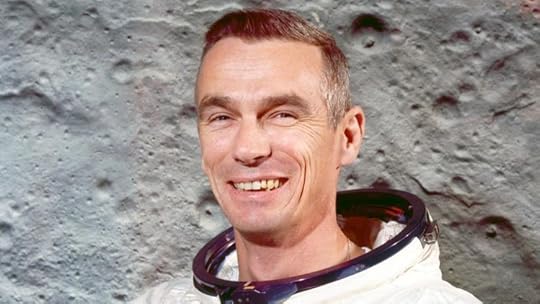
Apollo 10 astronaut Gene Cernan, pictured in 1969. (SSPL / Getty Images)
Associated Press
Former astronaut Gene Cernan, the last of only a dozen men to walk on the moon who returned to Earth with a message of "peace and hope for all mankind," has died. He was 82.
Cernan died Monday following ongoing heath issues, his family said in a statement released by NASA spokesman Bob Jacobs. NASA said Cernan was surrounded by his family.
"Even at the age of 82, Gene was passionate about sharing his desire to see the continued human exploration of space and encouraged our nation's leaders and young people to not let him remain the last man to walk on the Moon," the family said.
Cernan, commander of NASA's Apollo 17 mission, set foot on the lunar surface in December 1972 during his third space flight. He became the last person to walk on the moon on Dec. 14, 1972, tracing his only child's initials in the dust before climbing the ladder of the lunar module the last time. It was a moment that forever defined him in both the public eye and his own.
"Those steps up that ladder, they were tough to make," Cernan recalled in a 2007 oral history. "I didn't want to go up. I wanted to stay a while."
Cernan called it "perhaps the brightest moment of my life. ... It's like you would want to freeze that moment and take it home with you. But you can't."
Decades later, Cernan tried to ensure he wasn't the last person to walk on the moon, testifying before Congress to push for a return. But as the years went by he realized he wouldn't live to witness someone follow in his footsteps — still visible on the moon more than 40 years later.
"Neil [Armstrong, who died in 2012] and I aren't going to see those next young Americans who walk on the moon. And God help us if they're not Americans," Cernan testified before Congress in 2011. "When I leave this planet, I want to know where we are headed as a nation. That's my big goal."
On Dec. 11, 1972, Cernan guided the lander, named Challenger, into a lunar valley called Taurus-Littrow, with Harrison "Jack" Schmitt at his side. He recalled the silence after the lunar lander's engine shut down.
"That's where you experience the most quiet moment a human being can experience in his lifetime," Cernan said in 2007. "There's no vibration. There's no noise. The ground quit talking. Your partner is mesmerized. He can't say anything.
"The dust is gone. It's a realization, a reality, all of a sudden you have just landed in another world on another body out there [somewhere in the] universe, and what you are seeing is being seen by human beings — human eyes — for the first time."
Three days earlier, Cernan, Schmitt and Ronald Evans had blasted off atop a Saturn rocket in the first manned nighttime launch from Kennedy Space Center. Evans remained behind as pilot of the command module that orbited the moon while the other two landed on the moon's surface. Cernan and Schmitt, a geologist, spent more than three days on the moon, including more than 22 hours outside the lander, and collected 249 pounds of lunar samples.
"In that whole three days, I don't think there's anything that became routine," Cernan recalled. "But if I had to focus on one thing ... it was just to look back at the overwhelming and overpowering beauty of this Earth.
"To go a quarter of a million miles away into space and have to take time out to sleep and rest ... I wished I could have stayed awake for 75 hours straight. I knew when I left I'd never have a chance to come back."
Completing their third moon walk on Dec. 14, Schmitt returned to the lunar module and was followed by Cernan.
"We leave as we came and, God willing, as we shall return, with peace and hope for all mankind," Cernan said.
He later acknowledged that he had grasped for words to leave behind, knowing how the world remembered Neil Armstrong's "giant leap for mankind" on stepping on the moon in 1969.
Before heading home, Cernan said he drew the letters "TDC" — the initials of his then 9-year-old daughter, Teresa Dawn — with his finger on the dusty gray lunar surface. He said he imagined someone in the distant future would find "our lunar rover and our footprints and those initials and say, 'I wonder who was here? Some ancient civilization was here back in the 20th century, and look at the funny marks they made.'"
Eugene A. Cernan was born in 1934 in Chicago and graduated from Indiana's Purdue University in 1956 with a degree in electrical engineering. (Armstrong also was a Purdue grad.)
He had been a Navy attack pilot and earned a master's degree in aeronautical engineering when NASA selected him in October 1963 as one of 14 members of its third astronaut class.
Cernan had the looks of an astronaut from central casting. "He's your classic sort of handsome debonair flyboy," said space historian Roger Launius, associate director of the Smithsonian Air and Space Museum.
In 1966, he was pilot of Gemini 9, a three-day flight with command pilot Tom Stafford where they used different techniques to rendezvous with a docking adapter that was previously launched. On the flight, Cernan became the second American to walk in space, spending more than two hours outside the Gemini spacecraft.
Cernan would later call the mission, "that spacewalk from hell."
"It was very serious," said Launius, the historian. "He lost all kinds of water, his equipment did not work effectively. He overheated. His visor glossed over with water, he could barely see. He barely got back in the spacecraft."
Cernan sweat so much he lost 13 pounds. The space agency was forced to go back to the drawing board.
"That was a really important learning experience," Launius said. "The difficult thing about that is they put an astronaut's life at great risk there. They learned the lesson."
With the Apollo program underway, Cernan flew on Apollo 10 in May 1969. It was a dress rehearsal for the lunar landing on the next flight and took Cernan and Stafford, aboard the lunar module Snoopy, to within 9½ miles of the moon's surface.
The mission was marked by a glitch when the wrong guidance system was turned on and the lunar module went out of control before Stafford righted it by taking manual control.
Cernan often joked that his job was to paint a white line to the moon that Armstrong and the rest of the Apollo 11 crew could follow. Yet Cernan was one of only three people to voyage twice to the moon — either to its surface or in moon orbit. James Lovell and John Young are the others.
In 1973, Cernan became special assistant to the program manager of the Apollo program at Johnson Space Center in Houston, assisting in planning and development of the U.S.-Soviet Apollo-Soyuz mission. He was senior U.S. negotiator with the Soviets on the test project.
He retired from NASA three years later. He worked for a Houston energy firm, Coral Petroleum, then in 1981 began his own aerospace consulting company. He eventually became chairman of an engineering firm that worked on NASA projects. He also worked as a network television analyst during shuttle flights in the 1980s.
A documentary about his life, "The Last Man on the Moon," was released in 2016.
Teresa was Cernan's only child with his wife Barbara. The couple married in 1961 and divorced 20 years later. In 1987, he married again, to Jan Nanna, and they lived in Houston.
In all, Cernan logged 566 hours and 15 minutes in space, more than 73 hours of them on the moon's surface.
"I can always walk on Main Street again, but I can never return to my Valley of Taurus-Littrow, and that cold fact has left me with a yearning restlessness," he wrote in his 1999 autobiography, also entitled "The Last Man on the Moon."
"It was perhaps the brightest moment of my life, and I can't go back," he said. "Enriched by a singular event that is larger than life, I no longer have the luxury of being ordinary."
Cernan is survived by his wife, Jan Nanna Cernan, his daughter and son-in-law, Tracy Cernan Woolie and Marion Woolie, stepdaughters Kelly Nanna Taff and husband, Michael, and Danielle Nanna Ellis and nine grandchildren.
http://www.latimes.com/local/obituari...
I saw that earlier on the news. He was one of our modern day explorers. This poem seems appropriate.High Flight
Oh! I have slipped the surly bonds of earth,
And danced the skies on laughter-silvered wings;
Sunward I've climbed, and joined the tumbling mirth
Of sun-split clouds, --and done a hundred things
You have not dreamed of --Wheeled and soared and swung
High in the sunlit silence. Hov'ring there
I've chased the shouting wind along, and flung
My eager craft through footless halls of air...
Up, up the long, delirious, burning blue
I've topped the wind-swept heights with easy grace
Where never lark or even eagle flew --
And, while with silent lifting mind I've trod
The high untrespassed sanctity of space,
Put out my hand, and touched the face of God.
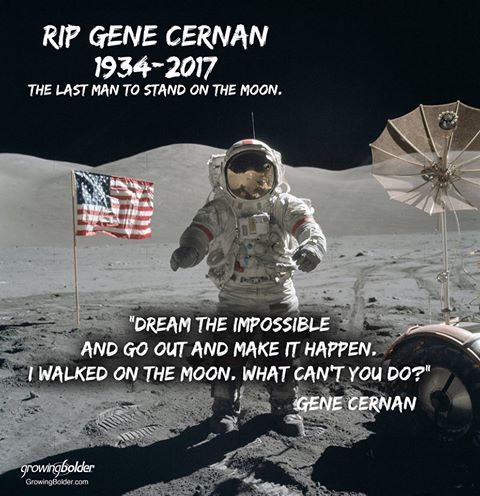 What an accomplishment for all the astronauts!
RIP Gene Cernan.
I was hoping someone else would find a better obituary for Vicki Lansky. Her book, Feed Me! I'M Yours, helped parents in the '70s & later manage their status as caretakers. My friends & i relied heavily on her first book, even though we knew there were some hinky aspects to it, such as crumbling Triscuit crackers for an emergency cereal--way too much salt for kids!Vicki Lansky, author of more than 30 parenting books on topics ranging from sleep to toilet training, died Sunday “after a week of peaceful sleep,” according to a Facebook announcement by her son, Douglas.
She celebrated her 75th birthday last week.
As news of Lansky’s death spread, her readers took to the Internet to express gratitude for her books that got them through their children’s early years, offering advice on everything from birthday parties to traveling with kids and how to deal with earaches.
Lansky and her then-husband, Bruce, founded Meadowbrook Press in Minnetonka to publish Vicki’s first book,” Feed Me I’m Yours,” in 1974.
Written for a local fundraising cookbook, it is one of the highest-selling baby/toddler cookbooks in the country, with more than three million copies in print.
After the Lanskys divorced in 1983, Vicki founded Book Peddlers in Deephaven and began writing books for other publishers. Book Peddlers also published books by other authors.
Among her family/parenting books are “Divorce Book for Parents,” “Taming the C.A.N.D.Y Monster” and “It’s Not Your Fault, Koko Bear,” which came with a bear doll with a backpack into which kids could stuff their fears and worries.
Lanksy was a Sunday columnist for the Minneapolis Star Tribune from 1985 to 1987, a contributing editor to Family Circle magazine for eight years, and wrote a monthly column for Sesame Street Parents magazine from 1987 to ’97.
She appeared on all the top television shows, including The View, The Today Show and CBS This Morning, and served on the boards of several organizations that worked with children and families.
In 2008 Lansky married Stephen M. Schaefer, a graduate of St. John’s University in Collegeville, who at the time of their marriage ran an on-line leadership training service
Besides her husband and son Douglas, of Stockholm, Sweden, Lansky is survived by daughter Dana, Minneapolis, and three granddaughters.
https://en.wikipedia.org/wiki/Vicki_L...
Tommy Allsup1931-2017
Guitarist who lost the coin toss that kept him off the Buddy Holly plane that crashed
https://www.nytimes.com/2017/01/13/ar...
 madrano wrote: "I was hoping someone else would find a better obituary for Vicki Lansky. Her book, Feed Me! I'M Yours, helped parents in the '70s & later manage their status as caret..."
Here's is one that looks different...
http://www.startribune.com/obituaries...
Thank you, rider. That filled me in on some of the particulars of her life that i was curious to learn.RIP Lansky
RIP Allsup

Book Nook Cafe
Books mentioned in this topic
The Primal Scream (other topics)History's Greatest Scandals: Shocking Stories of Powerful People (other topics)
History's Greatest Scandals: Shocking Stories of Powerful People (other topics)
Who Moved My Cheese? (other topics)
Who Moved My Cheese? (other topics)
More...
Authors mentioned in this topic
Sue Grafton (other topics)Julian May (other topics)
Arthur Janov (other topics)
Ed Wright (other topics)
Ed Wright (other topics)
More...
