
Book Nook Cafe discussion
General Conversation
>
Poetry ~~ 2017

 We were a family that read....and our parents began reading to us at a very young age. One of my first books was Poems of Childhood by Eugene Field and I still have it. One of my favorite poems from that book which used to make me cry and still brings a tear to my eye is:
Little Boy Blue
The little toy dog is covered with dust,
But sturdy and stanch he stands;
And the little toy soldier is red with rust,
And his musket moulds in his hands.
Time was when the little toy dog was new,
And the soldier was passing fair;
And that was the time when our Little Boy Blue
Kissed them and put them there.
"Now, don't you go till I come," he said,
"And don't you make any noise!"
So, toddling off to his trundle-bed,
He dreamt of the pretty toys;
And, as he was dreaming, an angel song
Awakened our Little Boy Blue---
Oh! the years are many, the years are long,
But the little toy friends are true!
Ay, faithful to Little Boy Blue they stand,
Each in the same old place---
Awaiting the touch of a little hand,
The smile of a little face;
And they wonder, as waiting the long years through
In the dust of that little chair,
What has become of our Little Boy Blue,
Since he kissed them and put them there.
 Jill, that is a sweet one. Precursor of "Puff the Magic Dragon", in its way, isn't it? I used to read books & poems to my children before bed but that one made me cry, so i rarely read it to them.
 On the other hand, we all found pleasure in their favorite from Field,
Wynken, Blynken, and Nod
Wynken, Blynken, and Nod one night
Sailed off in a wooden shoe,--
Sailed on a river of crystal light
Into a sea of dew.
"Where are you going, and what do you wish?"
The old moon asked the three.
"We have come to fish for the herring-fish
That live in this beautiful sea;
Nets of silver and gold have we,"
Said Wynken,
Blynken,
And Nod.
The old moon laughed and sang a song,
As they rocked in the wooden shoe;
And the wind that sped them all night long
Ruffled the waves of dew;
The little stars were the herring-fish
That lived in the beautiful sea.
"Now cast your nets wherever you wish,--
Never afraid are we!"
So cried the stars to the fishermen three,
Wynken,
Blynken,
And Nod.
All night long their nets they threw
To the stars in the twinkling foam,--
Then down from the skies came the wooden shoe,
Bringing the fishermen home:
'Twas all so pretty a sail, it seemed
As if it could not be;
And some folk thought 'twas a dream they'd dreamed
Of sailing that beautiful sea;
But I shall name you the fishermen three:
Wynken,
Blynken,
And Nod.
Wynken and Blynken are two little eyes,
And Nod is a little head,
And the wooden shoe that sailed the skies
Is a wee one's trundle-bed;
So shut your eyes while Mother sings
Of wonderful sights that be,
And you shall see the beautiful things
As you rock in the misty sea
Where the old shoe rocked the fishermen three:--
Wynken,
Blynken,
And Nod.
Oh my, yes!!! That is also one of my favorites. The Field poems are so sweet, touching, and sometimes poignant. I also have the other book which is quite wonderful that my parents used to read to me: A Child's Garden of Verses by Robert Louis Stevenson
If you love the poetry of the English language, there is one book that is a "must have". The Oxford Book of English Verse, 1250-1918 is huge and just open to any page and find something that will touch the poet within you. There is an updated version that includes poetry up until 1950 but the original is the one that I have and enjoy.
 Jill wrote: "We were a family that read....and our parents began reading to us at a very young age. One of my first books was Poems of Childhood by Eugene Field and I still have it...."
:(
Thanks for sharing this poem and the Oxford book.
My folks didn't read books to us--heck, i can't remember that we even owned a book, to be honest. No doubt as a direct result, our house was full of books & we read nightly to our children. So, as an adult i rather introduced myself to Fields and Stevenson's poetry for children. I liked more of the latter's work, probably because they were shorter, so i could memorize them, too.One terrific book which introduced me to more children's poets was A Child's Book of Poems, illustrated by Gyo Fujikawa. We all savored the artwork (as well as his Oh, What A Busy Day!) but that book led me to more poems & books by poets and authors. In turn, i shared those with my kids. And so it went.
On someone's DL thread i mentioned the following poem about Abe Lincoln's mom, Nancy Hanks. I thought i'd share it here.Nancy Hanks
by Rosemary Benét and Stephen Vincent BenétStephen Vincent Benét
If Nancy Hanks
Came back as a ghost,
Seeking news
Of what she loved most,
She'd ask first
"Where's my son?
What's happened to Abe?
What's he done?"
"Poor little Abe,
Left all alone
Except for Tom,
Who's a rolling stone;
He was only nine
The year I died.
I remember still
How hard he cried."
"Scraping along
In a little shack,
With hardly a shirt
To cover his back,
And a prairie wind
To blow him down,
Or pinching times
If he went to town."
"You wouldn't know
About my son?
Did he grow tall?
Did he have fun?
Did he learn to read?
Did he get to town?
Do you know his name?
Did he get on?"
Extremely touching. She would have been proud of her "little Abe".
Agreed, Jill. I don't know who this man is, but there was a reply to the above poem, often quoted immediately after the Benet poem. I'm using the GoodReads author link, although i don't know if this is the same man.A Reply to Nancy Hanks
by Julius Silberger
Yes, Nancy Hanks,
The news we will tell
Of your Abe
Whom you loved so well.
You asked first,
"Where's my son?"
He lives in the heart
Of everyone.
How interesting. I don't know who that man is either but his short verse says it all, doesn't it?
In the book I am reading, Mad Enchantment: Claude Monet and the Painting of the Water Lilies--Ross King there is this," The last poem by Edmund Waller, composed in 1686, when he was over eighty and nearly blind, contains a couplet about wisdom and vision in old age." I will post the complete poem. I thought it was quite poignant.
The seas are quiet when the winds give o'er;
So calm are we when passions are no more.
For then we know how vain it was to boast
Of fleeting things, so certain to be lost.
Clouds of affection from our younger eyes
Conceal that emptiness which age descries.
The soul's dark cottage, batter'd and decay'd,
Lets in new light through chinks that Time hath made:
Stronger by weakness, wiser men become
As they draw near to their eternal home.
Leaving the old, both worlds at once they view
That stand upon the threshold of the new.
~~~~ Edmund Waller
It says plenty that what we might think of as sage revelations about aging today were written about so long ago. Nothing new, just time moving on. I really like the words, "The soul's dark cottage..." I'm glad you shared this one, Alias.
Edna St. Vincent MillayIt’s the birthday of Edna St. Vincent Millay (1892) considered one of the finest American poets of her time. One of her best-known poems, “First Fig,” became emblematic for certain wild-hearted young people during the Jazz Age. Millay liked to say she was born “between the mountains and the sea” in Rockland, Maine. She and her two sisters were raised solely by their mother, who tried to instill in them a sense of independence and art. Millay longed to be a pianist, but her teacher said her hands were too small, so she focused on poetry instead. She was a tomboy; her family called her “Vincent.”
When Millay was 19, her mother saw a poetry contest in a magazine called The Lyric Year and encouraged Millay to enter. Her poem, “Renascence,” came in fourth, though everybody thought she should have won, including the second-prize winner, who offered her his $250 prize. She found a champion, though, in arts patron Caroline Dow, who saw such promise in Millay that she offered to pay her tuition at Vassar College. Millay loved college life, even though she was older than most of the other women. She wore men’s clothes, wrote and starred in a play called The Princess Marries the Page, and delighted in campus hijinks. Once, when she sent in a sick excuse to a class, the teacher stopped her later in the hallway and said, “Vincent, you sent in a sick excuse at nine o’clock this morning and at ten o’clock I happened to look out the window of my office and you were trying to kick out the light in the chandelier on top of the Taylor Hall arch, which seemed a rather lively exercise for someone so taken with illness.” Millay responded, “Prexy, at the moment of your class, I was in pain with a poem.”
Edna St. Vincent Millay headed to Greenwich Village after graduation, just in time for the Jazz Age. She spoke six languages, had affairs with men and women, and wrote for Vanity Fair magazine. One of her friends described her as “a frivolous young woman, with a brand-new pair of dancing slippers and a mouth like a valentine.” She made friends with fellow writers E.E. Cummings and Eugene O’Neill and wrote to a friend, “People fall in love with me and annoy me and distress me and flatter me and excite me.”
She lived in an attic apartment at 75 ½ Bedford Street that was nine feet long and six feet wide. It was the narrowest house in New York City and is today known as “The Millay House.”
Millay won the Pulitzer Prize for poetry (1923) for her book, The Ballad of the Harp-Weaver. Her other books include Renascence and Other Poems (1912), Fatal Interview (1931), and Collected Sonnets (1941).
After an affair with a French violinist didn’t end well, she married and bought a big house she called “Steepletop” in Austerlitz, New York. She built a cabin where she could write and cultivated the gardens. Steepletop had a spring-fed pool and Millay enjoyed swimming in the nude. She gave readings all over the country.
Edna St. Vincent Millay died in (1950). Her husband had passed away, and she’d drifted into alcoholism and ill health. She was found at the foot of the stairway at Steepletop. After she died, her sister turned Steepletop into the Millay Colony for the Arts.
Millay wrote: “My candle burns at both ends; / It will not last the night; / But ah, my foes, and oh, my friends — / It gives a lovely light!”
 Happy Birthday Edna St. Vincent Millay!
 I just read a very interesting article on "Do Not Go Gentle Into That Good Night" by Dylan Thomas at https://interestingliterature.com/201...
Shomeret wrote: "I just read a very interesting article on "Do Not Go Gentle Into That Good Night" by Dylan Thomas at https://interestingliterature.com/201...-..."
I just read a very interesting article on "Do Not Go Gentle Into That Good Night" by Dylan Thomas at https://interestingliterature.com/201...
Shomeret wrote: "I just read a very interesting article on "Do Not Go Gentle Into That Good Night" by Dylan Thomas at https://interestingliterature.com/201...-..."Thank you, Shomeret. I bookmarked it to read later as I am headed out the door.
Some of her poetry is magical. Thanks for the bio, Alias.
The timing on the Dylan Thomas poem couldn't be better. We've spent the last couple of days in my mother-in-law's retirement community. Several residents died recently but the saddest two were ones in which the community watched the residents lose interest. The saddest for me was a guy who spent much of his time walking around the building and sitting in the lobby. He almost seemed to asking for conversation but i never saw another resident engage with him beyond a few words. Something about that has moved me more than the passing of the others. I've resolved that if I'm ever in similar circumstances i will force myself upon others. Now I suspect i'll just approach them as I recite this poem! LOL--how scary would that be?
Sort of in the same situation. The other day I was at the Vitamin shoppe. An older gentleman was talking to the clerk but just really making conversation. Finally the clerk said he had to help me. The clerk apologized. I told him no need. For many people you are probably the only person they got to talk to all day. He was probably just lonely. The clerk thanked me and said he would have to remember that.
In this vein.... I was in a supermarket the other day in an area where many elderly people reside. The 'bagger' was a handsome old gentleman who made it his busniess to 'flirt' with each elderly lady who checked out. It kind of held up the line....but was very nice to see.
I am sure it made his day as well as the lady customers. :)I've heard it said that one of the most precious things you can give someone is your time. And generally speaking it doesn't cost a dime.
I think this is true across generations but it seems more poignant in older people. At least this was my thought as we spent the last few days visiting my mother-in-law's retirement community. Conversations are welcome there. By the time we left it seemed everyone knew we were going overseas for 8 months. It was funny how the residents apparently spread this from one person to the next.
It’s the birthday of poet Elizabeth Barrett Browning born in Durham, England (1806). A young poet, Robert Browning, read her poems and sent her an admiring letter. Eventually, he came to court her, and in 1846, when she was 40 and he was 34, they married — in secret and against her father’s wishes — and ran away to Italy. Over the next few years, Barrett Browning wrote her most famous volume of poetry, Sonnets from the Portuguese (1850), which included the lines: “How do I love thee? Let me count the ways.”http://writersalmanac.org/
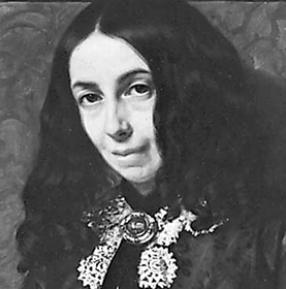
Number 43
How do I love thee? Let me count the ways.
I love thee to the depth and breadth and height
My soul can reach, when feeling out of sight
For the ends of Being and ideal Grace.
I love thee to the level of everyday's
Most quiet need, by sun and candlelight.
I love thee freely, as men strive for Right;
I love thee purely, as they turn from Praise.
I love thee with the passion put to use
In my old griefs, and with my childhood's faith.
I love thee with a love I seemed to lose
With my lost saints,—I love thee with the breath,
Smiles, tears, of all my life!—and, if God choose,
I shall but love thee better after death.
I wonder how many times that sonnet has been used at weddings, anniversaries, and deaths. It says so much about the love we have for another.
I always considered the opening lines of Robert Browning's "Rabbi Ben Ezra" a sort of reply to the sonnet. As it was published in '64, a couple of years after her death, i'm not sure my belief is justified but that doesn't stop me!Rabbi Ben Ezra
Grow old along with me!
The best is yet to be,
The last of life, for which the first was made:
Our times are in His hand
Who saith "A whole I planned,
Youth shows but half; trust God: see all, nor be afraid!''
Nice. I like your idea of a reply.
I now feel justified since I also thought it was a reply!!!!! Thanks, Madrano. :o)
Isn't that funny? It makes sense to us, so it must be correct!Here's something synchronistic. My aunt was telling a FB group about an online math-ish class she was taking. She mentioned it because she heard of a poem which called to her, "Hope is the Thing With Feathers" by Emily Dickinson. It's long been one of my favorites by one of my favorite poets. I hadn't thought or heard it in a number of years, however. (As it happens, whenever i see that poem mentioned i think of Woody Allen because he wrote a book titled Without Feathers, which i liked.) ANYway, that Very Night i began reading the book The Sun Is Also a Star by Nicola Yoon, which someone in this group mentioned earlier this year. The Dickinson poem is featured in the book. Love That! Here is said poem.
Hope is the Thing With Feathers
“Hope” is the thing with feathers -
That perches in the soul -
And sings the tune without the words -
And never stops - at all -
And sweetest - in the Gale - is heard -
And sore must be the storm -
That could abash the little Bird
That kept so many warm -
I’ve heard it in the chillest land -
And on the strangest Sea -
Yet - never - in Extremity,
It asked a crumb - of me.
Love that one, Alias. I sometimes mentally recite the first stanza.
madrano wrote: "Isn't that funny? It makes sense to us, so it must be correct!Here's something synchronistic. My aunt was telling a FB group about an online math-ish class she was taking. She mentioned it becaus..."
What a nice poem on hope.
I love when these synchronicity things happen.
Synchronicity goes in spurts with me. I appear to be in one, reading-wise. I have been reading Pride and Prejudice and Zombies by Jane Austen and Seth Grahame-Smith on & off for a few weeks, just filler, so to speak. This week i buckled down with it but am alternating with a sci-fi book mentioned here by Julie, The Lemoncholy Life of Annie Aster by Scott Wilbanks. Last night, i began the book P&P is mentioned. Love it. AND i was pretty quickly hooked on the Wilbanks book, too.
Poet Mari Evans died Friday, March 10. Here is her obituary. http://www.indystar.com/story/news/20...This is probably her best known poem.
I am a Black Woman
I am a black woman
the music of my song
some sweet arpeggio of tears
is written in a minor key
and I
can be heard humming in the night
Can be heard
humming
in the night
I saw my mate leap screaming to the sea
and I/with these hands/cupped the lifebreath
from my issue in the canebrake
I lost Nat's swinging body in a rain of tears
and heard my son scream all the way from Anzio
for Peace he never knew....I
learned Da Nang and Pork Chop Hill
in anguish
Now my nostrils know the gas
and these trigger tire/d fingers
seek the softness in my warrior's beard
I am a black woman
tall as a cypress
strong
beyond all definition still
defying place
and time
and circumstance
assailed
impervious
indestructible
Look
on me and be
renewed
That is a poignant poem. It's nice that she was "honored last year with the unveiling of a 30-foot-tall mural". Too often we wait until a person has passed to honor them.
Very moving poem. Thank you, Madrano. RIP Mari Evans.
My pleasure, Jill.Alias, i agree, often we wait too long to celebrate real people. And politicians often don't wait long enough to allow their names to be used for honors such as this.
IMO
April is Poetry Month! I saw this online.
The Writer's Guide to Poetry
The poet Dame Edith Sitwell practiced the lost art of lying in an open coffin before writing her poetry. Edgar Allan Poe wrote with his cat "Catarina" perched on his shoulder. We at Signature offer a simpler solution to get your poetic juices flowing.
Whether you're new to poetry, familiar with its form, a connoisseur of its craft, in need of encouragement, or simply wondering how to rhyme mat with cat, the Writer's Guide to Poetry is for you.
In it you'll find:
Insights from 11 award-winning poets.
Advice on how to overcome imposter syndrome.
3 classic poems illustrated by artist Nathan Gelgud.
Anne Lamott on the devils of perfectionism.
Important tips on "telling it slant."
And more.
We're pleased to have Knopf as a cosponsor of the guide. Knopf has prided itself on publishing some of the finest poets of our time. And for more than twenty years, the imprint has celebrated National Poetry Month by sending out a free poem every day throughout April. When you download the guide, you'll receive Knopf's poem-a-day emails in April, plus occasional news about award-winning poets.
http://www.signature-reads.com/guides...
What a nice idea. Alias, thanks for the info & link.
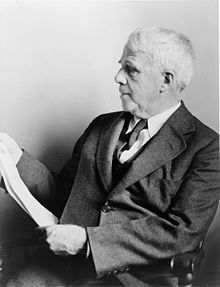
It’s the birthday of American poet Robert Frost (1874). People assume Frost was a native New Englander, since many of his poems are set there and evoke wintry landscapes and long, leafy walks, but he was born in San Francisco, where his father was a journalist for the San Francisco Bulletin. When he was 11, his father died and his mother packed up Frost and moved to Lawrence, Massachusetts.
His first poem, “My Butterfly: An Elegy,” was published in the New York Independent in 1894. Frost was paid $15.00 for his poem, about $415.00 today, but mostly he received rejections, like one from the Atlantic Monthly, which simply said, “We regret The Atlantic has no place for your vigorous verse.” He was so excited by his first publication that he proposed to his high school sweetheart. She said yes.
Dejected at having no further luck in America with his poetry, Frost and his wife pulled up stakes and moved to England in 1912. There, he found a champion in poet Ezra Pound, who helped get Frost’s first two books, A Boy’s Will (1913) and North of Boston (1914), published. Pound liked to tease Frost. He once showed him jujitsu in a restaurant and threw him over his head. About England, Robert Frost once said, “I went over there to be poor for a while, nothing else.” When he returned to the U.S., it was as a successful poet, a position he held until his death.
Robert Frost bought a farm in in Franconia, New Hampshire, for $1,000.00 and set about writing about farmers and day laborers, though he himself wasn’t much of farmer. He mostly got up at noon and sat on the fence outside. He liked to use a writing board to compose his poems, not a table, and once claimed to have written poems on the soles of his shoes. He traveled the country giving lectures and visiting schools. Once, during a train trip with poet Wallace Stevens, Stevens turned to Frost and said, “The trouble with your poetry, Frost, is that it has subjects,” to which Frost retorted, “You write about bric-a-brac.”
Robert Frost’s collections of poetry include A Further Range (1937), A Witness Tree (1942), Come In, and Other Poems (1943), You Come Too (1964).
http://writersalmanac.org/
The Road Not Taken - Poem by Robert Frost
Two roads diverged in a yellow wood,
And sorry I could not travel both
And be one traveler, long I stood
And looked down one as far as I could
To where it bent in the undergrowth;
Then took the other, as just as fair,
And having perhaps the better claim
Because it was grassy and wanted wear,
Though as for that the passing there
Had worn them really about the same,
And both that morning equally lay
In leaves no step had trodden black.
Oh, I kept the first for another day!
Yet knowing how way leads on to way
I doubted if I should ever come back.
I shall be telling this with a sigh
Somewhere ages and ages hence:
Two roads diverged in a wood, and I,
I took the one less traveled by,
And that has made all the difference.
Audio
https://www.poemhunter.com/poem/the-r...
JFK on Poetry, Power, and the Artist’s Role in Society: His Eulogy for Robert Frost, One of the Greatest Speeches of All Timeaudio
https://www.brainpickings.org/2015/05...
transcript ( also link to audio)
https://www.arts.gov/about/kennedy-tr...
Alias Reader wrote: "It’s the birthday of American poet Robert Frost (1874). People assume Frost was a native New Englander, since many of his poems are set there and evoke wintry landscapes and long, leafy walks, bu..."
My favorite Frost poem.
Happy Birthday Robert Frost. Wonderful poem.
Alias, thanks for the link to the eulogy transcript. Apropos of our discussion in the theater thread i note this, "I look forward to an America which will reward achievement in the arts as we reward achievement in business or statecraft. I look forward to an America which will steadily raise the standards of artistic accomplishment and which will steadily enlarge cultural opportunities for all of our citizens." Another area in which #45 shows himself to be pathetic in comparison to other presidents.One day, back when i had to select poems to discuss in our poetry chat group, i read over two dozen poems by Frost in one sitting. They evokes rural life and pleasures of seasons. Yet mostly there were few with enough meat for an hour long discussion. I can still sit for a long time reading his work, which seem to have not gone out of favor.
However, it has me wondering how it is that some poets & their works go out of favor. In their lifetimes Edgar Lee Masters, James Whitcomb Riley and Ella Wheeler Wilcox were very popular poets. Even today their verses seem to echo Frost and other longer remembered poets. I realize we change but is it the "meat" of some of the poems which help maintain a legacy? Probably. All's i know is i've been enjoying rereading the poems from Masters's Spoon River Anthology over the last few weeks.
madrano wrote: ""I look forward to an America which will reward achievement in the arts as we reward achievement in business or statecraft. I look forward to an America which will steadily raise the standards of artistic accomplishment and which will steadily enlarge cultural opportunities for all of our citizens." Another area in which #45 shows himself to be pathetic in comparison to other presidents.Excellent, Deb. I have to remember this Kennedy quote. Thank you !
madrano wrote: However, it has me wondering how it is that some poets & their works go out of favor. Perhaps one answer can be found in what we are exposed to in school. I think most children are exposed to Frost in school. I have no idea what other poetry is taught is school today.
As I was googling to find stats on poetry sales, I found this interesting article that notes that Rumi is the best selling poet in the U.S..
http://www.bbc.com/culture/story/2014...
If one considers Rap and hip hop poetry I would say poetry is still popular.
Here is an interesting article on the demise of poetry. It includes a chart of the number of people who read a poem in the last year. 6.7%
The article also has an interesting chart on various activities that people say they did during the last year. Only seeing an opera is lower than poetry.
https://www.washingtonpost.com/news/w...
Then you have Milk and Honey--Rupi Kaur This collection made the NY Times bestseller list recently.

Book Nook Cafe
Books mentioned in this topic
The Poems Of Richard Wilbur (other topics)Poems to Learn by Heart (other topics)
Committed to Memory: 100 Best Poems to Memorize (other topics)
Heart Beats: Everyday Life and the Memorized Poem (other topics)
Storm Tide (other topics)
More...
Authors mentioned in this topic
Richard Wilbur (other topics)John Hollander (other topics)
Susan Wise Bauer (other topics)
Catherine Robson (other topics)
Caroline Kennedy (other topics)
More...

Please share your favorite poems here. Heard any poetry news? Let us know. Heard of some new poetry books? Do tell !
Post here about all poetry !