
The Patrick Hamilton Appreciation Society discussion
Hamilton-esque books, authors..
>
John le Carré

 I absolutely love the Karla trilogy, all three parts blew me away. Other than that I've read A Murder of Quality which was good and A Small Town in Germany which is another excellent hunt for a traitor book in a similar vein to the Karla books. For me though the Karla books will stand forever as the high watermark of spy novels. They are books that definitely could take repeated readings.
 Mod
Can't believe I forgot that I've read The Spy Who Came in from the Cold! That's a superbly bleak indictment on the whole idea of spies and spying. The film starring Richard Burton is also very good.
Mod
Mod
Can't believe I forgot that I've read The Spy Who Came in from the Cold! That's a superbly bleak indictment on the whole idea of spies and spying. The film starring Richard Burton is also very good.
Mod
I recorded that Burton film of 'The Spy Who Came In from the Cold' off Film4 the other week and will watch it once I have read the book.

 Mod
Mod
Surely there is only one screen Smiley
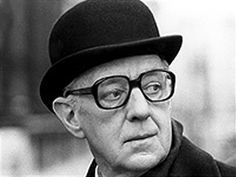
Alec Guinness
Though I'm happy to concede that Gary Oldman was also splendid in the absolutely wonderful 2011 film adaptation of Tinker Tailor Soldier Spy. A film that is amongst my all time favourites. The final montage says more in a few minutes than most film's manage in two hours - and with one of the all time great marriages of music and cinema.
 I know, Smiley is pudgy and doughy.
Oddly enough (or maybe not?) I don't think I've seen any of the le Carre film or TV productions.
But I am a big fan of le Carre. I started years ago with The Spy Who Came in from the Cold, and there followed such a long gap I forgot everything about it, then I started reading some of the others out of order. He is a terrific writer, just terrific. I've read eight of the novels and so far really only two have disappointed me, The Russia House and Our Kind of Traitor from 2010.
Richard Burton doesn't play Smiley though, Rupert Davies has that distinction. Smiley only plays a very small, though important role in The Spy Who Came in from the Cold.
Mod
Thanks too CQM - I'm quite relieved to discover that Burton is not Smiley
Mod
I adore the 2011 film adaptation of 'Tinker, Tailor, Soldier, Spy' directed by Tomas Alfredson. I saw it in the cinema, and rewatched it a few weeks ago. Just brilliant. I'd love to know what you make of it should you ever watch it.
Mod
It's a straightforward murder mystery set in a private English boy’s school which makes it an anomaly given the other books are set in the world of espionage and spying. I suspect it is also something of a footnote when compared with the more famous and celebrated books that came in its wake.
However, 'A Murder of Quality' is still well worth reading. Beautifully written and expertly plotted, it also takes a razor sharp scalpel to snobbery and the British class system, and has a pleasingly authentic and complex psychological dimension.
As with 'Call for the Dead', the first George Smiley novel, part of what is so marvellous about this book is how John le Carré allows the reader to enter Smiley’s mind and the slow, deliberate machinations as he grapples with complex problems.
I loved it and I am pressing straight on with 'The Spy Who Came In from the Cold' as I work through all the Smiley books.
4/5
Click here to read my review of 'A Murder of Quality'
 Mod
Mod
Mod
Mod
CQM wrote: "Bleak is the word I would always associate with 'The Spy Who Came In from the Cold' and the film version too."
Agreed CQM. I've started watching the film. Burton is great as Leamas.
After the relative simplicity of the first two novels 'The Spy Who Came In from the Cold' is a more subtle, exciting and complex novel and, I imagine (from film and TV adaptations), far more typical of what is to follow.
'The Spy Who Came In from the Cold' treats the reader as sharp witted and bright enough to keep up. It is magnificent. Beautifully and economically written, and dealing in politics, intrigue and what it is to be human. A bold claim, but all life is here. It’s dark, very dark, but quite brilliant too.
5/5
Next up, 'The Looking Glass War'
Call for the Dead (1961)
A Murder of Quality (1962)
The Spy Who Came in from the Cold (1963)
The Looking Glass War (1965)
Tinker Tailor Soldier Spy (1974)
The Honourable Schoolboy (1977)
Smiley's People (1980)
The Secret Pilgrim (1991)
Mod
Compared with 'The Spy Who Came In from the Cold', 'The Looking Glass War' was a relative flop, especially in Britain. In John le Carré's introduction, written in 1991, he addresses this...
After the success of 'The Spy Who Came In from the Cold' I felt I had earned the right to experiment with the more fragile possibilities of the spy story than those I had explored till now. For the truth was, that the realities of spying as I had known them on the ground had been far removed from the fiendishly clever conspiracy that had entrapped my hero and heroine in The Spy. I was eager to find a way of illustrating the muddle and futility that were so much closer to life. Indeed, I felt I had to: for while 'The Spy Who Came In from the Cold' had been heralded as the book that ripped the mask off the spy business, my private view was that it had glamourised the spy business to Kingdom Come.
So this time, I thought, I'll tell it the hard way. This time, cost what it will, I'll describe a Secret Service that is really not very good at all; that is eking out its wartime glory; that is feeding itself on Little England fantasies; is isolated, directionless, over-protected and destined ultimately to destroy itself.
'The Looking Glass War' summary from John le Carré's website:
The Department has faded since the war, effectively mothballed, without agents or resources. But now, with intelligence of a possible missile threat, it again has a mission. This is a chance to prove its influence to those at the Circus, like George Smiley, who think the Department’s time has passed. The opportunity to reclaim former glory cannot be missed – even though it means putting men’s lives at desperate risk, on foreign soil.
The Looking Glass War is a gripping story of the amorality of espionage – unflinching in its depiction of the men involved, who are as much full of vanity and fear as of selflessness and courage.
 Mod
Mod
I recorded that Burton film of 'The Spy Who Came In from the Cold' off Film4 the other week and will watch it once I have read the book. "
I've just watched the cinematic version. Not a patch on the book and much more simplified, but interesting for anyone who has read the book. And Burton is always good value.
Mod

At the halfway point I conclude that anyone coming to 'The Looking Glass War' (George Smiley #4) straight after 'The Spy Who Came In from the Cold' would have been pretty confused as it's so different. However, anyone reading the series in order would probably feel more at home. These are so much more than just genre spy novels.
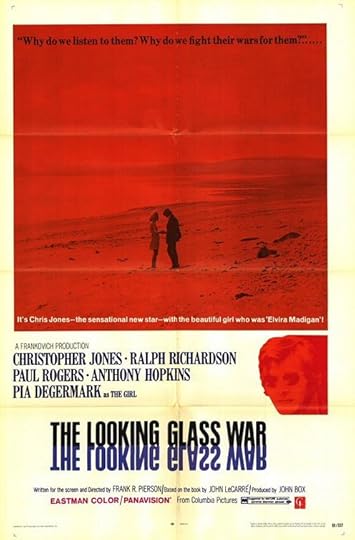
 Is the cover of that Pan edition of The Looking Glass War a Saul Bass design, or merely a riffing of Bass' style?
Mod
Is the cover of that Pan edition of The Looking Glass War a Saul Bass design, or merely a riffing of Bass' style?
Mod
On a more general note, there's some Bass here, alongside many wonderful covers...
https://uk.pinterest.com/pin/18774387...
And here are newish John le Carré covers that I like...
http://causticcovercritic.blogspot.co...
I'm trying to get a massive amount of work done today, damn you!I guess I can mark the next six hours down on my timesheet as "Design Inspiration Research," and that wouldn't be half lying. Thanks for the links!
Mod
After the success of 'The Spy Who Came In from the Cold' I felt I had earned the right to experiment with the more fragile possibilities of the spy story than those I had explored till now. For the truth was, that the realities of spying as I had known them on the ground had been far removed from the fiendishly clever conspiracy that had entrapped my hero and heroine in The Spy. I was eager to find a way of illustrating the muddle and futility that were so much closer to life. Indeed, I felt I had to: for while 'The Spy Who Came In from the Cold' had been heralded as the book that ripped the mask off the spy business, my private view was that it had glamourised the spy business to Kingdom Come.
So this time, I thought, I'll tell it the hard way. This time, cost what it will, I'll describe a Secret Service that is really not very good at all; that is eking out its wartime glory; that is feeding itself on Little England fantasies; is isolated, directionless, over-protected and destined ultimately to destroy itself.
With my expectations suitably managed, and having loved the previous three Smiley novels, I conclude this is another excellent John le Carré novel. As in 'The Spy Who Came In from the Cold', George Smiley only has a bit part in this book, however his perceptiveness and awareness help the reader to understand what is happening.
In essence, 'The Looking Glass War’ is a tale of haplessness: “The Department” is a small, increasingly irrelevant legacy of WW2, populated by deluded staff, which makes the novel painful to read. Avery, the only young person, cuts a particularly tragic figure. Amateurism, tragedy and stupidity permeate the entire novel. John le Carré lays bare snobbery, vanity, a sense of denial and delusion, repressed emotions, faded dreams, and incompetence. It's palpable, and often hard to read, but remains grimly compelling throughout. It’s exactly what he set out to write: a more truthful novel that captured the internal politics, the little Englander mentality, and the complacency of the mid-60s UK intelligence service.
4/5
 Mod
Mod
It can be rented on YouTube for £2.49...
https://www.youtube.com/watch?v=mN3VV...
There was another version in 2005 with Anthony Hopkins
 Mod
Mod
I've just started 'Tinker, Tailor, Soldier, Spy' (1974) by John le Carré (George Smiley #5)
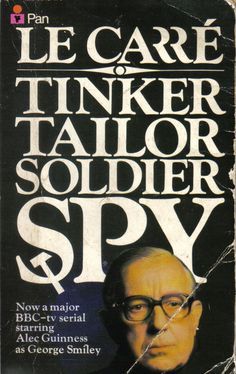 Nigeyb wrote: "Time for the big one...
I've just started 'Tinker, Tailor, Soldier, Spy' (1974) by John le Carré (George Smiley #5)
"
The others, even The Spy Who Came In from the Cold, have just been appetisers for this one... enjoy!
Mod
I do believe your right CQM, as I reach the halfway point, it's just brilliant, and very interesting to observe the difference between the book and the wonderful 2011 film adaptation directed by Tomas Alfredson which I rewatched a few weeks ago.
And now, as I read, comes Karla, Smiley's Cold War rival, and a man every bit as clever as our George.
 Nigeyb, if you enjoy LeCarre (as I do) you may well like the Slough House series. The first book in the series is Slow Horses
 and I think it will really appeal to you.
Not sure if you are still active on BYT, but I recently nominated a non fiction book which you may also be interested in and which also has a spying theme:
 The Irregulars: Roald Dahl and the British Spy Ring in Wartime Washington
There is also a Dan Snow History Hit episode about the book -
http://www.historyhitpodcast.com/fore...
Mod
By the by the other book I am reading at the moment is the wonderful High Dive by Jonathan Lee which is thanks to your review. Superb stuff.
I'm enjoying a sabbatical from BYT at the moment - focussing on other stuff - after getting a bit frustrated with the lack of insightful discussion. I looked in the other day and notice Ally is back and taking an active role in things again - which should help to make it a bit more vibrant.
I'll have a look at the Dahl book and check out the podcast too. Thanks, as always.
I'm racing through Tinker, Tailor, Soldier, Spy and loving it - definitely the high water mark of the Smiley series so far. Smiley is surely one of the all time great literary creations. John le Carré's writing is superb. In one minor scene he describes a workplace meeting that reminded me of so many similar scenarios from my own working life. Uncannily accurate - and wonderfully evoked. The only other person who has come close in my reading experience is (another recent discovery) Nigel Balchin (in Darkness Falls from the Air).
I loved High Dive - glad you are enjoying it too.I kind of dropped out of BYT's too for a while, but Ally is obviously trying to get people re-involved.
Totally agree about Smiley and I do think you will love Slow Horses. I am loathe to recommend books, so feel free to ignore my suggestion :)
Clive James is also a fan of Nigel Balchin - I must give him a try. Possible nomination for BYT's?! I miss your recommendations :)http://www.clivejames.com/pieces/herc...
Mod
We've got a Nigel Balchin thread here, and the two books I've read so far would both make good BYT era group reads...
https://www.goodreads.com/topic/show/...
Mod
I will take a look, Nigeyb. See, one recommendation leads to another ;)
If you don't mind, I will nominate one for BYT's and see what happens.
Mod
And so after reading the first four books in order I have now completed 'Tinker, Tailor, Soldier, Spy' (1974)….
Smiley has a habit of being dragged out of retirement, and so it is here, where the possibility of a long term Russian spy has emerged once more, and the list of suspects has been narrowed down to four wise men, each with a code name culled from a nursery rhyme: Percy Alleline (Tinker); Bill Haydon (Tailor); Roy Bland (Soldier); and Toby Esterhase (Poorman).
Being John le Carré, the hunt is ponderous and methodical, frequently conducted via old files and archives, with Smiley’s most energetic act being to polish his spectacles on his tie, but - as with the other books - this is the essence of the book’s appeal.
This early description can only be our man...
"Small, podgy and at best middle-aged, he was by appearance one of London’s meek who do not inherit the earth. His legs were short, his gait anything but agile, his dress costly, ill-fitting and extremely wet."
Smiley's careful, thorough, cerebral, unrelenting methods and finely honed powers of deduction, cut through a complex and intriguing plot to skewer the traitor. And all this despite personal humiliations involving his feckless but beloved wife, and that his employers have, as so often before, shunted him out because of their failure to see his true worth. Needless to say Karla, his nemesis in the East German intelligence service, is only too aware of Smiley’s unique qualities.
This book is a joy from start to finish. A complete masterpiece and my favourite in the series to far. It is also the first of the Karla Trilogy. I cannot wait to read the rest of the series.
Click here to read my review
5/5
Next up, 'The Honourable Schoolboy' (1977)

 Received this email today - very exciting!
Welcome Back to the Circus
with the Return of George Smiley
John le Carré is the titan of the thriller. His uncompromising third novel, 1963’s The Spy Who Came in From the Cold, almost instantly redefined the genre and established le Carré as the ultimate apparent insider, laying bare the grim politics and realities of the secret world.
For the first time in some twenty five years, this September sees le Carré return to his most iconic series of stories as George Smiley returns in A Legacy of Spies , a novel that brings the complicities of the Cold War past into the cold light of the present. Peter Guillam, Smiley’s disciple within the covert network of the Circus, finds himself summoned from his Brittany retirement to justify the activities of an era long thought buried. The history of figures such as Alec Leamas, Jim Prideaux, George Smiley and Peter Guillam himself face fresh scrutiny by a new authority with little patience for the motives of yesterday.
John Le Carre
With a craftsman’s eye, John le Carré weaves past and present into a masterfully-told tale that draws deep from the rich literary legacy of both The Spy Who Came in From the Cold and Tinker Tailor Soldier Spy. We can announce this afternoon that we have a limited number of signed copies available to secure now. As with any release of this significance, supply is unlikely to last long and we thoroughly recommend to strike whilst the iron is hot.
The official publication date of A Legacy of Spies will be Thursday 7th September, just six tantalising months to wait until we return once again to the twilight world John le Carré has so absolutely made his own.
Mod
Thanks for posting this Susan. Roll on September.
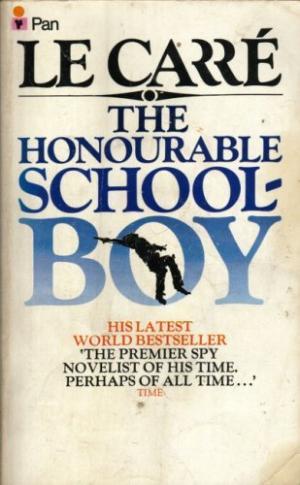
In other news I am about a quarter of the way through 'The Honourable Schoolboy' (George Smiley #6). As Smiley works away in London looking for chinks in Karla's armoury, we follow the exploits of Gerald Westerbury as he sets out to uncover the destination of $500,000 of funds transferred to a trust account in Hong Kong by the Russians. Not at the same level as 'Tinker, Tailor, Soldier, Spy', or not yet, but that's hardly surprising.
 Mod
Mod
The news (of Smiley's return) came as it was announced that a nine-year project to move 21 of Le Carré’s novels into Penguin Modern Classics is near completion. The project to convert the titles, starting with his debut and continuing to his war on terror thriller 'A Most Wanted Man' began eight years ago and will be completed by 2018. It will represent the most extensive body of work by a living author to be awarded this status, the publisher said.
https://www.theguardian.com/books/201...
I would have provided the link, Nigeyb. However, the email came from Waterstones and, when I did click on it, I was unable to pre-order the book anyway, so I didn't bother to include it.Good to see they will be Penguin Modern Classics. He deserves the status more than Morrissey!
Mod
'The Honourable Schoolboy’ was probably always going to be a disappointment after the wonderful 'Tinker, Tailor, Soldier, Spy'. Even so, it felt incredibly long (overlong) and full of unnecessary detail, although there is also much to enjoy too.
The Smiley parts are excellent. As usual, his sections crackle with excitement even when they are confined to discussions in meeting rooms.
Much of 'The Honourable Schoolboy' is focused on field agent Jerry Westerby. He is a character who never rings true. Why does he do what he does? What motivates him? Nothing about him is clear or plausible. It’s a shame, as there are some wonderful descriptions of his time in South East Asia including one long journey which is pure 'Heart of Darkness'/Apocalypse Now and which was surely some kind of homage to Joseph Conrad.
In short, the more Smiley the better the book, or at least that’s been my experience
Mod
My experience is that the more Smiley appears, the better the book, and so it is with 'Smiley's People’ which is about 90% Smiley.
'Smiley's People' is also the final part of the Karla trilogy. Smiley, now in his twilight years, displays his customary thorough, cerebral, unrelenting methods and finely honed powers of deduction, which cut through a complex and intriguing plot to finally draw Karla out, for a finale worthy of this superb trilogy.
Thankfully for me there’s still one more Smiley book to go - 'The Secret Pilgrim' (George Smiley #8) (1991) - and better still Smiley is set to return for the first time in 25 years in 'A Legacy of Spies', a new novel by John le Carré that is scheduled for publication on 7 September 2017.
5/5
 Mod
Mod
A Perfect Spy (1986)
The Honourable Schoolboy (1977)
Tinker, Tailor, Soldier, Spy (1974)
The Spy Who Came in from the Cold (1963)
The Constant Gardener (2001)
Absolute Friends (2003)
Call for the Dead (1961)
The Little Drummer Girl (1983)
Smiley’s People (1979)
The Mission Song (2006)
The Russia House (1989)
The Tailor of Panama (1996)
Single & Single (1999)
The Secret Pilgrim (1990)
A Delicate Truth (2013)
The Night Manager (1993)
Our Game (1995)
A Murder of Quality (1962)
Our Kind of Traitor (2010)
A Most Wanted Man (2008)
The Looking-Glass War (1965)
The Naïve and Sentimental Lover (1971)
A Small Town in Germany (1968)
http://www.slate.com/articles/arts/th...
Mod
Thanks for letting us know about the new BBC adaptation of Decline and Fall by Evelyn Waugh - we discussed it at BYT a few years back...
https://www.goodreads.com/topic/show/...
Now then, back to JLC
Yes, sorry, I posted in the wrong place, didn't I?I started to re-read Le Carre and stalled, but must get back to him.
Mod
Click here to read my review
I'm now inspired to read the rest of his book
Mod

I'm just over halfway now and I think it's up to his usual high standards.
The story is predominantly set in Bonn, in the late 1960s. Bonn was then the capital of West Germany. Numerous student demonstrations feature. Interestingly, given Brexit, part of this book's context is whether the UK will be invited to join the EU which was very much in the balance at the time due to France vetoing the UK applications.
JLC's writing is observant and richly descriptive, whilst skewering insecurities, politics and humanity. He is one of the greats.
Mod
Another John le Carré masterclass.
Click here to read my review


The Patrick Hamilton Appreciation Society
Books mentioned in this topic
A Legacy of Spies (other topics)The Spy Who Came In from the Cold (other topics)
The Spy Who Came In from the Cold (other topics)
A Legacy of Spies (other topics)
A Legacy of Spies (other topics)
More...
Authors mentioned in this topic
John le Carré (other topics)John le Carré (other topics)
John le Carré (other topics)
John le Carré (other topics)
Evelyn Waugh (other topics)
More...
All I can say is that, having only read one book by John le Carré, Call for the Dead, they are both extremely gifted writers.
I've wanted to read the George Smiley books since watching the BBC adaptation of 'Tinker, Tailor, Soldier, Spy' back in the 1970s. I subsequently loved the 2011 film adaptation directed by Tomas Alfredson, which I saw in the cinema, and rewatched a few weeks ago. Everything I have heard about the source material suggests joy and wonder would await and, I’m pleased to report, that’s exactly what I found.
Part of what is so marvellous about 'Call for the Dead' is how John le Carré allows the reader to enter Smiley’s mind and the slow, deliberate machinations as he grapples with complex problems. Frankly it’s wonderful. What a book.
Click here to read my review of Call for the Dead (George Smiley #1)
I am now pressing on with my Smiley odyssey...
Call for the Dead (1961)
A Murder of Quality (1962)
The Spy Who Came in from the Cold (1963)
The Looking Glass War (1965)
Tinker Tailor Soldier Spy (1974)
The Honorable Schoolboy (1977)
Smiley's People (1980)
http://www.johnlecarre.com
Anyone else read John le Carré? Or have an opinion, or perception?
'Call for the Dead' is a really intelligent, beautifully written novel, and a great introduction to the Smiley books which I know will only get better and better.
I don’t why it has taken me so long to start reading John le Carré’s work but better late than never eh?
There also a recent biography and memoir for fans to enjoy...
John le Carré: The Biography by Adam Sisman
The Pigeon Tunnel: Stories from My Life by John le Carré