
Reading the 20th Century discussion
History
>
Second World War History

 Mod
Mod
I also love WW2 history and will be back wit a few personal favourites (expect to read the name Anthony Beevor)
 Mod
Mod
 Mod
Mod
I've put aside another similar book, though, Americans in Paris: Life and Death under Nazi Occupation 1940-1944, as I was finding it a struggle to follow on Kindle, though the part I read was interesting.
Mod
I like Dan Snow, but don't know about this podcast. Thanks. I'll investigate.
 I’ve listen Richards Evans trilogy: The Coming of The Third Reich; The Third Reich in Power and The Third Reich at War. Also listened William L. Shirer book The Rise and Fall of The Third Reich. Recommended all of them!
 Judy wrote: "I recently finished Les Parisiennes: How the Women of Paris Lived, Loved, and Died Under Nazi Occupation by Anne Sebba, which I found interesting, though it didn't ha..."
I think I still have 4 more hours of listening to Les Parisiennes. However, the war is over and I am having trouble figuring out what she can find to talk about for 4 more hours. Also still reading Americans in Paris.
Mod
Mod
As I remember, there's quite a bit about survivors of concentration camps who returned to Paris after the war, and also about trials of war criminals, and the rebuilding of the city - so a lot of interesting stuff, though I'm surprised this section takes 4 hours on audiobook.
Mod
http://www.bbc.co.uk/programmes/b09gvjc2
 Naples '44: A World War II Diary of Occupied Italy is one of my all-time favorite reads on the war. I really hope these documentaries make it over here soon!
Mod
It really varies - a lot of the entertainment series get picked up by Public Broadcasting and some end up on BBC America or streaming services, but I haven't seen many of these quality documentaries turn up, unfortunately.
Mod
Naples '44: A World War II Diary of Occupied Italy is one of my all-time favorite reads on the war. I really hope these documentaries make it over here soon!
Mod
It really varies - a lot of the entertainment series get picked up by Public Broadcasting and some end up on BBC America or streaming services, but I haven't seen many of these quality documentaries turn up, unfortunately.
Mod
https://www.theguardian.com/tv-and-ra...
Personally, it is the channel I watch the most, but what do I know?!
Mod
http://www.bbc.co.uk/programmes/b09gvjc2"
Thanks Susan
I've only watched about 20 minutes (of a total of 80 minutes) of Naples '44: A Wartime Diary and look forward to the rest of it
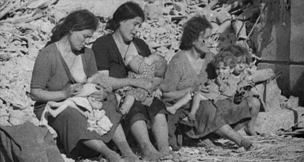
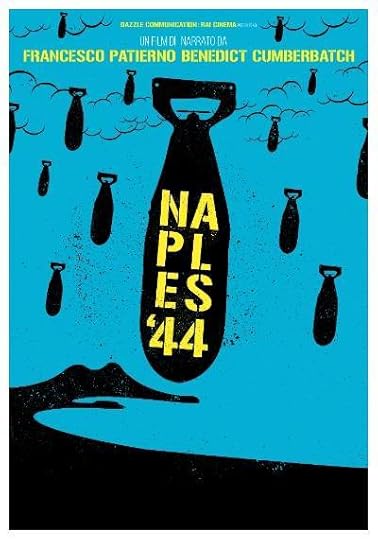
A highly unusual and somewhat impressionistic documentary, Francesco Patierno’s Naples ’44 illustrates scenes from Norman Lewis’ memoir of the same title (Naples '44: A World War II Diary of Occupied Italy)—a discerning valentine to Neapolitans—by amalgamating wartime archival footage, clips from 1950s and 1960s movies set in Naples, and excerpts from Lewis’s text read as narration by actor Benedict Cumberbatch.
A British intelligence officer, Lewis was part of the Allied forces’ 1943 invasion of Salerno, in occupied southern Italy, which liberated Naples. Published in 1978, Lewis’ memoir is a resurrection of the diary he kept during the year he spent in Naples in the aftermath of the invasion. He records the terrible destruction in the city and the horrifying behavior of Allied officers toward Italian civilians, shocking numbers of whom had been forced to resort to thievery or prostitution in order to survive. Yet his reportage is not completely dark-toned, as it is spiced by descriptions of numerous absurd duties he had to perform in his surprisingly undefined role there, such as gathering “intelligence” on any Italian women his fellow British soldiers had expressed interest in marrying: Those who had worked as prostitutes had to be deemed unsuitable.
The theme of the documentary’s anecdotal narrative is Lewis’ deep admiration for the Neapolitans’ remarkable resilience. He observes that despite their wretched conditions—extreme poverty, loss of family members, homes, jobs, the devastation of their economy, and the rampant spread of syphilis and typhus—instead of succumbing to hopelessness or despair, they exhibited industrious creativity and an upbeat, eager approach to surviving, topped with an exuberant display of self-satisfaction in having cleverly done so. Profoundly, Lewis connects the wondrousness of the Neapolitans to their striking dualities: They are superstitious, but ingenious; pained, yet joyous; beautiful, while grotesque; and both ordinary and strange.
Lewis’ observant, poetic text is so rich in exhilarating imagery, emotion and food for thought, however, that we feel overloaded by the addition of visual stimuli from the shuddering vintage film footage of invading soldiers, starving Neapolitan street kids, disease-ravaged adults and the erupting Vesuvius—even though Patierno keenly matches the footage to the wide-ranging topics and details of the narration. The clips from dramatic Italian and Hollywood movies, though serving up a jarringly different aesthetic, are easier to take in as they are self-contained and don’t require us to split our attention between Lewis’ all-consuming text and the equally demanding cinematic images. The documentary also incorporates contemporary footage of a contemplative man wandering through present-day Naples, presumably representing Lewis, who did indeed return to Italy in the 1970s to revisit the places he had spent time in during the war. These peaceful segments, accompanied by enticing original music by Andrea Guerra, function like a sorbet course to cleanse our palette and prepare us for the next barrage of sights and words. About halfway through the intriguing 85-minute documentary, I abandoned the task of trying to absorb everything Patierno was offering in one dose. This is a film that must be seen more than once.
The documentary ends sadly, when we learn that Lewis is being transferred elsewhere. The news comes too quickly to allow him time to say goodbye to all the Neapolitan characters he had befriended during his stay. This distressed him and he concluded, “A year among the Italians had converted me to such an admiration for their humanity and culture that I realized were I given the chance to be born again and to choose the place of my birth, Italy would be the country of my choice.”
http://www.filmjournal.com/reviews/fi...
It's on iPlayer for another 27 days...
https://www.bbc.co.uk/iplayer/episode...
Mod
I'm about halfway through now - really enjoying it. Thanks again Susan. Great tip.
It's on iPlayer for another 27 days...
https://www.bbc.co.uk/iplayer/episode...
Mod
Has anyone read any Norman Lewis?
Or perhaps even the film's source text 'Naples '44: A World War II Diary of Occupied Italy'?
Before he became an acclaimed travel writer, Norman Lewis was a young Army intelligence officer, who spent a year in Naples following the Allied landing at Salerno in 1943. He kept copious notes of his time in the city as it suffered deprivation, destruction – and the eruption of Vesuvius. His notebooks became Naples '44: A World War II Diary of Occupied Italy (1978).
Naples '44: A World War II Diary of Occupied Italy was then turned into this stunning mix of archive and movie footage and dreamlike reconstruction, with Lewis’s pellucid prose beautifully read by Benedict Cumberbatch.
Naples '44: A Wartime Diary carefully delineates the Neapolitans’ bloody, occasionally banal struggles just to survive endless daily indignities – “the war has pushed them back into the Middle Ages”, says Lewis – and it all makes for utterly compelling viewing.
This essential film - Naples '44: A Wartime Diary - is on iPlayer for another 26 days...
https://www.bbc.co.uk/iplayer/episode...

Naples '44: A World War II Diary of Occupied Italy by Norman Lewis
As a young intelligence officer stationed in Naples following its liberation from Nazi forces, Norman Lewis recorded the lives of a proud and vibrant people forced to survive on prostitution, thievery, and a desperate belief in miracles and cures. The most popular of Lewis's twenty-seven books, Naples '44: A World War II Diary of Occupied Italy is a landmark poetic study of the agony of wartime occupation and its ability to bring out the worst, and often the best, in human nature. In prose both heartrending and comic, Lewis describes an era of disillusionment, escapism, and hysteria in which the Allied occupiers mete out justice unfairly and fail to provide basic necessities to the populace while Neapolitan citizens accuse each other of being Nazi spies, women offer their bodies to the same Allied soldiers whose supplies they steal for sale on the black market, and angry young men organize militias to oppose "temporary" foreign rule. Yet over the chaotic din, Lewis sings intimately of the essential dignity of the Neapolitan people, whose traditions of civility, courage, and generosity of spirit shine through daily. This essential World War II book is as timely a read as ever.
 In the US today, Amazon offered To Run Across the Sea: Selected Pieces as possibly a Kindle deal. I haven't yet read him but I have bought two of his books (the other is The Tomb in Seville: Crossing Spain on the Brink of Civil War).
Mod
In the US today, Amazon offered To Run Across the Sea: Selected Pieces as possibly a Kindle deal. I haven't yet read him but I have bought two of his books (the other is The Tomb in Seville: Crossing Spain on the Brink of Civil War).
Mod
http://www.bbc.co.uk/programmes/b08f00r9
https://www.bbc.co.uk/iplayer/episode...
With unprecedented access to the SAS secret files, unseen footage and exclusive interviews with its founder members, this series tells the remarkable story behind an extraordinary fighting force.
I've read the book too - and it's another winner from Ben M
Episode one tells the story of the founding of the SAS in the heat of the north African desert in 1941. David Archibald Stirling is an aristocratic dreamer who had once held lofty ambitions to be an artist or perhaps a famous mountaineer but now, with the war in the desert reaching its most desperate stage, Stirling has a vision for a new kind of war: attacking the enemy where they least expect it - from behind their own lines. But Stirling is up against the many in British High Command who do not want to see him succeed with his radical new way of warfare. Against the odds, Stirling wins through and helps the Allies towards victory in the desert. The cost is high. In combat, Stirling loses lieutenant Jock Lewes, his right-hand man. With his brilliant training methods and invention of a new weapon, Lewes has proved vital to making Stirling's dream of a crack fighting force a reality. Stirling must soldier on alone.
Mod
 is obviously about the aftermath of war. There are people going in all directions - Germans being expelled from formerly occupied countries, Nazi's on the run, refugees that nobody knows what to do with, so Palestine is suggested as a good place to send them (mainly orphaned children in this book), war crimes trials going on and Britain struggling to feed those they are responsible for and abandoning India and Palestine in the process. It's almost a dreamlike book - reviewers seem to either hate, or love, it. I must say that I love it, but it jumps about in little snippets, from city to city and person to person.
Mod
is obviously about the aftermath of war. There are people going in all directions - Germans being expelled from formerly occupied countries, Nazi's on the run, refugees that nobody knows what to do with, so Palestine is suggested as a good place to send them (mainly orphaned children in this book), war crimes trials going on and Britain struggling to feed those they are responsible for and abandoning India and Palestine in the process. It's almost a dreamlike book - reviewers seem to either hate, or love, it. I must say that I love it, but it jumps about in little snippets, from city to city and person to person.
Mod
WW2! The SAS were formed in 1941, and all three episodes take place during WW2 (as does the book)
Susan wrote: " 1947: when now begins"
This sounds wonderful Susan - thanks. I read a similar book about WW1 earlier this year....
The Vanquished: Why the First World War Failed to End
..which is very good...
https://www.goodreads.com/review/show...
Mod
I will have a look at The Vanquished, thanks.
 The Vanquished: Why the First World War Failed to End, 1917-1923 gives an excellent overview of those five years (and it doesn't jump about in little snippets).
 Mod
Mod
Tangentially, this book of letters between Lewes and his fiancee, set during those war years, is interesting: Joy Street: A Wartime Romance in Letters.
Mod
 I am just about to begin reading the book cited below. It appears to be written in the same vein as The Monuments Men: Allied Heroes, Nazi Thieves, and the Greatest Treasure Hunt in History, so I hope it will be as interesting. The impossibility of the task of finding the stolen books seems almost beyond accomplishing and I imagine I will find that there are still some great treasures hidden somewhere in a dusty library in the mountains of Bavaria.
 by Anders Rydell
As an adjunct to the book cited above, I have also started another WWII tale. This one concerns Britain standing alone in 1939. It took my library forever to get this book.....oh, the joys of a small rural library!!
by Anders Rydell
As an adjunct to the book cited above, I have also started another WWII tale. This one concerns Britain standing alone in 1939. It took my library forever to get this book.....oh, the joys of a small rural library!! by Michael Korda
Mod
Mod
by Michael Korda
Mod
Mod

99p today. Apparently, there is a drama, "Home Fires," based on this. Haven't seen it, but this is a fantastic read. My review:
https://www.goodreads.com/review/show...
Mod
I have read a few books about this period of history. From Leo Amery's speech telling Chamberlain to resign, the Cabinet wanting Halifax as PM and, obviously, Churchill's appointment. In the film, we have Halifax and Chamberlain working to try to make Halifax PM, but, in reality, he didn't want the job. In fact, he turned it down several times. His excuse was it was too complicated, as he was in the Lords, but he was also obsessed with Baba Metcalfe and spent every weekend at her home and didn't want anything to take up time that could be spent with her. Does it matter that movies take such historical liberties? He did favour appeasement, this is true, but had no interest in being PM, even though everyone tried to bully him into it.
http://www.independent.co.uk/news/peo...
For those of you interested in that period, Baba's husband was indeed the delightfully named, 'Fruity' Metcalfe, who was friends with the Prince of Wales during the Wallis Simpson abdication scandal.
Mod
Holger Eckhertz's grandfather, a military journalist, interviewed soldiers stationed along the Atlantic Wall shortly before D-Day (June 6, 1944).
Ten years later he tracked down some of the troops he had visited and spoke again with those he had interviewed. He died in 1955.
Holger Eckhertz assembled his grandfather’s interviews and this is what is contained in 'D DAY Through German Eyes - The Hidden Story of June 6th 1944'.
'D DAY Through German Eyes - The Hidden Story of June 6th 1944' made me want to read more about D Day so now I have just embarked upon...
D-Day: The Battle for Normandy by Antony Beevor
I have loved everything I've read by Antony Beevor so have high hopes for this one.
According to the Guardian....
The pleasure of this book lies in the vividness of an episodic narrative, backed up by judicious use of quotation. Moving from the weather drama to surveillance of the assault beaches, to individual accounts of each beach, to the breakout for Paris, the action never lets up. Beevor follows personalities from one location to another. One moment we are with Captain Scott-Bowden swimming ashore from a midget submarine to Omaha Beach to take a soil sample, armed only with a commando knife, a Colt .45 and an auger, the next we are seeing him make his report to an intimidating room full of generals back in Whitehall: "Sir, I hope you don't mind me saying but this beach is a very formidable proposition indeed and there are bound to be tremendous casualties." So it would prove, with the ramps of landing craft dropping and German machine guns opening fire so that "men were tumbling just like corn cobs off a conveyor belt".
Many of the assault troops knew this was to be their fate, not least because their officers kept telling them so. Beevor is very good on how heavily the burden of premonition weighed on men. A large number took their minds off what lay ahead with frenetic betting, first with dubious-looking invasion money (une fausse monnaie as De Gaulle sneeringly called it), then with saved dollars and pound notes. Other eve of battle rituals included shaving heads, with some Americans deciding "to leave a strip of hair down the middle in Mohican style". This contributed to the German idea that US troops were recruited from Sing-Sing.
Whole thing here...
https://www.theguardian.com/books/200...

D-Day: The Battle for Normandy by Antony Beevor
Mod
D-Day: The Battle for Normandy by Antony Beevor"
Having read about 150 pages I can confirm it's superb. Right up there with Antony Beevor's other books about WW2.
Mod
Mod
I'm about halfway through - it's majestic. I'm listening on audiobook.
I'm trying to get through it as fast as I can so I can move on to The Sparsholt Affair by Alan Hollinghurst
 Nigeyb wrote: "Thanks Susan. I'll have a listen.
I'm about halfway through - it's majestic. I'm listening on audiobook.
I'm trying to get through it as fast as I can so I can move on to [book:The Sparsholt Aff..."
I picked up a copy of The Sparsholt Affair yesterday, but it might be on the to-read shelf for a while, as I still have a substantial backlog.
Mod
 there is a lot about Nuremberg. I am really intrigued to read A Train of Powder
 the account by Rebecca West.
Mod
the account by Rebecca West.
Mod
It'll be worth the wait Hugh.
Coincidentally I ordered a copy of The Swimming-Pool Library yesterday, as I am so keen to read more by Alan Hollinghurst
 I hope you'll post your thoughts when you've read it.
Mod
I have not read this, but several of my friends have, and rated it (mostly) 4-stars, with a couple of 5 stars thrown in for good measure.
I hope you'll post your thoughts when you've read it.
Mod
I have not read this, but several of my friends have, and rated it (mostly) 4-stars, with a couple of 5 stars thrown in for good measure.The Secret Life of Bletchley Park: The WWII Codebreaking Centre and the Men and Women Who Worked There
Mod
Mod
The huts really were claustrophobic, dark and dim. I could imagine that with the blackout, and everyone smoking, they would have been very unpleasant places to work!
Mod
 seems a favourite.
Turing's work was ever so much far-reaching, of course, but in terms of codes and WWII, I'm interested in Code Talker: The First and Only Memoir By One of the Original Navajo Code Talkers of WWII. I have a novel on the subject. When I picked it up recently I didn't realize it was written mostly for high school students, but I may read it anyway. I know only the basics: that the Navajos, with their language almost unknown outside their own tribe, created codes for the Pacific War that were never broken.
Mod
seems a favourite.
Turing's work was ever so much far-reaching, of course, but in terms of codes and WWII, I'm interested in Code Talker: The First and Only Memoir By One of the Original Navajo Code Talkers of WWII. I have a novel on the subject. When I picked it up recently I didn't realize it was written mostly for high school students, but I may read it anyway. I know only the basics: that the Navajos, with their language almost unknown outside their own tribe, created codes for the Pacific War that were never broken.
Mod
 by Hector Bolitho

I must admit that I hadn't heard of Hector Bolitho before, but he was a prolific writer.
Hector Bolitho (28 May 1897–12 September 1974) was a New Zealand journalist, novelist and biographer, who published fifty-nine books. Born in Aukland, he spent most of his career in England, where during World War II he worked as an intelligence officer for the RAF, editing the Royal Air Force Journal.
Widely travelled, he drew inspiration from his observations and experiences for his literary work. He journeyed in the South Sea Islands in 1919 and then through New Zealand with the Prince of Wales in 1920, going on to see Africa, Australia, Canada, America, and Germany in 1923–24, finally settling in Britain where he was to remain for the rest of his life.
Mod
Stalingrad is the prequel to Life and Fate, one of the twentieth century’s greatest novels. This is its first publication in English.
In April 1942, Hitler and Mussolini plan the huge offensive on the Eastern Front that will culminate in the greatest battle in human history.
Hundreds of miles away, Pyotr Vavilov receives his call-up papers and spends a final night with his wife and children in the hut that is his home. As war approaches, the Shaposhnikov family gathers for a meal: despite her age, Alexandra will soon become a refugee; Tolya will enlist in the reserves; Vera, a nurse, will fall in love with a wounded pilot; and Viktor Shtrum will receive a letter from his doomed mother which will haunt him forever.
The war will consume the lives of a huge cast of characters – lives which express Grossman’s grand themes of the nation and the individual, nature’s beauty and war’s cruelty, love and separation.
For months, Soviet forces are driven back inexorably by the German advance eastward and eventually Stalingrad is all that remains between the invaders and victory. The city stands on a cliff-top by the Volga river. The battle for Stalingrad – a maelstrom of violence and firepower – will reduce it to ruins. But it will also be the cradle of a new sense of hope.
Stalingrad is a magnificent novel not only of war but of all human life: its subjects are mothers and daughters, husbands and brothers, generals, nurses, political officers, steelworkers, tractor girls. It is tender, epic, and a testament to the power of the human spirit.
It's pretty long at about 700 pages. Is anyone planning to read it?
Mod

Reading the 20th Century
Books mentioned in this topic
The Nazi and the Psychiatrist: Hermann Göring, Dr. Douglas M. Kelley, and a Fatal Meeting of Minds at the End of WWII (other topics)East West Street: On the Origins of Genocide and Crimes Against Humanity (other topics)
The Ratline: Love, Lies, and Justice on the Trail of a Nazi Fugitive (other topics)
East West Street: On the Origins of Genocide and Crimes Against Humanity (other topics)
East West Street (other topics)
More...
Authors mentioned in this topic
Philippe Sands (other topics)Philippe Sands (other topics)
Giles Milton (other topics)
Julia Boyd (other topics)
Volker Kutscher (other topics)
More...

which I thought might interest some of us.
Personally, among my many obsessions, I love books about WWII. Indeed, I am currently reading Six Minutes in May: How Churchill Unexpectedly Became Prime Minister
So, if you want to talk about WWII books/series, etc. that you enjoy, then this is the place to do it.