
Never too Late to Read Classics discussion

This topic is about
Agnes Grey
Archive 2021-18 Authors-Genre
>
Agnes Grey

 I want to re-read it in a week or so, when I finish with my current book. I remember liking it a lot, Anne may be known as 'the other sister' but she's just as great as her sisters, I wish she was given more credit.
 Did you know Agnes Grey was written before Jane Eyre though it was published later? (I'm sure you do ;))
By the way, happy new year!
 Mod
Mod
Happy new year to you, Maria.
 I'm in on this one also but won't be starting right away.
 I'm in! I bought the book last month and I realky want to read it!
 I'm in! I will try and find this book at the library or get it!
 I have my copy on order and will be joining in reading this in a week. I loved The Tenant of Wildfell Hall and felt Anne Bronte would have been a greater author than Charlotte had she lived.
 Mod
Mod
Mod
Mod
 This story is absolutely gorgeous! I thoroughly enjoyed every page and highly recommend it. Anne's prose is wonderfully easy-to-read; her characters are excellent, especially Agnes and Rosalie Murray, and her descriptions are stunning. I am looking forward to reading The Tenant of Wildfell Hall soon!
I'm about 50 pages into Agnes Grey and am surprised by the difference in writing style between Agnes Grey and The Tenant of Wildfell Hall which I read in 2017. I think Anne Bronte grew as an author by leaps and bounds between the two books.
This story is absolutely gorgeous! I thoroughly enjoyed every page and highly recommend it. Anne's prose is wonderfully easy-to-read; her characters are excellent, especially Agnes and Rosalie Murray, and her descriptions are stunning. I am looking forward to reading The Tenant of Wildfell Hall soon!
I'm about 50 pages into Agnes Grey and am surprised by the difference in writing style between Agnes Grey and The Tenant of Wildfell Hall which I read in 2017. I think Anne Bronte grew as an author by leaps and bounds between the two books. That said, I'm enjoying the story of Agnes and her experience as a governess.
Like Littlefoot said above, it is very easy to read.
I've started Agnes Grey yesterday and I really like her writing!
Mod
(Currently on chapter 11, the comment contains spoilers)I'm enjoying it so far, as in the first time. It's been really helpful to read the introduction (I've got the Penguin Classics edition) to get more of the story; sometimes I see the parallels with Anne's life everywhere. Moreover, as a teacher, I sympathize with Agnes, specially while reading her 'little hell' with those horrible Bloomfields, I've kind of suffered with her. I'm glad things are getting better now.
I also love Anne's ability to describe the society she lived in; I think some things haven't changed much (sadly).
Happy reading!
I also have the Penguin Classics edition, Maria, and found that it helped me understand why Anne Bronte wrote the story and what the time was like in England. From the introduction:
"The plight of the governess was inseparable from the larger dilemma of marriage for a woman of Anne Bronte's generation. Since the beginning of the nineteenth century...there had been a steadily increasing surplus of women in England. According to the census of 1851, this excess amounted to 365,000... The unequal distribution of the sexes meant that there were large numbers of women who could never hope to marry...Outside of marriage, the prospects for supporting oneself were achingly few."
 María wrote: "(Currently on chapter 11, the comment contains spoilers)
I'm enjoying it so far, as in the first time. It's been really helpful to read the introduction (I've got the Penguin Classics edition) to..."
I read Agnes Grey several years ago and loved it. As a teacher, I smiled at a lot of the observations on education.
Mod
 Mod
Mod
The first Chapter lays out the plan for the family where money is an issue. Mary was asked to make paintings to be sold. Agnes suggest herself as being a governess, at first it is denied, but realizing the state of the family they allow it to take place with Agnes leaving in tears.
Kathy, it wasn't easy to be a woman in that period for sure! ;)Patrick, Anne really knew what it's like to work on education! :)
 Mod
Mod
Mod
Mod
I will try to make general comments.
Mod
I will try to make general comments."
Don’t worry, Lesle - you have more commitments than me, I’m impressed you find time to read at all!
I have started reading and am appalled at the behaviour of Agnes' little charges. I have met some children like this today when I homeschooled my own children. For some, but not the majority, homeschooling meant letting children do exactly what they wanted with no boundaries. I also know of a mother who sent her children to school but refused to teach them anything at home because the teachers were getting paid to do this; that was what she paid her taxes for! Whilst not all children's behaviour can be laid at the feet of the parents, I think that in these cases the parents were as bad as the Bloomfields.
Mod
Tracey I have to agree upon reading through Chapter 3 the Bloomfields are snooty and uppity! Master Tom does no wrong in his mothers eyes so that just guarantees the opposite reaction with others.
Agnes has the patience I would never have with Tom. Im afraid they (Mary Ann too) would be in the corner forever!
14 weeks! I would be crushed!
"They may crush, but they shall not subdue me!
‘Tis of thee that I think, not of them.
Mr Weston in the story is believed to be based on William Weightman who had the same beautiful spirit and it is thought Anne was in love with. He served the poor ceaselessly and died of cholerahttp://www.mick-armitage.staff.shef.a...
Agnes' poem, O they robbed me of the hope, is thought to have been written for him
Oh, they have robbed me of the hope
My spirit held so dear;
They will not let me hear that voice
My soul delights to hear.
They will not let me see that face
I so delight to see;
And they have taken all thy smiles,
And all thy love from me.
Well, let them seize on all they can: --
One treasure still is mine, --
A heart that loves to think on thee,
And feels the worth of thine.
Anne Bronte by Charlotte Bronte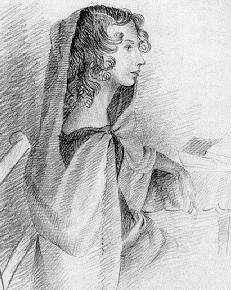 After William's death Anne wrote this poem:
I will not mourn thee, lovely one,
Though thou art torn away.
'Tis said that if the morning sun
Arise with dazzling ray
And shed a bright and burning beam
Athwart the glittering main,
'Ere noon shall fade that laughing gleam
Engulfed in clouds and rain.
And if thy life as transient proved,
It hath been full as bright,
For thou wert hopeful and beloved;
Thy spirit knew no blight.
If few and short the joys of life
That thou on earth couldst know,
Little thou knew'st of sin and strife
Nor much of pain and woe.
If vain thy earthly hopes did prove,
Thou canst not mourn their flight;
Thy brightest hopes were fixed above
And they shall know no blight.
And yet I cannot check my sighs,
Thou wert so young and fair,
More bright than summer morning skies,
But stern death would not spare;
He would not pass our darling by
Nor grant one hour's delay,
But rudely closed his shining eye
And frowned his smile away,
That angel smile that late so much
Could my fond heart rejoice;
And he has silenced by his touch
The music of thy voice.
I'll weep no more thine early doom,
But O! I still must mourn
The pleasures buried in thy tomb,
For they will not return.
Mod
Agnes gets to see the real side of 'The Grandmamma'.
Agnes figures out how to get Grandmamma back in her favor.
Chapter 5
The Uncle is her undoing and last straw with the Bloomfields.
Mod
For me, this was a really bad start to the book. Until nearly the end of the chapter I thought Agnes was a young child - she was unable to do anything useful & was sent to play with the kitten! Finding she was 18 was a real shock - at 18, people go to work, or college, drive cars, travel around the world on gap years...
So I’m meant to believe that from doing nothing, she is capable of looking after & teaching children? Everyone seems to like this book, so I assume it must improve.
Trisha wrote: "Chapter 1: For me, this was a really bad start to the book. Until nearly the end of the chapter I thought Agnes was a young child - she was unable to do anything useful & was sent to play with the..."
I agree with you, many girls were married at the age of 18 and her family treat her like a child, it was a little disturbing for me at the begining.
But keep reading!! The story is nice and you will love Agnes more after every chapter!
Mod
Mod
Anne Brontë’s goal was not to amuse or to entertain but, as Agnes Grey says, to benefit those whom it might concern—governesses themselves, whose numbers were rapidly growing in the late nineteenth century, and the British aristocracy who employed them. Because of the great imbalance in the ratio of women to men in England, with so many men living and working abroad in the far reaches of the British Empire, thousands of women were unable to marry. This problem was compounded by the strong social stigma against women working and the extremely limited professions to which they were admitted. Increasingly, out of desperation, women became governesses, accepting terms that would leave them exhausted, impoverished, and socially outcast. Brontë sought to make their plight visible to the English public and to arouse the kind of compassion that might lead to reform.
Mod
Anne Brontë’s goal was not to amuse or to entertain but, as Agnes Grey says, to benefit those whom it might concern—governesses themselves, whose numbers were rap..."
That’s interesting. I finished the book today. Perhaps your explanation also says why the end of the book seemed so rushed compared with the details of earlier events. I thought she just got bored writing, but maybe what happened to Agnes once the children no longer needed her seemed almost irrelevant to the author.
Mod
Trisha wrote: "Lesle wrote: "I found this, maybe a reason why:Anne Brontë’s goal was not to amuse or to entertain but, as Agnes Grey says, to benefit those whom it might concern—governesses themselves, whose nu..."
I found the ending a little rushed too, but maybe you're right and that was Anne's intention. It was very nice anyway.
PS. That awkward moment when everybody's in love with Mr Darcy or Mr Rochester and I'm in love with Mr Weston (sighs)
Mod
Mod
Yes, Rosemarie - it gets better! Not just her situation, but I thought Agnes’ character developed & she learnt from her experiences. Later in the book she seemed much more able to cope both with difficult pupils & their families. As I guess we all did in order to survive teaching!
Mod
Mod
I have 100 pages left, and I really love it! It's hard to put it down now, but I can't read at work...I think I prefer Anne's writing to her sisters', it's easier and more direct.
And honnestly I love Mr Weston, everytime he's mentionned in the book I can't help it but smile ^^
 Rosemarie wrote: "I have finished three chapters and found them very painful reading. From your comments it seems that things improve because I am not enjoying it so far. Poor Agnes."
I'm three chapters in and while I'm not a fan of corporal punishment for children, it is sure looking good. Thank God the girl is as big a brat as the boy as I've been getting ashamed of my gender while reading Anne's books.
Mod
Rosalie's coming out ball takes over!
Mod
I loved the ending.
message 46:
by
Lesle, Appalachian Bibliophile
(last edited Jan 21, 2018 07:33AM)
(new)
-
rated it 4 stars
Mod
The novel is enjoyable once you get into it and find that she is trying to let the world know how hard a life of a Governess can be. Trying to handle the antics of the Children and the Parents could be quite difficult.
Finally, she finds her Happy!
I have finished it today! I know a lot of people didn't like the ending but I Ioved it! Agnes deserves this happy endingI prefered Agnes Grey to Jane Eyre and Wuthering Heights, maybe because it was shorter and easier to read but mostly because I prefer M. Weston to Rochester and Heathcliff. M. Weston is a real gentleman he is patient and kind.
Anne discribed very well the life of a governess, it was a difficult task. The parents are so annoying!!! It was easy to hate them!
It was a delight to be part of this !
Mod
 Really enjoyed Agnes Grey, as well as The Tenant of Wildfell Hall.
message 50:
by
Lesle, Appalachian Bibliophile
(last edited Jan 30, 2018 11:56AM)
(new)
-
rated it 4 stars
Mod
I gave them both 4 stars but really like 4.5! (slow at times)

Never too Late to Read Classics
Books mentioned in this topic
The Tenant of Wildfell Hall (other topics)Henderson the Rain King (other topics)
Agnes Grey is the daughter of Mr. Grey, a minister of modest means, and Mrs. Grey, a woman who left her wealthy family and married purely out of love. Mr. Grey tries to increase the family's financial standing, but the merchant he entrusts his money to dies in a wreck, and the lost investment plunges the family into debt.