
Reading the 20th Century discussion

This topic is about
Pietr the Latvian
Favourite Authors
>
Georges Simenon

 Mod
Mod
A bit more information about The Mahé Circle....
The first English publication of Georges Simenon's compelling novel about summer escape and elusive obsessions.
'In Porquerolles, things were hostile to him. He had tried in vain to tame them. Back there, all the time, he had felt as if there was a tremendous chaos around him, a kind of life that was too vivid, so that the slightest contact with it made his blood pulse more quickly, and prompted a rising fever inside him.'
Nobody could understand why Dr. Mahé continued to drag his family to Porquerolles for the summer. Had he really become obsessed with the girl dressed in red? Or was it a longing to go fishing and play boules with the locals? Or maybe there was something even more powerful that drew him back to the island.
'Compelling, remorseless, brilliant' John Gray
'One of the greatest writers of the twentieth century . . . Simenon was unequalled at making us look inside, though the ability was masked by his brilliance at absorbing us obsessively in his stories' Guardian
'A supreme writer . . . unforgettable vividness' Independent
Georges Simenon was born in Liège, Belgium, in 1903. Best known in Britain as the author of the Maigret books, his prolific output of over 400 novels and short stories have made him a household name in continental Europe. He died in 1989 in Lausanne, Switzerland, where he had lived for the latter part of his life.

 Monsieur Monde Vanishes was the first I read of Simenon. I knew I wanted to read more. In reading The Widow, I was treated to much more about Simenon that made me understand why I want to keep reading more. My review of that novel says much more about Simenon than it does that novel.
I have also read the first of the Maigret series. In any case, I'm sure I'll be reading more of Simenon, whether of his series or his stand alone novels.
Mod
I particularly liked this bit....
Albert Camus' novel The Stranger and this by Simenon were published in the same year, and Paul Theroux thought it worthwhile to comment on the two of them (in his introduction). If reading Camus represents duty, Simenon represents indulgence, a lavishness that seems frivolous, inspiring a greedy satisfaction ... he writes.
I would be up for a once a year (or periodically anyway) buddy read of Simenon.By the way, this group is just plain dangerous to my reading habits, and have added The Mahe Circle to my over-burdened wish list.. ;-)
Mod
The Snow Was Dirty (aka Dirty Snow) also sounds like a book well worth reading....
A brilliant new translation of Simenon's critically acclaimed masterpiece.
'And always the dirty snow, the heaps of snow that look rotten, with black patches and embedded garbage ... unable to cover the filth.'
Nineteen-year-old Frank - thug, thief, son of a brothel owner - gets by surprisingly well despite living in a city under military occupation, but a warm house and a full stomach are not enough to make him feel truly alive in such a climate of deceit and betrayal. During a bleak, unending winter, he embarks on a string of violent and sordid crimes that set him on a path from which he can never return. Georges Simenon's matchless novel is a brutal, compelling portrayal of a world without pity; a devastating journey through a psychological no-man's land.

The Snow Was Dirty (aka Dirty Snow)
Mod
After ten years of writing dime store potboilers, Simenon decided to get more serious and started writing his Detective Maigret novels. A few years after pumping out detective novels, again Simenon decided to become even more serious and thus began writing what he sometimes characterized as romans durs, that is, “straight novels” or “hard novels,” meaning hard on the reader. P.D. James termed these Simenon third phase books as “dark novels.”
Personally, I like the sound of all three together: straight, hard and dark. And let me tell you folks, The Snow Was Dirty (aka Dirty Snow) is exactly that - straight as in straight psychological study (a mile away from detective fiction), hard as in very hard on the reader and dark as in the deep recesses of the human psyche.
https://www.goodreads.com/review/show...
 I like Georges Simenon. When I was in college and taking French we read Maigret Et Les Braves Gens. I'm sure I missed a lot but reading a mystery made reading/trying to read French more fun and interesting.
Mod
Nigeyb, from that same Glenn Russell review, is this superb description of Simenon's writing: With his innate ear for language and dialogue, eye for detail and feel for storytelling, all he needed was four dozen freshly sharpened pencils lined up on his desk and a 'Do Not Disturb' sign to hang on his door.
Nigeyb, by opening this thread you created a huge time sink for me this morning. I guess there are worse things. Anyway, I found an article about the Non-Maigret novels, which I found interesting. I added the Omnibus mentioned, but the only place I could find it for sale is in the UK at £ 45. Needless to say I won't be purchasing.
I like Georges Simenon. When I was in college and taking French we read Maigret Et Les Braves Gens. I'm sure I missed a lot but reading a mystery made reading/trying to read French more fun and interesting.
Mod
Nigeyb, from that same Glenn Russell review, is this superb description of Simenon's writing: With his innate ear for language and dialogue, eye for detail and feel for storytelling, all he needed was four dozen freshly sharpened pencils lined up on his desk and a 'Do Not Disturb' sign to hang on his door.
Nigeyb, by opening this thread you created a huge time sink for me this morning. I guess there are worse things. Anyway, I found an article about the Non-Maigret novels, which I found interesting. I added the Omnibus mentioned, but the only place I could find it for sale is in the UK at £ 45. Needless to say I won't be purchasing. However, I did look at the individual included titles. And in so doing, I tripped over a listopia: Best Books of Georges Simenon. You'll see your Dirty Snow is the top listed title on the list. I like that the list includes so many of the non-Maigret novels.
Mod
I enjoyed that article about A Simenon Omnibus and the non-Maigret books contained therein....
Mr Hire's Engagement
One of the first of his serious non-Maigret novels. Told from the viewpoint of a very strange man, a peeping Tom. Made into two movies: Panique (1947, France) and Mr Hire (1989, France).
Sunday
Told from the viewpoint of a guy plotting to poison his wife. Looks autobiographical to me especially in regard to his relationship with the girlfriends. Simenon said more than once that he had thousands of sexual encounters.
The Little Man From Archangel
Excellent tale of a second hand book store owner and stamp collector who makes the mistake of marrying a slut 16 years younger. He’s 40 and she is 24. Needless to say, this does not have a happy ending. The book and stamp details are fascinating.
The Premier (aka The President)
Not only a study of politics and the political life but also a look at old age and the impact it has not only on the famous but also every man. I was so impressed by this novel that I reread most of it immediately. Made into a 1961 movie starring Jean Gabin (Le President).
Mod
The Mahé Circle is a mere 151 pages, and I have already read a chunk of it.
I am thoroughly enjoyed this absorbing story about one man's obsession with something he is aware of on the fringes of his consciousness but cannot identify. Nothing much has happened yet. Doctor Mahe has taken his family on holiday to the island of Porquerolles just off the southern French Coast where the lazy southern lifestyle of the island hypnotises him as do some of the locals. All this against a backdrop of a growing sense of menace.
Nigeyb wrote: "All this against a backdrop of a growing sense of menace. "I seem to recall that Simenon manages to build tension about as well as anyone I read.
 I love Georges Simenon. Not so much the Maigret books - but the novels that he wrote. I've read several, but I must admit that I prefer the new translations that are published recently.
His novels are so raw, so noirish, so sexy but at the same time his writing is simple and easy to read. Also normally quite short. All of which makes for a nice quick but satisfying read. He is one of my favourite authors.
Do you have a couple of favorites, Cordelia?
Mod
I'm interested to discover the new translations are better than the earlier ones. I'll prioritise those.
This ticks many of my literary boxes...
Cordelia wrote:
"I love Georges Simenon....
His novels are so raw, so noirish, so sexy but at the same time his writing is simple and easy to read"
Thanks again
 Mod
Mod
Mod
Mod
And I'm still really enjoying The Mahé Circle - these Roman Durs of his are v different to Maigret.
Talking of which, this article is great. Here's a section...
His Inspector Maigret took the wheel of many of the titles he called Fords. Only Sherlock Holmes is more enduring and beloved than Simenon’s Inspector and while it seems absurd to think of titles featuring such an iconic character as shavings from the master’s work bench, Simenon himself took those books less seriously than his romans durs, or hard novels. Unlike the Maigret novels, he didn’t view these as commercial in nature and felt no need to make concessions to morality or popular taste. “When I did a commercial novel,” he told the Paris Review in a 1955 interview, “I didn’t think about that novel except in the hours of writing it. But when I am doing a novel now I don’t see anybody, I don’t speak to anybody, I don’t take a phone call—I live just like a monk. All the day I am one of my characters. I feel what he feels.” His process gradually altered to reflect that division. He wrote the Maigrets, he claimed, as a means of relaxation. He typed them, start to finish. The romans durs demanded greater focus. The difference between the two, he concluded, was “Exactly the same difference that exists between the painting of a painter and the sketch he will make for his pleasure or for his friends or to study something.” As he grew older, he wrote drafts of them longhand, in pencil, an uncommonly deliberate approach for such a prolific writer.
Though they are more serious in tone and intent, the romans durs seldom exceed two hundred pages in length. He meant for his works to be read in a single sitting, and beyond this consideration, the length was ideal for his style and concerns. The best of them, though they can be read quickly, tempt the reader to linger, despite Simenon’s resolute avoidance of anything he viewed as “too literary.” The approach was based on advice he received from Colette, and it’s easy to see her fingerprints on his work. He avoids undue ornamentation, is resolutely unsentimental, and is as comfortable as any writer with her advice to “Look for a long time at what pleases you, and longer still at what pains you.” He limited his working vocabulary to about two-thousand words. Working within those limitations, he still turned out striking lines, like this from Act of Passion: “A generation separates you from the soil and you have probably never known the unrelenting sky on your shoulders from four o’clock in the morning, the passage of hours with their accumulation of worries.” His revision process consisted largely of eliminating any beautiful sentences, in an effort to keep his work accessible.
And yet something essential emerges in the romans durs. Everything seems to be drawn in primary colors. Circumstances are never less than uncomfortable and often outright desperate. He traded on a view that the tension between men and women animates many of life’s conflicts. Both resort to desperate actions in Simenon’s work. Jealousy and duplicity are rampant, but on balance Simenon appears to have shared the view of one of his characters in Dirty Snow, that “it’s not an easy job, being a man.” His second wife, Denyse Ouimet, suggested that “he had contempt for women,” and his biographer Pierre Assouline concludes that Simenon “believed the only way to get to know a woman was to sleep with her.” Simenon refuted charges of misogyny. His work only reflected reality, he claimed. Society relegated women to supporting roles; why should he be made to answer for an accurate picture of the world in which he lived? It was a glib and disingenuous effort, but even with that blot on his record, Simenon remains a towering figure.
https://www.openlettersmonthly.com/a-...
 Cordelia wrote: "I really liked Red Lights and The Blue Room"
Thank you for these. I've added them and hope to find myself on a Simenon binge one of these days.
Mod
I've finished and wonderful it is too
A mesmerising read
Click here to read my review
4/5
 I would not call him a favourite author but I have read some of his books and would join in a buddy read if the library had copies of the book. They don't have "The Mahé Circle", but do have "Dirty Snow" and several Maigret ones.
Nigeyb wrote: "I'd be up for The Snow Was Dirty (aka Dirty Snow) next month if you fancy it Val?"
I would not call him a favourite author but I have read some of his books and would join in a buddy read if the library had copies of the book. They don't have "The Mahé Circle", but do have "Dirty Snow" and several Maigret ones.
Nigeyb wrote: "I'd be up for The Snow Was Dirty (aka Dirty Snow) next month if you fancy it Val?"I would be happy to participate in a buddy read of this, but I would rather purchase the paperback and I'm not sure I can get it here and read by early in the month. Could we shoot for November or even mid-October at the earliest?
Mod
The timing is also fine by me, assuming Val is also up for it.
We normally start buddy reads mid-Month, so mid-October could work well.
You wouldn't need to have read it by then, just have a copy of the book ready to go.
I'll order the book and get it coming - they seem to take about 3 weeks to arrive. Even if we don't add it to the buddy read list, I'll want to read it eventually.There are at least 2 translations of this. It might be interesting to compare, should we read different ones.
Mid-October is fine by me too (without the hashtag), or November if you prefer.
Mod
A brilliant new translation of Simenon's critically acclaimed masterpiece.
https://www.penguin.co.uk/books/29473...
I've set up a thread ready for mid-October - which will be our busiest month ever for buddy reads.
Nigeyb wrote: "I'll be getting the most recent Penguin edition (2016) which is, apparently....That's the one I ordered!
which will be our busiest month ever for buddy reads.
I've got 2 of them, the group read, and the Mod's read slotted for the challenge tasks!
 Mod
Mod
Mod
Mod

October is going to be a busy month! By the way, I am currently engrossed in one of our group books for next month - Shirley Jackson: A Rather Haunted Life
 Mod
Mod
Would we have it any other way Susan?
There's something for everyone here at RTTC.
See you in October 2018 for The Snow Was Dirty (aka Dirty Snow) amidst all the other exciting reads in prospect.
Mod
 Nigeyb wrote : "There's something for everyone here at RTTC..."
Absolutely, we are truly spoiled for choice. I just noticed this new Buddy Read and would love to join you.
Mod
So happy others will join in on this one - looking forward to a lively discussion!
Mod
I've just started Pietr the Latvian, which harks back to 1930, and is the first ever Maigret novel.
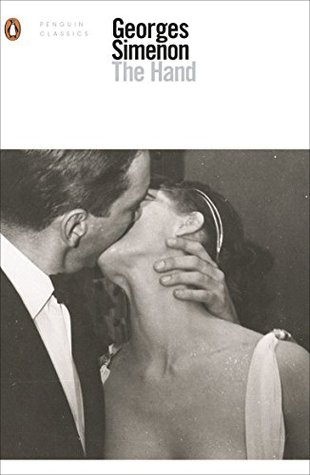
I've also just started The Hand (1968) another of Georges Simenon's Roman Durs (hard novels).
More info on both books....
Pietr the Latvian (1930)
A gripping new translation of the first novel in the famous Inspector Maigret series
What he sought, what he waited and watched out for was the crack in the wall. In other words, the instant when the human being comes out from behind the opponent . . .
Who is Pietr the Latvian? Is he a gentleman thief? A Russian drinking absinthe in a grimy bar? A married Norwegian sea captain? A twisted corpse in a train bathroom? Or is he all of these men? Inspector Maigret, tracking a mysterious adversary and a trail of bodies, must bide his time before the answer comes into focus.
The first book in the brand new Penguin Simenon series featuring brilliant renderings by some of today's best translators from French, Pietr the Latvian introduces the intrepid Inspector to a new audience.
The Hand (1968)
A new translation of George Simenon's taut, devastating psychological novel set in American suburbia. The inspiration for the new play by award-winning playwright David Hare.
'I had begun, God knows why, tearing a corner off of everyday truth, begun seeing myself in another kind of mirror, and now the whole of the old, more or less comfortable truth was falling to pieces'
Confident and successful, New York advertising executive Ray Sanders takes what he wants from life. When he goes missing in a snow storm in Connecticut one evening, his closest friend begins to reassess his loyalties, gambling Ray's fate and his own future.
'The romans durs are extraordinary: tough, bleak, offhandedly violent, suffused with guilt and bitterness, redolent of place . . . utterly unsentimental, frightening in the pitilessness of their gaze, yet wonderfully entertaining' John Banville
'One of the greatest writers of the twentieth century . . . Simenon was unequalled at making us look inside, though the ability was masked by his brilliance at absorbing us obsessively in his stories' Guardian
'A supreme writer . . . unforgettable vividness' Independent

 Nigeyb wrote: "I'm going to read a couple more Simenons before our buddy read in mid-October 2018 to give me a bit more of a feel for his work.
I've just started Pietr the Latvian..."
Good idea, Nigeyb, I have Pietr the Latvian too, and it is quite short so I think I'll read that too. Look forward to reading your thoughts on it
Mod
How wonderful Pamela.
I've actually read about a third of it already. Sounds impressive but, given its brevity, that is only 50 or so pages.
It's my first Maigret book for many a decade, and it's already clear why he remains such an iconic, laconic and enduring character.
It's also a good mystery so far and already has me wondering...just who exactly is Pietr The Latvian?
I look forward to discovering your reaction.
Pietr the Latvian is the only Maigret I've read. But (drum roll please), my edition of The Snow is Dirty arrived yesterday. I was so surprised it came so quickly, but I did order a Prime used book, rather than those that come by camel.
Mod
Please do chip in with any thoughts or feelings about the book Elizabeth
Elizabeth (Alaska) wrote: "my edition of The Snow is Dirty arrived yesterday"
That's great news - how prompt.
I don't mind opening the thread a bit earlier if you and Val (and anyone else) would like. As Susan says elsewhere we can stagger the October buddy reads.
I have a copy arriving from the library due in early October, so could easily read it earlier in the month too.
Here is my review of Pietr the Latvian. I see it has been a year to the day since I wrote that, and I post reviews the same day or the next day after I finish. I tend not to remember details of individual titles, but I can say that 4-stars for a mystery is the highest rating for me - most, while good, get 3-stars.Here is a review by someone I follow. I see I shelved this first in the Maigret series after Jim posted his review.
Here is my list of buddy reads for mid-October. I'm happy to read them in any order, so if you want to push the Simenon to earlier in the month, I can accommodate. However am thinking maybe there are others who are just learning we plan to read this, so that it maybe it should come nearer the 15th.The Haunting of Hill House, Shirley Jackson
Fidelity, by Susan Glaspell
Death Among The Sunbathers, E.R. Punshon
Dirty Snow, Georges Simenon
Mod
So far as I know it's only you, Val and me reading Dirty Snow. I also plan to read The Haunting of Hill House.
It doesn't really matter if we read them at different times though.
Susan likes to read all the books before the discussion opens. I used to do that but have concluded I have more to points to make, and more questions, if I wait until the threads open to start reading the books.
Nigeyb wrote: "So far as I know it's only you, Val and me reading Dirty Snow. "If we all have our copy, we can certainly start earlier. I like to have read the book before reading any comments, but those and the ensuing discussion definitely help to clarify my thoughts and to cement a book in the memory bank.
I have 2 group reads between now and then, but am starting one of them later today, and it is short, so expect to have both finished in the first day or two of October.
Nigeyb wrote: "So far as I know it's only you, Val and me reading Dirty Snow..."And me!
Mod
Elizabeth, Let's see how the land lies in early October. I suspect we're all pretty flexible.
Nigeyb wrote: "And Pamela! Hurrah. Elizabeth, Let's see how the land lies in early October. I suspect we're all pretty flexible."
Works for me! I'll just make sure Dirty Snow is earlier rather than later. ;-)
Mod
I would love to read them all at the time, but I usually have about 9 book group reads a month and it is unlikely I can fit them all in at the time of the discussion, so I do need to stagger them :)

Reading the 20th Century
Books mentioned in this topic
The Man Who Watched the Trains Go By (other topics)Dirty Snow (other topics)
Three Bedrooms in Manhattan (other topics)
The Old Man Dies (other topics)
The Man Who Watched the Trains Go By (other topics)
More...
Authors mentioned in this topic
Georges Simenon (other topics)Graeme Macrae Burnet (other topics)
Georges Simenon (other topics)
Georges Simenon (other topics)
Georges Simenon (other topics)
More...

I'm keen to revisit him and plan to start with a non-Maigret book The Mahé Circle. Has anyone read The Mahé Circle? It sounds very intriguing.
What do you think of Georges Simenon?
To what extent does his work still stand up?
What do you like about him?
Anything you're less keen on?
Here's more information about him....
Simenon was one of the most prolific writers of the twentieth century, capable of writing 60 to 80 pages per day. His oeuvre includes nearly 200 novels, over 150 novellas, several autobiographical works, numerous articles, and scores of pulp novels written under more than two dozen pseudonyms. Altogether, about 550 million copies of his works have been printed.
He is best known, however, for his 75 novels and 28 short stories featuring Commissaire Maigret. The first novel in the series, Pietr-le-Letton, appeared in 1931; the last one, Maigret et M. Charles, was published in 1972. The Maigret novels were translated into all major languages and several of them were turned into films and radio plays. Two television series (1960-63 and 1992-93) have been made in Great Britain.
During his "American" period, Simenon reached the height of his creative powers, and several novels of those years were inspired by the context in which they were written (Trois chambres à Manhattan (1946), Maigret à New York (1947), Maigret se fâche (1947)).
Simenon also wrote a large number of "psychological novels", such as La neige était sale (1948) or Le fils (1957), as well as several autobiographical works, in particular Je me souviens (1945), Pedigree (1948), Mémoires intimes (1981).
In 1966, Simenon was given the MWA's highest honor, the Grand Master Award.