
Essays discussion
Current events
date newest »
newest »
message 1:
by
Lia
(new)
May 16, 2019 12:00PM
 Mod
Mod
reply
|
flag
Mod
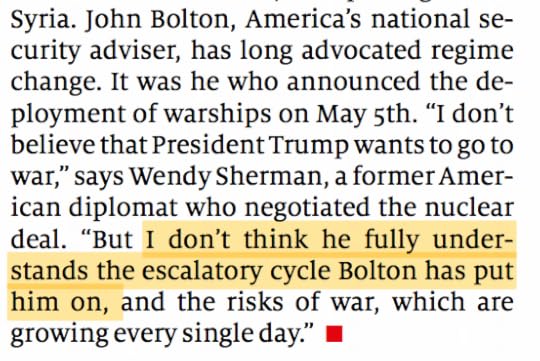
Useful idiots are terrifying.
 Yes, I'm watching this wearing more than a little deja vu with a smattering of OMG on my face.
Mod
Yes, I'm watching this wearing more than a little deja vu with a smattering of OMG on my face.
Mod
Or so I hope.
Mod
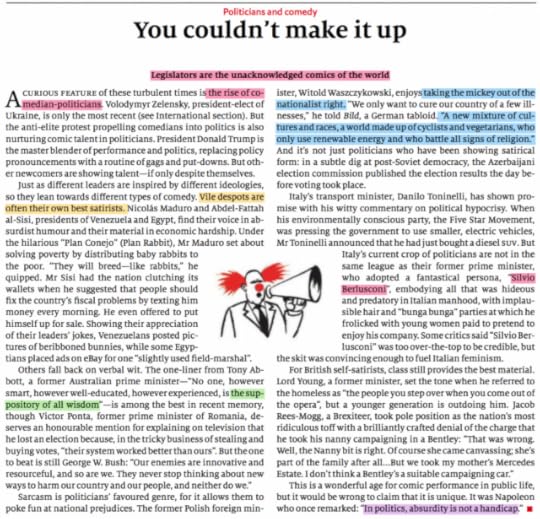
I acknowledge this.
 Mod
Mod
Mod
Mod
Mod
Mod
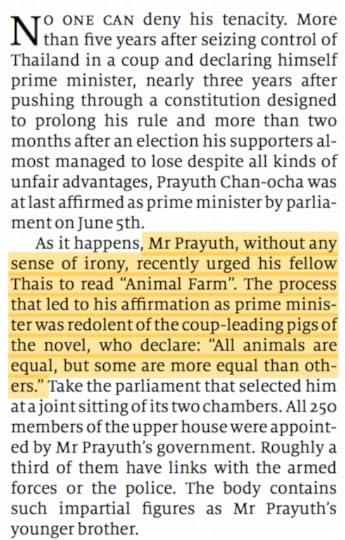 Hey, while reading Animal Farm in english comp class a classmate insisted it was about the U.S. The rest of us had a good laugh. Now I want to find him to say, "Let's talk."
Funny or scary?
Mod
But let's just laugh as if it's funny, we live in a very strange timeline and I don't feel like crying {:'(
At least we're not going full Tom Clancy on the Japanese Oil Tanker conspiracy.
Don't cry. Laugh. Then laugh some more. Politics is where sublime comedy resides -- a reflecting pool, a memorial to folly and farce. No, not full Clancy; slow Clancy.
Mod
https://www.economist.com/open-future...
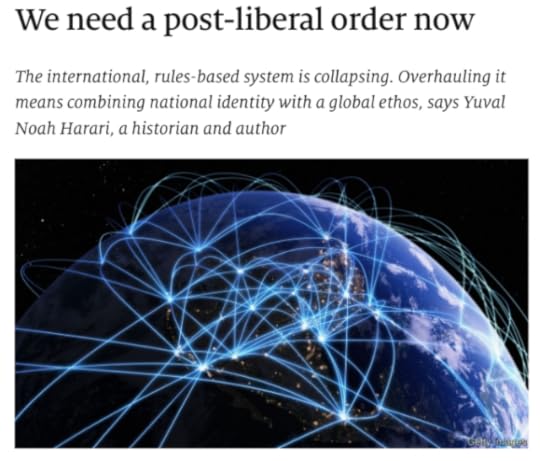
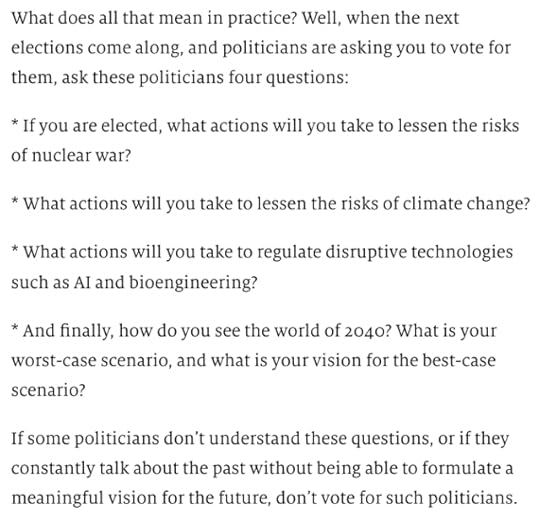
Some detour on "history" (?) of human (sapiens?) later, some suggestions:
 Mod
Mod
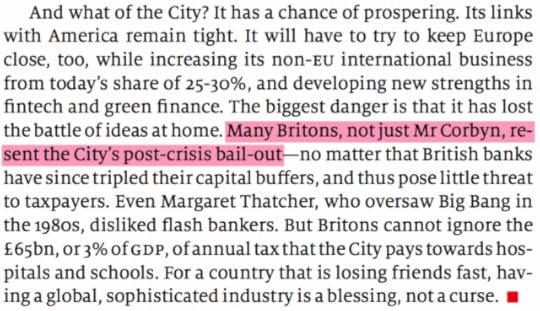
 This all being relevant if you trust politicians who are running for office to give you answers to your questions that really reflect what they believe rather then being what they think you want to hear.
 Good to see you posting again--thought maybe you'd sworn of Goodreads to completely immerse yourself in your Heidegger library. Which reminds me--in all my rooting through thrift shops and library sales, I'd never run across anything by or about Heidegger until last month when I found Poetry, Language, Thought. I'm sure I'd have picked it up anyway, but I was definitely reminded of your foray into Heideggeriana.
Mod
About trust for politicians -- which I don't have any -- it's still good to indicate interests or concerns in these specific areas, and demand public officials to give an account on their vision or their plan.
I think the way we organize ourselves is at a turning point (hence post-liberal), and I think that's what her article is about (or maybe I'm reading her books into her article, because it seems that's what all her books are about: different epochs.)
The funny thing is that I also think Heidegger touched on this -- the role, the function, the point of a philosopher is basically about affecting these pivotal points in history, when we re-imagine what kind of creatures we are, how we "be," where we came from, what are our possibilities, and where we go from here. Maybe at this point in history, more lowly non-philosophers can also be involved in this collective self-determination. (I know, I know, I sound naive.)
I'm too old, too conservative, and too disenchanted with theoretical approaches to making the world a better place to think that we can have much of a bearing on the direction we take from here, other than as the result of unintended consequences. If you take those questions from up above, the green new deal seems like it would answer them nicely. That it was so soundly defeated tells me that that really isn't what people want, no matter what they say.I think the reality is simply that there are many sacrifices involved in these things, and that we'd be hard pressed to find that many people willing to make sacrifices. So I think we'll keep blundering forward. I don't think that's a good thing, but I think the inertia is too difficult to overcome (I know, I know, I sound like an old fuddy-duddy) :)
Mod
To quote from a different book,
“In the end, a democratically elected government does—up to a point, over time—do as its citizens want. ”Source: Climate Shock: The Economic Consequences of a Hotter Planet By Martin Weitzman
I probably have to say this loudly because of how I am. I tend to give up easily, just look at the number of books I’ve “abandoned” (by that I mean partially read or left as “currently reading” but untouched for months)! If I can’t get along with a group or an individual, I tend to just walk away. Blocking or ignoring provocateurs is much easier than keep engaging. But the kind of policy changes that are necessary will require many more GND to get defeated repeatedly until we finally get used to the idea and move towards adopting something like that, and the best weapon to sabotage that is to nourish defeatism and get people so disillusioned, so cynical that they stop voting, stop engaging.
That's me--disillusioned. Don't let me stop you though. Because I'll tip my hat to the new constitution
Take a bow for the new revolution
Smile and grin at the change all around
Pick up my guitar and play
Just like yesterday
Then I'll get on my knees and pray
We don't get fooled again
My beard is getting really long, by the way, since I decided to let it grow out. I'm going to look like Ben Gunn before long.
Mod
I guess I should have included the lyric "And the beards have all grown longer overnight" to make that a better segue. As it reads right now, it looks like a bizarre non sequitur.
 Mod
Mod
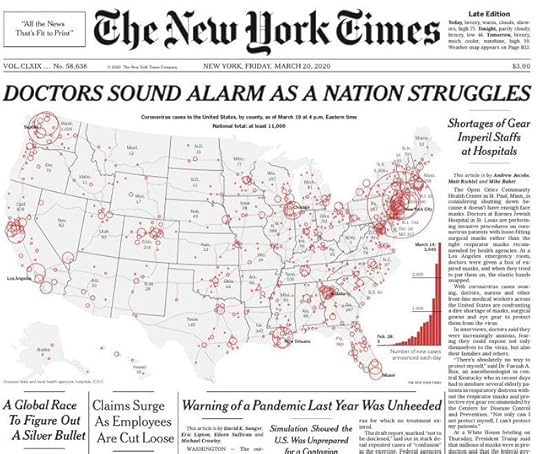
https://www.commonwealmagazine.org/ti...
“At this time in Europe when we are beginning to hear populist speeches and witness political decisions of this selective kind it’s all too easy to remember Hitler’s speeches in 1933, which were not so different from some of the speeches of a few European politicians now.
What comes to mind is another verse of Virgil’s: [forsan et haec olim] meminisse iuvabit [“Perhaps one day it will be good to remember these things too.”] We need to recover our memory because memory will come to our aid. This is not humanity’s first plague; the others have become mere anecdotes. We need to remember our roots, our tradition which is packed full of memories. In the Spiritual Exercises of St. Ignatius, the First Week, as well as the “Contemplation to Attain Love” in the Fourth Week, are completely taken up with remembering. It’s a conversion through remembrance.
This crisis is affecting us all, rich and poor alike, and putting a spotlight on hypocrisy. I am worried by the hypocrisy of certain political personalities who speak of facing up to the crisis, of the problem of hunger in the world, but who in the meantime manufacture weapons. This is a time to be converted from this kind of functional hypocrisy. It’s a time for integrity. Either we are coherent with our beliefs or we lose everything. ”
Mod
https://www.theguardian.com/uk-news/2...
Papyrology -- We have a field for everything.Decades spent piecing papyrus back together reminds me of Darwin spending eight years dissecting and cataloging barnacles. How exciting , , , for someone else. I wonder what type of glue one uses to piece together 3,000 year-old plant guts.
I hope this inspires a good ancient artifact forgery mystery novel.
Love that word, papyrus.
Mod
Decades spent piecing papyrus back together reminds me of Darwin spending eight years dissecting and cataloging barnacles. How exciting , , , for some..."
I have a friend completing his Ph.D on bird poop (poopology?), nothing surprises me anymore!
Apparently Sappho’s scrolls are missing as well 😭. Feck this
Xan wrote: “ I hope this inspires a good ancient artifact forgery mystery novel”
Don’t jinx it, Dan Brown might take it up!
Ouch, Sappho. That's terrible.What's with these people who steal ancient artifacts and keep them in their basement so only they can see them? Something seriously wrong with these people.
Interesting thing about poop, every species's poop is unique. Learn them all, and you can tell what animals inhabit an area without ever having seen them.
My ornithology professor speculated that birds poop to aid liftoff. I don't know if it's true, but it's an interesting idea.
He had a pet Myna bird. Don't ever get a Myna bird. They can mimic car and bus horns and train whistles, and they will do so in the middle of the night. Or so he says.
Mod
I can’t wait to read the novel.
I thought cats are the most malicious, non-cooperative animals we’ve ever been trained to live with. And then I met a couple of talking-birds (and people who live with them.) I’ve since decided that I do not want to mess with birds, as we all know, I’m literally, obviously beneath them.
Yes, that was Napoleon. The French took the Rosetta Stone from Egyptians and the British took it from them. When Napoleon invaded Egypt he brought a bevy of scientists and collectors with him.
Mod
https://www.tandfonline.com/doi/full/...
“ ABSTRACT
Between 1974 and 2005, a majority of states became democratic for the first time in history. However, a global democratic recession began in 2006 and has persisted – and deepened – over the past 14 years. Not only have average levels of freedom (or democratic quality) been declining globally and in most parts of the world, but the pace of democratic breakdown accelerated and the number of democratic transitions declined, particularly in the past five years. Democratic regression is particularly visible among the G-20 countries and other most populous and geopolitically weighty countries, 19 of which have declined in freedom during the democratic recession, with only two improving. The principal method of democratic regression has been incremental strangulation of democracy by elected (typically populist) executives who gradually eviscerate institutional checks, political opposition, independent media, and other forces of scrutiny and resistance in civil society. Weak and declining rule of law has predisposed regimes to democratic regression, enabling ambitious rulers to hollow out political competition. But international factors have also been crucial, generating common economic and social stresses while lifting the constraints and lowering the risks autocrats face as they inaugurate or accelerate the slide into authoritarianism.”
 Mod
Mod
https://www.youtube.com/watch?v=ANLkM...
Mod
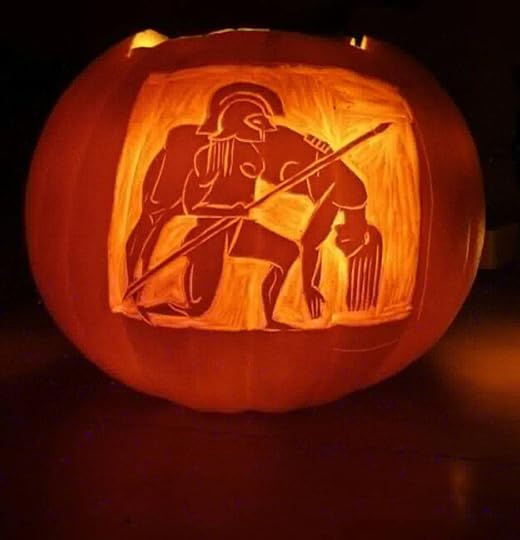
Given that toleration for representing atrocities in commercial entertainments, I'm not surprised that nobody was upset about comedians casually bringing up the holocaust as a part of the skit, and they weren't condoning it. They were shown as tone deaf idiots who proposed to represent the holocaust with paper cutouts and got yelled at and got told they can't broadcast something like that, audiences are invited to laugh at their lack of common sense, thus affirming that it's not acceptable.
I definitely think it's an overreaction to fire and publicly shame Kobayashi and turn him into an international pariah for performing (did he even write the script?) in a skit that included joking about the inappropriateness of representing the holocaust as a theme, without condoning or excusing or representing the holocaust itself.
At around the same time, thought police in Asia just arrested children book authors for penning sheep and wolf stories that "were aimed at inciting hatred towards the city's government."
I was getting frustrated with how difficult it is to decipher what Ovid and Boccaccio were actually trying to say, but looking at the entertainments-policing today, I'm convinced those are very useful skills.
