
Old Books, New Readers discussion
Through the Ages Challenge
>
√ April - Bosun
date newest »
newest »

Centuries:
√Ninth - The Thousand and One Nights
√Tenth - Hrotsvitha
√Eleventh - Shahnameh
√Twelfth - Arthurian Legend/Romances
√Thirteenth - Prose & Poetic Edda
√Fourteenth - The Divine Comedy
√Fifteenth - La Celestina
√Sixteenth - William Shakespeare
√Seventeenth - Don Quixote
√Eighteenth - Candide
√Nineteenth - Gothic Fiction
√Twentieth - Literary Criticism/Globalization
Skips:
One
Two

Crystals:









(radiowest.kuer)The Thousand and One Nights is a collection of Indian and Middle Eastern stories. There is still an ongoing debate on when the stories originated or who it's author/s are. This is a common occurrence with early century stories as they were often told orally through generations. The first book and most well known of the collection is titled "Arabian Nights". According to sources, it has been in circulation since the Ninth century. There was no known manuscript in Arabic until the Fourteenth century. It was not published in English until the Eighteenth century. The collection's stories are put within a frame story around King Shahryar. The stories are told through his wife in order to survive the night and avoid execution. Aladdin, Sindbad and Ali Baba are the most well known stories from the collection.

Complete 2 tasks to move to the next century:
1) Read tales from 1001 Nights (include page counts/must add up to a minimum of 100 pages)
2) Read a book that was originally published in another language.
3) Read a book set in the Middle East.
4) Read another book written or published in the 9th century OR a classic book with 9 in the publication date.
 Book Read: 1001 nights (read pgs 1-290)
Date Read: June 7
Task: (1) Read tales from 1001 Nights (include page counts/must add up to a minimum of 100 pages)
Explain How it Fits: 9th century.
Book Read: The Stranger (123 pg edition of book)
Date Read: June 10
Task: (2) Read a book that was originally published in another language.
Explain How it Fits: It was originally published in French as L’Étranger
Congrats you made it and found a Sunstone!

Hrotsvitha, nun of Gandersheim, is classified as the first female German poet. Her name, as she herself attests, is "strong voice" in Saxon. Some consider her to be the first dramatist/playwright since ancient times. Hrotsvitha desired her works to "counteract the pagan morality expressed in classical works". All of her original works were written in Latin as taught by the monastery. During her lifetime, Hrosvitha categorized her works into three sections: Book of Legends, Book of Drama, and Epics. The Book of Legends contained eight legends: Ascensio, Gangolf, Pelagius, Theophilus, Basilius, Dionysius, Maria & Agnes. Theophilus is hypothesized to be the most famous. The legend describes a young archdeacon who consults a Jewish sorcerer about his disappointed promotion. A dark journey ensues soon after. The Books of Drama include six plays that are believed to be written around 960. The plays are Gallicanus, Dulcitius, Callimachus, Abraham, Pafnutius & Sapientia. During the Tenth century, the Christian church looked down upon drama and theater under the advise of the Roman Empire. Hrotsvitha turned to drama as a means of promoting Christian ideals such as chastity, poverty and obedience. Thus re-inviting the Roman Empire and Christianity back into the art form. The two historical stories included in the Epics (the Gesta Ottonis and the Primordia coenobii Gandeshemensis) have been lost.
Complete 2 tasks to move to the next century:
1) Read a play from the Book of Dramas or a legend from the Book of Legends.
PDF of Hrotsvitha's Work
2) Read a book by a German author.
3) Read a book with a church on the cover or in text. (Cite passage)
4) Read another book written or published in the 10th century or read a book with 1 & 0 in the page count.
Book Read: The play Callimachus from the Book of Dramas Date Read: June 11
Task: (1) Read a play from the Book of Dramas or a legend from the Book of Legends.
Explain How it Fits: 10th century
Book Read: Grimm's Fairy Tales (339 page edition)Date Read: June 11
Task: (2) Read a book by a German author.
Explain How it Fits: The Brothers Grimm (Jacob and Wilhelm Grimm) were German. They compiled and published the tales in Germany around the 1800s.
Congrats you made it and found a Lapis Lazuli!

(huffingtonpost)
The epic of Shahnameh by Abu ʾl-Qasim Firdowsi Tusi describes the history of pre-Islamic Persia. The title translates to The Book of Kings. The stories center around fifty Persian Kings, hence the title. According to the Library of Congress, it includes "62 stories, told in 990 chapters with 50,000 rhyming couplets." The collection is divided into three parts. The first is the mythical, the second heroic and third is historical. Regarded as a literary masterpiece by Persian natives because it embodies the national identity. It reflects Iran's history, cultural values and ancient religions. The author published Shahnameh in 1010 when the nation's independence was compromised. This piece of work even effected modern Persian language a thousand years later. Experts believe it was due to surviving works such as Shahnameh with it's profound cultural influence that effected how the language was preserved and developed.
Complete 2 tasks to move to the next century:
1) Read a book whose both author's initials can be found in: BOOK OF KINGS
2) Read a book or anthology of poetry.
3) Read a book that features royalty.
4) Read another book written or published in the 11th century or who has 11 in the page count.
1st Task:Book Read: W. B. Yeats: Selected Poems (1992 edition, 224 pages)
Date Read: June 12
Task: (2) Read a book or anthology of poetry.
Explain How it Fits: This book was a collection of poems that were written by Yeats.
2nd Task: Book Read: The Tale of Genji by Murasaki Shikibu
Date Read: June 19
Task: (4) Read another book written or published in the 11th century or who has 11 in the page count.
Explain How it Fits: The Tale of Genji was written in the early 11th century.
*I enjoyed this task. It was just the excuse I needed to finally read this book!*
Congrats you made it and found Citrine!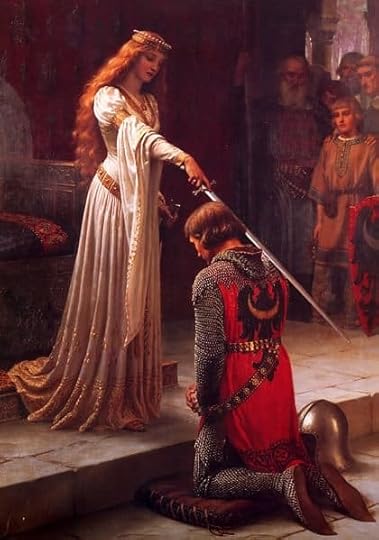
(kxcdn)
Twelfth century literature was dominated by a central character, King Arthur. Known as the Arthurian Legend began with Geoffrey of Monmouth’s 1138 work History of the Kings of Britain. Monmouth's work described the entirety of Britain's history from the seventh to twelfth century. With this increasing interest brought about the Arthurian Legend which are divided into three parts - Camelot, Age of Chivalry, and Songs of Deed. Three other authors are credited to these stories - Robert de Baron, Sir Thomas Malory & Chretien de Troyes. Within the Arthurian Legend one can find the Arthurian romances which birthed the genre of courtly romance. These stories combined Christian, Muslim and Celtic elements. Chretien de Troyes is considered the genre's founder with "Erec and Enide" published in 1160. He would go on to write four more works including the infamous romance between Lancelot and Guinevere. Not only did his works include Arthur like the others, but it included other members of his court.

Complete 2 tasks to move to the next century:
1) Read any of the Arthurian Legend stories.
2) Read a book whose title begins with a letter found in: TROYES
3) Read a French Romance novel.
4) Read another book published in the 12th century or read a book that has 12 in the page count.
Book Read: Le Morte d'Arthur, Volume 1 by Sir Thomas MaloryDate Read: June 26
Task: (1) Read any of the Arthurian Legend stories.
Explain How it Fits: This book is part of the Arthurian Legend
Book Read: Silas Marner
Date Read: July 1
Task: (2) Read a book whose title begins with a letter found in: TROYES
Explain How it Fits: The book 'Silas Marner' begins with the letter 'S' in which is found in 'TROYES'.
Congrats you made it and found Red Jasper!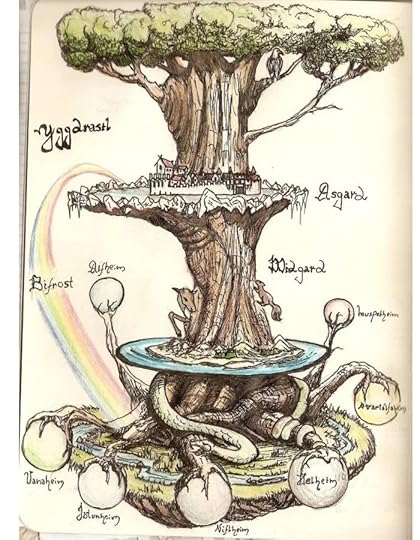
(ancientpages)
Not much had been known about Scandinavia culture and history until exploration and the influence of Western religion. Christianity brought about the first writings of centuries old Norse spoken tales and historical information. Known as the Saga's which translates to "what is told" usually involved historical figures, voyages and migration. From my research, there is still no finite author. The Icelandic Saga includes the King's, Family and Legendary Sagas. The King's Sagas include the contemporary biographies and histories of remote periods. Many themes in the Saga's include character development, fate, luck, heroic deeds and the supernatural. Originally written in Old Norse until 1220 when Snorri Sturluson translated and produced the first English translation. Famously known as the Prose Edda, Old Norse for collection of Sagas, has four surviving manuscripts. It is perceived to be the only extensive source of Norse mythology. The Prose and Poetic Edda include the Yggdrasil/the Tree of Life (photo above). Yggdrasil according to Historical Mysteries is an "enormous glistening ash tree that cradles the nine realms of the cosmos within its branches and roots, thereby connecting all things... and represents the cycle of birth, growth, death, and rebirth."

Complete 2 tasks to move to the next century:
1) Read the Prose or Poetic Edda.
2) Read a book that has mythology as a MPG(Main Page Genre).
3) Read a book set in Scandinavia.
4) Read another book published in the 13th century or read a book with 1 & 3 in the publication date.
1st TaskBook Read: Prose Edda
Date Read: July 3
Task: (1) Read the Prose or Poetic Edda.
Explain How it Fits: Prose Edda
*I enjoyed this a lot and ended up reading it quicker than I thought it would take me*
2nd TaskBook Read: Hamlet by William Shakespeare
Date Read: July 4
Task: (3) Read a book set in Scandinavia.
Explain How it Fits: Set in Denmark.
Congrats you made it and found Blue Lace Agate!
(nosweatshakespeare)
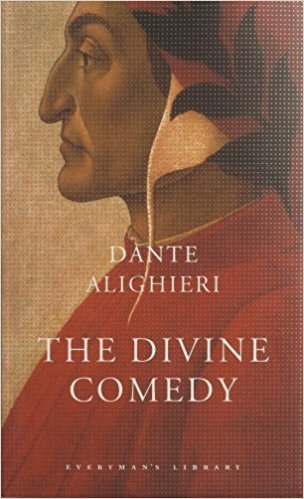
Dante Alighieri's "The Divine Comedy", originally titled La Commedia, is an Italian long narrative poem written between 1308 and 1321. Inferno, Purgatorio, and Paradiso are the three major sections that divide the work. The poem describes Dante's journey from darkness to the revelation of the divinity. Dante is guided by Virgil who is believed to be a representation of human knowledge. In April of 1472, the first printed edition was made in Foligno, Italy. "The Divine Comedy's" first English translation was by Henry Boyd in 1802. Today there are more than fourteen different language translations since Boyd. Historians believe that Dante's journey is a metaphor for the soul's journey while others believe it is an allegory for the life of Jesus. No manuscripts have survived, only Fourteenth and Fifteenth century copies. Nonetheless, Alighieri's work has inspired paintings, architecture, music, film and more.
Complete 2 tasks to move to the next century:
1) Read a book that features 1 of the 9 circles of Hell.
2) Read a book found in Best Italian Novels List
3) Read a book whose both author's initials are found in: INFERNO
4) Read another book published in the 14th century.
Task 1Book Read: Inferno by Dante Alighieri (302/302 pages)
Date Read: July 7
Task: (2) Read a book found in Best Italian Novels List
Explain How it Fits: The book features on the list as number 6
Task 2
Book Read: Cyrano de Bergerac by Edmond Rostand (240/240 pages)
Date Read: July 11
Task: (3) Read a book whose both author's initials are found in: INFERNO
Explain How it Fits: The initials E.R. (Edmond Rostand) are found in the word 'INFERNO'
Congrats you made it and found Rainbow Moonstone!
(evaroblesspain)
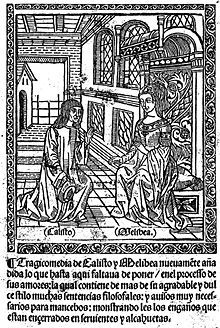
"La Celestina" is credited as the most influential work that assisted in transitioning the Iberian Peninsula from the Middle Ages to Renaissance. The 1499 original work was published in sixteen acts, the anonymous publisher then extended the story to twenty one acts. Researchers believe the author of this dialogue type story to be Fernando de Rojas, a dramatist and author. "La Celestina" was written in 1492 during the time of King Ferdinand and Queen Isabella's goal of expelling Jews from the peninsula. This included the brutal times of the Spanish Inquisition. The story centers around Calisto who falls for Melibea, a nobleman's daughter. Calisto seeks the help of Celestina, a former prostitute, in his pursuit of Melibea. Even though Calisto is given many warnings of danger by contacting Celestina, he proceeds. Celestina has been associated in Spanish with procuress. The work was originally titled "Comedia de Calisto y Melibea" and the extension by "Tragicomedia de Calisto y Melibea". The work influenced the development of European prose fiction and is still praised in literature for its historical significance. Researchers have debated the connection and possible personal association with William Shakespeare due to the work's content similarities. Gordon Campbell, a writer, claims that soon after its publication, "sixty editions and six sequels were published. Its sexual explicitness and amoral pessimism did not trouble the Spanish Inquisition, which was content simply to excise anticlerical passages".

Complete 2 tasks to move to the next century:
1) Read La Celestina.
2) Read a book by an Iberian(Spain/Portugal) author.
3) Read a book with a character who is a prostitute/escort.
4) Read another book published in the 15th century.
Task 1:Book Read: La Celestina
Date Read: 8/16/2019
Task: (1) Read La Celestina
Explain How it Fits: La Celestina
*I ended up reading it in Spanish since my library did not have an English translation version. It's been a while since I read something in Spanish so that was fun :)
Task 2: Book Read: Les Miserables
Date Read: 8/28/2019
Task: (3) Read a book with a character who is a prostitute/escort.
Explain how it fits: The character Fantine is pushed into prostitution in order to support herself and her daughter.
Congrats you made it and found Carnelian!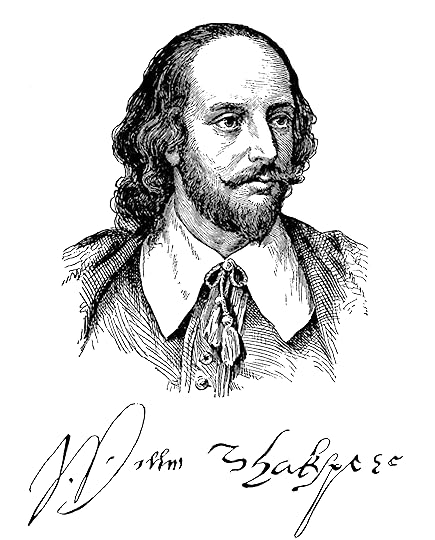
(Mainehumanities)
William Shakespeare can be claimed as the predominant author during the late Sixteenth century and early Seventeenth. There are no historical records found about Shakespeare for almost ten years. Researchers call this "The Lost Years" which only increased speculation and interest into the author and his works. His first work was "Henry VI, Part One" written in 1590 and last was the 1613 play "Henry VIII". In between that time, Shakespeare had written a hundred and fifty four sonnets and thirty seven plays including seventeen comedies and ten historical. Shakespeare had been a founder of the Lord Chamberlain's Men theater group, later known as the King's Men in 1603. This exclusively male group would perform Shakespeare's famous works at the Globe and Blackfriar's Theaters. The group's history is believed to be an influence to Shakespeare's writings. A connective theme found within some of his works is the questioning of the aristocracy, more importantly the King. "Venus and Adonis" are believed to be his first published works in 1593. It was published in quarto form. These pamphlet books were where each printed sheet is folded twice, then in half again to produce eight pages. Research has shown that there are no original manuscripts to survive, including couplets written in Shakespeare's own hand.

Complete 2 tasks to move to the next century:
1) Read a work by Shakespeare.
2) Read a book whose title begins with a letter found in: TRAGEDY
3) Read a book where a character appears as the opposite gender.
4) Read another book published in the 16th century.
Task 1:Book Read: The Merchant of Venice

Date Read: September 1
Task: (1) Read a work by Shakespeare
Explain How it Fits: Shakespeare play
Task 2:Book Read: Twelfth Night

Date Read: September 1
Task: (3) Read a book where a character appears as the opposite gender
Explain How it Fits: The character Viola assumes the identity of a man
Congrats you made it and found Amethyst!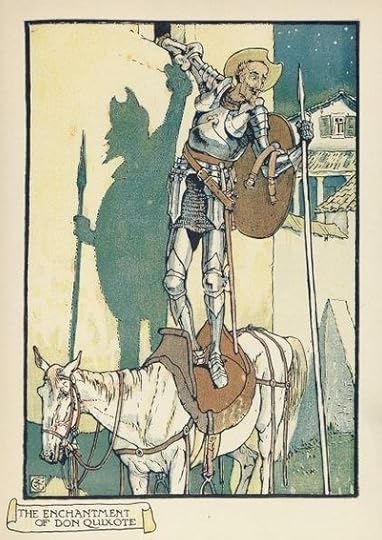
(university of calgary)The literary community still to this day praises Don Quixote as one of the most important novels of all time and claim it to be the first ever modern novel. Miguel de Cervantes originally published the work as a two piece novel. The first published in 1605 and the second in 1615. At some point during the ten year gap, an unauthorized forged version of part two was put out into society under the name of Alonso Fernandez de Avellaneda. This is believed to have pushed Cervantes to complete the second part. He even decides to take it a step further and notes the incident. In chapter fifty nine, Don Quixote, the character, learns of Avellaneda’s book and is outraged by the way he is portrayed. Also, Cervantes used the forward to address the situation. As the novel uses parody to mock chivalrous literature, it came to no surprise he would mock the forged version. The story follows Alonso Quixano, a noble, who reads so many chivalric romances that he loses his sanity. He then decides to become caballero andante/knight errant by the name of Don Quixote de la Mancha. Along with his squire, Sancho Panza, the goal is to revive chivalry and serve his country. Don Quixote does not see things for as they are in reality but imagines them as if he is in a chivalrous novel. On his adventures, he encounters a numerous and diverse amount of characters. This gave the chance for other opinions, perspectives and beliefs to be expressed besides those of the current society. As well, this allowed to increase social insight to such things as historical truth.

Complete 2 tasks to move to the next century:
1) Read Don Quixote.
2) Read a book where the MC (Main Character) has a sidekick.
3) Read a book from: Top 100 Literary Novels of All Time List
4) Read a book published in the 17th century.
Task 1:Book Read: The Fellowship of the Ring
Date Read: September 13
Task: (2) Read a book where the MC (Main Character) has a sidekick
Explain How it Fits: Samwise Gamgee is the sidekick to Frodo Baggins.
 Task 2:
Book Read: 1984
Date Read: September 15
Task: (3) Read a book from: Top 100 Literary Novels of All Time List
Explain How it Fits: on the list
 Congrats you made it and found Rose Quartz!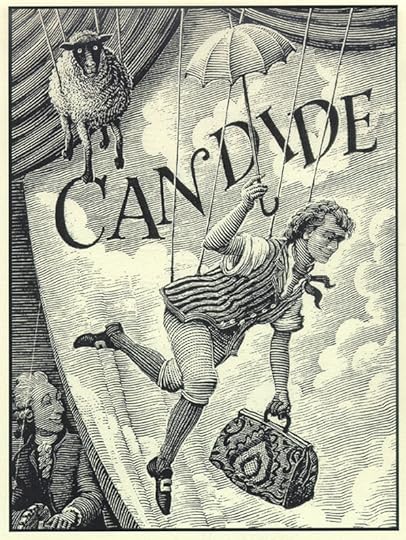
(manwithmuckrake)The Eighteenth century is best known for the Age of Enlightenment. A time period in which intellect and philosophy dominated ideas. Questions on God, humanity, and reason were of the most prevalent. In England, Charles II was restored to the throne. Known as the Restoration period, coincided with literary and artistic changes with the rest of Western Europe. These factors and the outbreak of the Seven Years War influenced the writing of Voltaire, particularly "Candide". The satirical novel follows the philosophy student Candide who gets kicked out and voyages on his own through diverse encounters and hardships. Voltaire uses satire to expose the injustices within 1759 society including government, religion and science. The second half of Eighteenth century Western Europe, saw the rise of the erotic novel such as Memoirs of a Woman of Pleasure. Most were often written in the form of letters such as Les Liasons Les Dangereuses and later in the 19th century Manon Lescaut.

Complete 2 tasks to move to the next century:
1) Read Candide.
2) Read a book with a MPG of Philosophy.
3) Read a book that is considered controversial.
4) Read another book published in the 18th century.
Task 1:Book Read: Le mythe de Sisyphe
Date Read: October 13
Task: (2) Read a book with a MPG of Philosophy
How it fits: Has a a MPG of Philosophy
Task 2:Book read: Giovanni's Room
Date read: December 18
Task: (3) Read a book that is considered controversial
How it fits: controversial , especially for the time it was written,
Congrats you made it and found Malachite!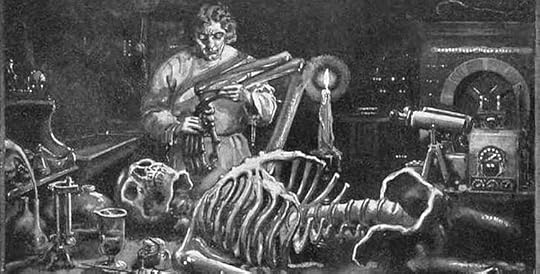
(readdurhamenglish)The Nineteenth century saw the rise of the gothic genre. European Romantic period which had an obsession for the Medieval in combination with an atmosphere full of mystery and terror. Horace Walpole is believed to be the father of the genre with his 1760 novel Castle of Ontranto. Common settings for Gothic literature were castles with Gothic architecture or remote uninhabited areas. The setting is of utmost importance to the entire story. There are three key elements to understanding gothic literature. The first being the uncanny in which Freud defines it as the class of frightening things that leads us back to what is known and familiar. The last two coincide with each other, sublime and grotesque. Victor Hugo describes the relationship in the Preface of "Cromwell". "We will simply say...as a means of contrast with the sublime, the grotesque is, in our view, the richest source that nature can offer art... the grotesque seems to be a halting-place, a mean term, a starting-point whence one rises toward the beautiful(sublime) with a fresher and keener perception". Most Gothic novels will include this three elements. Other common components found are the subconscious, mirrors, demonic or supernatural.

Complete 2 tasks to move to the next century:
1) Read Castle of Ontranto.
2) Read a book who's title starts with a letter from: GOTHIC
3) Read a book with a mirror on the cover or in text. (Cite passage)
4) Read another book published in the 19th century.
Task 1:Book Read: Cat's Cradle by Kurt Vonnegut
Date Read: December 20
Task: (2) Read a book who's title starts with a letter from: GOTHIC
Explain How it Fits: Starts with the letter "C"
Task 2:
Book Read: The Scarlet Letter by Nathaniel Hawthorne
Date Read: December 21
Task: (4) Read another book published in the 19th century.
Explain How it Fits: Written in the 19th century
Congrats you made it and found a Rainbow Obsidian!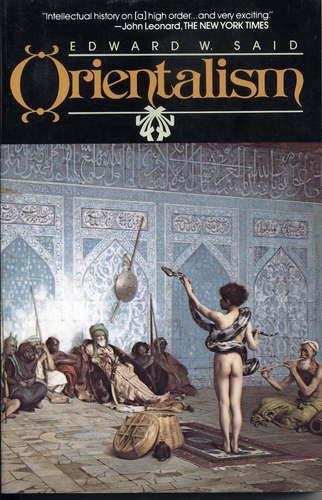
(middleastbooks)In the Twentieth century, the world became fast changing especially with the help of technological advances. Literature would be mass produced, creating a better space for authors to thrive. The rise of colonialism and thus globalization allowed Western and non-Western ideas to spread rapidly. The literary world evolved even further with new forms of ideas and themes. The rise combined with new literary ideas paved the way for literary criticism. Criticism takes into effect the biographical questions, historical knowledge, sources, influences, and problems of method in a particular or range of literary works. The schools of theory include Feminism, Gender Studies, Post-colonial, Marxist and more. One of the most influential was Orientalism by Edward Said. According to Britannica, the 1978 novel "Orientalism examined Western scholarship of the 'Orient,' specifically of the Arab Islamic world and argued that early scholarship by Westerners in that region was biased and projected a false and stereotyped vision of 'otherness' on the Islamic world that facilitated and supported Western colonial policy".

Complete 2 tasks to move to complete your journey:
1) Read an essay/book by an author associated with the schools of literary theory.
Here are some examples
Psychoanalysis
Freud/Lacan/Jung
Postcolonial
Said/Bhabha/Achebe
Gender Studies
Foucault/Irigaray/Mulvey
(Feel free to ask for help)
2) Read a book by an Eastern author.
3) Read a book from the Best Books of the 20th Century List
4) Read a book published in the 20th century.
Task 1:Book Read: Harry Potter and the Sorcerer's Stone
Date Read: 8 January
Task: (3) Read a book from the Best Books of the 20th Century List
Explain How it Fits: Is number 4 on the list
 Task 2:
Book Read: Go ask alice
Date: 13 January
Task: (4) Read a book published in the 20th century
Explain how it fits: first published in the 20th century (in 1971)
Congrats you completed the challenge and found an Angel Aura Quartz to add to your collection!
This was fun! I read a lot of interesting books. It was especially exciting to read books I never read before: some had been on my to read list for years and others I had never heard of before.
 Congratulations April! I'm glad to know you had a wonderful time reading :)
April wrote: "This was fun! I read a lot of interesting books. It was especially exciting to read books I never read before: some had been on my to read list for years and others I had never heard of before."
Congratulations April! I'm glad to know you had a wonderful time reading :)
April wrote: "This was fun! I read a lot of interesting books. It was especially exciting to read books I never read before: some had been on my to read list for years and others I had never heard of before."Extremely happy to hear this! Congrats on completion and thank you for your participation.

Old Books, New Readers
Books mentioned in this topic
Harry Potter and the Philosopher's Stone (other topics)1984 (other topics)
The Fellowship of the Ring (other topics)
Twelfth Night (other topics)
The Merchant of Venice (other topics)
*Challenge inspired by Love of Books Group Challenges*