
Art Lovers discussion
Questions from the Met
>
Relevance of Smoke
date newest »
newest »

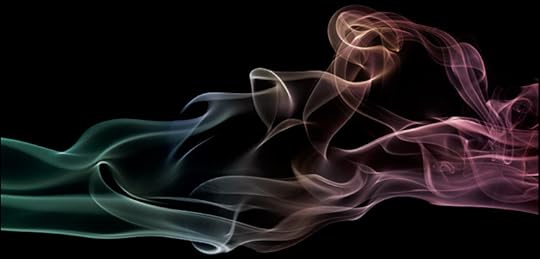
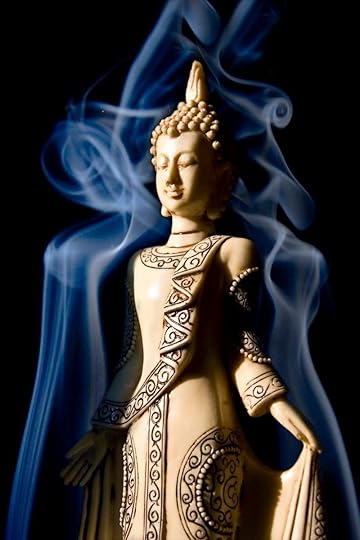
These pictures are of smoke released by a burning incense stick. Smoke is grey to the human eye, but with a little post processing in Photoshop or similar editor the underlying colour can be revealed. For the technically minded, change the colour temperature and increase the saturation to see what I mean.
Smoke photography is tricky, not least because it is hard for the camera to focus on the smoke. With practice and a lot of trial and error some interesting results can be produced.
https://sensitivelight.com/
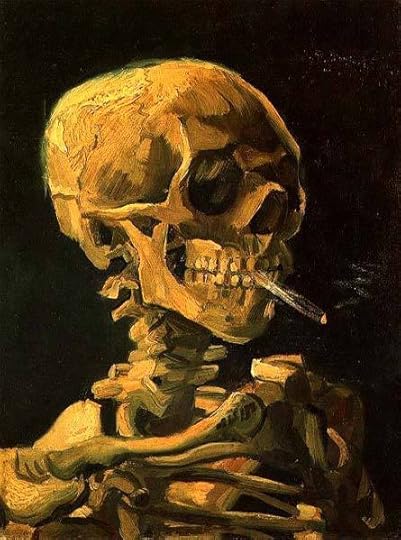
Skull of a Skeleton with Burning Cigarette
Vincent van Gogh
1885-1886
It was most likely painted in the winter of 1885–86 as a satirical comment on conservative academic practices. Before it was common to use live humans as models, the academic routine included the study of skeletons to develop an understanding of human anatomy. Van Gogh was in Antwerp, Belgium at that time attending classes at the Royal Academy of Fine Arts, which he later said were boring and taught him nothing.
https://en.wikipedia.org/wiki/Skull_o...
Depictions of tobacco smoking in art date back at least to the pre-Columbian Maya civilization, where smoking had religious significance. The motif occurred frequently in painting of the 17th-century Dutch Golden Age, in which people of lower social class were often shown smoking pipes. In European art of the 18th and 19th centuries, the social location of people – largely men – shown as smoking tended to vary, but the stigma attached to women who adopted the habit was reflected in some artworks. Art of the 20th century often used the cigar as a status symbol, and parodied images from tobacco advertising, especially of women. Developing health concerns around tobacco smoking also influenced its artistic representation. Recently tobacco has impacted on art in a quite different way, with the conversion of many cigarette vending machines into Art-o-mat outlets, selling miniature artworks the shape and size of a cigarette packet.
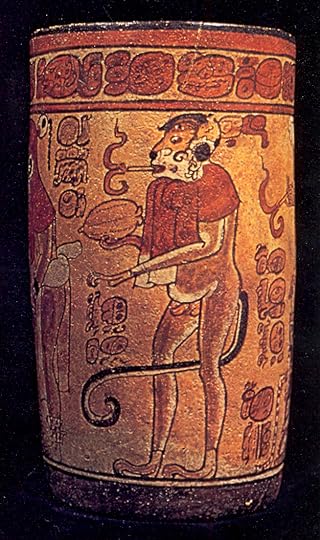
Mayas were perhaps the first people to represent tobacco smoking in art. Mayas smoked heavily, and they believed that their gods did too. Religious rituals often involved tobacco: offerings were given to certain gods and tobacco smoke warded off evil deities. Many tribes viewed tobacco as a supernatural, magical substance (perhaps because of its strong physiological and sometimes hallucinogenic effects). Because of tobacco's significance, it is not surprising that Mayas produced artistic representations of smoking. The artwork mostly portrays religious rituals and myths involving gods or lords because ordinary people and actions were considered too unimportant and unworthy for time consuming art pieces.
https://en.wikipedia.org/wiki/Tobacco...
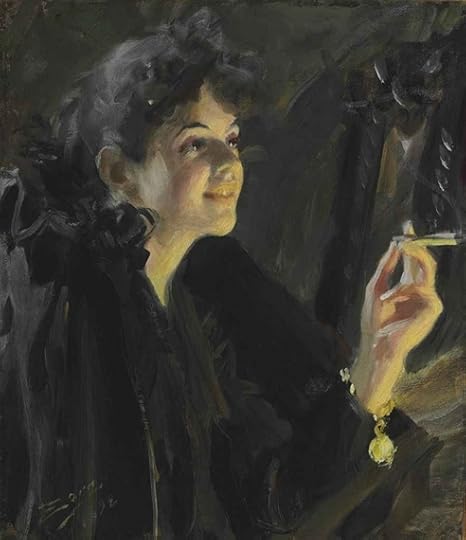


A little bit of a... different question here, what kind of answers will we have?